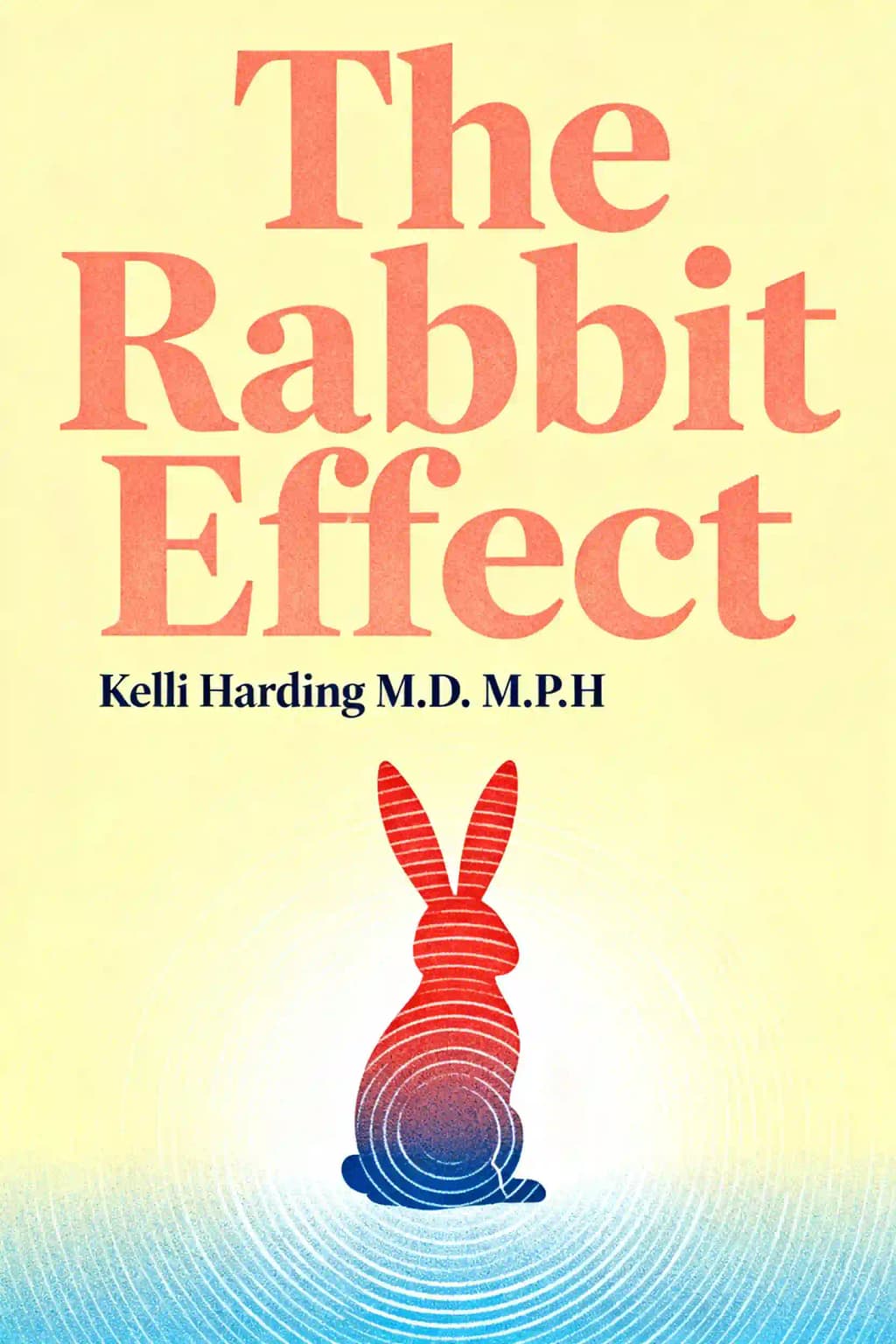
Discover why kindness is medicine in "The Rabbit Effect," where Dr. Harding reveals how compassion literally saves lives. When chronic loneliness equals smoking a pack daily, this NPR Best Book shows why your relationships might matter more than your doctor's advice.
Kelli Harding M.D. M.P.H., author of The Rabbit Effect: Live Longer, Happier, and Healthier with the Groundbreaking Science of Kindness, is a Columbia University-trained psychiatrist and public health physician specializing in psychosomatic medicine. Her critically acclaimed work explores the profound impact of kindness, social connection, and compassionate communities on physical and mental well-being, blending rigorous medical research with actionable insights.
An assistant clinical professor at Columbia University Irving Medical Center, Dr. Harding co-founded Our Kind of Club, a global movement promoting inclusive kindness initiatives. She’s shared her expertise through major media outlets including The New York Times, Good Morning America, NPR, and BBC World.
The New York Times critically acclaimed book has become a touchstone in holistic health discussions, inspiring both medical professionals and general readers to reimagine health through the lens of social determinants.
The Rabbit Effect explores how social connections, kindness, and emotional well-being significantly impact physical health. Inspired by a 1978 rabbit study where nurturing care improved heart health despite high-fat diets, Dr. Harding argues that factors like loneliness, community, and purpose affect wellness more than traditional medical interventions. The book synthesizes public health research to advocate for a holistic health model prioritizing compassion and social environments.
Dr. Kelli Harding is a Columbia University physician and public health expert whose clinical practice and research focus on the intersection of social determinants and health outcomes. Her work emphasizes how kindness, relationships, and environmental factors shape well-being, challenging conventional medical frameworks.
This book is ideal for healthcare professionals, public health advocates, and readers interested in holistic wellness. It’s particularly valuable for those navigating loneliness, stress, or chronic illness, offering evidence-based strategies to improve health through stronger social bonds and purposeful living.
Yes—it provides paradigm-shifting insights backed by rigorous research. By linking emotional well-being to physical health, the book offers actionable advice for improving quality of life, making it essential for anyone seeking a science-backed approach to holistic wellness.
Researchers studying diet-induced heart disease in rabbits found that those cared for by a compassionate lab assistant had better health outcomes, despite identical diets. This revealed that kindness and emotional support directly improve physiological resilience, reshaping understanding of non-medical health influencers.
Chronic loneliness increases inflammation and cardiovascular risk, equivalent to smoking 15 cigarettes daily. The book underscores loneliness as a public health crisis, advocating for community-building initiatives to mitigate its effects.
Kindness reduces stress hormones, boosts immune function, and enhances longevity. Dr. Harding highlights studies showing acts of compassion—like supportive relationships or workplace empathy—lower disease risk and accelerate recovery.
Strong communities correlate with lower rates of chronic disease and mental health disorders. For example, tight-knit neighborhoods show reduced heart disease incidence, illustrating how social infrastructure directly supports physiological resilience.
People with clear life purposes exhibit lower rates of Alzheimer’s, stroke, and depression. Purpose fosters healthier lifestyle choices and stress management, creating a biological “buffer” against aging and illness.
Environmental factors like safe housing, green spaces, and economic stability account for up to 60% of health outcomes. Dr. Harding links polluted or stressful environments to heightened disease risk, urging systemic changes to address these disparities.
Some critics argue the book underemphasizes genetic or clinical factors in favor of social determinants. However, Dr. Harding clarifies that her model complements—rather than replaces—traditional medicine, advocating for integrated care.
Unlike conventional focus on diet and exercise, the book prioritizes emotional and social health as foundational pillars. It reframes health as a collective responsibility, urging policymakers and individuals to cultivate kinder, more connected societies.
저자의 목소리로 책을 느껴보세요
지식을 흥미롭고 예시가 풍부한 인사이트로 전환
핵심 아이디어를 빠르게 캡처하여 신속하게 학습
재미있고 매력적인 방식으로 책을 즐기세요
Health extends far beyond medical interventions.
Nothing exists in isolation; each layer affects the others.
Our most intimate bonds literally shape our bodies from birth.
One-on-one bonds are the most critical hidden factor in our health.
A mother's love literally shapes DNA expression.
The Rabbit Effect: Live Longer, Happier, and Healthier with the Groundbreaking Science of Kindness의 핵심 아이디어를 이해하기 쉬운 포인트로 분해하여 혁신적인 팀이 어떻게 창조하고, 협력하고, 성장하는지 이해합니다.
The Rabbit Effect: Live Longer, Happier, and Healthier with the Groundbreaking Science of Kindness을 빠른 기억 단서로 압축하여 솔직함, 팀워크, 창의적 회복력의 핵심 원칙을 강조합니다.

생생한 스토리텔링을 통해 The Rabbit Effect: Live Longer, Happier, and Healthier with the Groundbreaking Science of Kindness을 경험하고, 혁신 교훈을 기억에 남고 적용할 수 있는 순간으로 바꿉니다.
무엇이든 물어보고, 목소리를 선택하고, 진정으로 공감되는 인사이트를 함께 만들어보세요.

샌프란시스코에서 컬럼비아 대학교 동문들이 만들었습니다
"Instead of endless scrolling, I just hit play on BeFreed. It saves me so much time."
"I never knew where to start with nonfiction—BeFreed’s book lists turned into podcasts gave me a clear path."
"Perfect balance between learning and entertainment. Finished ‘Thinking, Fast and Slow’ on my commute this week."
"Crazy how much I learned while walking the dog. BeFreed = small habits → big gains."
"Reading used to feel like a chore. Now it’s just part of my lifestyle."
"Feels effortless compared to reading. I’ve finished 6 books this month already."
"BeFreed turned my guilty doomscrolling into something that feels productive and inspiring."
"BeFreed turned my commute into learning time. 20-min podcasts are perfect for finishing books I never had time for."
"BeFreed replaced my podcast queue. Imagine Spotify for books — that’s it. 🙌"
"It is great for me to learn something from the book without reading it."
"The themed book list podcasts help me connect ideas across authors—like a guided audio journey."
"Makes me feel smarter every time before going to work"
샌프란시스코에서 컬럼비아 대학교 동문들이 만들었습니다

The Rabbit Effect: Live Longer, Happier, and Healthier with the Groundbreaking Science of Kindness 요약을 무료 PDF 또는 EPUB으로 받으세요. 인쇄하거나 오프라인에서 언제든 읽을 수 있습니다.
Picture this: two groups of rabbits on identical high-fat diets show dramatically different heart health outcomes. The difference? One group received regular handling, petting, and talking from researcher Murina Levesque. These rabbits had 60% fewer fatty deposits despite identical cholesterol levels. This groundbreaking 1978 discovery by Dr. Robert Nerem reveals what medicine often overlooks - our health extends far beyond medical interventions and personal choices to how we treat each other and structure our communities. This "Rabbit Effect" challenges our understanding of what truly makes us healthy in an increasingly isolated world, showing that kindness isn't just nice - it's necessary for physical wellbeing. Seventy-three-year-old Bella radiates health despite aggressive pancreatic cancer. She tends her garden, takes art classes, bakes for neighbors, volunteers, and enjoys weekly bridge games with friends. Her oncologist remains puzzled by how she thrives despite her grave diagnosis. Meanwhile, forty-three-year-old Daisy appears withered beyond her years despite perfect test results. Recently divorced and working two jobs, she moves slowly through constant pain and exhaustion, barely able to leave her house. This stark contrast highlights Western medicine's fundamental problem - categorizing people as either sick or well based solely on physical factors while ignoring crucial social contexts. Dr. George Engel's biopsychosocial model offers a solution, recognizing health occurs within concentric layers from cells at the center to relationships, community, and society in outer rings. Nothing exists in isolation; chronic stress triggers cellular inflammation while strong social connections boost immune function.