1장
The Journey That Transforms: Discovering Life's Ultimate Purpose
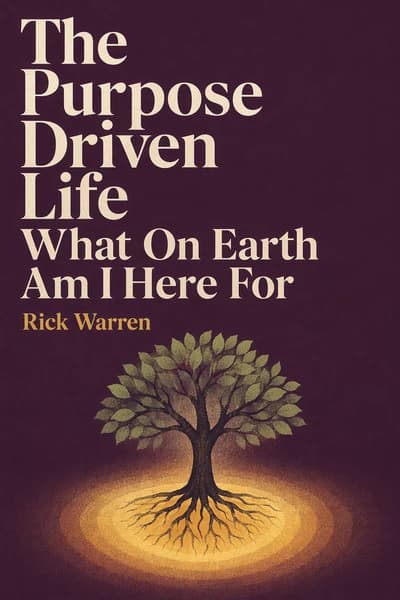
Have you ever felt that nagging sense that there must be more to life than just existing? You're not alone. "The Purpose-Driven Life" has resonated with over 50 million readers worldwide since its 2002 publication, making it the bestselling non-fiction hardback in history after the Bible. Even celebrities like American Idol winner Jordin Sparks cited it as her favorite book, and it famously helped hostage Ashley Smith connect with her captor Brian Nichols during a 2005 crisis. Author Rick Warren, founding pastor of Saddleback Church-one of America's largest congregations-doesn't just theorize about purpose; he's lived it through establishing a global network of churches and addressing the United Nations. This 40-day spiritual journey promises to answer life's most fundamental question: What on earth am I here for?
2장
It All Begins With God, Not You
The most crucial truth about your purpose is startlingly simple: it's not about you. This counterintuitive starting point challenges our self-focused culture. You weren't created for your own fulfillment or happiness-you were made by God and for God. His purposes, not yours, determine your life's meaning.
Many of us instinctively begin our search for purpose by looking inward, asking self-centered questions like "What do I want to be?" or "What makes me happy?" But this approach inevitably leads to dead ends. It's like trying to discover the purpose of an invention without consulting its inventor. Only the creator knows the original intent.
Your birth was no accident. Long before your parents conceived you, God envisioned you. He deliberately chose every detail of your existence-your ethnicity, appearance, talents, and personality. Even your perceived flaws were purposefully designed. The Bible says, "You know me inside and out, you know every bone in my body; You know exactly how I was made, bit by bit, how I was sculpted from nothing into something."
This divine intentionality extends to your life circumstances. The timing and location of your birth weren't random but specifically planned to fulfill God's purposes. Even if your parents didn't plan you, God did. His motivation? Love. You exist because God wanted to love you.
Understanding this truth transforms everything. When you recognize that you're a special object of divine love, created so God could express His love to you, your sense of worth no longer depends on achievements, appearance, or others' approval. You matter simply because God made you for Himself.
3장
The Five Purposes That Drive Meaningful Living
Everyone's life is driven by something. For many, it's guilt over past mistakes, resentment over hurts, fear of rejection, materialism, or approval-seeking. These driving forces create unnecessary stress and lead to unfulfilled potential.
Purpose-driven living offers a better alternative-allowing God's five purposes to guide your decisions and shape your future. These purposes bring clarity, simplicity, focus, motivation, and preparation for eternity.
First, you must understand that life on earth is temporary-a brief preparation for eternity. Though we may live a hundred years here, we're designed to exist forever. This explains why death always feels unnatural and why we instinctively long for immortality. Our earthly bodies are temporary "tents," while our future bodies are permanent "houses."
This eternal perspective transforms daily living. When you realize your time here is just a brief prelude to forever, your values shift dramatically. Relationships and character development suddenly matter more than wealth or achievements. Many earthly concerns that consume attention-career advancement, financial worries, social status-appear trivial by comparison.
To fulfill God's purposes, you must adopt three biblical perspectives: life is a test, a trust, and a temporary assignment. Every circumstance, even seemingly minor incidents, tests your character and faith. As a steward rather than owner of everything you have, you're entrusted with managing God's property during your brief stay. Your time, talents, treasures, and relationships are all gifts requiring responsible care.
The ultimate purpose of everything is displaying God's glory. Without it, nothing would exist. His glory-the essence of His nature-is reflected in creation, from microscopic organisms to vast galaxies. Jesus, as "the Light of the world," perfectly illuminates God's character, making His glory comprehensible to us.
We bring glory to God in five ways: worshiping Him, loving other believers, becoming like Christ, serving others with our gifts, and telling others about Him. These five actions constitute the purposes for which you were created.
4장
Worship: Finding Joy in God's Pleasure
Your first purpose is bringing pleasure to God. This isn't about religious rituals but about living in relationship with your Creator. You were made for God's enjoyment-not because He needed you, but because He chose to create you for His delight.
Worship extends far beyond music or church services to encompass your entire lifestyle. Noah exemplifies five acts of worship that please God: loving Him supremely, trusting Him completely, obeying Him wholeheartedly, praising Him continually, and using your abilities. When you maintain a close relationship with God despite circumstances, trust His guidance without understanding everything, follow His instructions exactly, express gratitude regularly, and use your abilities for His purposes, you bring Him pleasure.
The heart of worship is surrender-giving yourself completely to God. Though surrender remains unpopular in our competitive culture, it's the pathway to spiritual power. Three barriers typically block our surrender: fear (overcome by understanding God's love), pride (resisting our need for help), and confusion about what surrender means. Surrender isn't passive resignation or diminishing your personality-it enhances who God made you to be.
God wants to be your best friend, not just your Creator and Master. In Eden, Adam and Eve enjoyed intimate friendship with God without religious rituals-just a loving relationship. After humanity's fall, only a few people like Moses and David were called God's friends. Jesus changed everything by paying for our sins, allowing direct access to God again.
Two secrets develop this friendship: constant conversation and continual meditation. You can maintain an open-ended conversation with God throughout your day, "praying without ceasing" during everyday activities. Brother Lawrence, a 17th-century monk, practiced God's presence by changing his attitude toward common tasks, doing everything for God rather than himself. Short "breath prayers" throughout the day help maintain this connection.
Meditating on Scripture throughout the day further deepens your friendship with God. Job and David were God's close friends because they valued His Word above everything else. Friends share secrets, and God will share His with you when you develop the habit of thinking about His Word continually.
5장
Fellowship: Finding Your Place in God's Family
God's second purpose is making you part of His family. Because God's nature is relational (Father, Son, and Spirit), He desires relationships. When you place faith in Christ, God becomes your Father, you become His child, and other believers become your spiritual siblings.
This spiritual family transcends physical family because it lasts forever. As members of God's family, you receive incredible benefits: the family name, likeness, privileges, intimate access, and inheritance. Your eternal inheritance includes being with God forever, being transformed to be like Christ, freedom from suffering, rewards for service, and sharing in Christ's glory.
Love should be your top priority and greatest ambition. The Bible states that without love, all achievements are worthless. Love leaves a lasting legacy, and you'll ultimately be evaluated in eternity not by wealth or accomplishments, but by how you loved others. The essence of love is giving your time-your most precious gift-to others.
We're created for community, formed for God's family. No one can fulfill God's purposes alone. Being a "member" of the church means being a vital organ of a living body, an indispensable part of Christ's Body. The church is an organism, not an organization, and you discover your role through relationships with others.
Real fellowship goes beyond casual conversation to experiencing life together through unselfish loving, honest sharing, practical serving, sacrificial giving, and sympathetic comforting. In authentic community, people experience heart-to-heart sharing, reciprocal relationships, genuine sympathy, and grace-filled forgiveness.
Building this community requires both commitment and practical actions. Humility is essential-the oil that smoothes relationships. Practical ways to develop humility include admitting weaknesses, being patient with others' weaknesses, accepting correction, and focusing attention on others. Confidentiality creates the safe environment where people can share deeply, while gossip destroys fellowship.
Relationships are always worth restoring because life is about learning to love. When conflicts arise, we must confess our part, attack the problem rather than the person, cooperate as much as possible, and emphasize reconciliation over resolution. Unity is the soul of fellowship, and protecting it is every believer's responsibility.
6장
Discipleship: Growing to Spiritual Maturity
God's third purpose is transforming you to be like Christ. This doesn't mean losing your uniqueness or personality, but developing His character, values, and attitudes. God's ultimate goal isn't your comfort but your character development.
Many Christians misinterpret the "abundant life" as perfect health, comfort, and instant problem-solving through faith. This self-centered view treats God as a genie serving our pursuit of fulfillment. In reality, life is meant to be difficult to enable growth-earth isn't heaven.
The Holy Spirit produces Christlikeness through sanctification-a process requiring your active participation in three ways: letting go of old behaviors, changing thinking patterns, and developing new godly habits. Your character is essentially the sum of your habits.
God uses three tools to shape you: His Word provides truth, His people provide support, and circumstances provide the environment to practice Christlikeness. Unlike religions that value isolation, true spiritual maturity develops in community because it's about learning to love like Jesus-impossible without relationships.
Spiritual growth requires intentional commitment-it doesn't happen automatically. Many Christians remain in spiritual infancy because they never decided to grow. Your commitments ultimately shape who you become, so choose them wisely.
Lasting change requires transforming your thinking, not just forcing behavior change through willpower. Like a boat with an autopilot set in one direction, trying to change course through sheer force creates constant resistance. True change happens by reprogramming your mental "autopilot"-adopting Christ's perspective on everything.
God uses problems as character-building opportunities-the more difficult the problem, the greater potential for spiritual growth. When facing troubles, remember God's plan is good, stay focused on Christ rather than the pain, give thanks in all circumstances, and refuse to give up.
Every temptation presents an opportunity to do good, not just a potential for sin. Temptation always starts in your mind, not in external circumstances. To overcome it: refuse to be intimidated, recognize your pattern of temptation, request God's help immediately, and refocus your attention elsewhere rather than fighting the thought directly.
Spiritual growth takes time-there are no shortcuts to maturity. Just as fruit loses flavor when artificially ripened, character development cannot be rushed. When growth seems slow, remember that "Everything on earth has its own time and its own season." Great souls develop through struggles and storms.
7장
Ministry: Serving Others Through Your Gifts
God designed you to make a difference with your life. Your fourth purpose is serving others through ministry. You were saved not by service but for service. Every Christian is a minister, though not necessarily a pastor. Jesus commanded, "Your attitude must be like my own, for I, the Messiah, did not come to be served, but to serve."
God shaped you specifically for serving Him. Before creating you, He decided what role He wanted you to play on earth. You're not an assembly-line product but a custom-designed masterpiece. To help remember five factors that determine your shape for service, think of SHAPE: Spiritual gifts, Heart (passions), Abilities, Personality, and Experience.
Your spiritual gifts are God-empowered abilities for serving Him. You can't earn these gifts; they're expressions of grace. No single gift is given to everyone, and no individual receives all gifts. Your gifts were given not for personal benefit but to serve others.
Your heart represents what you love doing and care about most. God has given you a unique emotional "heartbeat" that races when you think about subjects and activities that interest you. These passions indicate where you should serve. When you serve from your heart, you experience both enthusiasm and effectiveness.
Your abilities are natural talents you were born with-perhaps with words, athletics, mathematics, music, or mechanics. All abilities come from God and can be used for His glory. The average person possesses 500-700 different skills and abilities.
Your personality affects how you'll use your gifts and abilities. God loves variety, creating introverts and extroverts, those who love routine and those who crave variety, thinkers and feelers. When you minister in alignment with your temperament, you experience fulfillment and fruitfulness.
Your experiences-family, educational, vocational, spiritual, ministry, and painful experiences-have shaped you for service. Surprisingly, painful experiences often become your most effective ministry tools. When you share how God's grace helped in your weakness, you encourage others most powerfully.
Real servants make themselves available, pay attention to needs, do their best with what they have, perform every task with equal dedication, remain faithful to commitments, and maintain a low profile. They think more about others than themselves, view resources as God's property not their own, focus on their work rather than comparing with others, base their identity in Christ, and see ministry as opportunity rather than obligation.
God loves using weak people. Everyone has weaknesses-physical, emotional, intellectual, and spiritual flaws. But God deliberately allows weaknesses to demonstrate His power through us. When we admit our limitations, remain content with them, honestly share them with others, and even "boast" about how God works through them, we experience His strength in remarkable ways.
8장
Mission: Sharing God's Message with the World
Your fifth purpose is fulfilling your mission of sharing God's love with others. While ministry serves believers, mission serves unbelievers. Your mission continues Jesus' work on earth-introducing people to God. This divine assignment extends beyond church walls into everyday life, transforming ordinary encounters into opportunities for spiritual impact.
This commission was repeated five times in Scripture - in Matthew, Mark, Luke, John, and Acts - emphasizing its fundamental importance and is mandatory for every believer. Each version adds unique insights: Matthew emphasizes making disciples, Mark focuses on proclamation, Luke stresses repentance and forgiveness, John highlights sending, and Acts addresses the scope of witness. It's a wonderful privilege to work with God and represent Him as His ambassador in daily life.
Your mission has eternal significance, far outweighing any job, career achievement, or worldly success. Whether you're a teacher, business professional, artist, or homemaker, nothing else you do will matter as much as helping people establish an eternal relationship with God. This perspective transforms routine interactions - at work, in your neighborhood, or through social media - into meaningful opportunities for spiritual influence. Fulfilling your mission requires abandoning your personal agenda and accepting God's, but brings His blessing in extraordinary ways through changed lives and spiritual breakthroughs.
God has given you a unique Life Message to share, comprised of four components. First, your testimony of how Christ changed your life - your personal story of faith. Second, the life lessons God has taught you through trials, failures, and victories. Third, your godly passions that reflect your heart for specific issues or groups. Fourth, the Good News of salvation - the essential message of Christ's love and redemption. Personal stories are particularly powerful as they build relational bridges that bypass intellectual defenses and connect heart-to-heart.
To become a "world-class Christian" requires several fundamental mental shifts: from self-centered to other-centered thinking, seeing beyond personal needs to others' spiritual needs; from local to global perspective, understanding God's heart for all nations; from temporary to eternal values, prioritizing spiritual impact over material success; and from making excuses to finding creative solutions for sharing faith. The Great Commission isn't just a suggestion - it's your personal commission and the secret to living significantly.
Maintaining balance across God's five purposes requires intentional effort: regular spiritual check-ups to assess your growth, journaling your progress to track spiritual development, and passing on what you've learned to others through mentoring and discipleship. Developing a personal purpose statement helps summarize your commitment to God's purposes, define success on His terms rather than the world's, clarify your roles in family and community, express your unique shape (spiritual gifts, heart, abilities, personality, and experiences), and point the direction of your life toward eternal impact.
9장
Living Your Purpose: The Legacy That Matters
Living on purpose is the only genuine way to live-everything else is merely existing. Most people wrestle with three fundamental questions throughout their lives: identity ("Who am I?"), importance ("Do I matter?"), and impact ("What is my place in life?"). The answers to these existential queries lie in God's five purposes, which provide a framework for meaningful living and lasting fulfillment.
Seven transformative words from Acts 13:36 can forever alter your life's direction: "David served God's purpose in his generation." This simple yet profound statement explains why God called David "a man after my own heart." David's legacy wasn't built on his accomplishments as king, his military victories, or even his artistic psalms - it was established through his dedication to fulfilling God's purposes in his specific time and place. Like David, each person has a unique calling within their generation.
Neither past nor future generations can serve God in this present moment-only you can. Just as Esther was positioned strategically "for such a time as this," you too have been placed in this precise historical moment with specific opportunities and challenges. God actively searches for people with fully committed hearts to strengthen and use for His divine purposes, just as He did with biblical figures like Moses, Ruth, and Paul.
When fulfilling your purposes seems overwhelming or difficult, remember the eternal reward that far outweighs temporary troubles. Consider Paul's perspective in 2 Corinthians 4:17: "For our light and momentary troubles are achieving for us an eternal glory that far outweighs them all." One day we'll all stand before God's throne, joining the heavenly chorus in praising Him for His perfect plan. The critical question then won't be "What did you achieve?" or "How successful were you?" but rather "Did you fulfill my purposes for your life?"
The ultimate goal isn't just intellectual understanding of these purposes but living them out daily in practical ways. This involves making intentional choices that align with God's design: worshiping Him wholeheartedly through both planned and spontaneous moments of praise, loving His family faithfully through active involvement in a local church community, growing in Christlike character through spiritual disciplines and life experiences, serving others by using your unique gifts and talents, and sharing His Good News through both words and actions. As you integrate these purposes into your daily routine - whether at work, home, or in your community - you'll discover the profound joy and lasting significance you were created for.
This purposeful living creates ripple effects that extend far beyond your immediate sphere of influence. Like stones thrown into a pond, your faithful living of God's purposes can impact generations to come, creating a legacy that matters for eternity.
10장
Transforming Knowledge into Action
This journey of purpose isn't meant to be traveled alone. The most effective way to internalize these truths is through community-discussing your spiritual journey with others in a small group setting. As Proverbs says, "iron sharpens iron," and we learn best in relationship with others. Small groups provide accountability, encouragement, and different perspectives that challenge our assumptions and broaden our understanding. Whether through formal church groups, informal Bible studies, or regular meetings with trusted spiritual friends, community engagement deepens our faith journey.
Regular spiritual check-ups help maintain balance across all five purposes. Just as physical health requires monitoring multiple vital signs, spiritual health demands attention to worship, fellowship, character growth, ministry and mission. Consider creating a monthly self-assessment routine where you evaluate your engagement in each purpose area. Ask yourself: How consistently am I spending time in worship? Am I actively participating in fellowship opportunities? What steps am I taking for personal growth? How am I serving others through ministry? Am I sharing my faith with non-believers?
Keeping a spiritual journal accelerates your growth by recording insights, lessons, and progress. As one writer noted, "thoughts disentangle themselves when they pass through your fingertips." This practice helps you recognize patterns in your spiritual journey and remember God's faithfulness. Your journal might include daily Scripture reflections, prayer requests and answers, questions you're wrestling with, and moments where you clearly see God's hand at work. Looking back through these entries often reveals God's consistent presence and guidance in your life.
Teaching others has proven to be one of the most powerful ways to reinforce what you've learned. By passing on these truths, you not only fulfill your responsibility to others but also deepen your own understanding and commitment. This might involve mentoring a newer believer, leading a small group discussion, or simply sharing your insights with family members. The process of organizing and articulating your thoughts for others often brings new clarity to your own understanding.
The question now isn't whether you understand God's purposes-it's whether you'll choose to live them. As Rick Warren's dying father repeatedly whispered in his final days, "Got to save one more for Jesus!" This powerful legacy reminds us that our lives should be driven by eternal significance rather than temporary success. What will be your life's theme? What story will your life tell? When your journey ends, will you have lived in alignment with God's purposes? These questions deserve careful consideration as you move from understanding to action.