1장
When Democracy Meets the Digital Panopticon
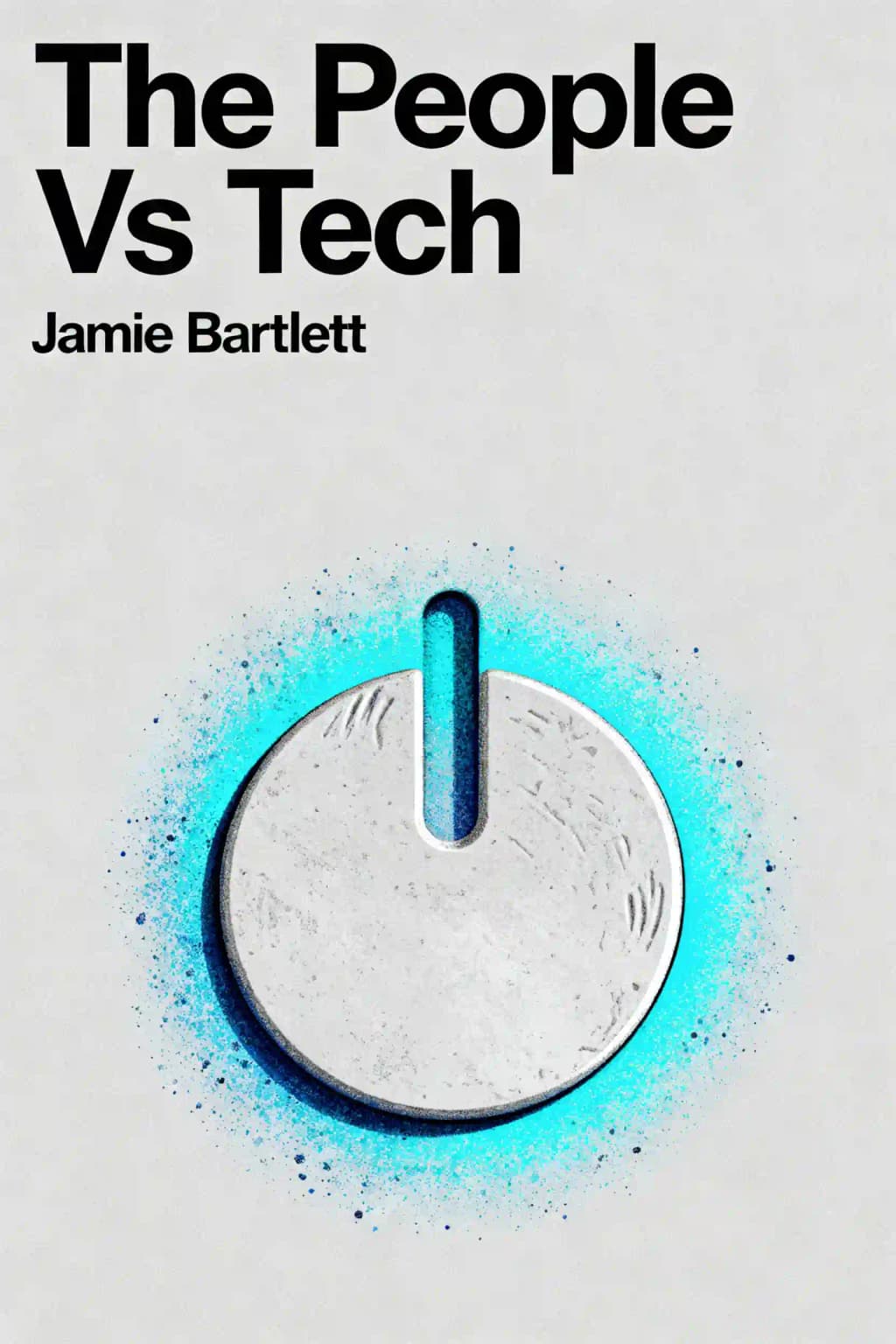
What if the very technologies that make our lives easier are quietly dismantling democracy as we know it? Jamie Bartlett's "The People vs. Tech" delivers this unsettling warning with urgent clarity. Published in 2018 and quickly becoming essential reading for policymakers worldwide, this book arrived at a critical moment - just after the Cambridge Analytica scandal broke and as governments began grappling with tech giants' unprecedented power. The book has been praised by figures ranging from Yuval Noah Harari to Edward Snowden, who called it "required reading for anyone concerned about the future of governance." Its prescient analysis has made it required reading in political science departments globally, while Silicon Valley executives reportedly keep dog-eared copies on their nightstands - perhaps as both warning and roadmap.
2장
The Digital Panopticon: Our Vanishing Freedom in the Age of Surveillance
We're living in an advertising panopticon that keeps us addicted to our devices - the latest iteration in humanity's long history of control systems. But unlike previous versions, this one grows more sophisticated by the day, threatening not just our privacy but our very autonomy.
The roots of this system trace back to early 20th century American psychology, which diverged from European philosophical traditions to focus on turning human decision-making into a hard science for business applications. John Watson, who became president of the American Psychological Association in 1915, pioneered behaviorism - arguing that all human behavior resulted from measurable external stimuli that could be understood and controlled. This approach spread through the corporate world as companies sought scientific methods to influence consumer decisions.
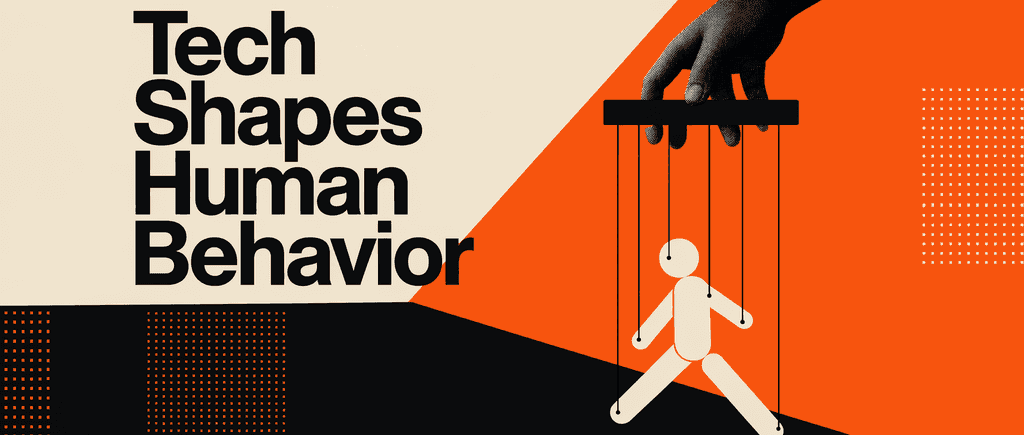
Today's tech giants are the modern inheritors of this tradition. Silicon Valley embraces "dataism" - the belief that with enough information, human behavior becomes perfectly predictable. Facebook, Google and others employ brilliant minds to analyze why we click on things and how to keep us engaged. Their interfaces are meticulously designed with visible numbers, red notifications, autoplay features and endless scrolls to maximize our attention. The average person now checks their phone every twelve minutes, with many effectively addicted to digital stimulation - by design. As Sean Parker, Facebook's first President, admitted, the "like" button was created to exploit "a vulnerability in human psychology."
The ultimate goal is to understand users better than they understand themselves. Facebook combines your activity data with information from powerful data brokers like Acxiom, which maintains thousands of data points on hundreds of millions of consumers worldwide. This data collection is accelerating - by 2020, around 50 billion internet-enabled devices will gather information from virtually every aspect of our lives.
The resulting data deluge requires algorithms to process - mathematical instructions that filter, predict, correlate and learn. These algorithms now determine what we see online, who we date, and what products we buy. More frighteningly, they can deduce intimate details about us from seemingly trivial information. Dr. Michal Kosinski demonstrated this by creating an algorithm that could accurately predict sexual orientation, ethnicity, religious views, political leanings, personality traits and more - all from Facebook likes alone. When tested on Bartlett, it correctly identified his religious background, profession, and education despite having no direct access to this information.
Since 1890, privacy laws have been established to protect citizens from surveillance by both governments and corporations. Without these protections, wearable tech, smart homes and AI would enable unprecedented levels of monitoring. Even in free societies, we're never truly "let alone" - intelligence agencies can often access data directly from tech companies rather than spying directly.
Our modern panopticon features everyone both watching and being watched. This constant visibility creates self-censorship and conformity. For every angry Twitter troll, hundreds lurk silently, afraid of data collectors, employers, or online mobs. This damages citizens' moral development, which requires making mistakes and learning from them. Social media creates performative politics with little room for genuine growth. Digital technology's perfect memory prevents the forgetting necessary for personal development - when past mistakes remain forever searchable, people conclude it's safer to say nothing at all.
Beyond mere distraction, today's data-driven targeting represents a fundamental shift in manipulation capabilities. Personalized advertising systems can learn to target individuals using language they find compelling, delivered precisely when they're most receptive or vulnerable. The implications are troubling: anti-Semites could receive increasingly virulent content because algorithms determine it increases engagement; anti-depressants might be marketed at moments of lowest self-esteem; gambling offers could target people when they're most financially desperate.
The rise of artificial intelligence presents a fundamental challenge to our self-understanding. For centuries, we've believed human free will and judgment represent the highest authority - the foundation of democracy's moral value. But what happens when machines consistently make better decisions than humans?
AI will soon outperform doctors in medical diagnosis, and we'll quickly adapt to trusting these systems with life-or-death decisions, just as we did with airplane autopilots. The shift from practical to moral questions is inevitable. We already outsource moral choices to algorithms in hiring, teacher evaluations, and policing. These systems appear objective but reproduce their creators' biases, creating self-perpetuating loops of injustice. The danger isn't poor solutions but excellent ones that save money and appear effective while hiding deeper inequities.
This extends to voting itself - millions already use apps to determine how to vote. The author, who once helped design such an app, now believes they undermine critical faculties. As AI surpasses human decision-making, we face a "moral singularity" - the point where we delegate substantial moral reasoning to machines. This represents an immediate threat to democracy, which requires citizens to actively exercise moral reasoning through repeated decisions. While machine-guided decisions might create a wiser society, it would no longer be a democracy.
3장
The Tribal Mind: How Digital Media Fuels Our Worst Political Instincts
The sudden shift from information scarcity to overwhelming overload has fundamentally changed politics. With infinite information options, people personalize their sources to match existing biases, creating filter bubbles and echo chambers. Digital communication is transforming how we engage with political ideas and understand ourselves as political actors.
Just as Netflix replaced mass-audience television with personalized content, total connectivity has fragmented stable political identities into ever-smaller tribes of like-minded people. Online, anyone upset can algorithmically find others who share their grievances, a process sociologists call "homophily." The internet enables clustering into increasingly refined groups like Momentum, Black Lives Matter, alt-right, and others.
What transforms like-minded people into motivated tribes is shared struggle and common grievance - and the internet provides an unlimited supply of legitimate grievances for every possible identity group. Every individual now has reasons to feel aggrieved or threatened, even when their personal life is fine. This tribal identification magnifies small differences between us into seemingly unbridgeable divides.
Marshall McLuhan theorized that written word created rational, cool-headed people who carefully categorized information, while electronic media would produce more emotional, tactile responses. Daniel Kahneman's research validates this insight by identifying two thinking systems: "System one" (fast, instinctive, emotional) and "System two" (slow, deliberative, logical).
Modern democracies aspire to operate on "system two" logic, with institutions designed for thoughtful, fact-driven decisions. The internet, however, resembles "system one" - immediate, instinctive and emotional. It creates expectations of speed and personalization that clash with the compromise and plodding pace of politics.
The internet is primarily an emotional medium. Citizens must navigate an overwhelming torrent of competing facts, propaganda, and commentary, leading them to rely on emotional shortcuts and confirmation bias. Studies consistently show emotional content gains more traction online than serious analysis - during the 2016 US election, fake news stories on Facebook outperformed sober reporting from established newspapers.
Tribalism and "system one" thinking emerge directly from information overload. While some partisanship is necessary in democracies, when it overwhelms everything, compromise becomes impossible and democracy breaks down.
The transformation of opponents into enemies happens through selective consumption of information. Tommy Robinson exemplifies this process, constantly sharing negative stories about Muslims from various sources. These stories, often from legitimate outlets, are framed through specific lenses that transform isolated incidents into patterns confirming pre-existing beliefs.
This constant exposure to negative information transforms disagreements from practical issues into matters of purity versus impurity. "We" become good and pure, while "they" are evil and corrupt. Polling shows this divisive polarization growing - most young Remain voters think older people are prejudiced, while older Leave voters see young people as entitled. In America, "very unfavorable" views of political opponents doubled between 1992 and 2014.
Just as television transformed politics after the 1960 Kennedy-Nixon debate, social media has created its own political archetype in Donald Trump. As the first true politician of the social media age, Trump exemplifies "system one" leadership - offering simple solutions to complex problems and trading on outrage.
Trump represents tribal leadership in a digital world characterized by confusion and information overload. He promises swift deliverance from complexity, blaming bureaucrats, politically correct media, judges and immigrants for society's problems. His appeal stems from offering tribal belonging amid uncertainty.
Hannah Arendt's warnings in "The Origins of Totalitarianism" seem prescient - when citizens float like corks in a stormy sea, unsure what to believe, they become susceptible to demagogues. Trump's supporters see him as a savior protecting the tribe from external threats. Studies after the election confirmed a strong correlation between white identity and Trump support, reflecting a politics based on tribal affiliation rather than policy positions.
4장
The Data-Driven Campaign: How Elections Became Information Warfare
Project Alamo was Trump's digital campaign headquarters, established in an unremarkable San Antonio building and staffed by digital specialists including Brad Parscale, Theresa Hong, and data analytics firm Cambridge Analytica. Though data-driven campaigning wasn't new - Republicans boasted of voter mailing lists in the 1890s and Obama's 2008 campaign used sophisticated voter scoring - Project Alamo represented an unprecedented scale of digital operations.
Cambridge Analytica, backed by billionaire Robert Mercer who also invested in right-wing Breitbart News, brought a database of roughly 5,000 data points on 230 million Americans. They created targeted "universes" - specific voter segments like "concerned working mothers" or "pro-gun Midwesterners" - and assessed their persuadability. The team identified 13.5 million persuadable voters across sixteen battleground states and built models to achieve electoral college victory.
The 2016 election became an information war with multiple players. Jonathan Albright described it as dominated by a "micro-propaganda machine" - thousands of right-wing web pages hyperlinking to each other and spreading biased information, using advanced tracking cookies and AI content optimization. Russian interference was significant, with thousands of paid content producers pushing pro-Trump or anti-Hillary content, running large Facebook pages, allegedly hacking Clinton's emails, and flooding social media with disinformation. Their goal wasn't always pro-Trump but often to sow discord and undermine social cohesion.
On election night, while early polls favored Clinton, Brad Parscale's data-driven strategy proved decisive. He had shifted resources to Michigan and Wisconsin - states considered safely Democratic that hadn't gone Republican since Reagan. Trump's narrow victories in Pennsylvania (by 44,000 votes), Wisconsin (22,000), and Michigan (11,000) - all less than 1% margins - delivered the presidency despite Clinton winning the popular vote by two million.
This new style of campaigning threatens democracy itself. When elections become sophisticated information wars with hyper-targeted messaging, the "software" of elections - voters making decisions freely based on accurate information - is compromised. As Brad told CBS afterward: "I took every nickel and dime I had out of everywhere else, and I moved it to Michigan and Wisconsin." The result proved his data-driven approach correct, leading him to simply say "I told you" as Trump delivered his victory speech.
5장
The AI Revolution: Automation, Inequality, and the End of the Middle Class
Silicon Valley startup Starsky Robotics exemplifies the AI revolution's impact on traditional industries. The author joins Tony Hughes, a veteran trucker now training the very machines that might replace him, on a 200-mile journey in "Rosebud" - a semi-autonomous truck. During the trip, 70% of the driving is handled by AI while Tony supervises. This experience reveals how rapidly autonomous vehicle technology has advanced despite MIT researchers declaring it impossible just years earlier.
The AI revolution extends far beyond trucking. While general AI remains decades away, domain-specific machine learning is transforming industries from retail to law. DeepMind's AlphaGo Zero demonstrates AI's accelerating capabilities, learning to dominate the complex game of Go without human examples. McKinsey estimates 45% of current paid tasks could be automated with existing technology, while the Bank of England suggests 15 million British jobs might become unnecessary within a generation.
However, technological disruption historically creates new jobs even as it eliminates others. The real challenge may be inequality rather than unemployment. AI will likely create a "barbell-shaped economy" where high-skilled tech workers and low-paid service workers remain, while middle-skill "routine cognitive" jobs disappear. Despite rising productivity and corporate profits, average wages continue falling - suggesting technology's benefits aren't being shared equally.
AI excels at routine, predictable tasks but struggles with unpredictable situations requiring sensorimotor skills - a phenomenon known as Moravec's Paradox. This creates a bifurcated job market where "non-routine" work will survive but with extreme wage disparities. High-skilled non-routine jobs (machine learning specialists) and low-skilled non-routine jobs (gardeners, delivery cyclists) will remain, while middle-tier "routine cognitive" positions (paralegals, loan officers, radiologists) face elimination.
The result is what MIT economist David Autor calls a "barbell-shaped economy" - extreme inequality where those working closely with technology see massive productivity and wage gains, while millions compete for low-paid service jobs serving the tech elite. This pattern of tech-fueled inequality is already evident, with productivity and corporate profits rising while average salaries fall in both the US and UK. Since the 1970s, productivity has increased significantly while median worker compensation has barely moved in real terms, a trend visible across developed economies including Sweden and Germany.
As AI-driven creative destruction threatens even the winners, Silicon Valley leaders like Y Combinator president Sam Altman are exploring Universal Basic Income (UBI) as a solution. The concept involves governments providing everyone with unconditional money to live on, with pilot schemes running in Oakland and Finland. UBI appeals across political spectrums - to the right as a capitalism-preserving measure during economic uncertainty, to the left as wealth redistribution, and to utopians as liberation from meaningless labor.
However, UBI faces significant challenges: unclear funding mechanisms (especially given tech companies' tax avoidance), potential reinforcement of extreme inequality, and questions about human dignity. When pressed on whether people would be happy in a society with a small wealthy elite and everyone else receiving subsistence payments, Altman dismissed such concerns as "pessimistic" and "anti-progress." The more likely outcome is a relentlessly unequal economy where tech millionaires live in gated communities, separated from masses they either fear or patronize.
6장
The New Monopolies: How Tech Giants Threaten Democracy
Tech monopolies represent the most extreme example of how digital technology drives inequality. Unlike traditional monopolies, tech giants not only wield economic power through market dominance but also political influence through their control of communication platforms. This dual power threatens democracy by allowing them to shape public opinion and activism itself, undermining the free association that forms the foundation of independent civil society. We're moving toward monopolies not just of economics and politics, but of culture and ideas themselves.
While monopolies have existed before, tech monopolies pose unique threats to democracy. Unlike traditional monopolies that harm consumers through higher prices, tech companies often provide free or low-cost services while accumulating unprecedented power over public discourse. They're difficult to classify under existing anti-trust frameworks - is Facebook a media outlet, advertiser, or platform? Their power transcends price metrics, concentrating control over data, public space, and future technologies.
Most critically, political parties now depend on tech platforms to reach voters, creating a dangerous dependency. Politicians, often technically illiterate and desperate for advantage, eagerly embrace the targeting capabilities these companies offer. This creates a system where narrow business interests are prioritized over democratic values. Tech companies have unprecedented abilities to mobilize their users for political causes - Uber rallied users against Transport for London's licensing decision, Google blacked out its homepage to defeat anti-piracy legislation, and Airbnb created "home-sharing clubs" to fight regulations. These companies can subtly shape public debate in ways that serve their interests, distorting the independent public sphere and transforming citizens into consumer-activists who respond to corporate calls to action.
This undermines what democracy theorists from Aristotle to de Tocqueville recognized as essential: healthy, independent civil society where citizens freely associate to become "free and independent actors." Meanwhile, tech monopolies have prospered at the expense of journalism, the traditional watchdog that could shine light on their growing power. As journalism struggles financially, our ability to investigate algorithmic influence, political manipulation, and corporate power diminishes precisely when we need it most.
Technology isn't merely tools but carriers of values and worldviews. The digital revolution is powered by "The Californian Ideology" - a fusion of bohemianism and free-market zeal promising technological liberation will solve all social problems.
Silicon Valley's products have spread this ideology globally, infecting us with the notion that disruption equals liberation and gadgets equal progress. Children aspire to tech careers or YouTube fame (30% hope to become successful YouTubers), while governments embrace "smart cities" and "lean government." To question any of this risks being labeled a Luddite who doesn't "get it."
The ultimate victory for tech monopolies isn't just economic or political - it's cultural hegemony. We now look to tech-geek superheroes instead of the state: Elon Musk for space and climate, Google for health problems, Facebook for defining free speech. Politicians suggest running healthcare like Uber or implementing Airbnb-style patient accommodations. When tech companies have so thoroughly insinuated themselves in our lives and minds that we can't imagine a world without them, they'll have achieved total victory.
7장
Crypto-Anarchy: The Digital Rebellion Against State Power
Crypto-anarchy emerged in the late 1980s when Timothy May, Eric Hughes and John Gilmore - radical libertarians and early tech adopters - realized digital technology could create dystopian state surveillance rather than liberation. They formed the "cypherpunks" to spread powerful encryption that would make digital spaces ungovernable.
The movement initially gained ground but faced setbacks after 9/11 when surveillance powers expanded and people traded privacy for free online services. Now crypto-anarchy is resurging as ordinary users realize their online activities are being tracked by governments and corporations alike. Hundreds of "crypto-parties" worldwide teach privacy protection, while tools like Tor browsers, encrypted messaging apps, and WikiLeaks gain popularity.
Bitcoin represents crypto-anarchy's most successful implementation - a digital currency requiring no central authority or real identity verification. At Prague's Institute of Cryptoanarchy, only bitcoin is accepted for everything from coffee to postcards. Beyond currency, bitcoin's underlying blockchain technology creates a tamper-proof, distributed database that can store various types of information and execute "smart contracts" - code that automatically executes instructions when conditions are met. This decentralized approach to information storage could prove as revolutionary as the internet itself.
Encryption technologies offer vital protection for democracy by enabling freedom of expression, particularly for journalists in restrictive regimes. Bitcoin and cryptocurrencies provide immediate, fee-free global money transfers that could liberate people in corrupt banking systems and include the unbanked in the formal economy.
Blockchain's potential extends beyond finance - from bridges with sensors that automatically initiate repair contracts to government transparency initiatives like Estonia's system where citizens can track who accessed their medical records. Crypto-anarchist ideas may even be our best defense against the tech monopolies and data-driven surveillance described earlier in the book.
However, this pursuit of total freedom risks undermining the very foundations of democratic society. Democracy requires not just individual liberty but also systems of coercion - the state must be able to enforce taxation, restrict certain activities, and back these powers with force. Crypto-anarchy fundamentally challenges this authority by creating systems no government can control or crack, effectively allowing people to opt out of societal responsibilities while still expecting rights protection.
The internet already poses enormous challenges for law enforcement, with cybercrime flourishing while prosecution rates remain negligible. Crypto-anarchy exacerbates this problem by creating digital spaces beyond governmental reach.
Governments respond with draconian measures - Silk Road founder Ross Ulbricht received multiple life sentences without parole, Anonymous hacktivists routinely get jail time for website vandalism, and the UK proposed 15-year sentences for viewing extremist content online. These absurd penalties reflect authorities' recognition of the existential threat, showing weakness rather than strength.
Crypto-anarchy's appeal grows as democracy fails to regulate financial markets, protect the environment, or resist donor influence. Only 30% of US millennials now consider democracy "essential," compared to 75% of those born in the 1930s. The crypto-anarchist vision offers an immutable, perfect alternative to democracy's stuttering.
Timothy May, crypto-anarchy's most influential figure, believes democracies will disintegrate in coming decades. He celebrates recent developments, suggesting crypto is "making the world safe for the one percent" - a world of anonymous, unconstrained elites freed from social commitments, ghostlike in the machine.
8장
The Coming Storm: Silicon Valley's Secret Fears
There are competing visions for technology's impact on society. The utopian view imagines abundant resources, easier lives, and universal basic income. The dystopian scenario sees governments losing function, inequality exploding, and the wealthy retreating to fortified enclaves - what crypto-anarchists like Timothy May welcome as a step toward stateless paradise.
Bartlett proposes a third possibility: growing inequality will worsen social problems while simultaneously eroding the tax base through gig economics, offshore monopolies and cryptocurrencies. Governments will increasingly fail to address citizens' needs, creating a destructive equilibrium where distrust breeds further dysfunction. Society will fracture between tech-savvy elites and an underserved underclass, with machines increasingly seen as tools of repression rather than liberation.
Not enough people worry about technology's impact on democracy. While tech feels liberating for individuals, this blinds us to larger problems. Meanwhile, tech creators themselves are getting concerned. Antonio Garcia Martinez, former Facebook executive and Twitter millionaire, abandoned Silicon Valley for a remote island with guns, solar panels and a tepee because "I've seen what's coming... very scary." He's not alone - Reid Hoffman claims half of Silicon Valley billionaires have "apocalypse insurance," like Peter Thiel's 477-acre New Zealand property. Many tech entrepreneurs share this pessimism privately while maintaining public optimism.
9장
Saving Democracy: A Twenty-Point Plan for the Digital Age
Democracy won't save itself against digital threats. It needs both citizen action and radical reform to refresh itself for the digital age by strengthening its six pillars. While there are no quick fixes, these twenty ideas can help democracy survive technology's challenges.
First, we must reclaim our mental independence by resisting technology's attempts to think for us. Despite our time-starved culture pushing us toward outsourcing decisions, we must maintain our ability to make independent political and moral judgments. We should fight digital distraction by creating deliberate switch-off times and treating every online action as politically meaningful.
We need a new digital ethics where tech companies design for human well-being rather than maximizing engagement. Users should deliberately break their echo chambers by seeking diverse information sources and applying the "principle of charity" when interpreting opposing views. Our education system must teach critical thinking skills that combine classic techniques with understanding of digital mechanisms and psychological biases.
To address algorithmic bias, we need accountability officials with authority to examine Big Tech algorithms through random checks or in response to complaints. The internet's advertising-based business model must be challenged through political advocacy and consumer choices that favor services not collecting personal data.
Election campaign laws must catch up with digital reality by requiring transparent recording of social media spending and investigation of data misuse. Political parties should publish all data points, ads and targeting techniques used during elections. Election days should become public holidays with opportunities for citizens to engage with ideas outside their bubbles through debates and meet-ups. Independent groups must monitor bots, trolls and influencers that shift public opinion during elections.
To spread technology's economic benefits more widely, governments should invest in retraining schemes and emerging industries. Local authorities should build their own versions of popular apps where profit stays with workers rather than venture capitalists. As automation increases, we need new taxation models like "robot taxes" on machines displacing human workers, and experimental wealth distribution approaches like a "Universal Training Income" for continuous professional development.
Workers' rights must be strengthened in the gig economy, with tougher enforcement of minimum wages and sick pay, and support for unionization. Users should support smaller, ethical companies providing social media, search engines, and other services - those with ethical data usage and fair profit sharing with workers.
We need to reconceive what constitutes a modern monopoly based on combinations of data, market share or cross-market holdings rather than just price. Governments must confidently bring anti-trust cases to break up these new monopolies and create tough privacy controls to prevent exploitation.
Artificial Intelligence must not become a proprietary operating system owned by a single winner-takes-all company but should be subject to democratic control and tough regulation ensuring it works in the public interest. Law enforcement agencies need increased budgets, capabilities and staff to maintain order in the digital age, but with commensurate increases in oversight and scrutiny.
Cryptocurrencies should be regulated by financial authorities, following the same anti-money laundering and counter-terrorism financing regulations as traditional financial services. Finally, governments should embrace technology's potential benefits - using data and AI to improve decision-making, blockchain to enhance accountability, and new ways to involve people in governance - provided it's done ethically with public involvement and human oversight.