Procrastination isn't laziness - it's a coping mechanism. "The Now Habit" revolutionizes productivity with the counterintuitive "Unschedule" method: plan leisure first, work second. Entrepreneur Derek Sivers recommends this paradigm shift that transforms guilt-ridden delay into guilt-free productivity. Ready to start now?
Neil Fiore, Ph.D., is a licensed psychologist, bestselling author of The Now Habit, and a leading expert in productivity and overcoming procrastination. His seminal self-help book combines cognitive-behavioral strategies with mindfulness techniques to address time management, motivation, and guilt-free work-life balance.
As a former president of the Northern California Society of Clinical Hypnosis and paratrooper with the 101st Airborne, Fiore brings a unique blend of academic rigor, military discipline, and clinical insight to his work. He has trained professionals at Stanford University, the Smithsonian Institute, and Fortune 500 companies like Levi Strauss and AT&T.
Fiore’s authority extends through his six books, including Awaken Your Strongest Self and the Now Habit at Work, and media features in The New York Times, Wall Street Journal, and CNN. Recognized as one of Boardroom Reports’ “Top Ten Self-Help Gurus,” his frameworks for productivity are widely taught in corporate training programs and mental health practices. The Now Habit has become a cornerstone resource in behavioral psychology, translated into multiple languages and consistently ranked among the most actionable guides for chronic procrastinators.
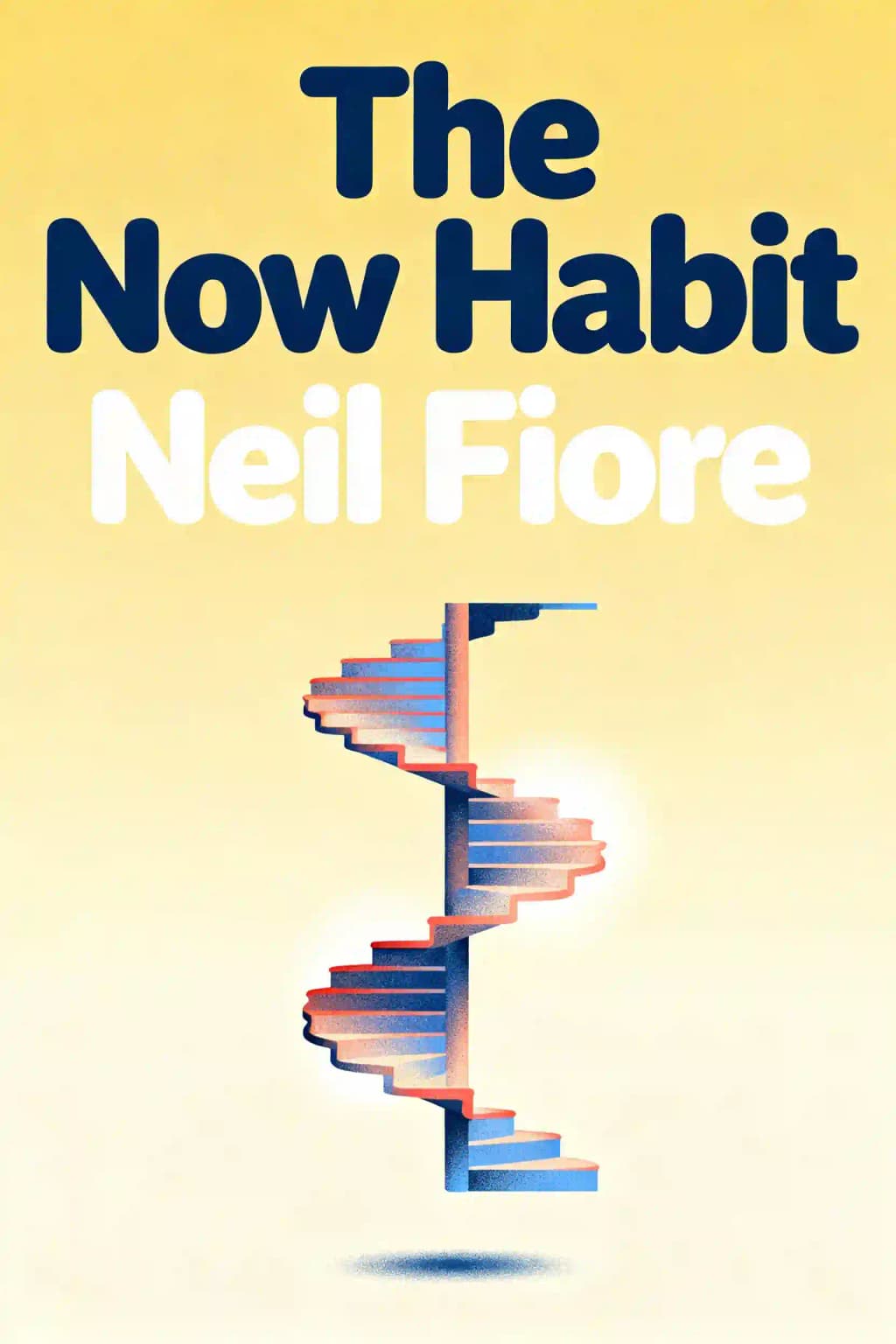
The Now Habit by Neil Fiore is a strategic guide to overcoming procrastination by addressing its root causes, such as anxiety and perfectionism. It reframes procrastination as a coping mechanism for fear of failure, offering practical tools like the “Unschedule” method to prioritize productivity while balancing guilt-free leisure. The book combines cognitive-behavioral techniques with actionable steps to foster sustainable work habits.
This book is ideal for chronic procrastinators, perfectionists, students, and professionals seeking to improve time management. It’s also valuable for anyone struggling with work-life balance or anxiety-driven delays. Fiore’s insights are particularly useful for those wanting to replace stress with structured, play-focused productivity strategies.
Yes, readers praise its actionable advice, especially the “Unschedule” technique and emphasis on starting tasks incrementally. While some criticize parts as “common sense,” the book’s focus on psychological triggers makes it a standout resource for long-term habit change. Updated editions address modern challenges like digital distractions.
The “Unschedule” flips traditional planning by prioritizing leisure and self-care first. Users block out time for meals, exercise, and hobbies, then fill remaining slots with focused work intervals. This reduces anxiety about tasks by framing productivity as a reward rather than a burden, helping users start sooner.
Fiore argues perfectionism fuels procrastination by creating unrealistic standards. The book encourages “progress over perfection,” advocating for small, consistent efforts (e.g., 30-minute work sessions) to build momentum. By reframing mistakes as learning opportunities, it reduces the fear of failure that delays action.
These strategies help users build resilience against procrastination cycles.
Some readers find the advice repetitive or outdated compared to newer productivity frameworks. Others note the cognitive-behavioral approach requires consistent practice to see results. However, most agree the core principles remain effective for reducing task avoidance.
While Atomic Habits focuses on building systems for incremental change, The Now Habit targets the emotional barriers (e.g., anxiety) behind procrastination. Both emphasize starting small, but Fiore’s method uniquely integrates structured downtime to sustain productivity.
Yes, by advocating for “guilt-free play,” the book teaches readers to prioritize rest and hobbies alongside work. This balance reduces burnout and fosters a healthier relationship with productivity, making tasks feel less overwhelming.
The 2023 updated edition includes strategies for managing digital distractions, such as setting tech-free zones during work blocks. Fiore emphasizes mindful technology use to prevent apps from derailing focus.
While no direct quotes are widely cited, key concepts include:
These ideas underscore the link between mental health and effective task management.
Its focus on anxiety-driven procrastination resonates in high-pressure, digitally distracted environments. Updated editions tailor Fiore’s methods to modern challenges, ensuring tools like the “Unschedule” remain practical for balancing work and well-being.
저자의 목소리로 책을 느껴보세요
지식을 흥미롭고 예시가 풍부한 인사이트로 전환
핵심 아이디어를 빠르게 캡처하여 신속하게 학습
재미있고 매력적인 방식으로 책을 즐기세요
Replace ‘I should’ with ‘I choose to.’
Work less, play more, and accomplish everything that matters.
Procrastination isn't a character flaw-it's a complex psychological response to internal pressure and fear.
When struggling indicates you're moving in the wrong direction.
Effective time management requires a complete paradigm shift from "getting things done" to "starting things now."
The Now Habit의 핵심 아이디어를 이해하기 쉬운 포인트로 분해하여 혁신적인 팀이 어떻게 창조하고, 협력하고, 성장하는지 이해합니다.
The Now Habit을 빠른 기억 단서로 압축하여 솔직함, 팀워크, 창의적 회복력의 핵심 원칙을 강조합니다.

생생한 스토리텔링을 통해 The Now Habit을 경험하고, 혁신 교훈을 기억에 남고 적용할 수 있는 순간으로 바꿉니다.
무엇이든 물어보고, 목소리를 선택하고, 진정으로 공감되는 인사이트를 함께 만들어보세요.

샌프란시스코에서 컬럼비아 대학교 동문들이 만들었습니다
"Instead of endless scrolling, I just hit play on BeFreed. It saves me so much time."
"I never knew where to start with nonfiction—BeFreed’s book lists turned into podcasts gave me a clear path."
"Perfect balance between learning and entertainment. Finished ‘Thinking, Fast and Slow’ on my commute this week."
"Crazy how much I learned while walking the dog. BeFreed = small habits → big gains."
"Reading used to feel like a chore. Now it’s just part of my lifestyle."
"Feels effortless compared to reading. I’ve finished 6 books this month already."
"BeFreed turned my guilty doomscrolling into something that feels productive and inspiring."
"BeFreed turned my commute into learning time. 20-min podcasts are perfect for finishing books I never had time for."
"BeFreed replaced my podcast queue. Imagine Spotify for books — that’s it. 🙌"
"It is great for me to learn something from the book without reading it."
"The themed book list podcasts help me connect ideas across authors—like a guided audio journey."
"Makes me feel smarter every time before going to work"
샌프란시스코에서 컬럼비아 대학교 동문들이 만들었습니다

The Now Habit 요약을 무료 PDF 또는 EPUB으로 받으세요. 인쇄하거나 오프라인에서 언제든 읽을 수 있습니다.
Ever notice how the most important tasks feel the hardest to start? You sit down to begin that crucial project, but suddenly your brain conjures a hundred urgent distractions-emails to check, research to do, your desk to organize. Here's what most people get wrong: procrastination isn't laziness. It's your mind's way of protecting you from something far more threatening than a looming deadline-the possibility of trying your absolute best and still failing. This realization changes everything. When we frame procrastination as a character flaw, we pile on shame and pressure, which only makes the problem worse. But when we understand it as a sophisticated psychological defense mechanism, we can finally address the real issue. Your brain isn't broken; it's actually working exactly as designed, shielding your self-esteem from potential damage. The challenge is learning to work with your psychology rather than against it. Think about how you talk to yourself when facing a deadline. "I have to finish this report." "I should have started earlier." "I must do better." This language might sound motivating, but it triggers the same stress response as a physical threat. Your primitive brain doesn't distinguish between a saber-toothed tiger and an overwhelming project-both activate fight-or-flight mode, flooding your system with cortisol and shutting down creative thinking.