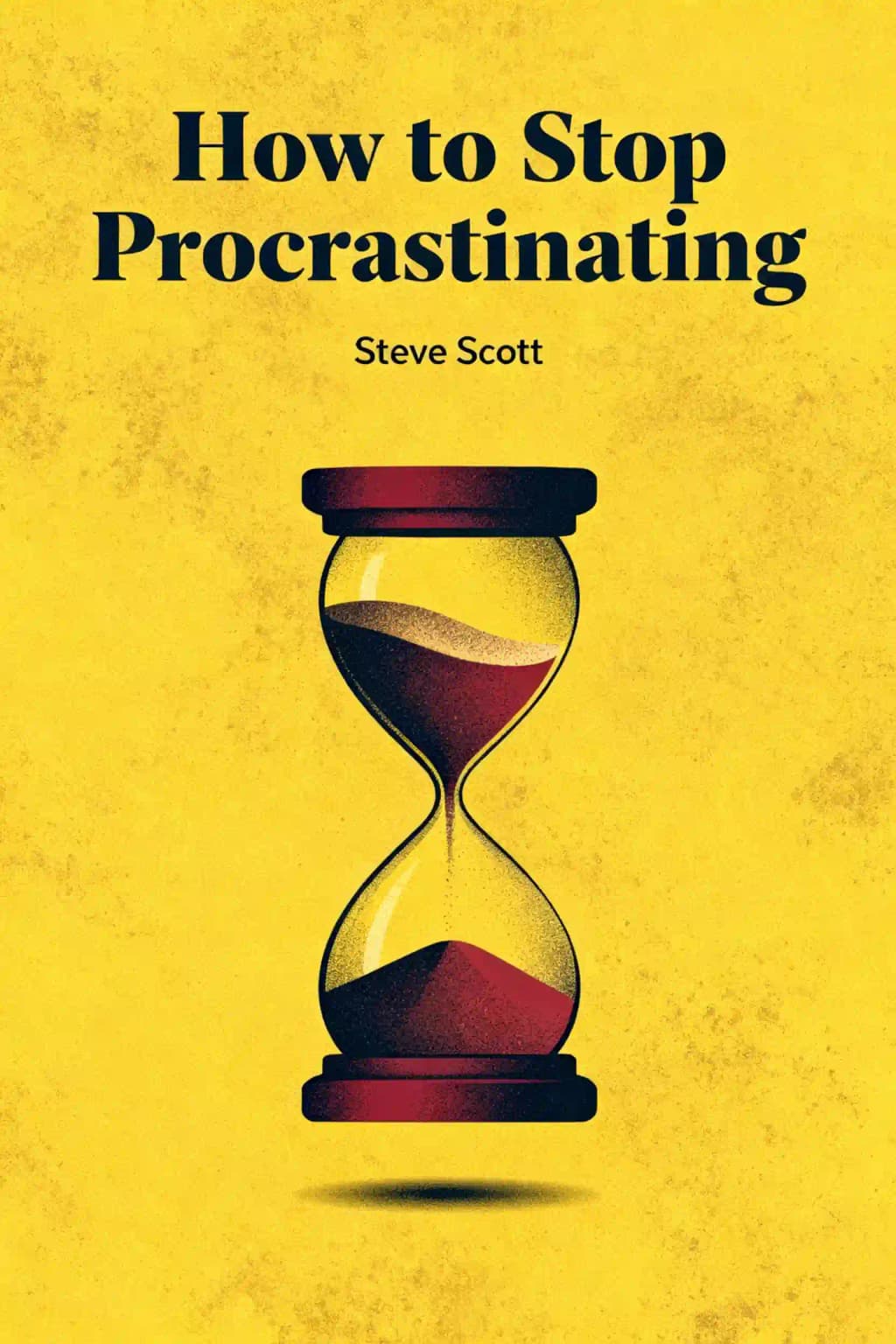
Procrastination isn't laziness - it's a complex behavioral pattern Steve Scott dismantles with practical tools like the Warren Buffett-inspired "25-5 Rule." While critics note borrowed concepts, productivity enthusiasts praise its actionable framework. What daily five-minute habit could transform your productivity forever?
Steve Scott, bestselling author of How to Stop Procrastinating, is a leading authority in habit formation, productivity, and personal development. A prolific self-help writer with over 60 nonfiction books to his name—including Habit Stacking and 10-Minute Declutter—he specializes in actionable strategies for overcoming distractions and building sustainable routines. Scott’s expertise stems from his decade-spanning career as a self-published entrepreneur, blending practical insights from his military service and corporate experience with evidence-based behavioral science.
He shares actionable advice through his blog Develop Good Habits and the Authority Self-Publishing podcast, where he guides aspiring writers on productivity and publishing. His work has been featured on over 100 podcasts and media platforms, cementing his reputation as a trusted voice in the self-improvement space.
Scott’s books, including Habit Stacking (a #1 Amazon bestseller translated into 12 languages), have collectively sold more than a million copies worldwide. His no-nonsense, step-by-step approach continues to empower readers to achieve lasting personal and professional growth.
How to Stop Procrastinating provides a systematic framework to build an "anti-procrastination habit" through actionable strategies like goal prioritization, SMART objectives, and weekly planning. It addresses root causes of delay (perfectionism, fear) and offers tools to break unproductive cycles, helping readers tackle difficult tasks efficiently.
This book is ideal for professionals, students, or anyone struggling with chronic delays in personal or professional goals. It’s particularly useful for those seeking structured methods to align daily tasks with long-term values and overcome anxiety-driven inaction.
Adapted from Warren Buffett’s prioritization strategy, the 25-5 Rule involves listing 25 goals, selecting the top five, and ignoring the rest. This sharpens focus on high-impact projects that align with core values, reducing distractions and decision fatigue.
Scott advocates defining goals as Specific, Measurable, Achievable, Relevant, and Time-bound. For example, instead of “exercise more,” aim for “30-minute workouts, 4x weekly for 3 months.” This clarity reduces ambiguity and creates accountability.
The framework combines:
This system builds momentum by making progress feel achievable.
Scott highlights:
The book provides targeted exercises to address each cause.
While both focus on habit-building, Scott’s book emphasizes task-specific strategies (e.g., the 25-5 Rule) rather than broader behavior science. It’s more tactical for immediate procrastination crises, whereas Atomic Habits explores long-term identity shifts.
Notable lines include:
These reinforce the book’s action-first philosophy.
Some readers note the strategies require high self-discipline to implement initially. The book assumes users can consistently identify core values, which may challenge those struggling with self-awareness.
Scott recommends the “5-Minute Start”: commit to working on a task for just five minutes. This bypasses the brain’s resistance, as momentum often builds once started.
Weekly reviews involve:
This ritual prevents task accumulation and decision paralysis.
The book suggests reframing failure as data collection: “Every misstep reveals what doesn’t work, moving you closer to what does.” This reduces the emotional weight of imperfect outcomes.
Yes. Scott’s “Obligation vs. Opportunity” filter helps categorize tasks: obligations (mandatory) vs. opportunities (growth-focused). This clarifies where to invest energy, improving workplace efficiency.
저자의 목소리로 책을 느껴보세요
지식을 흥미롭고 예시가 풍부한 인사이트로 전환
핵심 아이디어를 빠르게 캡처하여 신속하게 학습
재미있고 매력적인 방식으로 책을 즐기세요
Perfectionism actually limits success by setting unrealistic standards.
The "I'll do it later" excuse creates a dangerous disconnect.
Avoid the other 20 "at all costs."
The rule's effectiveness lies in its brutal simplicity.
Narrowing your focus to just a few key priorities.
How to Stop Procrastinating의 핵심 아이디어를 이해하기 쉬운 포인트로 분해하여 혁신적인 팀이 어떻게 창조하고, 협력하고, 성장하는지 이해합니다.
How to Stop Procrastinating을 빠른 기억 단서로 압축하여 솔직함, 팀워크, 창의적 회복력의 핵심 원칙을 강조합니다.

생생한 스토리텔링을 통해 How to Stop Procrastinating을 경험하고, 혁신 교훈을 기억에 남고 적용할 수 있는 순간으로 바꿉니다.
무엇이든 물어보고, 목소리를 선택하고, 진정으로 공감되는 인사이트를 함께 만들어보세요.

샌프란시스코에서 컬럼비아 대학교 동문들이 만들었습니다
"Instead of endless scrolling, I just hit play on BeFreed. It saves me so much time."
"I never knew where to start with nonfiction—BeFreed’s book lists turned into podcasts gave me a clear path."
"Perfect balance between learning and entertainment. Finished ‘Thinking, Fast and Slow’ on my commute this week."
"Crazy how much I learned while walking the dog. BeFreed = small habits → big gains."
"Reading used to feel like a chore. Now it’s just part of my lifestyle."
"Feels effortless compared to reading. I’ve finished 6 books this month already."
"BeFreed turned my guilty doomscrolling into something that feels productive and inspiring."
"BeFreed turned my commute into learning time. 20-min podcasts are perfect for finishing books I never had time for."
"BeFreed replaced my podcast queue. Imagine Spotify for books — that’s it. 🙌"
"It is great for me to learn something from the book without reading it."
"The themed book list podcasts help me connect ideas across authors—like a guided audio journey."
"Makes me feel smarter every time before going to work"
샌프란시스코에서 컬럼비아 대학교 동문들이 만들었습니다

How to Stop Procrastinating 요약을 무료 PDF 또는 EPUB으로 받으세요. 인쇄하거나 오프라인에서 언제든 읽을 수 있습니다.
A father clutches his chest, brushing off the pain. "I'll call the doctor next week," he says. His son insists on an emergency appointment. The diagnosis arrives like a thunderclap: quadruple bypass surgery needed immediately. The doctor's words hang in the air - waiting even a few more days could have been fatal. Ten years later, that father still watches movies with his son, shares dinners, holds his grandson. One decision, one refusal to delay, preserved an entire future of moments. We call it procrastination, as if it's merely a quirk or personality flaw. But delay isn't always benign. It's the tax return that becomes a $2,348 penalty for a task requiring mere minutes. It's the chest pain that becomes a funeral. The gap between intention and action seems trivial until you calculate its true cost - not just in money or opportunities, but in relationships, health, and the irretrievable substance of our lives. Understanding why we postpone what matters most becomes the first step toward reclaiming time we can never recover.