1장
The Dopamine Dilemma: How One Molecule Drives Our Greatest Triumphs and Deepest Struggles
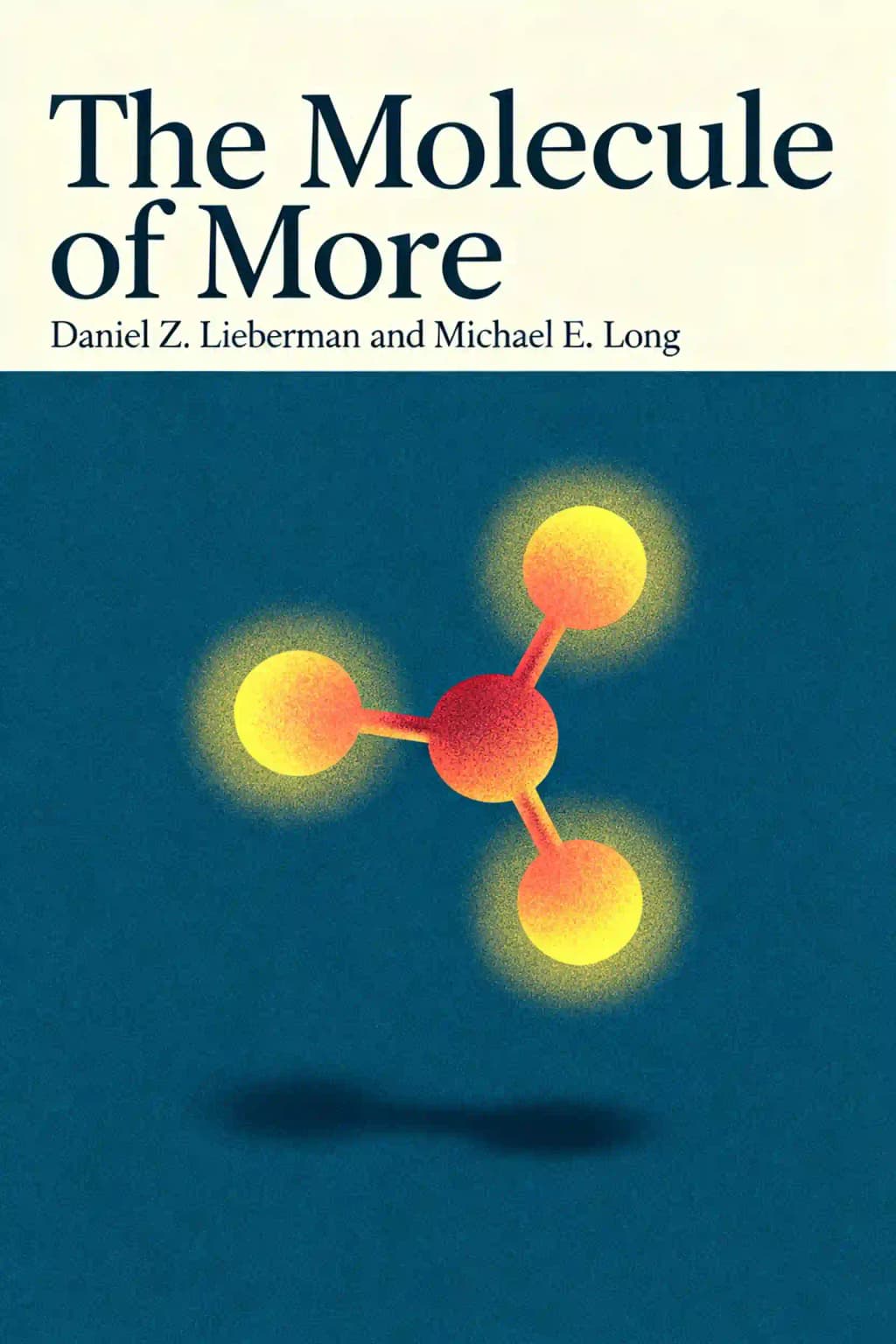
The Molecule of More has become a sensation among neuroscientists, psychologists, and everyday readers seeking to understand what drives human behavior. This groundbreaking work, which Bill Gates called "a fascinating exploration of what makes us human," reveals how a single neurotransmitter shapes everything from love and creativity to addiction and political beliefs. Authors Daniel Z. Lieberman and Michael E. Long, both Harvard-educated experts in their fields, have created what The Wall Street Journal described as "the most accessible and comprehensive exploration of dopamine's role in human behavior since Daniel Kahneman's Thinking, Fast and Slow."
The book's influence extends beyond academia-Silicon Valley entrepreneurs consider it essential reading for understanding innovation, while therapists recommend it to patients struggling with relationship issues or addiction. What makes this work particularly compelling is how it transforms complex neuroscience into a page-turning narrative that helps readers understand their own behaviors and those of everyone around them. As we explore the book's insights, you'll discover why we're never satisfied for long and how this perpetual dissatisfaction drives both our greatest achievements and our deepest struggles.
2장
The Tale of Two Brain Systems: Up Versus Down
Look up and you'll see things beyond your immediate grasp-possibilities that require planning, calculation, and coordinated effort. Look down and you'll find things within reach-objects you can touch, control, and experience right now. This simple distinction represents two fundamentally different brain systems that govern human behavior.
The "down world" operates through here-and-now neurotransmitters (H&Ns) like serotonin, oxytocin, endorphins, and endocannabinoids. These chemicals help us experience satisfaction in the present moment-the pleasure of eating chocolate, the warmth of hugging a loved one, or the contentment of sitting in a comfortable chair. They're about experiencing what we already possess.
The "up world," by contrast, functions through a single remarkable molecule: dopamine. This chemical doesn't help us enjoy what we have-it makes us desire what we don't yet have. Dopamine is the biological driver of anticipation, not satisfaction. It rewards us when we pursue possibilities and punishes us when we ignore them. It's the chemical that makes us look to the horizon rather than appreciate what's right in front of us.
This distinction explains why humans are perpetually dissatisfied creatures. We're blessed (and cursed) with more dopamine than any other species, which drives our endless pursuit of "more"-more knowledge, more resources, more status, more everything. It's why we build civilizations and create art, but also why we're never content for long with what we've achieved.
The dopamine circuit evolved for a critical purpose: to motivate us to secure resources necessary for survival. In prehistoric environments of scarcity, this drive was essential. But in today's world of abundance, this same circuit can lead us astray, creating desires that never truly satisfy. Understanding this fundamental division in our brain chemistry helps explain everything from why relationships lose their initial spark to why addictions are so difficult to overcome.
The authors' research builds upon groundbreaking work by neuroscientist John Douglas Pettigrew, who discovered that the brain processes peripersonal space (within arm's reach) differently from extrapersonal space (everything beyond). This isn't just a matter of distance-it represents two fundamentally different ways of engaging with the world, each controlled by different neurochemical systems. When we understand this division, we gain profound insights into our behavior, our relationships, and our perpetual struggle for happiness.
3장
The Chemistry of Love: Why Passion Fades
Have you ever wondered why the honeymoon phase of a relationship never lasts? The answer lies in dopamine's fundamental nature-it responds to the unexpected, not the familiar. When we first fall in love, dopamine circuits light up like fireworks, creating that intoxicating rush of excitement and obsession. But there's a catch: dopamine isn't about pleasure itself; it's about anticipation and possibility.
Scientists discovered this through experiments with rats and monkeys. When rats received unexpected food pellets, their dopamine cells fired enthusiastically. But after repeated feedings, even though the rats still enjoyed the food, their dopamine response disappeared. Similarly, researcher Wolfram Schultz found that monkeys' dopamine cells eventually stopped responding to food rewards themselves and instead fired when they saw the light signaling that food was coming. The dopamine response had shifted from the reward to the anticipation.
This explains the universal experience of fading passion in relationships. When we first meet someone attractive, dopamine creates powerful feelings of excitement and desire. Every text message, every touch, every new discovery about them triggers a dopamine rush. But as the relationship becomes familiar and predictable, dopamine naturally diminishes-not because our partner has changed, but because dopamine's job is to pursue novelty and possibility, not to appreciate what we already have.
The initial stage of love-what scientists call limerence or passionate love-typically lasts between 12 and 18 months. During this period, dopamine suppresses activity in the prefrontal cortex, the brain region responsible for critical thinking and judgment. This is why we temporarily lose our minds in early love, overlooking flaws and making impulsive decisions. It's nature's way of getting us to bond quickly before our rational minds can intervene.
This dopamine-driven passion creates a powerful illusion that psychologists call "glamour"-a magical sense that the beloved will transport us beyond ordinary life. But glamour exists only in things beyond our reach. An airplane seems glamorous from the ground but becomes mundane once you're cramped inside it. Similarly, a new lover seems perfect and exciting until the relationship becomes familiar.
For love to endure, it must transition from dopamine-driven passion to what scientists call companionate love, powered by different neurochemicals. Oxytocin (more active in women) and vasopressin (in men) create the deep bonding essential for long-term relationships. These H&N chemicals enable us to find satisfaction in what we have rather than constantly craving something new.
This transition explains why over 90% of people eventually marry despite dopamine's fickle nature. We have an innate need for companionship that goes beyond the thrill of pursuit. The challenge is learning to appreciate the richness of familiar love after the dopamine rush fades-finding joy in the depth of connection rather than the excitement of novelty.
4장
Wanting Versus Liking: The Paradox of Desire
Have you ever desperately wanted something-a new gadget, a promotion, a romantic partner-only to feel strangely unsatisfied once you obtained it? This disconnect between wanting and liking represents one of the brain's most profound paradoxes, and it's central to understanding addiction, consumption patterns, and even happiness itself.
The distinction hinges on two separate brain circuits: the dopamine-powered "wanting" system and the H&N-controlled "liking" system. These systems evolved for different purposes and operate largely independently. Dopamine creates desire without guaranteeing satisfaction, while H&N chemicals produce enjoyment without necessarily generating motivation.
This separation explains why we often don't like what we desperately wanted. When we see something desirable-whether a donut in a bakery window or a potential mate across the room-dopamine creates an immediate wanting sensation. This isn't a conscious choice but an automatic reaction to environmental triggers. The dopamine circuit constantly scans for resources that could benefit us in the future, making us want things regardless of whether we'll actually enjoy them or even need them.
Dr. Kent Berridge's research with rats demonstrated this separation conclusively. When researchers boosted dopamine in rats' brains, the animals consumed more food (wanting) without showing increased pleasure signals like lip-smacking (liking). The wanting circuit is powerful and widespread throughout the brain, while the liking circuit is tiny, fragile, and much harder to activate.
This disconnect becomes most evident in addiction. Addictive substances hijack the dopamine system, stimulating it far more powerfully than natural rewards like food or sex. To an addict, drugs feel more important than anything because the dopamine blast overwhelms all other considerations. Unlike natural rewards that activate satiety circuits, drugs have no built-in stopping mechanism. They bypass the brain's normal surprise-and-prediction system, artificially igniting dopamine and creating an endless craving for more.
The speed of drug delivery directly correlates with addictiveness-the faster a substance enters the brain, the more dopamine released, creating greater euphoria and stronger cravings. This explains why crack cocaine is more devastating than powder cocaine. While chemically similar, crack is smoked rather than snorted, allowing it to enter through the lungs (with surface area equal to a tennis court) rather than the limited nasal mucosa. This rapid delivery creates a steeper dopamine spike, making it far more addictive.
For addicts, drug craving persists even as the brain's ability to deliver the high diminishes. As Patrick Kennedy explained in a "60 Minutes" interview, addiction becomes less about getting high and more about "relief from the low." When expected rewards fail to materialize, dopamine firing drops from its normal 3-5 times per second to zero, creating terrible feelings of deprivation.
This wanting/liking divide extends beyond drugs to everyday experiences like shopping, eating, and even pornography. Modern technology has made potentially addictive experiences more accessible than ever. Video games may be even more addictive than gambling, with research showing nearly 10% of gamers aged 8-18 develop addiction-like problems-five times higher than gambling addiction rates. Games are designed to maximize dopamine release through constant exploration, progress tracking, and carefully calibrated reward schedules.
Understanding this fundamental disconnect between wanting and liking gives us powerful insight into our behavior. It explains why we're never satisfied for long with our possessions, why we make impulsive purchases we later regret, and why addictions are so difficult to overcome. The key to happiness may lie not in pursuing more desires but in strengthening our capacity to enjoy what we already have.
5장
The Control Circuit: How Dopamine Helps Us Dominate Our Environment
While one dopamine circuit creates desire, a complementary dopamine system enables us to achieve those desires through planning, calculation, and tenacity. This "control circuit" (mesocortical pathway) manages the uncontrolled urges of the desire circuit, guiding that energy toward profitable ends.
The control circuit resides in the frontal lobes-the brain's most recently evolved region and the one that most distinguishes humans from other animals. This uniquely human feature enables long-term planning beyond immediate desires, abstract thinking, and rational decision-making without emotional interference. It's cold, calculating, and ruthless in pursuit of goals.
This circuit enables imagination, allowing us to peer into the future to see consequences of current decisions and choose preferred outcomes. While the desire circuit makes us want things, the control circuit calculates what's worth having and constructs plans to dominate our surroundings. It rewards us with a dopamine "buzz" when we successfully maximize resources through planning and strategy.
Success requires not just imagination but struggle with uncompromising realities-knowledge plus tenacity. Scientists at the University of Connecticut demonstrated dopamine's role in persistence by measuring rats' willingness to work for food rewards. They divided rats into normal and dopamine-depleted groups, then tested how many lever presses they'd perform for treats. With minimal effort required, both groups performed equally. But as work requirements increased, stark differences emerged.
Normal rats pressed nearly 2,000 times when 16 presses were needed per treat, while dopamine-depleted rats barely increased their efforts. At 64 presses per treat, normal rats managed 2,500 presses in 30 minutes while dopamine-depleted rats simply gave up. Additional experiments showed that dopamine specifically powers effort and tenacity, not desire itself.
In humans, this tenacity connects with self-efficacy-our belief in our ability to succeed. Dopamine-boosting drugs like cocaine and amphetamine increase self-efficacy, sometimes to delusional levels. Under normal circumstances, robust self-efficacy acts like a self-fulfilling prophecy, making obstacles disappear before us. Our brains recognize when someone has high self-efficacy, powered by control dopamine, and we instinctively yield to their will.
This explains how underdogs sometimes triumph over superior opponents in sports. The 1993 NFL playoff game known as "The Comeback" saw the Buffalo Bills overcome a 35-3 deficit against the Houston Oilers. As their comeback gained momentum, the Bills scored 21 points in just 10 minutes. Their belief in their inevitable success-their self-efficacy-proved stronger than their opponents' skills, leading to the greatest point-deficit comeback in NFL history.
People with weak control dopamine circuits struggle with impulsivity and maintaining focus on complex tasks-the hallmarks of ADHD. They have difficulty following through, get easily distracted, lose track of time, and misplace items. ADHD appears most commonly in children because frontal lobes, where control dopamine acts, develop last. When control dopamine is weak, the desire circuit operates unchecked, leading to impulsive behavior.
Dopamine lacks conscience-it pursues more, not morality. When revved up, it suppresses guilt and can inspire deceit to achieve goals. An Israeli experiment demonstrated this: players who won a skill-based game were likely to cheat in a subsequent dice game, while lottery winners didn't cheat at all. Winning competitions releases dopamine, creating a pleasurable rush that leaves us wanting more. This creates a double bind-the thrill of winning becomes addictive, while the fear of losing becomes unbearable.
Understanding the dopamine control circuit helps explain why some people succeed despite obstacles while others give up easily. It reveals why ADHD treatments like Ritalin (which boost dopamine) paradoxically calm hyperactive children by strengthening their control circuits. And it illuminates why achievement-oriented people often make cold, calculated decisions that prioritize future success over present relationships.
6장
The Creative Mind: Where Genius and Madness Meet
The creative mind represents humanity's greatest potential for wealth creation, while mental illness reflects the brain at its most dysfunctional. Yet remarkably, both genius and madness share a common chemical foundation in dopamine, making them more closely connected to each other than either is to ordinary brain function.
This connection begins with how our brains process salience-the quality of being important or noticeable. Things become salient when they're unusual, valuable, personally significant, or potentially impactful to our future. The dopamine circuit activates when we encounter something salient, sending the message: "Pay attention. This matters." Our brains constantly filter information, assigning higher salience to things that might affect our wellbeing or future prospects.
Psychosis occurs when this salience function malfunctions, firing inappropriately when nothing significant is happening. This malfunction creates delusions-fixed, absolutely certain beliefs inconsistent with reality. Schizophrenia patients commonly believe TV personalities are speaking directly to them or that they're being investigated by intelligence agencies. Even ordinary objects like stop signs or red cars can take on profound, personalized meaning.
People with schizophrenia take medications that block dopamine receptors to control these symptoms. These medications prevent dopamine from binding to receptors, similar to putting tape over a keyhole. While they can eliminate delusions and hallucinations, they don't cure all symptoms and can worsen cognitive issues by blocking dopamine in the frontal lobes.
Schizophrenia involves a short-circuit in the brain's ability to filter information, a condition called low latent inhibition. Normally, we inhibit our attention to unimportant stimuli to focus on what matters-like tuning out familiar sirens when living near a fire station. Without this filtering mechanism, even the most familiar environment feels alien and overwhelming. People with this condition experience the world as if everything were new and demanding attention, leading to exhaustion and distress.
Creativity requires a similar but controlled breaking of mental filters. Our brains build models to understand the world, simplifying reality by including only essential elements while discarding irrelevant details. These models are powerful but limiting tools that can lock us into particular ways of thinking. Breaking models is essential for creativity, as seen in insight problems like riddles that require abandoning preconceived frameworks.
Researcher Oshin Vartanian discovered that the right ventrolateral prefrontal cortex activates when people find creative solutions to problems. This brain region lights up when participants imagine things that don't exist in reality ("a living thing that is a helicopter") but remains dark when imagining real objects ("a flower that is a rose"). Interestingly, brain scans of people with schizophrenia show changes in this same area, suggesting that creative thinking involves temporarily suspending our normal inhibition of seemingly irrelevant aspects of reality-behaving somewhat like someone with schizophrenia.
Dreams represent the midpoint between genius and madness, working with material from the external world but arranging it unconstrained by physical reality. During dreams, dopamine is unleashed while H&N neurotransmitters are suppressed as sensory input is blocked, allowing bizarre connections that can yield novel insights. Research from the University of Milan found that dreams of healthy people score similarly on the "Bizarreness Density Index" as both dreams and waking fantasies of people with schizophrenia.
The transition between dreaming and wakefulness offers a unique creative window. Friedrich August Kekule famously discovered the ring structure of benzene during such a state, seeing a vision of a snake grabbing its own tail while half-asleep by the fireplace. This insight solved the chemical puzzle that had confounded scientists who couldn't reconcile benzene's properties with conventional molecular structures.
The fine arts and hard sciences share more than most realize-both are driven by dopamine and require looking beyond sensory experience into abstract ideas. Elite scientists are remarkably artistic: National Academy of Sciences members are 1.5 times more likely to have artistic hobbies than average people, Royal Society members twice as likely, and Nobel Prize winners nearly three times as likely.
Highly dopaminergic individuals excel at abstract thinking but often struggle with human relationships. Their elevated dopamine suppresses H&N functioning-the empathy needed to understand others' minds. Einstein exemplified this paradox, famously saying "I love Humanity but I hate humans" and demonstrating brilliant scientific insight while maintaining disastrous personal relationships.
The genetic components of dopaminergic traits often link genius with mental illness. An Icelandic study of 86,000 people found those with genetic risk factors for schizophrenia or bipolar disorder were more likely to belong to artistic societies. Many brilliant minds-Beethoven, van Gogh, Darwin, Plath, Tesla-battled mental illness. Dopamine enables us to imagine the unreal and discover deeper meaning, but this creative power comes at a cost: hyperactive dopamine systems risk mental illness while potentially overwhelming H&N systems that facilitate human connection.
7장
The Political Brain: How Neurochemistry Shapes Ideology
Politics divides us along fundamental personality lines linked to our neurochemistry. Research has revealed that liberals exhibit traits associated with elevated dopamine: risk-taking, sensation-seeking, impulsivity, and openness to new experiences. Meanwhile, conservatives typically show stronger H&N functioning, with greater emphasis on stability, tradition, and close personal relationships.
Liberals, often self-identifying as "progressives," display dopaminergic traits in their political outlook. They embrace change, imagine better futures, and believe technology and policy can solve fundamental human problems like poverty and war. Their idealistic, forward-looking perspective contrasts with conservatives, who prefer maintaining inherited traditions and distrust rapid change. While progressivism points forward like an arrow, conservatism forms a protective circle.
This dopamine-liberalism connection appears in creative, abstract-thinking Silicon Valley entrepreneurs who embody the tough-minded, risk-taking traits associated with liberals. The entertainment industry provides another example, with Hollywood exemplifying dopaminergic excess-celebrities constantly pursuing more money, drugs, sex, and novelty. They divorce at twice the rate of ordinary people, with newly married celebrities six times more likely to separate. Politically, Hollywood heavily favors liberals, with celebrities donating $800,000 to Obama versus just $76,000 to Romney in one election cycle.
Academia shows similar patterns, with professors overwhelmingly liberal-only 2% of English professors identify as Republican while 18% of social scientists identify as Marxist. Intelligence testing reveals a correlation between liberal ideology and higher IQ scores. Research by Satoshi Kanazawa found a clear progression: "very liberal" adults averaged 106, while "very conservative" adults averaged 95 (with 100 being average). Similar patterns appeared with religiosity-atheists averaged 103 while the very religious averaged 97.
However, intelligence extends beyond IQ tests, which primarily measure the ability to make generalizations from incomplete data and apply abstract rules-essentially building predictive models using control dopamine. Emotional intelligence, governed by the H&N system, proves essential for everyday decision-making when information is either insufficient or overwhelming.
Genetic research supports the dopamine-liberalism connection, particularly through variants of the D4 dopamine receptor gene. People with the 7R variant tend toward novelty-seeking, impulsivity, exploration, excitability, quick tempers, and extravagance-contrasting with the reflective, rigid, loyal, stoic, and frugal tendencies of those without it. University of California researchers found this 7R allele correlates with liberal ideology, but only when individuals grow up exposed to diverse political opinions.
While liberals may excel in abstract thinking, conservatives typically enjoy stronger H&N systems, fostering empathy, altruism, and stable relationships. This difference appears in charitable giving patterns-the top sixteen states for charitable donations as percentage of income all voted for Romney in 2012, while liberal cities like San Francisco and Boston ranked near bottom. This doesn't mean conservatives care more about poverty, but rather approach it differently. Liberals focus on humanity through government policy (providing nearly $1 trillion annually), while conservatives emphasize humans through personal charity ($360 billion).
Conservatives' preference for close personal contact extends to relationships, making them more likely to establish long-term monogamous partnerships. Blue America residents are about 10% less likely to marry, and when liberals do marry, they're more likely to cheat-24% of liberals reported infidelity versus 14% of conservatives. While conservatives have less frequent sex, it's more likely to end in orgasm for both partners, possibly because H&N-dominant individuals form more trusting relationships and can better enjoy physical sensations in the present moment.
Unsurprisingly, conservatives report higher life satisfaction-66% of Republicans versus 53% of Democrats described themselves as "very satisfied." Yet paradoxically, red states have higher divorce rates, possibly because religious pressure leads to earlier marriages with less premarital experience.
The relationship between conservatism and threat works bidirectionally. Not only are conservatives more threat-focused, but when people feel threatened, they become more conservative. Even subtle threats nudge people rightward-college students seated near hand sanitizers or asked to use germ-killing wipes before surveys reported higher levels of moral, social, and fiscal conservatism.
Just as subtle threats increase conservatism, small interventions can promote liberalism. When conservatives imagined having superpowers making them invulnerable to injury, they became more liberal-reduced vulnerability suppressed H&N fear of loss, allowing dopamine to play a larger role. Similarly, abstract thinking (a dopaminergic function) influences political views. When participants were prompted to think abstractly about why exercise is important (rather than how to do it), conservatives' acceptance of unfamiliar groups increased to match liberals'.
Understanding these neurochemical foundations of political beliefs offers a path beyond the current toxic polarization. Most people on both sides want what's best for Americans, but extremists get disproportionate attention. The essential truth remains: liberals want to help people become better, conservatives want to let people be happy, and politicians want power.
8장
The Migration Instinct: How Dopamine Drove Human Expansion
Modern humans evolved in Africa 200,000 years ago, beginning migration 100,000 years later-a crucial development for species survival. Our genome shows unusually low variation compared to other primates, suggesting we all descend from a small group of ancestors after a near-extinction event reduced humans to fewer than 20,000 individuals. This illustrates why migration was vital: a species concentrated in one area faces extinction from localized disasters, while dispersal acts as insurance.
Research shows drugs that boost dopamine increase exploratory behavior in mice, making them more active and less fearful of unfamiliar environments. Scientists from the University of California studied whether dopamine drove human global migration by analyzing the DRD4 gene, which creates dopamine receptors. The gene's long form variants, particularly the 7R allele, correlate with risk-taking and novelty-seeking behaviors.
Research revealed a clear pattern: populations that migrated farther from their origins had higher percentages of people with the long DRD4 allele. Following migration routes from Africa through Asia and the Americas, researchers found indigenous South Americans (who traveled farthest) had the highest proportion of long alleles at 69%, compared to North Americans at 32% and Central Americans at 42%. On average, the proportion increased by 4.3 percentage points for every 1,000 miles migrated.
Even if migration began for reasons unrelated to dopamine (like conflict or following prey), the 7R allele provided carriers with survival advantages in new environments. These included enhanced novelty-seeking that drove exploration for resources, faster learning (especially when rewards were involved), and stronger reactions to wins and losses. Crucially, carriers also showed low reactivity to novel stressors-they thrived amid change while others suffered stress-related health problems that reduced survival and reproduction.
However, the 7R allele wasn't advantageous everywhere; carriers often struggled with relationships and social cooperation, which were vital in stable environments. This explains why the allele frequency varies based on environmental demands-becoming more common in migratory populations facing novel challenges, less common in stable societies where cooperation was paramount.
The United States, as a nation of immigrants, has achieved remarkable dopaminergic accomplishments, receiving 42% of all Nobel Prizes between 1901-2013, with immigrants disproportionately represented among recipients. Immigrant entrepreneurs founded many leading technology companies including Google, Intel, PayPal, and eBay. By 2005, immigrants had founded 52% of Silicon Valley startups despite comprising only 13% of the U.S. population.
Alexis de Tocqueville's 19th-century observations of Americans revealed traits strikingly similar to dopaminergic personalities: passionate pursuit of more, attraction to things beyond physical senses, and a "restless spirit" despite prosperity. He described Americans as building houses only to sell them before completion, planting gardens only to rent them before harvest, embracing professions only to abandon them-behaviors characteristic of hyperthymic temperament, suggesting America has long been a nation populated by people with elevated dopaminergic traits.
While dopamine's drive for "more" once ensured our survival in times of scarcity, it may now threaten our existence in an era of abundance. Our brains evolved when survival was precarious, but technology has advanced far faster than evolution. Our dopaminergic desires, unchecked, could lead to our extinction within generations as we've become too efficient at gratifying these urges.
Climate change presents a dopamine-driven doomsday scenario as our insatiable consumption threatens planetary health. Over half of greenhouse gases come from burning fossil fuels to produce cement, steel, plastics, and chemicals-materials increasingly demanded as countries rise from poverty. Addressing this crisis requires fundamental social change: slowing economic growth and drastically reducing consumption of energy and resources. This would require unprecedented suppression of dopamine-driven behaviors, ending the era of "better, faster, cheaper, and more"-something humanity has never voluntarily chosen.
9장
Finding Balance: Harmony Between Dopamine and H&N Systems
A middle-aged man sought treatment for depression characterized by unhealthy future obsession and emotional brittleness. Standard antidepressant treatment targeting serotonin (an H&N neurotransmitter) dramatically improved his condition, but when he tried a higher dose, he became so content he lost all motivation. This case illustrates how people can be disabled by either excessive future focus or excessive present enjoyment.
Dopamine and H&N neurotransmitters evolved to work together in balance, but modern life pushes us toward constant dopaminergic stimulation. Too much dopamine leads to "productive misery" while excess H&N creates "happy indolence"-neither providing a truly happy life. Balance is essential.
Mastery represents the perfect intersection of dopamine and H&N systems. It's the ability to extract maximum reward from particular circumstances-whether in gaming, sports, cooking, or programming. Unlike other dopaminergic pursuits, mastery creates a unique moment when dopamine bows to H&N, allowing us to savor our accomplishment in the present. This creates an "internal locus of control"-the empowering feeling that our choices and experiences are under our control rather than determined by external forces.
Reality offers the richest source of unexpected rewards-the very thing dopamine craves. While dopamine loves reward prediction errors (discovering something better than anticipated), it paradoxically works to eliminate such surprises by learning to predict them perfectly. Paying attention to reality, to what we're actually doing in the moment, maximizes information flow into our brains and enhances dopamine's ability to build accurate predictive models.
Nature's complexity provides virtually limitless detail to explore while triggering feelings of beauty and calm. Researchers at the University of Melbourne demonstrated that even a 40-second "microbreak" viewing an image of a building covered with grass and flowers improved concentration compared to viewing a concrete structure. Students performed better on attention tasks after briefly viewing natural scenes.
Despite what technology enthusiasts believe, multitasking is impossible. When attempting multiple tasks simultaneously, we merely shift attention between them, compromising both. Even brief interruptions double error rates and consume mental energy. A UC Irvine study found office workers switch tasks every 47 seconds on average, making over 400 shifts daily-those who switched more frequently experienced higher stress and lower productivity.
Living in the abstract, dopaminergic world of future possibilities costs us happiness. Harvard researchers developed a smartphone app that prompted volunteers to report their thoughts and feelings throughout daily activities. They discovered people's minds wander about half the time regardless of activity (except during sex). Most importantly, people were consistently less happy when their minds wandered, regardless of what they were doing. The researchers concluded that "a human mind is a wandering mind, and a wandering mind is an unhappy mind."
Creativity beautifully integrates dopamine and H&N systems. Activities like woodworking, knitting, painting, and decorating don't require digital technology-they engage brain and hands together to create something new. A miserable financial executive found relief through rediscovering painting, a long-abandoned hobby. "I can't wait to get home at the end of the day," he told his doctor. "Last night I painted for four hours, and I didn't even realize the time had gone by."
A 2015 survey by TINYpulse of over 30,000 employees revealed something surprising: construction workers were the happiest employees across all industries, outranking even glamorous fields like technology and finance. Construction workers transform abstract plans into reality using both mind and hands. They also enjoy strong camaraderie-"I work with great people" was their most common reason for happiness. This blend of dopamine (future-oriented work) and H&N (present-focused relationships) creates the happiness that Aristotle considered life's ultimate goal.
The key to a fulfilling life lies in balancing dopamine's future focus with H&N's present enjoyment-combining ambition with appreciation, progress with contentment, and planning with presence. By understanding how these systems interact, we can design lives that satisfy both our drive for achievement and our need for connection and joy. The molecule of more has given us civilization, but only by tempering it with the chemistry of here and now can we truly find happiness.