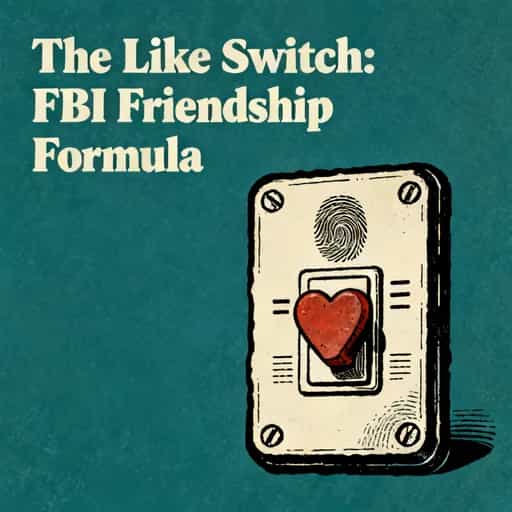
Former FBI agent Jack Schafer reveals secret techniques for winning anyone over using his "Friendship Formula." Learn the nonverbal cues that build instant trust - the same strategies that helped him recruit spies and profile terrorists. Your relationships will never be the same.
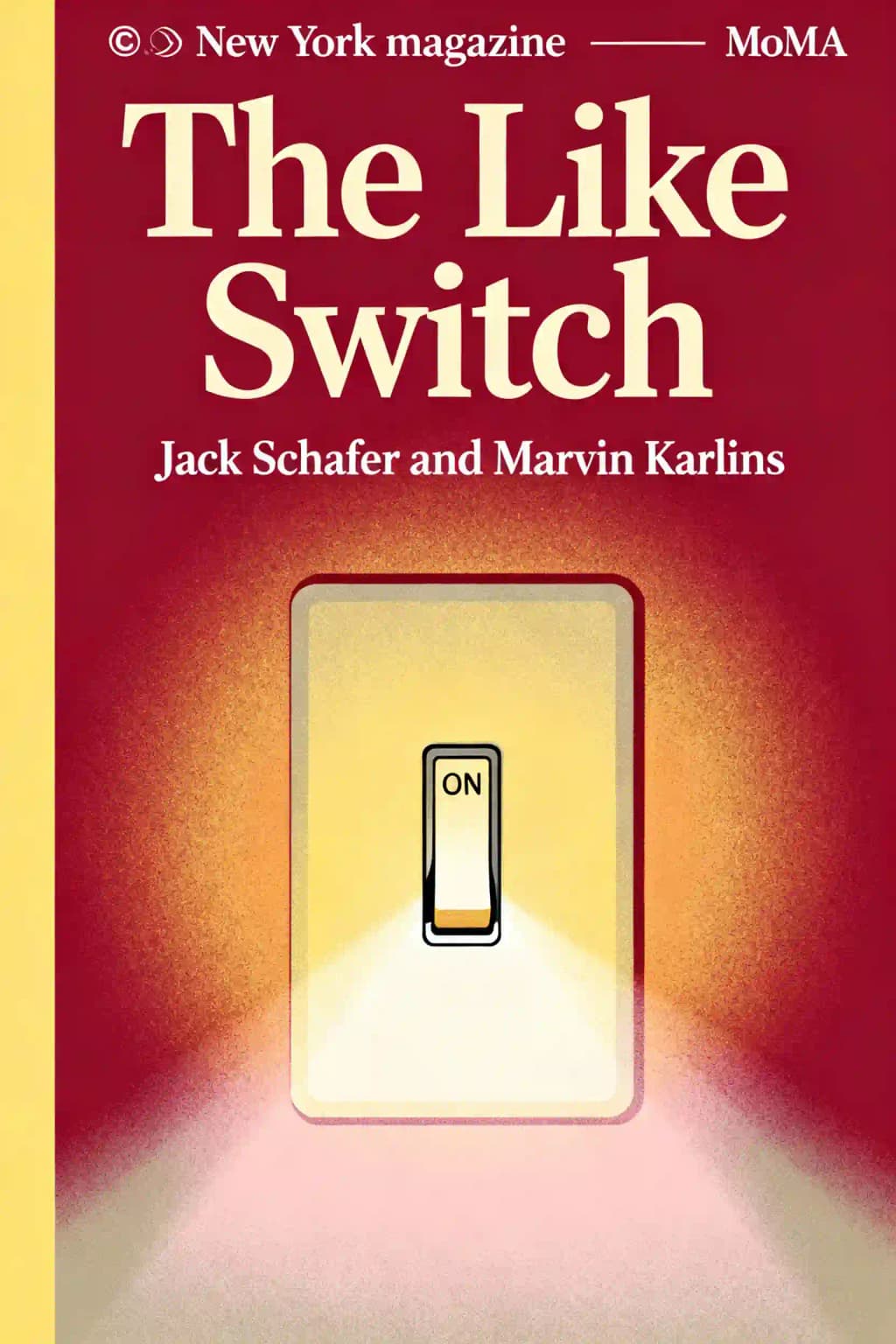
John R. “Jack” Schafer, Ph.D., is a retired FBI Special Agent and behavioral psychology expert who co-authored The Like Switch: An Ex-FBI Agent’s Guide to Influencing, Attracting, and Winning People Over alongside Marvin Karlins, a seasoned collaborator in psychology and communication.
Schafer’s 15-year FBI career, including counterintelligence and counterterrorism roles, underpins the book’s focus on FBI-developed techniques for building rapport and decoding social dynamics. As a professor at Western Illinois University and creator of the FBI’s Behavioral Analysis Program, Schafer merges academic rigor with real-world espionage tactics, while Karlins brings decades of expertise in applied psychology.
Schafer’s acclaimed works, including The Truth Detector and Advanced Interviewing Techniques, expand on his proven frameworks for deception detection and interpersonal influence. A frequent contributor to Psychology Today and featured guest on platforms like the Business Development Podcast, he translates spycraft into actionable strategies for personal and professional growth. The Like Switch series, praised as “practical and insightful” by negotiation expert William Ury, has become a cornerstone for law enforcement training and communication enthusiasts worldwide.
The Like Switch by Jack Schafer is a guide to building rapport and influencing others using strategies developed during Schafer’s FBI career. It focuses on decoding body language, mastering nonverbal cues like eyebrow flashes and genuine smiles, and applying the “Friendship Formula” (proximity, duration, intensity) to turn strangers into allies. The book also teaches techniques to detect deception and manage perceptions in personal and professional relationships.
Professionals in sales, leadership, or negotiations, individuals seeking to improve social skills, and anyone interested in behavioral psychology will benefit from this book. It’s particularly useful for introverts or those navigating dating, networking, or job interviews, as it provides actionable tools to reduce social anxiety and create authentic connections.
Yes, The Like Switch offers evidence-based strategies from FBI behavioral analysis, making it a practical resource for improving likability and communication. Readers praise its actionable tips on body language, conversation tactics, and managing relationships, though some may find the techniques overly analytical for casual interactions.
The Friendship Formula outlines three elements for building connections: proximity (frequency of interaction), duration (time spent together), and intensity (emotional resonance of exchanges). Schafer argues balancing these factors helps foster trust and rapport, whether in friendships, romantic relationships, or professional networks.
Schafer identifies key nonverbal signals, such as the eyebrow flash (a quick raise indicating recognition), head tilt (showing engagement), and Duchenne smile (genuine smile involving eye muscles). Mastering these cues helps project approachability and interpret others’ intentions accurately.
The Likeability Quotient (LQ) measures your ability to attract and influence others. Schafer provides tools to boost LQ, such as active listening, validating emotions, and minimizing aggressive body language (e.g., crossed arms). Higher LQ correlates with stronger personal and professional relationships.
Yes, the book’s FBI-tested tactics are applicable to negotiations, team management, and client interactions. For example, using “pregnant pauses” to encourage concessions or mirroring body language to build subconscious rapport can enhance outcomes in high-stakes scenarios.
While both focus on interpersonal skills, The Like Switch emphasizes FBI-derived tactical methods (e.g., deception detection, nonverbal cues) over Carnegie’s philosophical principles. Schafer’s approach is more analytical, ideal for readers seeking structured, behavior-based strategies.
Introverts learn to leverage passive strategies, like using open body language or asking targeted questions, to attract others without initiating conversations. These methods reduce social fatigue while fostering meaningful connections.
In an era dominated by digital communication, Schafer’s focus on nonverbal cues and authentic engagement remains critical. The book’s insights help navigate virtual meetings, online dating, and remote teamwork by emphasizing timeless human psychology.
Some reviewers note that overly applying Schafer’s tactics may feel manipulative if not paired with genuine intent. Additionally, the focus on “switching” likability risks oversimplifying complex social dynamics, requiring readers to adapt techniques thoughtfully.
저자의 목소리로 책을 느껴보세요
지식을 흥미롭고 예시가 풍부한 인사이트로 전환
핵심 아이디어를 빠르게 캡처하여 신속하게 학습
재미있고 매력적인 방식으로 책을 즐기세요
Proximity is a powerful force in generating liking.
Frequency of contact is a powerful force in generating liking.
Duration of contact is a powerful force in generating liking.
Intensity, the final element, acts as relationship glue.
Mirroring creates a favorable impression in the mind of the person you're mirroring.
The like switch의 핵심 아이디어를 이해하기 쉬운 포인트로 분해하여 혁신적인 팀이 어떻게 창조하고, 협력하고, 성장하는지 이해합니다.
The like switch을 빠른 기억 단서로 압축하여 솔직함, 팀워크, 창의적 회복력의 핵심 원칙을 강조합니다.

생생한 스토리텔링을 통해 The like switch을 경험하고, 혁신 교훈을 기억에 남고 적용할 수 있는 순간으로 바꿉니다.
무엇이든 물어보고, 목소리를 선택하고, 진정으로 공감되는 인사이트를 함께 만들어보세요.

샌프란시스코에서 컬럼비아 대학교 동문들이 만들었습니다
"Instead of endless scrolling, I just hit play on BeFreed. It saves me so much time."
"I never knew where to start with nonfiction—BeFreed’s book lists turned into podcasts gave me a clear path."
"Perfect balance between learning and entertainment. Finished ‘Thinking, Fast and Slow’ on my commute this week."
"Crazy how much I learned while walking the dog. BeFreed = small habits → big gains."
"Reading used to feel like a chore. Now it’s just part of my lifestyle."
"Feels effortless compared to reading. I’ve finished 6 books this month already."
"BeFreed turned my guilty doomscrolling into something that feels productive and inspiring."
"BeFreed turned my commute into learning time. 20-min podcasts are perfect for finishing books I never had time for."
"BeFreed replaced my podcast queue. Imagine Spotify for books — that’s it. 🙌"
"It is great for me to learn something from the book without reading it."
"The themed book list podcasts help me connect ideas across authors—like a guided audio journey."
"Makes me feel smarter every time before going to work"
샌프란시스코에서 컬럼비아 대학교 동문들이 만들었습니다

The like switch 요약을 무료 PDF 또는 EPUB으로 받으세요. 인쇄하거나 오프라인에서 언제든 읽을 수 있습니다.
What if I told you the same psychological tactics used to turn foreign diplomats into American spies could help you make friends at your new job, find a romantic partner, or simply feel less alone in a crowded room? For two decades, Jack Schafer worked as an FBI behavioral analyst with one primary mission: getting complete strangers to trust him with their lives. His specialty wasn't interrogation or intimidation-it was friendship. The techniques he developed weren't just effective for national security; they revealed something profound about how all human relationships actually work. Think about your closest friend. How did that relationship begin? Chances are, it wasn't love at first sight. More likely, you kept running into each other, started chatting, found common ground, and gradually grew closer. That's not coincidence-it's a formula. Relationships aren't mysterious. They follow a surprisingly simple equation: Friendship = Proximity + Frequency + Duration + Intensity. Each element builds on the others, creating the foundation for genuine connection.