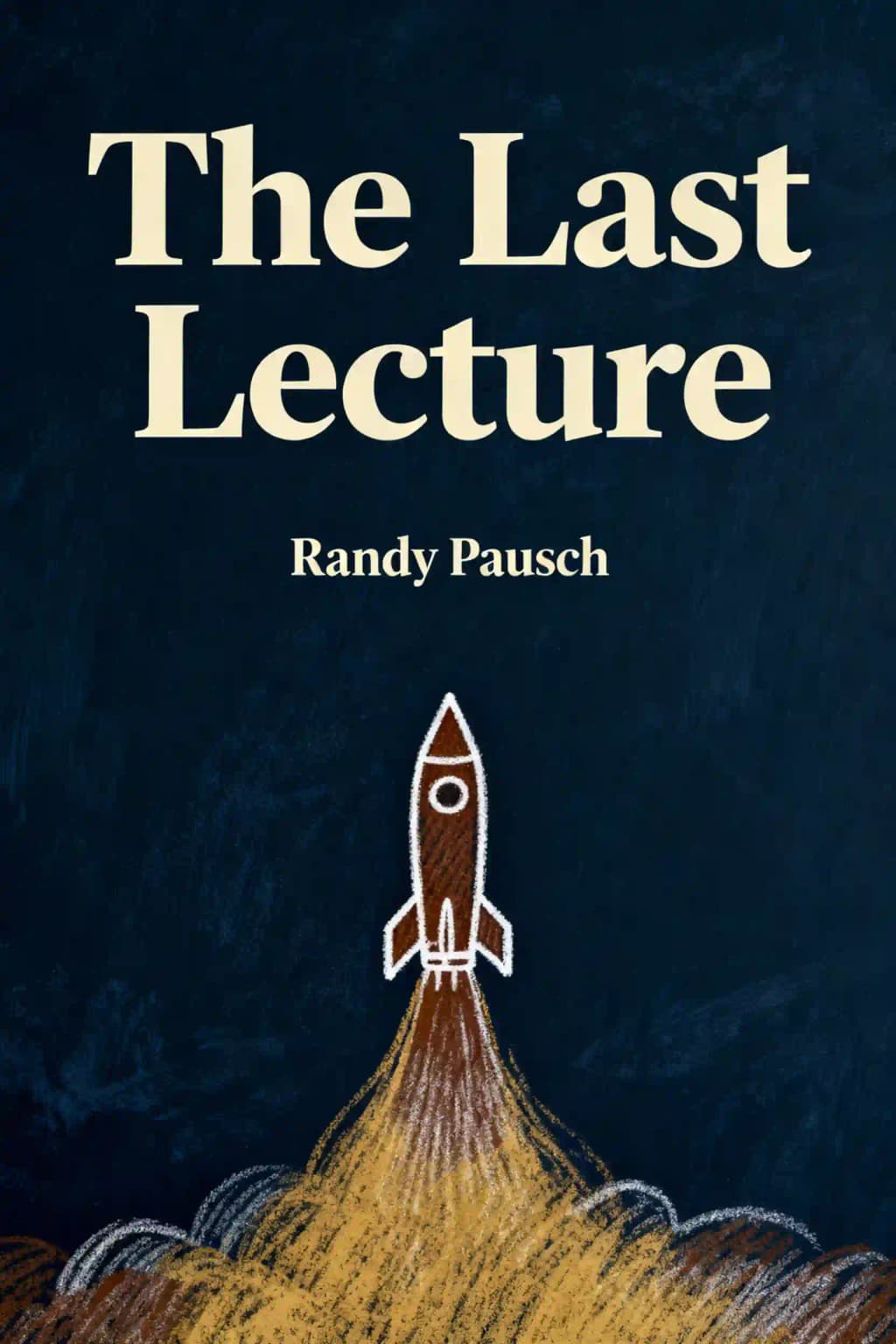
When a dying professor delivers his final wisdom, the world listens. Randy Pausch's "Last Lecture" - viewed by millions and endorsed by Oprah - offers timeless lessons on achieving dreams while facing mortality. What legacy would you leave with only months to live?
Randolph Frederick Pausch (1960–2008), author of The Last Lecture, was a pioneering computer science professor and inspirational speaker known for blending technical innovation with life wisdom. As a Carnegie Mellon University professor specializing in human-computer interaction and virtual reality, Pausch co-founded the Entertainment Technology Center and developed the "Alice" programming platform, used globally to teach coding through storytelling.
His final lecture, delivered after receiving a terminal pancreatic cancer diagnosis, transformed into a viral YouTube phenomenon and #1 New York Times bestselling memoir about seizing opportunities and fulfilling childhood dreams.
Pausch's message reached millions through appearances on The Oprah Winfrey Show, an ABC Diane Sawyer special, and a TED Talk viewed over 15 million times. A devoted educator until his passing, he advised Walt Disney Imagineering and Electronic Arts while maintaining affiliations with Brown University and the University of Virginia. The Last Lecture has been translated into 48 languages, selling over 5 million copies worldwide, and remains required reading in leadership and personal development curricula.
The Last Lecture is Randy Pausch’s memoir about living purposefully despite terminal pancreatic cancer. Structured around his famous 2007 Carnegie Mellon lecture, it blends childhood anecdotes, career insights, and life lessons for his three children. Themes include achieving dreams, embracing setbacks, and leaving a legacy. The book’s core message—focus on how you live, not the time you’re given—resonates through personal stories and practical wisdom.
This book is ideal for readers seeking inspiration during life transitions, parents wanting legacy-driven advice, or anyone navigating adversity. It appeals to fans of motivational memoirs like Tuesdays with Morrie and those interested in personal growth. Pausch’s humor and vulnerability make it accessible for teens and adults alike.
Yes, for its heartfelt insights on resilience and prioritizing what matters. While some critics find its tone overly optimistic, most praise its emotional depth and actionable advice. The book’s brevity (206 pages) and relatable storytelling make it a impactful, quick read. Over 6 million copies sold underscore its enduring relevance.
Key themes include:
The “head fake” refers to teaching indirect life lessons through seemingly unrelated stories. In his lecture, Pausch reveals the ultimate head fake: the talk wasn’t about achieving dreams but about living fully, even in hardship. This concept underscores the book’s structure, where anecdotes subtly convey deeper wisdom.
Pausch illustrates lessons through vivid memories, like his football coach teaching perseverance or conflicts with authority figures shaping his problem-solving skills. These stories humanize abstract ideas, making advice like “brick walls are there to test how badly you want something” memorable.
Notable quotes include:
Some readers find the tone overly sentimental or disjointed, noting Pausch’s privileged perspective limits relatability. Others argue it prioritizes inspiration over practical steps. However, most acknowledge its emotional power outweighs these flaws.
Pausch shares his own dreams (e.g., zero gravity experiences, writing for World Book Encyclopedia) and how perseverance, mentorship, and creativity made them possible. He argues childhood ambitions reveal core values worth pursuing, even if paths evolve.
Strategies include:
Pausch urges readers to clarify priorities, nurture relationships, and act with integrity. His emphasis on “time management as life management” challenges readers to align daily choices with long-term legacy goals.
“Last Lecture” traditions invite professors to share final wisdom. For Pausch, it became a literal farewell speech, blending academic rigor with raw personal reflection. The title symbolizes confronting mortality to distill life’s essence—a theme central to the book.
저자의 목소리로 책을 느껴보세요
지식을 흥미롭고 예시가 풍부한 인사이트로 전환
핵심 아이디어를 빠르게 캡처하여 신속하게 학습
재미있고 매력적인 방식으로 책을 즐기세요
Experience is what you get when you didn't get what you wanted.
When you screw up, apologize.
Showing gratitude is one of the simplest yet most powerful things humans can do for each other.
Time is all you have. And you may find one day that you have less than you think.
The Last Lecture의 핵심 아이디어를 이해하기 쉬운 포인트로 분해하여 혁신적인 팀이 어떻게 창조하고, 협력하고, 성장하는지 이해합니다.
The Last Lecture을 빠른 기억 단서로 압축하여 솔직함, 팀워크, 창의적 회복력의 핵심 원칙을 강조합니다.

생생한 스토리텔링을 통해 The Last Lecture을 경험하고, 혁신 교훈을 기억에 남고 적용할 수 있는 순간으로 바꿉니다.
무엇이든 물어보고, 목소리를 선택하고, 진정으로 공감되는 인사이트를 함께 만들어보세요.

샌프란시스코에서 컬럼비아 대학교 동문들이 만들었습니다
"Instead of endless scrolling, I just hit play on BeFreed. It saves me so much time."
"I never knew where to start with nonfiction—BeFreed’s book lists turned into podcasts gave me a clear path."
"Perfect balance between learning and entertainment. Finished ‘Thinking, Fast and Slow’ on my commute this week."
"Crazy how much I learned while walking the dog. BeFreed = small habits → big gains."
"Reading used to feel like a chore. Now it’s just part of my lifestyle."
"Feels effortless compared to reading. I’ve finished 6 books this month already."
"BeFreed turned my guilty doomscrolling into something that feels productive and inspiring."
"BeFreed turned my commute into learning time. 20-min podcasts are perfect for finishing books I never had time for."
"BeFreed replaced my podcast queue. Imagine Spotify for books — that’s it. 🙌"
"It is great for me to learn something from the book without reading it."
"The themed book list podcasts help me connect ideas across authors—like a guided audio journey."
"Makes me feel smarter every time before going to work"
샌프란시스코에서 컬럼비아 대학교 동문들이 만들었습니다

The Last Lecture 요약을 무료 PDF 또는 EPUB으로 받으세요. 인쇄하거나 오프라인에서 언제든 읽을 수 있습니다.
What would you do if you knew you had only months to live? Randy Pausch faced this question not as a hypothetical exercise but as his reality. Diagnosed with terminal pancreatic cancer, this computer science professor transformed his "last lecture" at Carnegie Mellon into an extraordinary gift-not just for the 400 people in attendance, but for his three young children who would grow up without him. With humor, wisdom, and remarkable clarity, Pausch didn't dwell on dying but instead focused on living fully. "We cannot change the cards we are dealt," he told his audience, "just how we play the hand." After showing his CT scans with ten liver tumors, he dropped to the floor and did pushups-breaking tension with laughter and demonstrating that while death approached, he wasn't finished living yet.