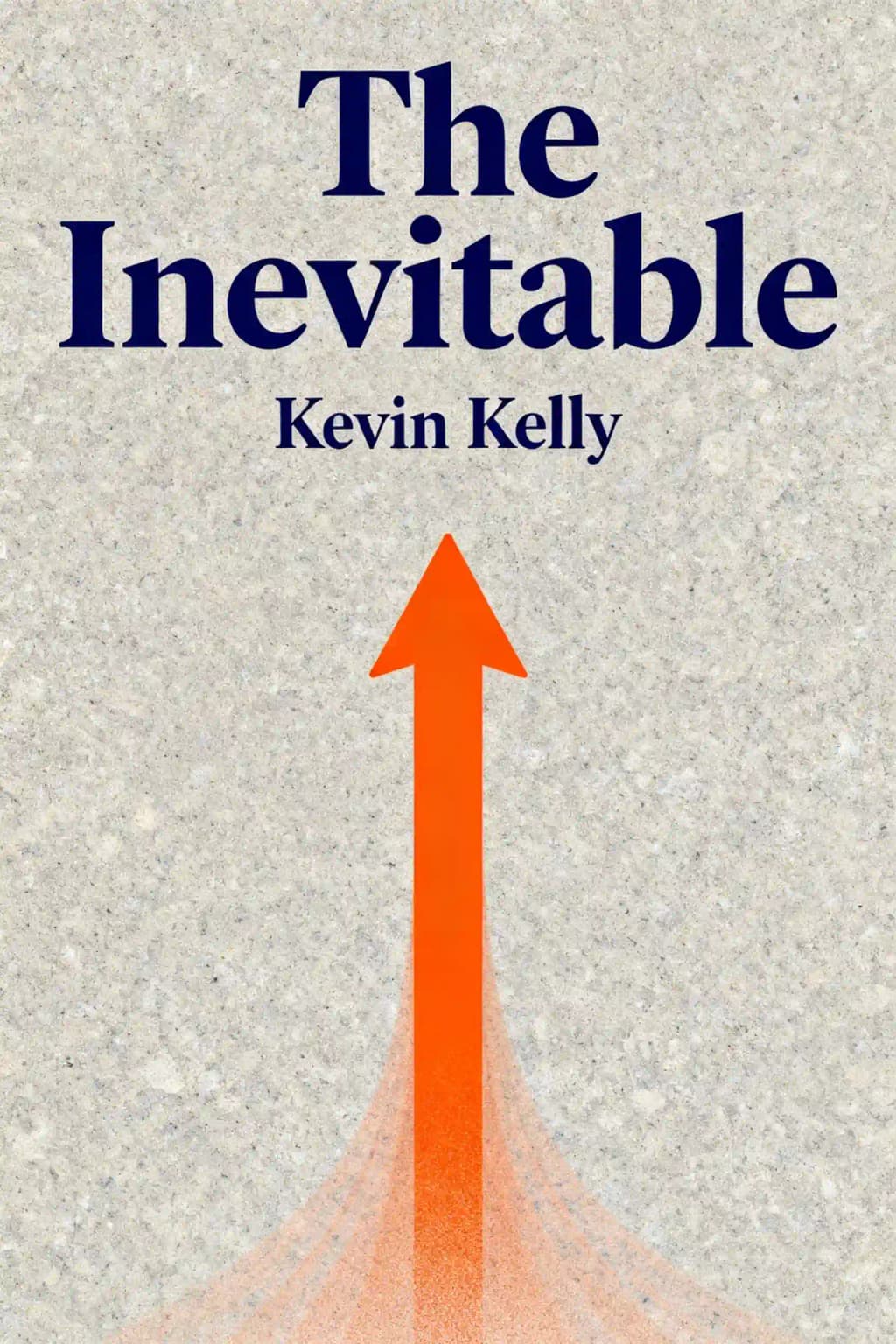
In "The Inevitable," Wired co-founder Kevin Kelly forecasts twelve technological forces reshaping our future. Praised for restoring optimism during uncertain times, this 2016 bestseller asks: How will AI, tracking, and access-over-ownership transform your life in ways you haven't imagined yet?
Kevin Kelly, the bestselling author of The Inevitable: Understanding the 12 Technological Forces That Will Shape Our Future, is a pioneering digital visionary and futurist.
As co-founder of Wired magazine, where he served as executive editor and now holds the title of Senior Maverick, Kelly has spent decades chronicling the intersection of technology, culture, and innovation. His expertise in emerging trends—from AI to decentralized systems—is rooted in his editorial leadership at the Whole Earth Review and his role as co-chair of The Long Now Foundation, an organization dedicated to fostering long-term thinking.
Kelly’s influential works include Out of Control (a foundational text on adaptive systems), What Technology Wants, and Excellent Advice for Living. He also founded the widely read Cool Tools platform, which curates innovative technologies for over 1 million monthly visitors.
The Inevitable, a New York Times and Wall Street Journal bestseller, distills his decades of insight into actionable forecasts about the digital economy, cementing his reputation as one of tech’s most authoritative optimists.
The Inevitable explores 12 technological forces reshaping society over the next 30 years, including AI integration (Cognifying), real-time data streams (Flowing), and AI-driven personalization (Filtering). Kevin Kelly argues these trends are unavoidable and will transform work, communication, and daily life through advancements like ubiquitous screens, democratized collaboration, and immersive virtual interfaces.
Tech enthusiasts, futurists, and professionals in innovation or strategy roles will benefit most. Kelly’s insights are valuable for anyone seeking to understand AI’s societal impact, the shift from ownership to access-based economies, or the ethical implications of pervasive tracking.
Yes—it’s praised for blending accessible analysis with actionable foresight. Reviewers highlight Kelly’s optimism about human-machine collaboration and his framework for navigating accelerating change, though some note it underaddresses risks like algorithmic bias.
Kelly identifies:
Kelly argues humans will thrive by specializing in creativity, curation, and interpersonal skills while partnering with AI. He predicts 90% of future “coworkers” will be machines, emphasizing adaptability over resistance.
“Cognifying” refers to embedding cheap, cloud-based AI into everyday objects and systems—from thermostats to supply chains—to enhance their problem-solving capabilities. Kelly compares this transformation to the 19th-century electrification of industries.
The book predicts reduced privacy due to Tracking, where continuous self-quantification (health metrics, location data) becomes standard. Kelly suggests transparency and data-ownership frameworks will mitigate risks, though critics argue this underestimates misuse potential.
“Beginning” describes the emergence of a global “holos”—a mesh connecting humans, AI, sensors, and devices into a collective intelligence. Kelly likens this to a planetary nervous system enabling real-time coordination.
While Siva Vaidhyanathan critiques tech monopolies’ control over information, Kelly focuses on democratized innovation. Both agree data filtering shapes human knowledge, but Kelly is more optimistic about decentralized creativity.
Critics note its limited discussion of algorithmic bias, wealth inequality from automation, and the epistemological risks of AI-curated realities. Some argue Kelly’s optimism undersells regulatory challenges.
The book advises mastering skills complementary to AI (empathy, imagination) and embracing lifelong learning. For example, “Remixing” suggests combining niche expertise with cross-disciplinary collaboration to stay relevant.
With AI adoption accelerating post-2023, Kelly’s predictions about AI-augmented workflows, VR workspaces, and ethical tracking debates align with current trends in remote work, ChatGPT integration, and EU AI Act discussions.
“You’ll be paid in the future based on how well you work with robots. Ninety percent of your coworkers will be unseen machines.” This underscores Kelly’s thesis that human-machine synergy drives future success.
저자의 목소리로 책을 느껴보세요
지식을 흥미롭고 예시가 풍부한 인사이트로 전환
핵심 아이디어를 빠르게 캡처하여 신속하게 학습
재미있고 매력적인 방식으로 책을 즐기세요
The internet is the world's largest copy machine.
Everything we create is perpetually becoming something else.
We're all perpetual newbies.
Our perpetual job will be making jobs for robots.
The advantages from cognifying inert things will be hundreds of times more disruptive than industrialization was.
The Inevitable의 핵심 아이디어를 이해하기 쉬운 포인트로 분해하여 혁신적인 팀이 어떻게 창조하고, 협력하고, 성장하는지 이해합니다.
The Inevitable을 빠른 기억 단서로 압축하여 솔직함, 팀워크, 창의적 회복력의 핵심 원칙을 강조합니다.

생생한 스토리텔링을 통해 The Inevitable을 경험하고, 혁신 교훈을 기억에 남고 적용할 수 있는 순간으로 바꿉니다.
무엇이든 물어보고, 목소리를 선택하고, 진정으로 공감되는 인사이트를 함께 만들어보세요.

샌프란시스코에서 컬럼비아 대학교 동문들이 만들었습니다
"Instead of endless scrolling, I just hit play on BeFreed. It saves me so much time."
"I never knew where to start with nonfiction—BeFreed’s book lists turned into podcasts gave me a clear path."
"Perfect balance between learning and entertainment. Finished ‘Thinking, Fast and Slow’ on my commute this week."
"Crazy how much I learned while walking the dog. BeFreed = small habits → big gains."
"Reading used to feel like a chore. Now it’s just part of my lifestyle."
"Feels effortless compared to reading. I’ve finished 6 books this month already."
"BeFreed turned my guilty doomscrolling into something that feels productive and inspiring."
"BeFreed turned my commute into learning time. 20-min podcasts are perfect for finishing books I never had time for."
"BeFreed replaced my podcast queue. Imagine Spotify for books — that’s it. 🙌"
"It is great for me to learn something from the book without reading it."
"The themed book list podcasts help me connect ideas across authors—like a guided audio journey."
"Makes me feel smarter every time before going to work"
샌프란시스코에서 컬럼비아 대학교 동문들이 만들었습니다

The Inevitable 요약을 무료 PDF 또는 EPUB으로 받으세요. 인쇄하거나 오프라인에서 언제든 읽을 수 있습니다.
A thirteen-year-old boy walks through a trade show in 1965, utterly bored by room-sized computers that seem like expensive paperweights. Sixteen years later, even an Apple II fails to spark his imagination - until he plugs it into a phone line. That single act of connection transforms everything. Suddenly, the universe floods through that humble phone jack, and the future becomes visible. This is how technological revolutions actually happen: not through isolated inventions but through connections that unlock possibilities we never imagined we needed. Today, we stand at a similar inflection point, where the forces reshaping our world feel both exhilarating and terrifying. The question isn't whether these changes will happen - they're already underway - but whether we'll embrace them with eyes wide open or resist until we're swept along anyway. Your smartphone isn't a thing anymore - it's a process. The app you mastered last month has already morphed into something different through invisible updates. This perpetual transformation isn't a bug; it's the defining feature of our age. We've shifted from a world of fixed products to fluid processes, from nouns to verbs, from being to becoming.