1장
The Unexpected Journey of Love and Family
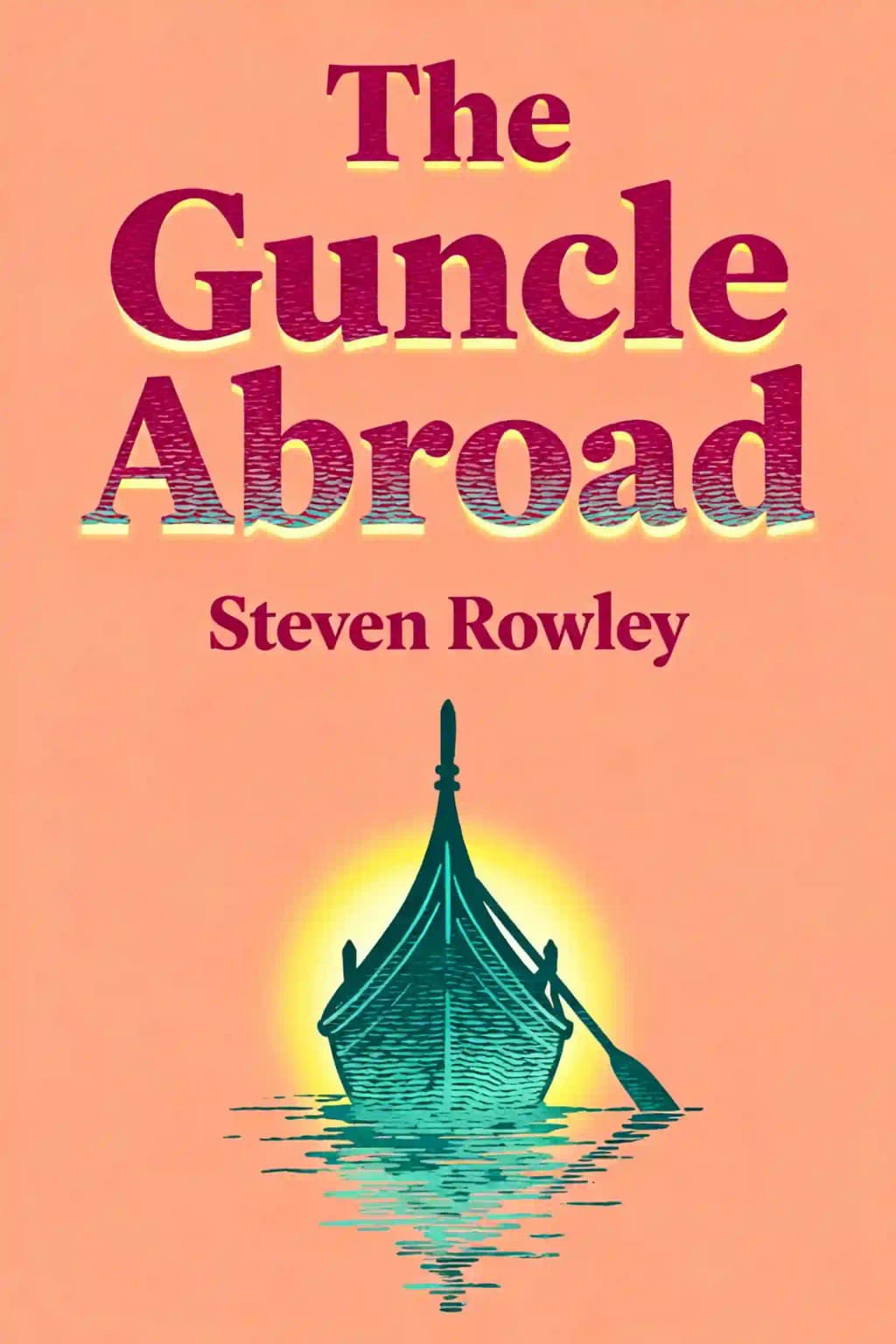
Steven Rowley's "The Guncle Abroad" has taken the literary world by storm, becoming a New York Times bestseller and winning the hearts of readers worldwide. This sequel to the beloved "The Guncle" continues Patrick O'Hara's journey with his niece and nephew, now exploring themes of family reconstruction, second chances, and finding love in unexpected places. The book has garnered praise from celebrities like Whoopi Goldberg, who is helping bring "The Guncle" to the screen through Lionsgate. What makes this novel particularly resonant in today's climate is its warm-hearted portrayal of LGBTQ+ family dynamics during a time of increasing book bans targeting such representation. With Rowley's signature blend of humor and heartfelt emotion, this novel proves that family can be found and formed in the most unexpected circumstances.
2장
European Adventures and Hidden Agendas
Patrick O'Hara, a former sitcom star turned film actor, finds himself entangled in an unexpected family situation when his brother Greg announces his whirlwind engagement to Livia, an Italian marchesa from an old noble family. The wedding, planned for a picturesque villa on Lake Como in just four weeks, completely derails Patrick's carefully planned Mediterranean vacation. During a lengthy late-night phone call with Greg, Patrick discovers the deeper complications: his teenage niece Maisie and twelve-year-old nephew Grant are struggling to accept their father's remarriage, still processing their mother Sara's death from breast cancer five years earlier. Without fully thinking through the implications, Patrick makes an impulsive offer to shepherd the children through Europe before the wedding - a decision that will prove both challenging and transformative.
The reunion at Heathrow Airport is a study in contrasts. The children greet their "GUP" (Gay Uncle Patrick) with genuine enthusiasm, having formed a special bond with him during previous family visits to Los Angeles. However, their excitement quickly gives way to revealing conversations about the upcoming wedding. Maisie, now fifteen and increasingly sharp-tongued, dismisses the marriage as "a sham" and Livia as "trying too hard." Though she can't - or won't - provide specific examples of Livia's supposed failings, her body language and defensive tone speak volumes about her underlying fears. Grant, quieter but equally troubled, fidgets with his gaming console while avoiding eye contact during these discussions.
Patrick, drawing from his own experience with loss and change, gently steers the conversation toward their past skepticism of his relationship with Emory. He reminds them how they initially viewed Emory with suspicion during family holidays, only to later include him in their special nickname for Patrick, dubbing them both "The Guncles." When Grant tearfully admits that Emory's absence still hurts - "It's like losing another person we loved" - Patrick recognizes the deeper pattern of their resistance to Livia: fear of emotional investment followed by inevitable loss.
A poignant memory surfaces for Patrick: a late-night conversation with Sara during their freshman year at Northwestern, sharing dreams over contraband wine in their dorm. Sara, already showing the warmth and wisdom that would define her as a mother, had expressed her hope that any future children of hers would find happiness "at all costs, even if that means being brave enough to risk getting hurt." This remembrance crystallizes Patrick's mission: helping Maisie and Grant honor their mother's memory while opening their hearts to new possibilities for family happiness.
As they settle into their first-class compartment on the Eurostar to Paris, Patrick proposes what he calls "The Great European Bargain." He'll share his personally developed "Guncle Love Languages" - a combination of wisdom, humor, and practical life lessons - throughout their journey through France and Switzerland. If, by the time they reach Italy, they can present legitimate objections to Livia beyond their fears, he promises to advocate for them with Greg. The children exchange a look before agreeing, not realizing that this bargain marks the beginning of their own journey toward healing and acceptance.
3장
Love Languages and Life Lessons
Patrick's mission to help Maisie and Grant understand love's many expressions takes shape through his "Guncle Love Languages" - playful but profound lessons about connection and meaning. The first, "Silent All These Years," emerges as they ride quietly through the Channel Tunnel, teaching the value of comfortable silence with loved ones. Upon arriving at Paris's luxurious Hotel Plaza Athenee, Patrick introduces "Guncle Love Language number two: The Finer Things," explaining they shouldn't save special experiences for a hypothetical future but enjoy them with loved ones in the present.
This philosophy comes to life at Angelina's on rue de Rivoli, where Patrick treats the children to the cafe's famous hot chocolate. Despite initial skepticism from Grant, who expected something more like Swiss Miss, both children are won over by the decadent treat. Grant enthusiastically empties his cup like a "pelican," wishing for a "throat pouch" to store more. Patrick claims chocolate is good for them, fabricating a New England School of Medicine study, but privately believes such luxurious experiences nourish the soul in ways that transcend physical health.
The next day, Patrick marches the children up the 237 steps to Sacre-Coeur Basilica at Montmartre. Despite their complaints about tired feet, he's determined to show them Paris's best view - his preferred alternative to the tourist-packed Eiffel Tower. Here, he introduces "Guncle Love Language number three: Don't need no credit card to ride this train," explaining that life's greatest joys come free with people you care about. As they sit on the steps overlooking Paris's shimmering lights at dusk, Patrick recalls similar moments from his early Hollywood days with his late partner Joe and Sara.
The view inspires a metaphorical lesson when Patrick explains how city lights appear to twinkle due to "invisible things" between them and the lights - atmospheric conditions that create the shimmer. He uses this as a metaphor for their mother, suggesting she's not as far away as they might think. When the children express concerns about Livia replacing their mother's memory, Patrick reassures them that no one can take their mother away from them.
These love languages aren't just lessons for the children but revelations for Patrick himself. As he watches Maisie and Grant sleeping on the overnight train to Salzburg, he questions whether grief and gratitude can coexist - missing Sara while being thankful for this time with her children. This reflection leads to "Guncle Love Language number four: Simply remember your favorite things" - doing things your loved ones enjoy even when they're no longer present.
4장
Musical Memories and Theatrical Moments
Patrick's connection to "The Sound of Music" becomes a touching thread throughout the European journey. He reminisces about his college days with Sara when they auditioned for a summer stock production in Louisville. Despite watching the movie repeatedly and practicing diligently, neither got their desired roles - Patrick was offered Max Detweiler (ironically foreshadowing his future role as the rakish uncle in his niece and nephew's lives), while Sara was cast as a background nun. Disappointed, they abandoned the production and spent the summer at the beach instead.
Now, with thoughts of Greg marrying "the Baroness" Livia, Patrick decides Austria should be their next destination. He takes the children on the official Sound of Music tour in Salzburg - something he and Sara had promised to do but never accomplished. This becomes another lesson in love: doing something simply because you know it would make someone you care about happy, even if they're no longer present to witness it.
In Salzburg, Patrick fully embraces the experience for Sara's sake. At Mirabell Gardens, he meets theater students Kevin and Mel wearing Wonder Bread and Smucker's t-shirts representing "jam and bread" from the song. Patrick dons their spare Lipton tea shirt to complete their costume trio for a photo, fully committing to the theatrical moment. Taking his role further, Patrick enlists Kevin and Mel to join Maisie and Grant in a spontaneous "Do-Re-Mi" performance around the Pegasus Fountain. Soon dozens of tourists join in, marching through the Dwarf Garden to the Angel Staircase for the song's climactic choreography.
This musical interlude represents more than just tourist fun - it's Patrick's way of honoring Sara's memory while creating new memories with her children. As Mel hits the signature high note perfectly and the crowd erupts in applause, Patrick takes a bow, thinking that acts of service - something he's doing for Sara's memory - aren't such "bullshit" after all. The moment transcends simple entertainment, becoming a bridge between past and present, between loss and new beginnings.
The theatrical theme continues when Patrick receives an unexpected offer from his agent Cassie - the role of Vince Fontaine in a Broadway revival of Grease. Though initially hesitant since he "can't sing," Patrick is intrigued when he learns he'd only need to teach the hand jive. This opportunity represents not just a career move but a symbolic step forward in his own life, "a way to keep his feet wet" while embracing new possibilities.
5장
Family Tensions at Lake Como
The idyllic European adventure takes a complicated turn when the family arrives at the Grand Hotel Tremezzo on Lake Como for Greg and Livia's wedding. New dynamics emerge with the introduction of Clara, Greg's ex-wife who has kept her married name Drury since finalizing her divorce. Though she's become more adventurous, joining Patrick for unique activities during his filming break, Clara feels out of place among the wedding guests, confiding to Patrick that she's relieved he's there since she knows no one else.
More significantly, Patrick encounters an unexpected rival for the children's affection: Palmina, Livia's lesbian sister. When Maisie suggests calling her "GAP" (Gay Aunt Palmina), Patrick drops his fork in dismay, feeling his special role as the children's gay relative is being usurped. Despite his initial antagonism, Patrick and Palmina develop a complex relationship that moves from rivalry to reluctant alliance as the wedding weekend progresses.
The welcome party reveals deeper tensions when Clara approaches Patrick, asking his opinion on Greg's marriage and reminding him that "Greg is not the only consideration" - the children matter too. This conversation plants seeds of doubt about whether Patrick should support the wedding or help the children prevent it, as they've been asking him to do.
These tensions culminate at the rehearsal dinner, where Patrick finds himself caught between family loyalty and his promise to the children. When Maisie approaches him with what she believes is damning evidence against Livia, claiming she "has her cold" after translating something Livia said in Italian, Patrick grows increasingly anxious about the impending confrontation. During dinner, Patrick tries to subtly undermine Greg and Livia's relationship by pointing out Greg's flaws as a travel companion.
When the time comes for toasts, Patrick is put in the uncomfortable position of having to decide whether to support the wedding or help the children stop it. His toast goes disastrously wrong when he chooses to protect Greg and Livia's relationship rather than follow through on his promise to Maisie, leaving her feeling betrayed. The situation escalates when Maisie reveals she overheard Livia saying she didn't want to be a mother, using her translation app as proof. As tensions flare, Grant speaks up, saying he wants a mom after only having one for six years. The evening culminates in Maisie getting her period and, despite her anger, running to Livia for comfort - a moment that begins to shift the family dynamics.
6장
Unexpected Alliances and Revelations
In the aftermath of the disastrous dinner, Patrick orchestrates an emergency meeting with Clara and Palmina to salvage the wedding situation. Despite their differences, the three form an unlikely alliance, agreeing to divide and conquer: Palmina will talk to Livia, Clara to Greg, and Patrick to the kids. This crisis brings out unexpected dimensions in each character, particularly Palmina, who appears more approachable in casual clothes with her guard down.
Their conversation reveals surprising depths to Palmina's character when she shares Italian folklore about a lake monster, using it as a metaphor for the rage young women must contain while young men are allowed to express theirs freely. In a vulnerable moment, Palmina admits she doesn't actually like the extravagant wedding production, contrary to Patrick's assumptions. She also makes a startling confession: she starts every day by crying for nine minutes - not from misery but from joy. This practice, so foreign to Patrick's understanding, suggests alternative ways of processing emotion that challenge his perspectives.
Meanwhile, Patrick has his own revelation during a heart-to-heart with Greg. When his brother asks if Sara would be proud of him for remarrying, Patrick honestly replies that she would be. This conversation forces Patrick to confront his own relationship failures, particularly with Emory. Greg questions why Patrick let Emory go, and Patrick defensively explains the age gap, claiming Emory wouldn't want him when he's sixty-six, though he admits he never actually asked. Greg calls him out for dispensing wisdom he doesn't follow himself, highlighting Patrick's tendency to sabotage his own happiness.
The most profound revelation comes when a knock on Patrick's hotel room door interrupts his hangover recovery the next morning. To his shock, Emory stands in the doorway, having flown from New York after receiving a call from the children. Their reunion reveals that Emory has maintained relationships with Patrick's family despite their separation, and that Patrick's deepest fear - that Emory would eventually lose interest in him due to their age difference - was unfounded. Emory tenderly reassures him, asking if he's ever given any indication he was "going anywhere" and declaring he's only fallen more in love with Patrick each year.
7장
Second Chances and New Beginnings
The climax of the novel brings all the characters together in Greg and Livia's suite, where the couple announces their difficult decision to postpone the wedding. Patrick immediately protests, calling the decision "bullshit" and reminding Maisie of the love language lessons he taught her. Grant wisely explains they're just "the last survivors of a lost civilization" of their original family, but they can rebuild and include Livia.
As Livia offers to learn their family traditions, Maisie quietly suggests that "GUP" should get married instead. When Greg notices her comment, Patrick pretends not to have heard, but Maisie persists, pointing out all the ways Emory shows love to Patrick just as Livia does for the family. Backed into a corner with everyone watching, Patrick finally drops to one knee despite his groaning joints and proposes to Emory: "I want to truly live, and that means living my life with you. I don't always deserve you, but I do always love you."
The impromptu wedding that follows becomes a celebration not just of Patrick and Emory's love but of the family's capacity to heal and grow. Clara pronounces them united despite having no official power, and Palmina binds their wrists together with her tiger-printed silk scarf. Maisie and Grant toss golden confetti as the newlyweds look around in wonder at the twilight scene - strangers clapping, rolling green hills, and the magnificent lake. Patrick reflects that while the distribution of loss has been inequitable for his family, he's now done being sad. It's time to celebrate.
The wedding feast on the lawn showcases the Italians' ability to shift their hospitality effortlessly - celebrating the moment regardless of who it's for. Later on the terrazza, Patrick embraces Emory as they gaze across the lake, calling him "husband" and attempting "husbandito" in Italian before Emory corrects him with "marito." Patrick has a heart-to-heart with Greg about Sara, reassuring him they're not dishonoring their lost loves by loving again.
At midnight, Patrick kneels beside the sleepy children, reflecting on how they've patched the leak in their lives since losing their mother. When Grant panics about not having a wedding gift, Patrick tells them they've given him "everything." The celebration continues with dancing to Starship's "Nothing's Gonna Stop Us Now," until hotel staff shut it down after 1 a.m. The evening concludes with Livia taking the children to the kitchen for Italian hot chocolate, even gamely spitting in her hand to seal a deal with Grant after he does so first - a small but significant moment of connection between the children and their future stepmother.
8장
The Circle of Love Completes
As the novel concludes, Patrick watches the sunset from his first-class seat flying over the Atlantic toward New York, where new chapters await them all. The family's journey comes full circle when Maisie approaches Patrick with a letter - from her mother Sara to the woman who would eventually marry Greg. Written on hospital stationery in Sara's loopy handwriting, the letter asks Greg's future wife to be patient with Maisie and Grant, promising it would be worth the wait.
Reading the letter brings tears to Patrick's eyes, and Maisie confesses her regret about being too scared to spend more time with her mother at the end. Patrick gently suggests that while she can't change the past, she might try spending time with Livia - "some people come into our lives to give us a second chance." This moment of vulnerability and growth shows how far Maisie has come in processing her grief and opening herself to new possibilities.
The novel's final chapter finds Patrick in his dressing room at the Belasco Theatre, where he's performing in the Broadway revival of Grease. Unlike his high school days when he needed techniques to appear older, he now naturally matches his character's age - a subtle reminder of the passage of time and Patrick's journey toward accepting himself fully. After his performance, he's surprised to find Greg, Livia, Clara, Maisie, and Grant waiting outside the theater. Even more shocking is Palmina's presence, visiting from Italy for a jewelry expo.
The final surprise comes when Patrick receives a birthday gift from Emory - keys to a house in Palm Springs, representing the final Guncle Love Language, wrapped in Rosemary Clooney's words: "Come on-a my house." Patrick laughs, thinking how this is a place where his whole family can gather, completing the circle of love and belonging that has been forming throughout their European adventure.
Through Patrick's journey with Maisie and Grant, Rowley crafts a tender exploration of grief, growth, and the many ways we express love. The novel reminds us that family isn't just something we're born into but something we create and nurture through intention and care. As Patrick learns to embrace his own happiness while guiding the children toward theirs, "The Guncle Abroad" becomes not just a story about a gay uncle and his niece and nephew but a universal tale about finding home in the hearts of those we love.
9장
The Art of Letting Go and Holding On
Throughout "The Guncle Abroad," Patrick grapples with seemingly contradictory impulses: the need to let go of the past while holding onto what matters most. This tension manifests in his relationship with Emory, which he sabotaged due to fears about their age difference, and in his guidance to Maisie and Grant about accepting Livia into their lives while honoring their mother's memory.
Patrick's journey toward resolving this tension begins with his "Guncle Love Languages," which teach the children (and himself) how to cherish memories while remaining open to new experiences. When he takes them to Paris's luxurious Hotel Plaza Athenee and treats them to Angelina's famous hot chocolate, he's showing them that special moments shouldn't be postponed for some hypothetical "right time" but embraced in the present. Similarly, when he leads them up the steps to Sacre-Coeur Basilica to view Paris at sunset, he's teaching them that beauty can be found in unexpected places if you're willing to look.
The Sound of Music tour in Salzburg represents another step in this journey, as Patrick honors Sara's memory by fulfilling a promise they never completed together. By embracing the experience wholeheartedly - even donning a Lipton tea shirt to complete a costume trio with theater students Kevin and Mel - Patrick demonstrates that honoring the past doesn't mean living in it. Instead, it means carrying forward the spirit of those we've lost into new experiences and relationships.
This theme reaches its climax during the family summit in Greg and Livia's suite, when Grant wisely observes that they're "the last survivors of a lost civilization" of their original family, but they can rebuild and include Livia. His insight captures the novel's central message: that honoring what came before doesn't preclude creating something new and beautiful in its place.
Patrick's proposal to Emory represents his personal resolution of this tension. By acknowledging "I don't always deserve you, but I do always love you," he's letting go of his self-sabotaging behaviors while holding onto the relationship that matters most to him. Similarly, Maisie's discovery of her mother's letter to Greg's future wife provides her with permission to embrace Livia while keeping her mother's memory alive.
The novel concludes with Emory's gift of a house in Palm Springs - a physical space where the past, present, and future can coexist. As Patrick imagines his whole family gathering there, he envisions a place where memories of Sara can live alongside new traditions with Livia, where his relationship with Emory can flourish alongside the children's growth, and where letting go and holding on aren't opposing forces but complementary aspects of loving fully.
In this way, "The Guncle Abroad" offers a profound meditation on how we navigate loss and change while remaining true to ourselves and those we love. Patrick's journey reminds us that the heart has an infinite capacity for love if we're brave enough to risk it, and that sometimes the most meaningful way to honor those we've lost is to live fully in their absence.