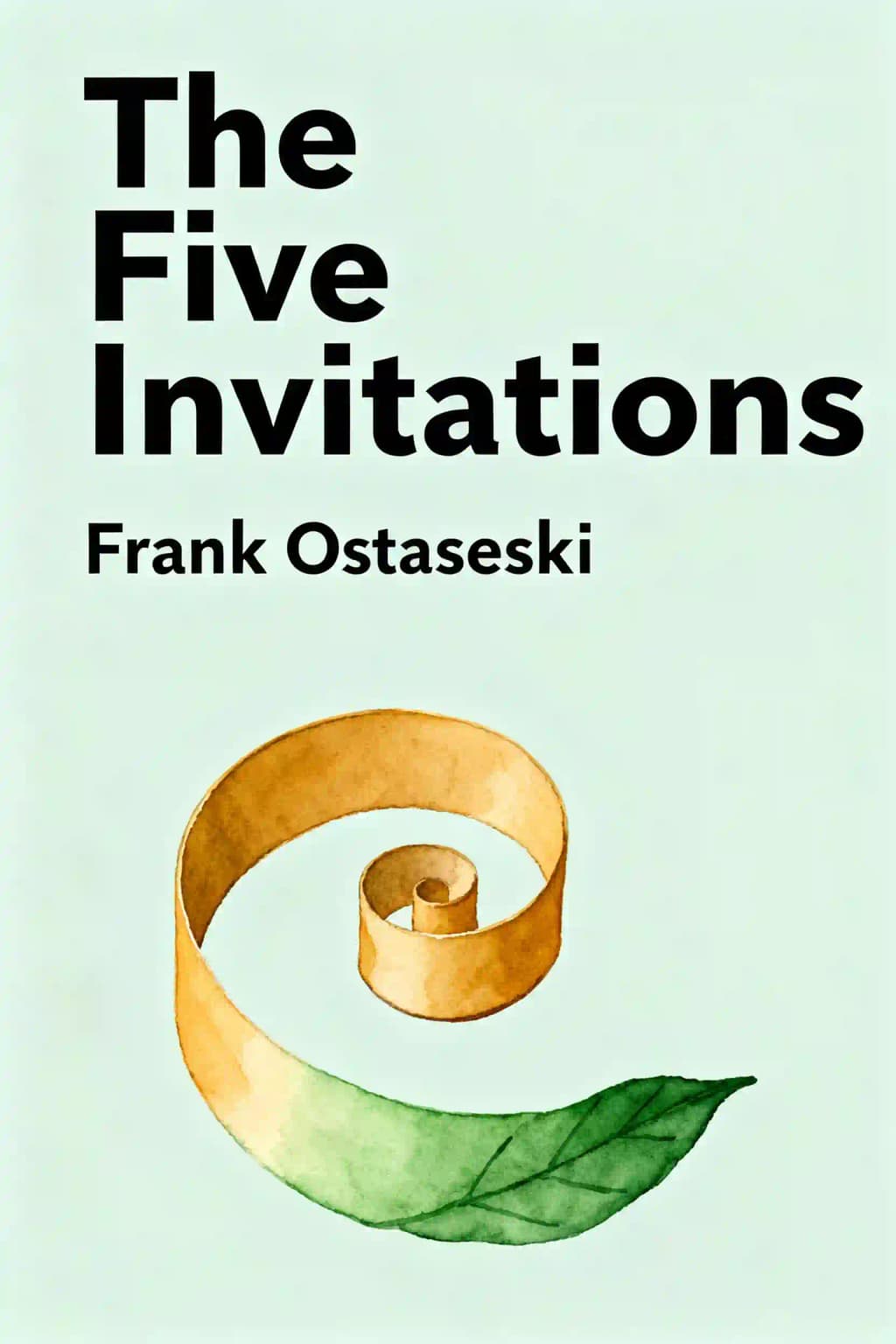
The five invitations
discovering what death can teach us about living fully
The five invitations 개요
Facing mortality's wisdom: Frank Ostaseski's "Five Invitations" distills profound lessons from guiding 1,000+ people through death. Endorsed by the Dalai Lama and taught at Harvard and Google, this transformative framework changed how Apple executives approach both life and loss.

The five invitations의 핵심 주제
- hospice wisdom
- death awareness
- radical acceptance
- embracing impermanence
- compassionate caregiving
The five invitations의 명언
Death isn't waiting for us...it exists in every moment as our secret teacher.
Impermanence isn't something that happens later-it's happening right now.
Conventional hope is mere wishful thinking, often tied to the belief that external forces will fulfill our desires.
Mature hope requires both clear intention and letting go.
While pain is inevitable, suffering is optional.
The five invitations의 등장인물
- Frank OstaseskiAuthor, hospice worker, and Buddhist teacher
- FredHusband who learned to support his dying wife
- LorenzoHomeless man who found peace in hospice care
저자 소개
The five invitations의 저자 소개
Frank Ostaseski is the author of The Five Invitations: Discovering What Death Can Teach Us About Living Fully and a pioneer in contemplative end-of-life care. A Buddhist teacher and internationally respected expert on mindfulness and dying, he co-founded the Zen Hospice Project in 1987, America's first Buddhist hospice, where he established a groundbreaking model for compassionate care.
In 2005, he founded the Metta Institute, training thousands of healthcare clinicians and caregivers worldwide.
Ostaseski has accompanied over 1,000 people through the dying process and has lectured at Harvard Medical School, the Mayo Clinic, and leading corporations like Google and Apple. His work has been featured on Bill Moyers' PBS series On Our Own Terms and The Oprah Winfrey Show, and he was honored by the Dalai Lama in 2001 for his compassionate service.
In 2018, he received the prestigious Humanities Award from the American Academy of Hospice and Palliative Medicine, cementing his authority in transforming how we approach death and living.
The five invitations 요약 다운로드
The five invitations 요약을 무료 PDF 또는 EPUB으로 받으세요. 인쇄하거나 오프라인에서 언제든 읽을 수 있습니다.
이 책에 대한 FAQ
The Five Invitations by Frank Ostaseski explores profound lessons about living fully, drawn from 30 years of accompanying over 1,000 people through death. The book translates insights from end-of-life care into practical wisdom for everyday life, teaching readers how to cultivate bravery, intimacy, honesty, and ease. Ostaseski argues these lessons are too important to be left to our final hours.
Frank Ostaseski is a Buddhist teacher and pioneer in end-of-life care who co-founded the Zen Hospice Project in 1987, America's first Buddhist hospice. He founded the Metta Institute in 2005 and has trained thousands of healthcare professionals worldwide. Ostaseski received the 2018 Humanities Award from the American Academy of Hospice and Palliative Medicine and was honored by the Dalai Lama for his compassionate service.
The Five Invitations serves healthcare professionals, caregivers, spiritual seekers, and anyone facing life transitions or loss. The book appeals to readers interested in mindfulness-based approaches to death and dying, Buddhist teachings applied to modern life, and those seeking deeper meaning in their daily existence. It's particularly valuable for people confronting mortality, whether personally or through caring for others.
The Five Invitations is worth reading for its unique perspective combining Buddhist wisdom with practical end-of-life care experience. Frank Ostaseski's 30-year track record, recognition from the Dalai Lama, and features on The Oprah Winfrey Show and Bill Moyers' PBS series validate his approach. The book transforms death-related insights into actionable guidance for living with greater presence, compassion, and authenticity.
The central message of The Five Invitations is that death is an intimate teacher offering essential lessons for living fully. Ostaseski demonstrates that by turning away from death, we also turn away from life's preciousness and our ability to live authentically. The book emphasizes mindful awareness, compassion, and presence as pathways to deeper meaning, regardless of whether facing terminal illness or everyday challenges.
Frank Ostaseski integrates Buddhist mindfulness practices with compassionate hospice care throughout The Five Invitations. His approach, refined through the Zen Hospice Project, emphasizes meditation, curious inquiry, and cultivating whole-heartedness to develop clarity and presence. This fusion of spiritual insight and practical caregiving creates a model for mindful accompaniment of the dying that's applicable to all life situations.
The Five Invitations distills hard-won wisdom from Frank Ostaseski's decades serving the dying into practical guidance for daily life. The book teaches readers to cultivate appreciation for life's preciousness, develop insight into impermanence, practice freedom from clinging, and embrace equanimity. These contemplative practices help readers live with greater awareness, compassion, and authenticity in every moment, not just during crisis.
The Five Invitations provides frameworks for navigating grief through mindful awareness and compassionate presence rather than avoidance. Ostaseski's experience training thousands of caregivers offers readers practical tools for sitting with difficult emotions and finding meaning in loss. The book emphasizes that understanding impermanence and change can transform how we process grief, helping us honor death while embracing life's continuation.
The Five Invitations remains relevant in 2025 as society increasingly seeks mindfulness-based approaches to mortality and meaningful living. With aging populations, healthcare burnout, and existential uncertainty, Ostaseski's integration of contemplative practices with end-of-life wisdom addresses modern needs for presence and compassion. His teachings at institutions like Harvard Medical School, Mayo Clinic, and Google demonstrate the book's ongoing application across healthcare and corporate settings.
Frank Ostaseski argues in The Five Invitations that avoiding death causes us to miss life's intimacy and preciousness. By developing mindfulness of mortality—what Buddhists call Maraṇasati practice—readers cultivate qualities essential for awakened living: appreciation, impermanence awareness, non-attachment, and equanimity. This perspective transforms death from something fearful into a teacher that illuminates how to live with greater depth and authenticity.
The Five Invitations serves as essential training for healthcare professionals and family caregivers through its mindfulness-based care model. Ostaseski's Metta Institute has trained countless clinicians, and the book distills this expertise into accessible wisdom. It addresses compassion fatigue, presence with suffering, and maintaining whole-heartedness while accompanying others through illness and death—skills increasingly vital in healthcare environments.
Readers of The Five Invitations often explore Being Mortal by Atul Gawande, When Breath Becomes Air by Paul Kalanithi, and The Tibetan Book of Living and Dying by Sogyal Rinpoche. Other related titles include Advice for Future Corpses by Sallie Tisdale, Being with Dying by Joan Halifax, and Dying Well by Ira Byock—all exploring conscious approaches to mortality and meaningful living through contemplative or medical perspectives.