1장
The Journey to Happiness Through Death's Lens
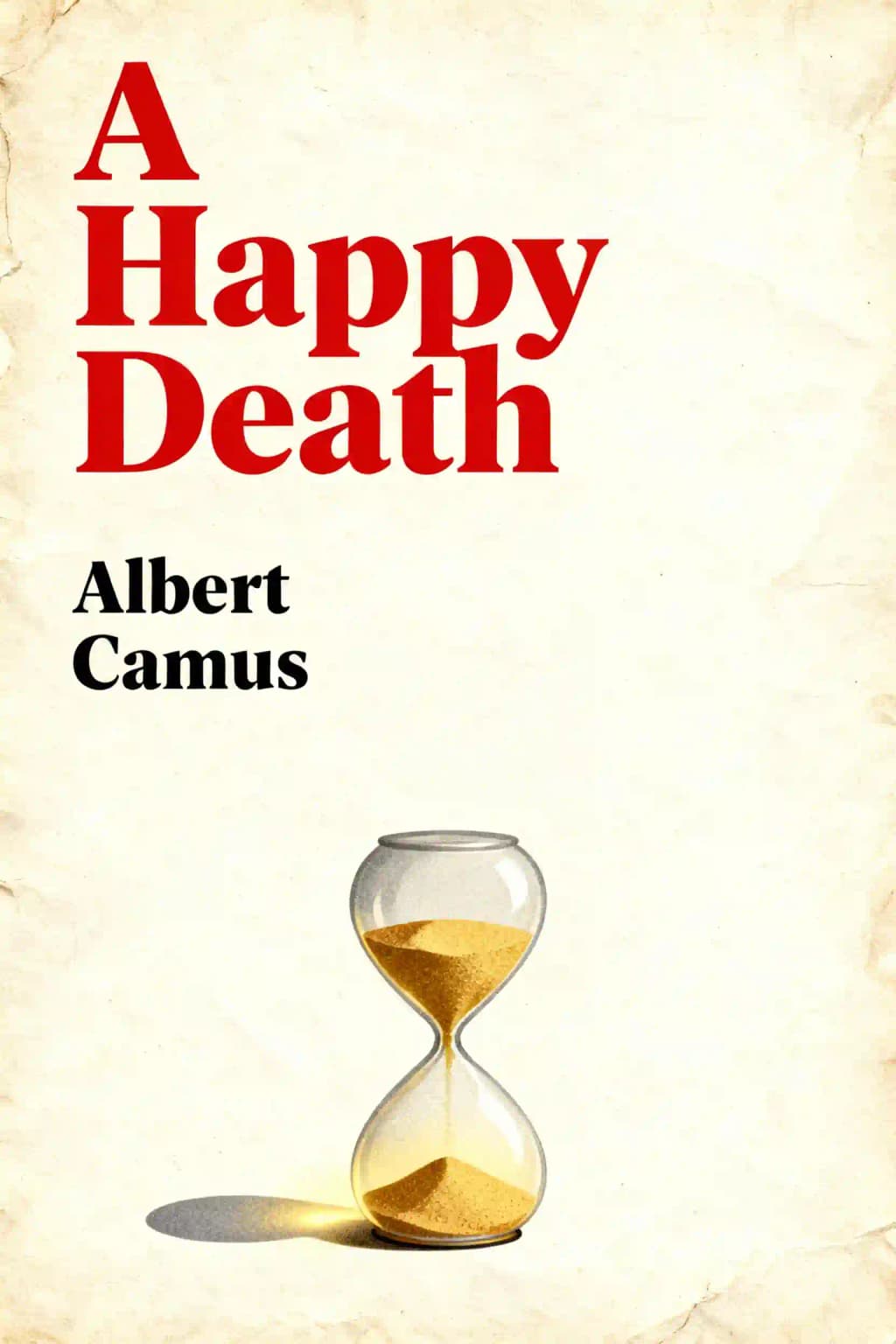
Albert Camus's "A Happy Death" remains one of literature's most intriguing explorations of existentialism, written before his acclaimed masterpiece "The Stranger" but published posthumously in 1971. The novel follows Patrice Mersault, a character whose name would later evolve into Meursault in "The Stranger," suggesting this work was Camus's laboratory for ideas he would refine throughout his career. The book has developed a cult following among philosophers, with thinkers like Alain de Botton citing it as a formative influence. Despite being less known than Camus's other works, it provides perhaps his most direct examination of what constitutes a meaningful life. Interestingly, Camus wrote much of the novel during his travels through Europe in 1936-37, incorporating his own experiences of Prague's alienating atmosphere and the Mediterranean's life-affirming warmth. What makes this book particularly fascinating is how it serves as both prelude and counterpoint to "The Stranger" - same protagonist name, similar themes, yet strikingly different conclusions about life's purpose.
2장
Murder as Liberation: The Beginning of Mersault's Journey
The novel opens with a deliberate murder that sets everything in motion. Patrice Mersault walks to the villa of Zagreus, a wealthy cripple who lost both legs, and methodically kills him with a revolver. After arranging the scene to look like suicide, Mersault steals money from Zagreus's strongbox and returns to his apartment to sleep. This cold-blooded act serves as the catalyst for Mersault's pursuit of happiness - a stark moral paradox that Camus presents without judgment.
Before this pivotal moment, Mersault led a life of quiet desperation. Working as an office clerk, he lived in poverty above a horse butcher shop, sleeping in his dead mother's room which he kept unchanged after her passing. For ten years, he had cared for her as diabetes ravaged her body. Though neighbors expected deep grief at her funeral, Mersault showed little emotion - a detail that would later become central to "The Stranger." His relationship with a woman named Marthe provided momentary escapes from his monotonous existence, but even this connection was poisoned by jealousy when he discovered she had previous lovers, including Zagreus.
What drives Mersault to murder? The answer lies in a philosophical conversation with Zagreus himself. During a visit, the crippled man shares his belief that money buys time for happiness, showing Mersault his safe containing both wealth and a suicide note he contemplates using on difficult days. "With your healthy body," Zagreus tells Mersault, "your duty is to live and be happy." This conversation plants the seed that will blossom into murder - the idea that Zagreus's money could free Mersault to pursue authentic happiness, something the cripple can no longer fully experience despite his wealth.
The murder represents more than mere opportunism; it's Mersault's rebellion against a life of poverty and constraint. When he later encounters the barrelmaker Cardona sobbing over a photograph of his dead mother, Mersault feels "rebellion rising in him like a tide" - his only authentic feeling amid misery and submission. This rebellion culminates in his decision to kill Zagreus, resign from his job, and embark on a journey of self-discovery. Isn't it striking how Camus positions a morally reprehensible act as the first step toward an authentic life?
3장
Exile and Alienation: Confronting the Void
After the murder, Mersault flees to Prague, beginning a period of wandering that represents his confrontation with existential emptiness. In a cheap hotel room, exhausted and disheveled, he experiences the first pangs of what his newfound freedom actually means - not immediate happiness but profound alienation. The city becomes a metaphor for his internal state - Gothic steeples silhouetted against dim skies, baroque churches both grandiose and grotesque, and most memorably, a strange pungent odor of "cucumbers soaked in vinegar" that torments him throughout his stay.
Prague's atmosphere intensifies Mersault's fever and weakness, creating a feedback loop of physical and existential discomfort. His days follow a pattern of visiting churches and monasteries, finding their baroque magnificence both impressive and disturbing. Walking along the Vltava river in evenings, his desolation deepens - "a solitude where love has no part." The breaking point comes when he encounters a dead man on the street, head lying in blood, which pushes him toward madness.
This section brilliantly illustrates how freedom without purpose leads not to happiness but to heightened awareness of life's absurdity. Mersault has escaped his former constraints but finds himself confronting an even greater prison - the meaninglessness of existence itself. In his hotel room, his rebellion explodes within him as he craves women, warmth, and sunlit cities. "A great lake of solitude and silence opens inside him" - a void that money alone cannot fill.
The journey continues through Silesia, where the desolate landscape of mud and black birds mirrors his internal state. Yet it's precisely at this lowest point that Mersault begins to come to himself, "calculating his hunger for life and the dormant splendors within him." He yearns to crush himself into the earth, to affirm his solidarity with the world even in its filth. This marks the beginning of his transformation - the recognition that happiness must be actively created rather than passively received.
Haven't we all experienced moments when freedom, once achieved, reveals itself as a new kind of burden? Mersault's journey through Central Europe shows how liberation without purpose becomes its own form of imprisonment.
4장
The Mediterranean Revival: Returning to Life's Essentials
Mersault's journey takes a decisive turn when he heads to Genoa and ultimately back to Algeria. The Mediterranean environment acts as a healing force, contrasting sharply with the alienation of Central Europe. In Genoa, he surrenders to "the siren songs of happiness," swimming until forgetting his own body and wandering streets where "sheer excess of life flaunted its exultant bad taste." During the sea crossing to Algiers, he has a crucial realization - he must "create his happiness and his justification."
Upon returning to Algeria, Mersault joins a community of friends living in the "House above the World," a villa perched on a hilltop overlooking the bay. The four inhabitants - Patrice, Catherine, Rose, and Claire - create a microcosm of simple pleasures and philosophical exploration. Their days revolve around swimming, cooking, conversations, and contemplation of the natural world. Catherine, who equates nakedness with freedom from inhibition, sometimes undresses on the terrace, proudly announcing at dinner: "I was naked in front of the world." Though the others tease her, they recognize her animal instinct for essentials and her ability to decipher "the secret language of trees, of the sea, of the wind."
This communal life represents a stark contrast to Mersault's previous solitude. The House above the World is described as "not a house of pleasure, but a house of happiness" - a crucial distinction in Camus's philosophy. Here, happiness emerges not from fleeting sensations but from deep engagement with life's fundamental elements: friendship, nature, physical well-being, and contemplation. On the terrace under star-studded nights, the four friends abandon themselves to the world, learning "that double lesson which leads to a happy death."
Yet Mersault's journey isn't complete. He meets Lucienne Raynal, a tall blonde whose silent beauty captivates him, culminating in a kiss on the docks where he feels "a great cry within him" and "the limitless longing to seize from these vibrant lips all the meaning of that inhuman and dormant world." This encounter points toward his next phase - the pursuit of solitude and a more individual happiness.
The Mediterranean section beautifully illustrates Camus's belief that happiness is found not in abstract philosophizing but in sensual engagement with the world. The sun, sea, and simple pleasures of food and friendship create a foundation for authentic living. Isn't there something profoundly true about how returning to our essential nature - our connection to earth, water, and human community - can restore meaning when abstract thought fails us?
5장
Creating a Personal Kingdom: The House by the Sea
Mersault's quest for happiness reaches its culmination when he purchases a house on the slopes of the Chenoua, between mountain and sea. Before departing the House above the World, Catherine asks why he's leaving when he's happy there. "There's the risk of being loved," he replies, "and that would keep me from being happy." This cryptic answer suggests Mersault has realized he must face solitude directly rather than using community as a buffer against it.
His new home - a two-story house with an enormous upstairs room overlooking the sea through a splendid bay window - becomes the stage for his final evolution. Initially, he loses himself in the physical labor of preparing the house, but once settled, he confronts his longed-for solitude with mixed results. His first days pass in aimless routine - waking late, eating without appetite, napping, and sleeping early despite intentions to work or read. The memory of wasted time embitters him, yet he remains unable to break the pattern.
Struggling against this emptiness, Mersault invites Lucienne to visit, finding mindless joy in her company at first, but soon growing bored. When she asks to live with him permanently, he refuses. "You don't love me," she says tearfully. "I never said I did," he replies. Looking at the stars through the pines, he tells her there is no such thing as great suffering or memory - everything is forgotten, even great love. "That's what's sad about life, and also what's wonderful about it."
After this false start, Mersault establishes a new rhythm to his days - rising early for morning swims that exhaust and energize him, walking along the beach to the ruins at Tipasa where he lies among wormwood bushes matching his heartbeat to the pulsing sun. He learns to humble himself to the rhythm of days rather than imposing human hopes on time. Through local characters like Perez (a one-armed fisherman) and Bernard (a retired doctor), he becomes involved in village life, finding meaning in community without surrendering his essential solitude.
The village itself provides comic relief through the rivalry between two wealthy Spanish landowners, Morales and Bingues, who compete through increasingly extravagant purchases. Morales, known as the "King of Spain," creates an outdoor Louis XV salon of precious woods and fabrics in his vineyard. When asked what happens when it rains, he simply answers: "I replace it" - a delightful absurdity that highlights how wealth can be used creatively rather than merely accumulated.
When Catherine, Rose, and Claire visit Mersault, they climb the Chenoua mountain at dawn. As they ascend above the misty sea, Mersault feels at one with the mountain, its saffron blossoms, icy springs and shadows. When Catherine asks if he's happy now, he gives the novel's philosophical core: "What matters is the will to happiness, a kind of enormous, ever-present consciousness. The rest - women, art, success - is nothing but excuses."
This section reveals Camus's mature vision of happiness - not as escape or indulgence but as conscious alignment with natural rhythms and acceptance of life's transience. Isn't there profound wisdom in recognizing that our human constructs - love, art, achievement - are ultimately "excuses" for the deeper project of being fully present to existence itself?
6장
Confronting Mortality: The Path to a Conscious Death
During the mountain climb, Mersault faints for the first time, foreshadowing his approaching death. Later, Bernard examines him, prompting a philosophical exchange where the doctor confesses he loves life too much to be satisfied with nature alone - he wants intoxication, intensity, action. "You're an idealist," Mersault tells him. "The opposite of an idealist is too often a man without love," Bernard replies. This exchange highlights the tension between Mersault's pursuit of natural harmony and the human desire for transcendence.
As seasons pass in rhythmic cycles - almond trees blooming in January, pears ripening in June, grape harvests ending as autumn rains begin - Mersault takes to his bed with pleurisy. During his convalescence, he walks to the ruins of Tipasa where he experiences a profound connection with the world, feeling simultaneously conscious yet alienated, passionate yet disinterested. Swimming in the warm moonlit sea brings him to the heights of sensual joy, but upon returning home, he falls desperately ill.
As fever grips him, Mersault realizes he doesn't want to die unconsciously - he wants to face death with lucidity. Bernard confirms his heart is failing and provides adrenaline to keep him conscious. Watching the landscape from his sickbed with Lucienne by his side, Mersault contemplates his life and death, understanding that fear of death is really fear of not having truly lived.
In his final moments, Mersault experiences a surprising kinship with Zagreus, the man he killed, recognizing that in death they share a fraternal bond - both facing the end with eyes wide open. As his body slowly grows cold from the extremities inward, he experiences a strange exultation, the same feeling Zagreus thanked life for. The sun rises, bathing the world in golden light, and Mersault, "stone among stones," returns "in the joy of his heart to the truth of the motionless worlds."
This conclusion presents death not as defeat but as culmination - the final alignment of human consciousness with natural truth. Mersault achieves a "happy death" not by avoiding mortality but by embracing it with full awareness. The murder that began his journey comes full circle as he recognizes his kinship with his victim - both ultimately seeking the same authentic confrontation with existence.
Isn't this the most profound paradox of human life - that only by accepting our mortality can we fully inhabit our living moments? Mersault's journey suggests that happiness lies not in endless accumulation of experiences but in the quality of consciousness we bring to whatever time we have.
7장
The Philosophical Landscape: Time, Money, and Authenticity
Throughout "A Happy Death," Camus weaves several philosophical threads that illuminate his early thinking about existence. Chief among these is the relationship between time, money, and authentic living. When Zagreus tells Mersault that "money buys time for happiness," he articulates a central tension of modern life - how financial independence might free us from meaningless labor to pursue genuine fulfillment.
Mersault's journey demonstrates both the truth and limitations of this perspective. His theft of Zagreus's money does indeed buy him freedom from office drudgery, allowing him to travel, purchase his seaside home, and establish a life aligned with natural rhythms. Yet money alone proves insufficient - his initial aimlessness in Prague and early days of empty routine at the Chenoua show that freedom without purpose leads to its own kind of despair.
The novel presents three distinct relationships with time: "killing time" (Mersault's office existence), "buying time" (his post-murder freedom), and finally "aligning with time" (his seaside life synchronized with natural cycles). Only the last brings genuine contentment, suggesting that happiness emerges not from escaping time's constraints but from harmonizing with its deeper patterns.
Another crucial theme is the tension between solitude and connection. Mersault oscillates between community (the House above the World) and isolation (his Chenoua home), ultimately finding that neither extreme satisfies. His final wisdom emerges from a balance - involvement with village life while maintaining his essential separateness. This reflects Camus's own evolving thought about the human condition - we are fundamentally alone yet desperately need connection.
The novel's most provocative philosophical claim comes in Mersault's statement that "what matters is the will to happiness, a kind of enormous, ever-present consciousness." This suggests happiness is neither a feeling nor an achievement but a mode of attention - a deliberate orientation toward life that transcends circumstance. When he adds that "women, art, success" are "nothing but excuses," he implies that our cultural markers of fulfillment are merely vehicles for this deeper consciousness.
Finally, Mersault's "happy death" presents Camus's early meditation on mortality. Unlike later existentialists who saw death as the ultimate absurdity that renders life meaningless, Camus suggests that conscious acceptance of mortality is precisely what gives life its value. Mersault's final moments of lucid dying represent not defeat but triumph - the full circle of a consciousness that has learned to embrace both life's pleasures and its inevitable end.
Don't these philosophical threads still resonate today? In our era of distraction and achievement-obsession, isn't there profound wisdom in Camus's suggestion that happiness comes not from what we acquire or accomplish but from the quality of attention we bring to our brief existence?
8장
The Mediterranean Ethic: Camus's Alternative to Nihilism
"A Happy Death" presents what might be called Camus's "Mediterranean ethic" - an alternative to both religious morality and nihilistic despair. This ethic emerges from the landscape itself - the sun, sea, and sensual abundance of Algeria that formed Camus's own consciousness.
The novel's most vivid passages describe Mersault's physical communion with this environment - swimming until exhaustion, lying among wormwood bushes matching his heartbeat to the sun's rhythm, walking paths "speckled with crushed black olives" where "the air is heavy with the scent of bitter almonds." These aren't merely aesthetic descriptions but articulations of an ethical stance: that meaning emerges from sensual engagement with the world rather than abstract principles.
This Mediterranean ethic has several key components. First is the primacy of the body - Mersault finds wisdom through physical immersion in sea and sun, suggesting that embodied experience precedes intellectual understanding. Second is the acceptance of natural limits - happiness comes not from transcending human constraints but from aligning with them. Third is the embrace of present consciousness over future achievement or past regret - what matters is the quality of attention in each moment.
Most radically, this ethic rejects conventional moral categories. Mersault's murder of Zagreus is presented without judgment, as if to suggest that traditional morality misses the deeper question of authentic living. When Bernard asks what would make Mersault contemptuous of a man, he answers "when he was motivated by expediency or a desire for money" - implying that inauthenticity is the only true sin.
The novel's conclusion, with Mersault returning "in the joy of his heart to the truth of the motionless worlds," suggests that ethical living culminates not in moral perfection but in conscious alignment with natural truth. This represents Camus's early attempt to answer the question that would preoccupy his entire career: how to find meaning in a world without God or absolute values.
Doesn't this Mediterranean ethic offer a compelling alternative to our contemporary moral confusion? Between rigid traditional morality and relativistic nihilism, Camus suggests a third path - finding meaning through conscious engagement with the physical world and authentic presence to our finite existence.
9장
The Genesis of "The Stranger": A Happy Death as Literary Laboratory
"A Happy Death" serves as a fascinating literary laboratory where Camus developed ideas and techniques he would perfect in "The Stranger." The similarities are striking: both feature protagonists named Mersault/Meursault who kill a man, both explore themes of alienation and authenticity, both begin with a death (mother/murder) and end with the protagonist facing his own mortality.
Yet the differences reveal Camus's evolving vision. While "A Happy Death" presents murder as a deliberate act enabling Mersault's pursuit of happiness, "The Stranger" shows Meursault killing almost accidentally, through a kind of existential drift. The earlier novel follows a traditional narrative arc of quest and fulfillment, while the later work embraces absurdity more radically. Most significantly, "A Happy Death" concludes with Mersault achieving a kind of transcendent wisdom, while "The Stranger" ends with Meursault merely accepting the "benign indifference of the universe."
The autobiographical elements are more prominent in the earlier work. Mersault's childhood neighborhood of Belcourt, his job at the maritime commission, his European travels, and his experiences in the "House above the World" all draw directly from Camus's life. Even minor characters like the barrelmaker Cardona were based on people from Camus's own background. This suggests that "A Happy Death" served as Camus's first attempt to transform personal experience into philosophical fiction - a process he would refine throughout his career.
The novel's publication history adds another layer of interest. Though written between 1936 and 1938, "A Happy Death" remained unpublished during Camus's lifetime. He initially structured it in three balanced parts before condensing it to two contrasting sections: "Natural Death" (focusing on Mersault's murder of Zagreus) and "Conscious Death" (chronicling his subsequent journey). Despite extensive rewriting efforts, Camus ultimately set the manuscript aside as "The Stranger" took shape in his imagination.
This evolution shows an artist refining his craft and vision - moving from a somewhat conventional narrative of quest and fulfillment toward the more radical absurdism that would make him famous. Reading "A Happy Death" alongside "The Stranger" offers a rare glimpse into the development of one of the 20th century's most influential philosophical visions.
Isn't there something profoundly human in this literary evolution? Like Camus himself, don't we all revise our understanding of life's meaning as we grow, sometimes abandoning earlier certainties for more nuanced perspectives?
10장
The Paradox of Conscious Living: Camus's Enduring Legacy
"A Happy Death" culminates in a profound paradox: that fully conscious living requires acceptance of death. This paradox would become central to Camus's mature philosophy, most famously expressed in "The Myth of Sisyphus" where he argues that embracing life's absurdity is the path to authentic existence.
The novel presents this paradox through Mersault's journey from unconscious routine to deliberate engagement with life's fundamental elements. His initial existence - working at a meaningless job, living in his dead mother's room, pursuing shallow relationships - represents a kind of living death. The murder of Zagreus, morally reprehensible as it is, serves as his first authentic act, propelling him toward genuine consciousness.
Yet this newfound awareness brings its own challenges. In Prague, Mersault confronts the void that lies beneath conventional meaning, experiencing alienation so profound it approaches madness. Only by returning to the Mediterranean landscape and establishing a life aligned with natural rhythms does he find a sustainable form of consciousness - one that embraces both life's pleasures and its inevitable limits.
The "happy death" of the title refers not just to Mersault's final moments but to the quality of life that precedes them. As Bernard tells him, "The opposite of an idealist is too often a man without love." True consciousness involves neither idealistic transcendence nor cynical detachment but loving engagement with life's concrete realities - the sun, sea, human connection, and natural cycles that give existence its texture.
This vision offers a compelling alternative to contemporary attitudes toward mortality. Rather than denying death through endless distraction or medical intervention, Camus suggests that accepting our finite nature is precisely what gives life its value. Mersault's final exultation as his body grows cold represents not defeat but triumph - the culmination of a consciousness that has learned to embrace both life's pleasures and its inevitable end.
Camus's enduring legacy lies in this unflinching yet life-affirming vision. Between religious consolation and nihilistic despair, he charts a third path - finding meaning through conscious engagement with the physical world and authentic presence to our finite existence. In an age still struggling with questions of meaning after the "death of God," this perspective remains as relevant as ever.
Doesn't Camus's vision still speak powerfully to our contemporary condition? In a world of endless distraction and achievement-obsession, isn't there profound wisdom in his suggestion that happiness comes not from what we acquire or accomplish but from the quality of attention we bring to our brief existence?