Discover the definitive guide for nurturing exceptional young minds. Curriculum specialist Sarah Herbert Robbins offers expert strategies for identifying giftedness, managing perfectionism, and fostering healthy socialization. What's the hidden cost of misidentifying your child's unique abilities? This resource transforms parental uncertainty into confident advocacy.
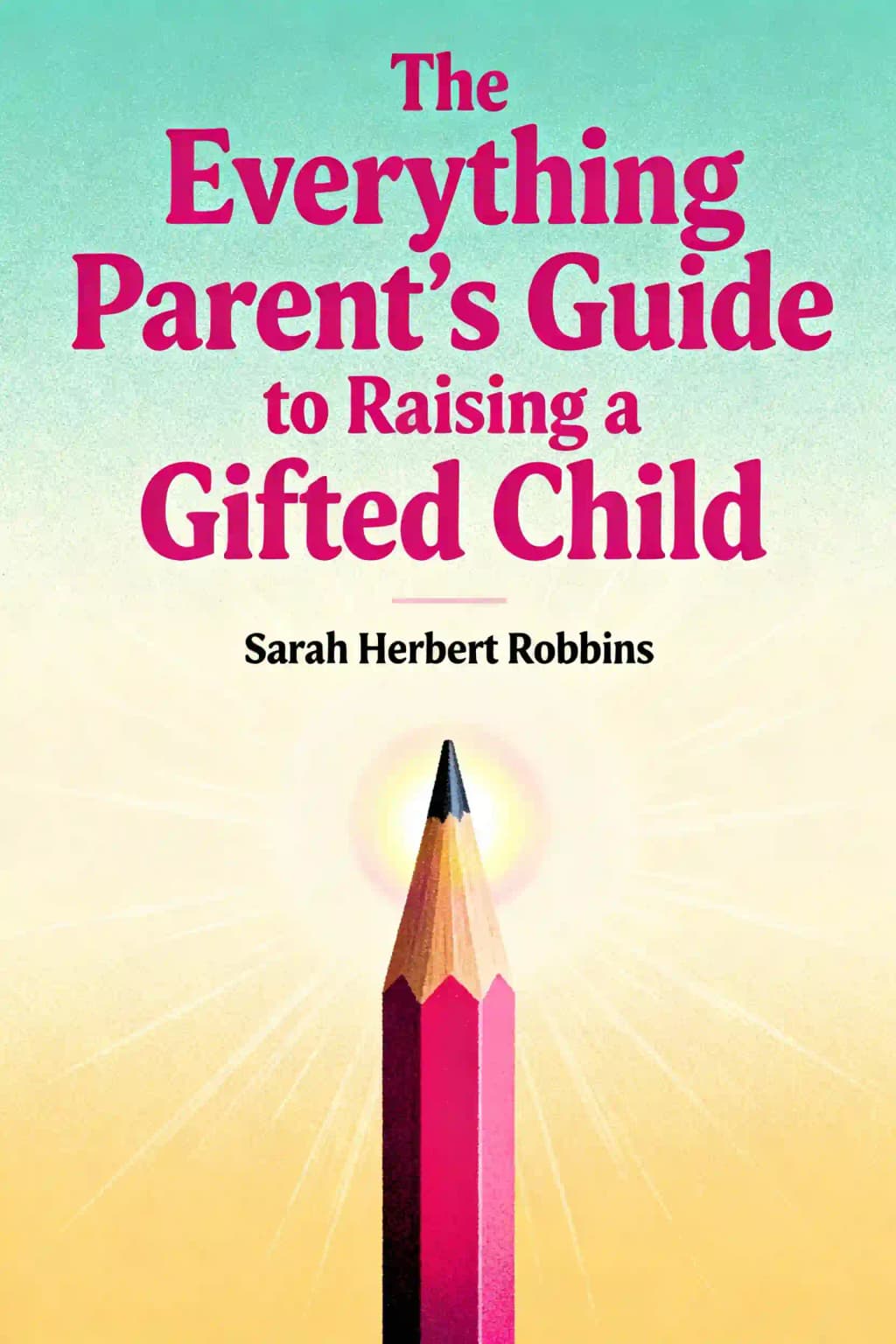
Sarah Herbert Robbins, MEd, author of The Everything Parent’s Guide to Raising a Gifted Child, is a curriculum development specialist and advocate for gifted education.
With advanced degrees in designing programs for exceptional learners, Robbins combines her academic expertise with over a decade of hands-on experience as an elementary school teacher in both traditional and gifted-focused classrooms.
Her book, part of the Everything® Parenting Guide Series, addresses the emotional, social, and academic needs of gifted children, drawing from her work counseling families and leading workshops for parents and educators. Robbins shares ongoing insights through her platform, ParentingGiftedKids.com, where she offers strategies for nurturing talent and navigating challenges like perfectionism and socialization.
A trusted voice in her field, she emphasizes realistic goal-setting and holistic support for gifted youth. Published by Adams Media, her guide remains a foundational resource for families, blending professional rigor with compassionate, actionable advice.
The Everything Parent's Guide to Raising a Gifted Child provides actionable strategies for nurturing gifted children’s emotional, social, and academic needs from birth through adolescence. It covers identifying giftedness, school program options, managing perfectionism, fostering healthy socialization, and addressing challenges like bullying. Written by education specialist Sarah Herbert Robbins, it blends professional expertise with practical parenting advice.
This book is ideal for parents, caregivers, and educators of gifted children seeking evidence-based methods to support exceptional learners. It’s particularly valuable for those navigating school advocacy, social challenges, or emotional intensity in gifted kids. Robbins’ advice applies to families across developmental stages, from early childhood to teenage years.
Yes, reviewers praise its balance of research-backed insights and relatable strategies. It addresses nuanced topics like differentiating giftedness myths vs. realities, managing societal judgments, and balancing high achievement with emotional well-being. The inclusion of real-world examples and multi-age solutions makes it a comprehensive resource.
Robbins emphasizes giftedness as a thinking style rather than a fixed identity. She distinguishes between concrete-sequential (traditional, test-friendly) and abstract-spatial (creative, less quantifiable) giftedness. The book also explores Howard Gardner’s Multiple Intelligences Theory, underscoring that giftedness extends beyond academics to include artistic, interpersonal, and kinesthetic strengths.
Robbins evaluates options like accelerated classes, specialized schools, homeschooling, and enrichment activities. She stresses aligning programs with a child’s learning style—for example, self-contained gifted classrooms for abstract-spatial thinkers. The guide also advises collaborating with educators to tailor Individualized Education Plans (IEPs) or gifted-specific curricula.
It offers techniques to reframe perfectionism as growth-oriented resilience. Strategies include setting realistic goals, normalizing mistakes as learning opportunities, and balancing challenge with emotional support. Robbins also warns against conflating high achievement with self-worth, advocating for mindfulness practices to reduce stress.
The guide highlights fostering friendships through shared interests (e.g., STEM clubs, arts programs) while teaching empathy and conflict resolution. It addresses challenges like asynchronous development, where a child’s intellectual maturity outpaces social skills. Robbins also provides scripts to help children navigate jealousy or bullying from peers.
Unlike purely academic guides, Robbins integrates emotional health and family dynamics into gifted advocacy. The book stands out for its lifespan approach (birth to adolescence) and focus on underdiscussed issues, such as parental guilt, sibling dynamics, and advocating for twice-exceptional (2e) learners.
Robbins dispels myths like “gifted kids excel in all areas” and “they don’t need help.” She clarifies that giftedness doesn’t guarantee success and that these children often struggle with overexcitabilities (e.g., sensory sensitivities). The book also challenges the stereotype that gifted parents are overly pushy.
It provides templates for educator meetings, IEP negotiation tips, and criteria to evaluate school quality. Robbins advises parents to emphasize their child’s holistic needs (social-emotional + academic) and offers alternatives if schools lack resources, such as mentorship programs or online learning platforms.
Robbins holds a Master’s in Education and designed curricula for gifted programs. She taught gifted students in both traditional and self-contained classrooms, later transitioning to parent counseling and teacher training. Her website, ParentingGiftedKids.com, extends the book’s principles with updated resources.
Robbins frames emotional intensity as a hallmark of giftedness, offering tools like journaling, creative outlets, and age-appropriate discussions about existential concerns. She advises parents to validate feelings while teaching emotional regulation, ensuring children don’t equate intellectual maturity with emotional readiness.
저자의 목소리로 책을 느껴보세요
지식을 흥미롭고 예시가 풍부한 인사이트로 전환
핵심 아이디어를 빠르게 캡처하여 신속하게 학습
재미있고 매력적인 방식으로 책을 즐기세요
This isn't just about being smart-it represents a fundamentally different way of thinking and processing information.
Having special abilities doesn't necessarily mean a child is gifted.
Parents are remarkably accurate at identifying their children's abilities.
Traditional classroom settings often frustrate them.
All children have special talents.
Everything Parent's Guide to Raising a Gifted Child의 핵심 아이디어를 이해하기 쉬운 포인트로 분해하여 혁신적인 팀이 어떻게 창조하고, 협력하고, 성장하는지 이해합니다.
Everything Parent's Guide to Raising a Gifted Child을 빠른 기억 단서로 압축하여 솔직함, 팀워크, 창의적 회복력의 핵심 원칙을 강조합니다.

생생한 스토리텔링을 통해 Everything Parent's Guide to Raising a Gifted Child을 경험하고, 혁신 교훈을 기억에 남고 적용할 수 있는 순간으로 바꿉니다.
무엇이든 물어보고, 목소리를 선택하고, 진정으로 공감되는 인사이트를 함께 만들어보세요.

샌프란시스코에서 컬럼비아 대학교 동문들이 만들었습니다
"Instead of endless scrolling, I just hit play on BeFreed. It saves me so much time."
"I never knew where to start with nonfiction—BeFreed’s book lists turned into podcasts gave me a clear path."
"Perfect balance between learning and entertainment. Finished ‘Thinking, Fast and Slow’ on my commute this week."
"Crazy how much I learned while walking the dog. BeFreed = small habits → big gains."
"Reading used to feel like a chore. Now it’s just part of my lifestyle."
"Feels effortless compared to reading. I’ve finished 6 books this month already."
"BeFreed turned my guilty doomscrolling into something that feels productive and inspiring."
"BeFreed turned my commute into learning time. 20-min podcasts are perfect for finishing books I never had time for."
"BeFreed replaced my podcast queue. Imagine Spotify for books — that’s it. 🙌"
"It is great for me to learn something from the book without reading it."
"The themed book list podcasts help me connect ideas across authors—like a guided audio journey."
"Makes me feel smarter every time before going to work"
샌프란시스코에서 컬럼비아 대학교 동문들이 만들었습니다

Everything Parent's Guide to Raising a Gifted Child 요약을 무료 PDF 또는 EPUB으로 받으세요. 인쇄하거나 오프라인에서 언제든 읽을 수 있습니다.
A five-year-old sits at the kitchen table, tears streaming down her face. She's just explained quantum entanglement to her bemused grandmother but can't tie her shoelaces. Her father watches, bewildered-how can someone who grasps particle physics struggle with something so simple? Welcome to the paradox of raising a gifted child, where brilliance and frustration dance an unpredictable tango. These children think differently, feel intensely, and often find themselves caught between worlds-too advanced for their age-mates, too young for the adults who understand them. Understanding giftedness isn't about celebrating genius; it's about recognizing a fundamentally different way of being in the world.