1장
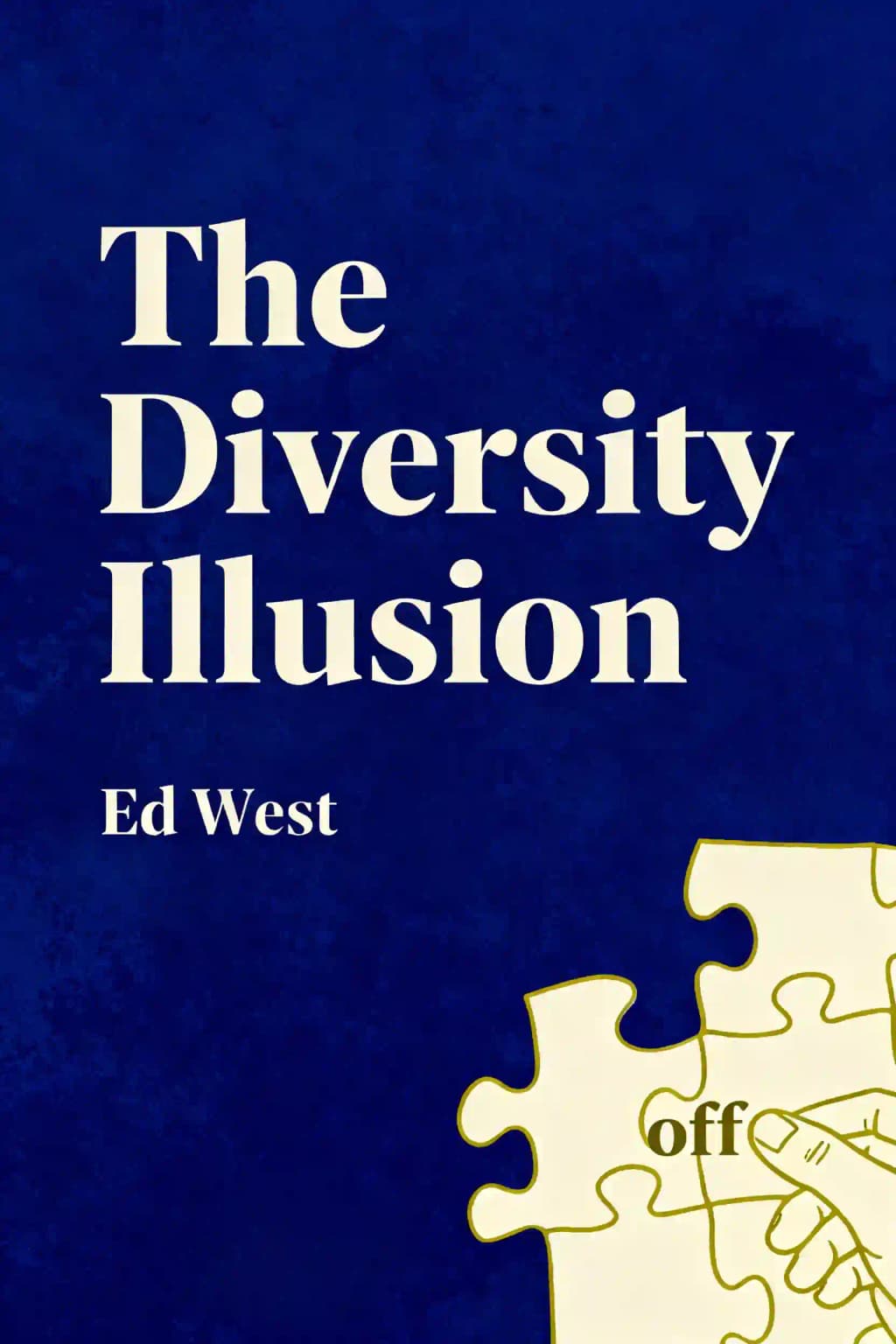
The Diversity Illusion: Britain's Cultural Transformation
When Gordon Brown called Rochdale grandmother Gillian Duffy a "bigoted woman" for expressing concerns about immigration during the 2010 election campaign, he inadvertently exposed a profound divide in British society. This moment crystallized what author Ed West explores in "The Diversity Illusion" - how Britain transformed from a largely homogeneous nation into one of the most diverse countries in Europe within a single lifetime, and how this transformation was never truly debated. The book challenges the orthodoxy that diversity is an unquestionable good, examining its impacts on social cohesion, economic equality, and democratic institutions.
What makes this work particularly compelling is its willingness to ask uncomfortable questions about immigration that mainstream politicians have long avoided. West's book has gained a cult following among policy makers concerned about integration, with former British Prime Minister David Cameron reportedly keeping it on his nightstand. As comedian and social commentator Douglas Murray noted, "West manages to be both scholarly and entertaining while tackling one of the most contentious issues of our time."
2장
The Accidental Experiment
Britain's demographic transformation represents perhaps the most profound social change in its modern history. Despite popular belief, Britain was never historically a "nation of immigrants." Research by geneticist Stephen Oppenheimer reveals that three-quarters of British ancestors arrived before the first farmers, with minimal genetic impact from later invasions. The English are only about 5.5% Anglo-Saxon, and even the Normans never accounted for more than 5% of British DNA. By the end of World War II, over 70% of British DNA dated back more than 6,000 years.
This genetic continuity remained largely intact until the post-war period. Before 1948, non-European immigration was extremely rare, with only 20,000-30,000 non-whites (0.04% of the population) in Britain by 1939. The arrival of the Empire Windrush in 1948, carrying 492 West Indian men and one stowaway woman, marked the beginning of a new era. Despite their British passports, these arrivals faced official apprehension. Eleven concerned MPs wrote to Prime Minister Attlee warning that an "influx of coloured people" would harm Britain's social cohesion.
Immigration began slowly but accelerated dramatically - from 1,500 West Indians annually in 1951 to over 26,000 by 1956. Different immigrant groups had different mindsets - West Indians largely saw themselves as British (87%), while only 2% of Indians and Pakistanis felt the same. Between 1951 and 1991, Britain's African-Caribbean and South Asian population grew from 80,000 to three million.
What's remarkable is that this transformation happened without deliberate public policy. Mass immigration began for economic reasons, was later justified through cultural benefits, and eventually "diversity" became not just a side effect but an official good. By 2009, 25% of births in Britain were to foreign-born mothers, and white Britons had become a minority in London. Projections suggest white Britons will become a minority nationwide around 2066 - a demographic change without precedent in peaceful history.
3장
The Shadow of Auschwitz
How did Britain embrace such dramatic demographic change with so little debate? The answer lies partly in the traumatic events of the 20th century. The First World War profoundly shook Western confidence in mankind, civilization, and especially patriotism. As classicist Goldsworthy Lowes Dickinson observed in 1931, young men who experienced the war had lost all belief in progress.
This disillusionment, followed by Hitler's rise and the Holocaust, undermined Europeans' faith in their civilization. As Christopher Caldwell wrote, "Europe's decision to welcome millions of foreigners was made at a time when it was not of sound mind and body," with Muslim immigration to Europe being "unthinkable without the anguished moral self-examination the Holocaust brought in its wake."
Our generation, born forty years after World War II, lived in Auschwitz's shadow. History was framed by Nazi atrocities, colonialism, the Civil Rights movement, and anti-apartheid struggles. Racism became our Victorian sexual impropriety - the defining moral wrong - making rational discussion of immigration nearly impossible.
Universalism emerged as a reaction to scientific racism, with revolutionaries seizing "the means of mental production" through universities in the 1960s. Marxist thinkers like Herbert Marcuse argued that Western society practiced "repressive tolerance" and that "outcasts and outsiders" including "the exploited and persecuted of other races" were society's saviors.
This philosophy holds that races and ethnic groups are merely social constructs and nations artificial creations. As Mario Vargas Llosa wrote, "The notion of 'collective identity' is an ideological fiction and the foundation of nationalism." Once this premise is accepted, opposing immigration becomes morally unjustifiable.
Yet just fifty years ago, the concept of nations based largely on ancestry was almost universally accepted outside the West. Today, arguing for nationhood based even partly on blood invites moral condemnation, placing the burden of proof on those opposing change rather than those advocating it - a revolutionary shift in thinking.
4장
The Economics of Diversity
The economic case for mass immigration combines cultural radicalism with economic liberalism: "do good and get rich" by importing workers from developing countries to perform jobs deemed too dangerous, difficult, dirty or demeaning for natives. However, this approach ignores a fundamental flaw - labor shortages are typically temporary while immigration is permanent.
When New Labour took power, they faced significant labor shortages alongside 5.8 million benefit claimants. Rather than reform the welfare system that disincentivized low-paid work, they chose immigration as the solution. This created a peculiar situation where over 95% of 750,000+ Polish arrivals found employment while unemployment remained high in areas like inner London, within walking distance of abundant job opportunities.
Tony Blair initially appointed Frank Field to "think the unthinkable" on welfare reform, but when Field did exactly that, he was reassigned. The government instead justified mass immigration on humanitarian grounds, though critics noted the hypocrisy of Labour MPs like Diane Abbott calling it "cruel" to suggest unemployed Britons relocate for work while supporting policies encouraging global migration for menial jobs.
Mass immigration primarily benefits large corporations seeking cheap, non-unionized labor, homeowners watching property values rise, and middle-class professionals employing immigrant services. Meanwhile, the working poor suffer wage depression - each 1% increase in immigrant-to-native ratio decreases wages for the lowest 10% of earners by 0.5%, while increasing wages for median and higher earners.
Immigration's true costs include infrastructure demands (schools, housing, healthcare), integration programs, and environmental impacts from population density increases. With current immigration levels, Britain's population will reach 91.9 million by century's end versus 57.3 million with zero immigration. Oxford demographer David Coleman estimates total integration costs at 12.8 billion annually.
The argument that immigration is necessary to support aging populations also fails scrutiny. The UN calculates that maintaining Europe's age structure would require 670 million immigrants by 2050 (60 million for Britain alone). This solution creates a perpetual cycle, as immigrants themselves eventually age and require replacement.
5장
The Progressive Dilemma
What society do we want? Liberals typically aspire to both a Scandinavian-style egalitarian welfare state and American-style racial diversity, yet these desires fundamentally conflict. As David Willetts termed it, this is the "progressive dilemma" - extensive welfare systems require most people to view benefit recipients as similar to themselves, which becomes harder as values and lifestyles diversify.
The tension between diversity and equality represents a fundamental progressive dilemma. The most egalitarian states in America (Vermont, New Hampshire) are among the most ethnically homogeneous, with a medium-strong correlation (0.453) between a state's inequality levels and its minority population size. Social capital-the trust and solidarity between people-underlies equality more than financial redistribution does.
Robert Putnam found that ethnic diversity correlates with lower social trust and reduced investment in public goods across multiple countries. People living near those of different races are more likely to oppose welfare spending. Harvard economists found that roughly half of Americans' resistance to European-style socialism could be explained by ethnic diversity, with more diverse US states spending less on social services.
Both the US and Britain have become steadily more unequal as they've grown more diverse. Britain reached its highest level of income inequality since post-WWII by 2007-8, with the bottom 50% of the population seeing their wealth share plummet from 12% in 1976 to just 1% by 2003.
The universalism that opposes all discrimination follows the Platonic tradition-morally difficult to argue against but unworkable in reality. Human nature likely requires both in-groups and out-groups, with xenophobia and xenophilia serving as competing drives that need balance. Too much hostility makes a tribe warlike; too much openness undermines altruism.
6장
The Mental Health Toll
Mental health studies reveal troubling patterns in diverse societies. While discrimination was traditionally blamed for higher rates of mental illness among minorities, evidence suggests migration itself is the primary factor. Dr. Swaran Singh's systematic review found no evidence that higher detention rates under the Mental Health Act were due to racism, despite facing public denunciation for these findings.
Studies across different countries consistently show elevated rates of serious mental illness in all migrant groups. Even Norwegian immigrants in Minnesota showed higher schizophrenia rates in the 1930s, and recent studies find Mexican immigrants in America suffer more mental illness than Mexicans at home. The pattern varies by group-Moroccans in the Netherlands have higher psychosis rates than Turkish immigrants, likely because Turks migrated as families while Moroccans came as single men. In Britain, African-Caribbeans are significantly more likely to be sectioned or restrained than the general population.
This mental health impact extends to natives too. Tim Lott's mother's suicide note-"I hate Southall, I feel so alone"-captures the disorientation many experience as their communities transform. As psychologist Martin Seligman observes, modern individualism and consumerism lead to depression when traditional buffers of religion, country and family weaken.
The decline of social trust correlates with rising crime rates. Richard Laylard notes that "the best predictor of crime in a community is the number of people each person knows within 15 minutes of their home." Japan, with its cultural homogeneity and high moral capital, saw no major looting after the 2011 tsunami while crime rose in every other industrialized nation between 1950-1980.
The fundamental tension in diverse societies lies between bonding social capital (within groups) and bridging capital (between groups). Putnam's research suggests diversity causes everyone to withdraw socially-trust decreases both between and within racial groups. Rather than making bigots more open-minded, diversity often leads people to stop talking to anyone.
7장
Multiculturalism: Rise and Fall
Multiculturalism emerged as the British state's solution to the challenges of its new colonial population, tracing back to Home Secretary Roy Jenkins's 1966 vision of "cultural diversity, coupled with equal opportunity in an atmosphere of mutual tolerance."
While "soft multiculturalism" refers to cultural interaction generally seen as positive, "hard multiculturalism" describes the specific government policy that each culture should be valued equally, with no supremacy for "white" British culture. It represents the application of anti-racist doctrine to managing a multi-ethnic society.
The policy's philosophical foundation lies in cultural relativism pioneered by anthropologists like Franz Boas, who concluded after studying the Inuit that "the idea of a 'cultured' person is merely relative." This marked a departure from earlier European progressive thought, which held that progress was attainable for all and some cultural forms were superior to others.
Multiculturalism reached its high watermark with the 2000 Commission on the Future of Multi-Ethnic Britain, which concluded that Britain was "both a community of citizens and a community of communities." Since citizens had "different needs," equality required "full account to be taken of their differences." The Parekh report stated that "Britishness" had "systematic, largely unspoken, racial connotations," making integration inherently racist.
State-funded multiculturalism accelerated in the 1980s following Britain's worst riots of the 20th century. The 1981 Brixton riots saw 5,000 rioters burn 30 buildings and damage 120 more, with over 100 cars destroyed and hundreds injured. The Conservative government responded by creating Britain's first "minister for race relations," Sir George Young, who aimed to "back the good guys" - moderate ethnic group leaders - with financial support for urban projects.
Multiculturalism mimics colonial structures, with "community leaders" replacing maharajahs as intermediaries between government and minority populations. This resembles European corporatist systems where churches and unions interact directly with government, but in Britain's diverse society, this approach aggravates sectarianism.
The 2005 Lozells riots in Birmingham demonstrated how multiculturalism's funding allocation by ethnic lines creates competition and resentment. A rumor about a black girl raped in an Asian shop sparked violence that left an innocent man dead, illustrating how racial tension exists between all groups, not just involving whites.
8장
The Diversity State
Diversity was conceived as a "liberal" idea, yet paradoxically, as society becomes more diverse, it grows less liberal. The naive belief that ethnic divisions can be eliminated through interaction and propaganda inevitably fails, leading to increasingly coercive state intervention to maintain peace and minimize conflict.
As diversity increases, so does the state apparatus needed to manage it. After Somali pupils became a majority in two Bristol schools, taxpayer-funded organizations immediately called for more "community cohesion" initiatives. Trevor Phillips suggested state-funded community centers for "meaningful interaction across ethnic lines," while Philippe Legrain advocated for "vigorous anti-discrimination laws" - all requiring massive state expansion.
Britain now has 116 anti-discrimination laws covering race, sex, sexuality, religion and disability. Harriet Harman's 2010 Equality Bill shifted from "anti-discrimination law" to "pro-fairness law," with Phillips boasting about "putting the fear of God into employers." The concept of "indirect discrimination" - where neutral policies disproportionately affect certain groups - creates legal ambiguity that terrifies small businesses unable to afford expensive legal battles.
After 2010, the burden of proof in race discrimination cases shifted to employers - once a complainant showed disadvantage, the employer had to prove it wasn't discrimination. This reverses centuries of legal tradition where authorities bear the burden of proof. The system particularly burdens small employers who can't afford legal expertise to navigate diversity requirements, while larger corporations use diversity programs as relatively cheap credibility.
Hate crime legislation in Britain began with the 1998 Crime and Disorder Act, creating offenses of racially aggravated assault, criminal damage and harassment. The concept has expanded dramatically, with even minor rudeness now potentially classified as a "hate crime" - resulting in 50,000 "racist incidents" logged in schools annually.
The Macpherson inquiry departed from traditional English legal practices, according to sociologist Norman Dennis. Rules of evidence were modified, witnesses harassed, and police representatives asked to "confess" to racism even in their private thoughts. The inquiry found the Metropolitan Police guilty of "institutional racism" without requiring evidence that blacks would have been treated worse than whites in the same situation.
9장
The Revolt of the Elites
The traditional Marxist theory of nationalism - that it creates false consciousness among workers - has been inverted. Today, it's the middle and upper classes who have abandoned national loyalty, becoming a "global footloose force" with few ties to any place. Christopher Lasch called this "the revolt of the elites," warning that the chief threat to social order now comes from those at the top of the hierarchy.
The working classes disappointed revolutionary theorists by embracing patriotism rather than internationalism, fighting for their nations in both World Wars and pursuing middle-class aspirations in the 1960s. So the Left found new vanguard groups for their revolutionary aims.
While Marxists claimed nationalism was a tool to distract workers from their true interests, recent decades have inverted this theory. National loyalty was actually a two-way relationship that obligated the elite to remain loyal to their workers. Freed from patriotic constraints, today's middle classes have simply replaced domestic workers with more compliant foreign ones.
The new global elite, what The Economist calls "international capital," has few ties to any place. When they advocate open borders, they envision the cosmopolitan business-class lounges they frequent, while for ordinary people, universalism means heightened security, reduced freedom, and overcrowding.
Diversity has profoundly altered working-class life in Britain. By 2009, 52 pubs were closing weekly, with many becoming mere museum pieces in areas of white flight. Football stadiums, once cathedrals of working-class life, have relocated to suburban locations as their supporters moved away from inner cities. The modern game, now as expensive as opera, reflects new English life - globally open yet disconnected from its roots, massively unequal, and civilized only through surveillance and high costs.
Labour MP Jon Cruddas acknowledged that immigration has functioned as "an informal reserve army of cheap labour," objectively reducing his constituents' social wage. This aligns with Marx's observation that the bourgeoisie seeks labor "as cheaply as possible" through maximizing supply. Ethnically diverse workforces are less able to organize for better conditions, and when native workers protest, they're labeled racist while business demands for looser immigration receive sympathetic media coverage.
10장
Democracy and Diversity
While Britain has achieved multiculturalism, it may not deliver the permanent liberal majority its advocates hoped for. Democracy, parliamentary rule and jury systems developed in remarkably homogeneous countries like England, Denmark and Holland. In contrast, the polyglot Ottoman, Austro-Hungarian and Russian Empires struggled with political liberalization until breaking into relatively homogenous nation-states.
Multi-racial societies don't vote along class lines but tribal affiliations. The American South, Northern Ireland and Lebanon demonstrate this pattern-"center-Left" parties typically draw support from just one ethnic group. In the US, higher black population percentages correlate with higher white Republican voting, reaching 85% white GOP support in states like Mississippi and Alabama.
This tribal voting threatens Labour's coalition. As former Cabinet Minister Chris Mullin noted, at least 20 Labour seats depend on Asian votes, with Muslims three times likelier to vote Labour than Conservative. The 2008 London mayoral election showed unprecedented racial voting patterns, while the Conservatives won only 16% of ethnic minority votes in 2010 despite their overall victory.
As diversity increases, democracy weakens. Mass immigration, consistently opposed by most citizens yet embraced by all mainstream politicians, has shaken public trust in politics. Bosnia's democratic transition unleashed bloodshed when Orthodox Christians feared losing position to the growing Muslim population. Lebanon's delicate Christian majority similarly collapsed through demographic change.
Even as Muslim birth rates decline, the demographic advantage persists because native European fertility rates continue falling. By 2030, Britain will have approximately 5.5 million Muslims (8.2% of the population), with cities like Oldham, Bradford, Blackburn and possibly Birmingham becoming Muslim-majority. Leicester will become Britain's first majority non-white city in the 2010s.
The most explosive situations aren't multicultural but bicultural societies. Northern Ireland demonstrates how a 35% Catholic minority created fatal division, with only 6% intermarriage compared to 67% in England. England's greatest damage has been to its gentleness, egalitarianism, social welfare institutions, secularism, unarmed police, and unobtrusive national identity.
11장
Beyond the Diversity Illusion
The 1950s social psychology classic "When Prophecy Fails" demonstrated a fascinating human tendency: when faced with evidence that contradicts deeply held beliefs, people often double down rather than change their minds. The study showed how doomsday cult members, rather than abandoning their beliefs when predictions failed, actually increased their commitment and sought validation from fellow believers. This psychological phenomenon, known as cognitive dissonance reduction, provides a compelling parallel to current debates about diversity and immigration.
Similarly, diversity advocates frequently respond to legitimate criticism with defensive mechanisms that mirror this behavior. When confronted with evidence of integration difficulties or social cohesion challenges, they often resort to false dichotomies, suggesting that any critique of current policies implies support for extreme measures like mass deportations. They frame multiculturalism as an unstoppable historical force, describing it as "inevitable" while using carefully sanitized language - "challenges" instead of problems, "tensions" rather than conflicts - to minimize genuine concerns.
The weakness in diversity advocacy often manifests in rhetorical shifts from policy discussion to character assessment. Supporters are portrayed as forward-thinking optimists, while critics are branded as fearful, hostile, or backward-looking. This characterization ignores nuanced positions revealed by Pew Research Center studies, which consistently show that many people maintain positive attitudes toward immigrants while opposing high levels of immigration - the "anti-immigration, but pro-immigrant" stance. This distinction proves crucial for understanding public sentiment and crafting effective policies.
A more balanced approach requires rejecting the current interpretation of diversity as unlimited globalism while acknowledging its benefits when properly managed. This means moving beyond simplistic Marxist interpretations of racial dynamics and accepting that human nature includes both cooperative and competitive impulses. Nation-states, despite their imperfections, have proven the most successful framework for developing and maintaining democratic institutions and social progress.
For Britain specifically, this translates into several concrete policy recommendations. Border control must be reasserted, with immigration policies designed to maintain stable ethnic majorities (approximately 80%) while welcoming highly skilled immigrants from all backgrounds. A more selective approach to immigration from developing nations should be balanced with easier movement between countries of similar economic development and cultural values.
Addressing religious tensions requires specific measures: restricting foreign funding of religious institutions, particularly mosques, to prevent external influence on community development. Organizations receiving state support must fully embrace British law and values. Most importantly, fostering a robust sense of national identity becomes crucial for social cohesion. This necessitates reforming equality laws that sometimes impede integration, moving away from failed multicultural policies, and reinforcing British history and cultural education in schools.
As Rabbi Jonathan Sacks insightfully observed about his immigrant parents: "They were proud to be English because the English were proud to be English. Indeed, in the absence of pride, there can be no identity at all." This observation underscores a fundamental truth: successful integration requires both a confident host culture and willing participants in that cultural framework.