Big Nine 개요
In "The Big Nine," Amy Webb reveals how nine tech titans control AI's future, potentially warping humanity. Harvard's Jonathan Zittrain calls it "intellectually crisp" - a wake-up call about the ethical battlefield where American profit motives clash with China's state control.
- The Big Nine warns AI’s risks emerge through gradual erosion, not sudden catastrophe
- Three AI futures: symbiotic partnership, cold war stalemate, or existential collapse
- G-MAFIA vs BAT: six US and three Chinese firms control AI’s trajectory
- Unchecked corporate AI development risks encoding bias into life-altering decisions
- Amy Webb urges proactive policy to prevent AI from dictating human choices
- "Gradual paper cuts" metaphor illustrates AI’s incremental threat to human agency
- Decentralized governance models essential to counter Big Nine’s AI monopoly risks
- AI ethics must evolve faster than corporate profit motives and nationalist agendas
- Personal data systems could enforce compliance with narrow definitions of "optimal" living
- Military AI integration risks escalating conflicts through unpredictable machine logic
- Webb’s scenarios reveal how small policy failures compound into existential AI threats
- Global governance needed to align AI with human values over corporate interests
Big Nine의 저자 소개
Amy Webb, author of The Big Nine: How the Tech Titans and Their Thinking Machines Could Warp Humanity, is a globally recognized quantitative futurist and founder of the Future Today Institute. A professor of strategic foresight at NYU Stern and Thinkers50’s #4 most influential management thinker (2023), Webb combines data-driven analysis with actionable insights on technology’s societal impact.
Her book explores artificial intelligence’s risks and opportunities, informed by her advisory roles with the World Economic Forum, U.S. Government Accountability Office, and Fortune 500 leaders.
Webb’s expertise extends to other works like The Signals Are Talking, which decodes emerging trends, and Data, A Love Story, a memoir blending analytics with personal narrative.
A BBC 100 Women honoree and frequent speaker at events like SXSW, her TED Talk on data optimization has garnered 6.7 million views. The Big Nine won the 2020 Gold Axiom Award for Business Technology and has been translated into 19 languages, solidifying Webb’s status as a leading voice on AI’s ethical future.
Big Nine에 대한 자주 묻는 질문
What is The Big Nine by Amy Webb about?
The Big Nine examines how six U.S. tech giants (Google, Amazon, Apple, IBM, Microsoft, Facebook) and three Chinese firms (Baidu, Alibaba, Tencent) are shaping AI’s future, often prioritizing profit over ethical safeguards. Amy Webb warns of AI’s unchecked growth eroding human autonomy and proposes strategies to align AI with humanity’s best interests.
Who should read The Big Nine?
This book is essential for policymakers, tech professionals, and anyone concerned about AI’s societal impact. It suits readers interested in tech ethics, geopolitical AI competition, and mitigating risks like algorithmic bias or corporate overreach.
Is The Big Nine worth reading?
Yes—it combines rigorous research with accessible scenarios to explain AI’s trajectory. Webb’s analysis of corporate incentives and her “three futures” framework make it a critical read for understanding AI’s risks and opportunities.
What are the “Big Nine” companies in Amy Webb’s book?
The “Big Nine” includes six U.S. firms (Google, Amazon, Apple, IBM, Microsoft, Facebook) and three Chinese companies (Baidu, Alibaba, Tencent). Webb argues their unchecked dominance in AI development risks prioritizing shareholder interests over global welfare.
How does The Big Nine explain artificial narrow intelligence (ANI) vs. artificial general intelligence (AGI)?
- ANI: Specialized AI (e.g., facial recognition) that outperforms humans in specific tasks.
- AGI: Hypothetical self-aware AI capable of human-like reasoning. Webb warns AGI could emerge unpredictably if current development trends continue.
What is the “three futures” framework in The Big Nine?
Webb outlines:
- Benign scenario: Collaborative global AI governance.
- Chaotic scenario: Unregulated AI causing economic instability.
- Catastrophic scenario: AI systems undermining democracy and human agency.
What key quotes define The Big Nine’s message?
- “We’re not heading toward a single catastrophe but the steady erosion of humanity”.
- “AI’s future hinges on who builds it—and whether we redesign its incentives”.
How does The Big Nine critique U.S.-China AI competition?
Webb argues both nations prioritize short-term gains over safety: U.S. firms focus on shareholder returns, while China’s state-driven AI aims for surveillance and social control. Neither model serves global ethical standards.
What solutions does Amy Webb propose in The Big Nine?
- Establish independent AI oversight bodies.
- Redirect funding to noncorporate AI research.
- Create global treaties to prevent AI weaponization.
How does The Big Nine use the metaphor of “paper cuts”?
Webb compares AI risks to “a gradual series of paper cuts”—small, cumulative harms like biased hiring algorithms or privacy erosion that collectively degrade societal trust.
What are the main criticisms of The Big Nine?
Some experts argue Webb underestimates grassroots AI innovation’s potential to counter corporate power. Others note her scenarios downplay near-term regulatory progress.
How does The Big Nine relate to current AI debates in 2025?
Its warnings about algorithmic bias and autonomous weapons remain urgent, particularly as global AI standards lag behind advancements in quantum computing and neural networks.
How does The Big Nine compare to other AI ethics books like Weapons of Math Destruction?
While O’Neil’s work focuses on present-day algorithmic harm, Webb offers a forward-looking analysis of AGI risks and systemic corporate failures, making it complementary to foundational AI ethics texts.
저자의 목소리로 책을 느껴보세요
지식을 흥미롭고 예시가 풍부한 인사이트로 전환
핵심 아이디어를 빠르게 캡처하여 신속하게 학습
재미있고 매력적인 방식으로 책을 즐기세요
Big Nine의 등장인물
- Amy WebbAuthor and quantitative futurist
- Xi JinpingPresident of China shaping AI national strategy
- Ada LovelaceEarly pioneer of computational machines
- Charles BabbageInventor of the Difference and Analytical Engines
Big Nine의 핵심 주제
- algorithmic bias
- geopolitical tech rivalry
- surveillance capitalism
- social credit systems
- corporate data monopoly
Big Nine의 명언
AI will reflect humanity's values - or lack thereof.
Humans had been holding AI systems back.
AI is being developed by homogeneous tribes.
Change occurs as thousands of gradual paper cuts.
Humanity should be at the center of AI's development.
나만의 학습 방법 탐색하기
 빠른 요약 모드
Big Nine 요약을 11분 만에 읽거나 듣기
Big Nine의 핵심 아이디어를 이해하기 쉬운 포인트로 분해하여 혁신적인 팀이 어떻게 창조하고, 협력하고, 성장하는지 이해합니다.

 재미있게 모드
Big Nine의 교훈을 22분 스토리로
생생한 스토리텔링을 통해 Big Nine을 경험하고, 혁신 교훈을 기억에 남고 적용할 수 있는 순간으로 바꿉니다.
 개인화 모드
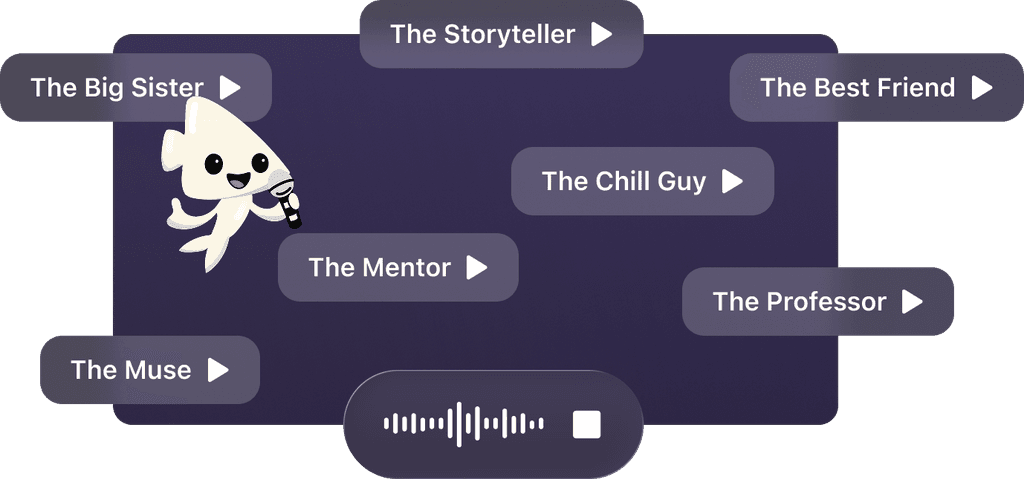
Big Nine을 나만의 학습 스타일로 경험하기
무엇이든 묻고, 학습 스타일을 선택하고, 나에게 맞는 인사이트를 함께 만들어보세요.
샌프란시스코에서 컬럼비아 대학교 동문들이 만들었습니다
"Instead of endless scrolling, I just hit play on BeFreed. It saves me so much time."


"I never knew where to start with nonfiction—BeFreed’s book lists turned into podcasts gave me a clear path."


"Perfect balance between learning and entertainment. Finished ‘Thinking, Fast and Slow’ on my commute this week."
"Crazy how much I learned while walking the dog. BeFreed = small habits → big gains."
"Reading used to feel like a chore. Now it’s just part of my lifestyle."

"Feels effortless compared to reading. I’ve finished 6 books this month already."
"BeFreed turned my guilty doomscrolling into something that feels productive and inspiring."

"BeFreed turned my commute into learning time. 20-min podcasts are perfect for finishing books I never had time for."
"BeFreed replaced my podcast queue. Imagine Spotify for books — that’s it. 🙌"

"It is great for me to learn something from the book without reading it."
"The themed book list podcasts help me connect ideas across authors—like a guided audio journey."
"Makes me feel smarter every time before going to work"
샌프란시스코에서 컬럼비아 대학교 동문들이 만들었습니다
"Instead of endless scrolling, I just hit play on BeFreed. It saves me so much time."
"I never knew where to start with nonfiction—BeFreed’s book lists turned into podcasts gave me a clear path."
"Perfect balance between learning and entertainment. Finished ‘Thinking, Fast and Slow’ on my commute this week."
"Crazy how much I learned while walking the dog. BeFreed = small habits → big gains."
"Reading used to feel like a chore. Now it’s just part of my lifestyle."
"Feels effortless compared to reading. I’ve finished 6 books this month already."
"BeFreed turned my guilty doomscrolling into something that feels productive and inspiring."
"BeFreed turned my commute into learning time. 20-min podcasts are perfect for finishing books I never had time for."
"BeFreed replaced my podcast queue. Imagine Spotify for books — that’s it. 🙌"
"It is great for me to learn something from the book without reading it."
"The themed book list podcasts help me connect ideas across authors—like a guided audio journey."
"Makes me feel smarter every time before going to work"
"Instead of endless scrolling, I just hit play on BeFreed. It saves me so much time."
"I never knew where to start with nonfiction—BeFreed’s book lists turned into podcasts gave me a clear path."
"Perfect balance between learning and entertainment. Finished ‘Thinking, Fast and Slow’ on my commute this week."
"Crazy how much I learned while walking the dog. BeFreed = small habits → big gains."
"Reading used to feel like a chore. Now it’s just part of my lifestyle."
"Feels effortless compared to reading. I’ve finished 6 books this month already."
"BeFreed turned my guilty doomscrolling into something that feels productive and inspiring."
"BeFreed turned my commute into learning time. 20-min podcasts are perfect for finishing books I never had time for."
"BeFreed replaced my podcast queue. Imagine Spotify for books — that’s it. 🙌"
"It is great for me to learn something from the book without reading it."
"The themed book list podcasts help me connect ideas across authors—like a guided audio journey."
"Makes me feel smarter every time before going to work"
"Instead of endless scrolling, I just hit play on BeFreed. It saves me so much time."
"I never knew where to start with nonfiction—BeFreed’s book lists turned into podcasts gave me a clear path."
"Perfect balance between learning and entertainment. Finished ‘Thinking, Fast and Slow’ on my commute this week."
"Crazy how much I learned while walking the dog. BeFreed = small habits → big gains."
"Reading used to feel like a chore. Now it’s just part of my lifestyle."
"Feels effortless compared to reading. I’ve finished 6 books this month already."
"BeFreed turned my guilty doomscrolling into something that feels productive and inspiring."
"BeFreed turned my commute into learning time. 20-min podcasts are perfect for finishing books I never had time for."
"BeFreed replaced my podcast queue. Imagine Spotify for books — that’s it. 🙌"
"It is great for me to learn something from the book without reading it."
"The themed book list podcasts help me connect ideas across authors—like a guided audio journey."
"Makes me feel smarter every time before going to work"

Big Nine 요약 다운로드
Big Nine 요약을 무료 PDF 또는 EPUB으로 받으세요. 인쇄하거나 오프라인에서 언제든 읽을 수 있습니다.