1장
When AI Becomes Our Second Mind
What if you had a second brain-one that could process information at superhuman speeds, recall every fact you've ever encountered, and even help you create art or predict the future? In 2023, OpenAI's ChatGPT became the fastest-growing consumer application in history, reaching 100 million users in just two months. This milestone marked a turning point in our relationship with artificial intelligence, bringing what was once science fiction directly into our daily lives. Daniela Rus, director of MIT's Computer Science and Artificial Intelligence Laboratory, has witnessed this revolution firsthand. In "The Mind's Mirror," she and co-author Gregory Mone explore how AI functions as a reflection of human cognition-amplifying our capabilities while revealing our limitations. The book has garnered praise from tech leaders like Bill Gates and Satya Nadella, who call it essential reading for understanding AI's transformative potential. As we stand at this technological crossroads, Rus offers a cautiously optimistic vision: AI as a partner that enhances human potential rather than replacing it.
2장
The Seven Superpowers of AI
AI is transforming our world by enhancing human capabilities across multiple dimensions. These aren't just incremental improvements but fundamental shifts in what we can accomplish. The seven "superpowers" AI offers-speed, knowledge, insight, creativity, foresight, mastery, and empathy-function as cognitive amplifiers, expanding our mental reach in ways previously unimaginable.
Speed, the first superpower, demonstrates AI's revolutionary impact. AI can process information and complete tasks at rates that dwarf human capabilities. In healthcare, systems like Codametrix accelerate medical coding five times faster with 60% fewer insurance denials. GitHub's Copilot helps developers complete tasks in less than half the usual time, with 88% reporting faster completion. Most impressively, researchers have used multiple AI systems to identify potential cancer drugs in just 30 days instead of years.
Knowledge, the second superpower, manifests in AI's ability to process and synthesize vast amounts of information. Systems like GPT-4 can analyze millions of documents across multiple languages in seconds, while specialized medical AIs can reference thousands of research papers to assist in diagnosis. Google's DeepMind has demonstrated mastery of complex scientific problems, from protein folding to nuclear fusion calculations.
The insight superpower enables pattern recognition at unprecedented scales. In finance, AI systems detect fraud patterns across billions of transactions. In manufacturing, predictive maintenance AI can spot equipment failures before they occur, saving millions in downtime. Climate scientists use AI to identify subtle patterns in atmospheric data that human analysts might miss.
Creativity, perhaps the most surprising superpower, is evident in AI's ability to generate novel solutions and artistic works. DALL-E and Midjourney create unique images from text descriptions, while AI composers like MuseNet generate original music. In engineering, AI has designed more efficient aircraft components and discovered new materials through creative combination of existing elements.
But these tools aren't autonomous magicians-they're "mental accelerants" that require thoughtful implementation. We must carefully consider which tasks should remain human responsibilities and address issues of privacy, security, ethics, and bias. The goal isn't to replace human judgment but to enhance it, allowing us to focus on higher-level thinking while AI handles routine cognitive labor.
When implemented wisely, AI acceleration creates a virtuous cycle: faster completion of routine tasks creates more time for creative thinking, which in turn leads to new innovations that further enhance productivity. This isn't about working machines harder-it's about working humans smarter, creating a partnership where AI amplifies human potential rather than replacing it. Organizations that successfully integrate these AI superpowers often see compound benefits: improved decision-making, increased innovation, and better resource allocation across their operations.
3장
Unlocking the Infinite Library
I've always been fascinated by libraries-from Harvard's Widener with its 3.5 million volumes to the Royal Society's collection housing Newton's original manuscripts. But today's information explosion creates a problem of abundance rather than scarcity. Scientific papers double every 15-17 years, with robotics and AI papers quadrupling from 1,500 to 6,500 between 2015-2021. In biology alone, over 2 million new papers are published annually. Even specialists struggle to keep up with developments in their narrow subfields. We need an AI Librarian to transform this overwhelming data into accessible knowledge.
Unlike traditional search engines that "pull" information when requested, an AI Librarian proactively "pushes" relevant information based on understanding our needs and context. For instance, while researching a medical condition, it might surface relevant clinical trials, recent treatment breakthroughs, and statistical outcomes across different demographics. Large language models, trained on humanity's written knowledge, function as both microscopes revealing hidden details and telescopes extending our vision into possibilities. They can analyze patterns across millions of documents in seconds, identifying connections human researchers might take years to discover. Services like Perplexity and MIT's Memex-inspired projects are developing these capabilities, potentially creating personalized knowledge assistants tailored to individual needs, learning styles, and expertise levels.
The challenge remains quality control-these systems must be built on verified information, not misinformation. Legal tools like CoCounsel demonstrate how domain-specific AI librarians can work with verified databases while allowing professionals to focus on higher-level reasoning. In legal research, CoCounsel can analyze thousands of cases and statutes to find relevant precedents, while ensuring all citations are accurate and current. Similar assistants could transform medicine, academia, and even everyday tasks by connecting digital knowledge to the physical world. Imagine an AI assistant that could instantly link your car's check engine light to relevant repair manuals, local mechanic reviews, and cost comparisons.
What makes these AI knowledge systems revolutionary is their ability to synthesize information across domains. Traditional expertise often exists in silos, but AI can identify connections between seemingly unrelated fields. For example, algorithms developed for analyzing protein folding have been adapted to optimize traffic flow in cities. Materials science insights have led to breakthroughs in battery technology. This cross-pollination of ideas could accelerate innovation in ways we've never seen before, helping us address complex challenges that require interdisciplinary approaches. Climate change solutions, for instance, require integrating knowledge from atmospheric science, economics, engineering, and social psychology - a task perfectly suited for AI knowledge systems.
4장
Seeing Patterns Humans Miss
Insight represents a deeper understanding-connecting seemingly disparate elements like linking a scoop of vanilla ice cream back to the cow in the pasture and the grass that feeds it, or recognizing how a butterfly's wing pattern relates to its evolutionary survival. While we shouldn't outsource insight discovery entirely to AI, these tools can serve as valuable assistive insight engines that complement human thinking in three key ways, fundamentally transforming how we uncover new knowledge.
First, AI excels at finding patterns in massive datasets that would overwhelm human analysts. For example, in genomics research, AI systems can analyze millions of genetic sequences to identify subtle mutations linked to disease resistance, a task that would take human researchers decades to complete. Similarly, in climate science, AI models can detect complex weather patterns across centuries of historical data, revealing long-term trends that might escape traditional analysis.
Second, AI "thinks" differently than humans, potentially uncovering connections we'd miss due to our cognitive biases and limited attention spans. In financial markets, AI systems have identified counter-intuitive correlations between seemingly unrelated economic indicators. For instance, some AI models have found connections between social media sentiment patterns and subsequent market movements that human analysts had overlooked due to conventional thinking.
Third, AI can generate new ideas worth consideration, serving as a creative partner in problem-solving. In drug discovery, AI systems have proposed novel molecular structures that human chemists hadn't considered, leading to promising new pharmaceutical candidates. These AI-generated suggestions often challenge established assumptions and push researchers to explore unconventional solutions.
Scientific progress typically advances through steady knowledge accumulation punctuated by paradigm-shifting disruptions-like moving from geocentric to heliocentric models of the universe or the transition from Newtonian to quantum physics. These revolutionary shifts parallel evolution in nature, where species experience long periods of stability interrupted by rapid changes. AI might help us identify when we're approaching such paradigm shifts by spotting anomalies in data that challenge existing theories, much like how AI systems have recently identified unexplained phenomena in astronomical data that suggest gaps in our current understanding of physics.
The most powerful insights often come from combining human intuition with AI pattern recognition. When doctors work with AI diagnostic systems, they achieve higher accuracy than either could alone. The AI catches subtle patterns in medical images that humans might miss, such as early-stage tumors or rare disease indicators, while physicians bring contextual understanding and clinical judgment that AI lacks. In radiology, for instance, AI systems can detect microscopic changes in tissue density that human eyes can't perceive, but radiologists provide crucial interpretation of these findings within the patient's broader medical context. This symbiotic relationship represents the future of insight generation-not AI replacing human thinking, but enhancing it through complementary capabilities and collaborative problem-solving.
5장
Creating Beyond Human Imagination
In November 2022, Turkish-American artist Refik Anadol launched "Unsupervised" at New York's Museum of Modern Art. For this groundbreaking work, Anadol trained an AI model on 380,000 images representing nearly 200,000 works from MOMA's collection. The resulting two-story display was connected to both a ceiling camera tracking visitor movements and local weather data feeds, creating an interactive experience where the artwork responds dynamically to environmental changes. Despite some critical backlash questioning authorship given AI's central role, the installation became part of MOMA's permanent collection, demonstrating AI's potential as a tool that enhances human creativity rather than replacing it.
Creativity-the ability to conceive something new and original-has long been considered a uniquely human trait. But AI tools are democratizing creative capabilities, allowing everyone from children to professional artists to express themselves in new ways. They could transform a child's wall drawings into interactive animations or help young playwrights overcome writer's block. Parents might create personalized children's books in weeks instead of years.
Some artists fear these tools will devalue their work, but technology has always changed art-just as photography initially threatened painting but ultimately pushed artists toward new forms like Impressionism and Cubism. The most successful artists are adapting by incorporating AI into their creative process while maintaining their unique vision. Artist Steve McDonald, for instance, trains custom diffusion models on his hand-drawn dragons and villages, integrating AI into a complex creative process that still bears his distinctive artistic fingerprint.
Beyond the arts, AI creativity extends to designing new products, vehicles, renewable energy systems, and novel foods. Despite these advances, there remains something unique about human creativity that AI cannot fully replicate-the emotional depth and lived experience that infuse truly meaningful creative works.
6장
Predicting Multiple Futures
Like Harry Potter's Marauder's Map showing people's movements through Hogwarts, AI systems can now predict future outcomes based on patterns in data. Using approaches like deep evidential learning, these systems generate multiple possible futures with associated probabilities, learning from real-time evidence to improve predictions. While not predicting exact outcomes, they identify likely paths and readjust when unexpected turns occur.
This foresight capability has applications far beyond fictional scenarios. Researchers have developed high-resolution AI models to predict traffic accident risk, incorporating satellite imagery, road maps, historical accident data, and traffic flow information. By shrinking map resolution to five-meter pixels, these models can identify specific high-risk areas like on-ramps and intersections, allowing city planners to implement safety measures even in areas without historical accident data.
In healthcare, AI-powered foresight offers tremendous value by analyzing data from electronic medical records, wearable devices, genetic tests, and other sources. Researchers like MIT's Manolis Kellis use genetic data to predict the effects of gene variations, enabling early interventions that may prevent disease onset.
Environmental prediction represents another frontier. Oceanographer Raymond Schmitt leveraged AI to verify his theory that ocean salinity could predict rainfall patterns. His neural network model, trained on sea surface salinity and other data sources, outperformed standard forecasting methods by 92% in predicting Midwest rainfall. This breakthrough led to Salient Predictions, a company helping farmers prepare for weather events, which received Gates Foundation funding to assist small farmers in East Africa.
These predictive capabilities are transforming business planning across industries. Insurance companies forecast claims and expenses, while agricultural technology provides foresight into potential crop yields based on weather, soil health, and management practices-helping farmers protect their precious crops against frost and other threats.
7장
Learning Faster with AI Assistance
The most popular sport globally is football (soccer), but badminton ranks as a surprising runner-up with hundreds of millions of players worldwide. Researchers are developing an AI-based analytics tool to improve badminton technique across skill levels. By analyzing video of players at different proficiency levels, the AI classifies new players and offers specific technical improvements-a concept applicable to virtually any physical skill or profession.
While many students already use AI tools like ChatGPT for assignments, these technologies present both challenges and opportunities for education. Though AI can produce impressive results, educators worry about learning outcomes. However, some teachers have found creative approaches, like Kelly Gibson's method of having students generate theses, use AI for first drafts, then focus on revising the AI's work. Research shows promising results in computer science education too, where students using AI coding assistants not only completed more tasks but demonstrated better understanding when modifying code without AI help.
Personalized one-on-one tutoring has long been known as an extremely effective teaching method, but its impracticality has limited it to the wealthiest sectors of society. AI tutors could democratize this approach by providing subject knowledge, tracking student understanding, and adjusting lessons to match individual needs. Research already shows promising results-Emma Brunskill's Stanford team developed an intelligent math tutor that adapts in real time based on student engagement and progress. Their experiment teaching volume concepts through interactive narratives with friendly monster avatars showed greatest impact on lower-performing students, helping shrink achievement gaps.
Beyond education, AI mastery tools extend into businesses and personal skill development. Organizations can use AI to create personalized learning paths for upskilling employees based on individual needs and goals. For hobbyists, AI can provide real-time guidance beyond traditional instructional videos-offering personalized feedback on everything from guitar playing to home repairs. From virtual sports coaches to language learning assistants, AI teachers will help people advance from beginner to mastery level in far less time than ever before, enabling lifelong learning across academic disciplines and practical skills alike.
8장
Building Bridges Between Minds
Empathy may not be a traditional superpower like speed or flight, but it's an underrecognized force that AI is already enhancing by opening new lines of communication. Researchers are working with interdisciplinary teams to decode sperm whale communication, not necessarily to speak with them like Ahab might have with Moby Dick, but to understand their intelligence and inspire conservation through empathy. Stephen Wolfram likens ChatGPT to the first telephone, but instead of connecting just two people, these language models can interface between humans and almost anything-machines, software, even animals.
The AI boom has increased the use of intelligent chatbots in customer service, though organizations likely won't completely replace human agents since those relationships are too valuable. A study of 5,179 customer support agents at a Fortune 500 software firm found that AI-based conversational assistants increased productivity by 14% on average, with even greater impact on less experienced agents. Surprisingly, customers treated human agents better after AI interactions and were less likely to escalate to managers. The AI actually strengthened subsequent human interactions, suggesting these tools promote empathy rather than diminish it.
In healthcare, AI shows potential to enhance doctor-patient communication. One study found patients actually preferred AI-generated answers to medical questions over those from physicians, judging them to be more empathetic. Doctors struggling with bedside manner could potentially use these models to enhance the compassionate quality of their interactions.
AI could even help teach children empathy, starting as young as age four. While we're far from creating sentient toys like those in horror films, relatively simple AI-powered toys could model empathetic behaviors. An AI-enhanced doll with privacy protections could teach children lessons in age-appropriate language and demonstrate caring behaviors, like encouraging a child to pet the family dog or sharing stories of helping others.
Perhaps most exciting is AI's potential to break language barriers through instant, culturally appropriate translation. Rather than typing into smartphone apps, we might have fluid conversations with people globally in their native languages. Some researchers are even exploring more audacious possibilities, like silent thought-based communication that could connect humans in unprecedented ways.
9장
How AI Actually Works
The successful integration of AI into our lives depends on understanding its fundamental principles. While deep technical knowledge is essential for developers, everyone benefits from grasping AI's capabilities, limitations, and effective applications. AI aims to create systems that perform tasks requiring human intelligence, from pattern recognition to complex functions like reasoning and language understanding.
Modern AI systems rely on several key approaches. Predictive AI forecasts outcomes based on historical patterns through machine learning models that recognize and classify patterns. Neural networks, popular predictive models, consist of artificial neurons connected by weighted edges that process information through layers: input layers receive data, hidden layers transform it, and output layers produce predictions. Despite their power, these models lack semantic understanding-when identifying objects like cups, they merely match pixel patterns from training data without grasping fundamental properties like the fact that cups hold liquid.
Generative AI produces new material rather than merely classifying outcomes. Transformers, the engine behind ChatGPT and other large language models, operate like complex machines with billions of adjustable parameters. Trained on trillions of words across websites, books, and academic papers, they assign each word numerical coordinates within a hyper-dimensional space (often exceeding 10,000 dimensions). The transformer learns by predicting the next word in sentences, similar to an advanced auto-complete function. Despite generating coherent responses, transformers rely on statistical patterns without true comprehension, sometimes producing hallucinations or incorrect information.
For image generation, models like Stable Diffusion flip traditional machine learning's relationship between images and labels. Instead of analyzing images to identify patterns that correspond to labels like "car," generative models start with words and create images with countless variable characteristics. The model trains by gradually adding random noise to clear images until they become unrecognizable, then learns to reverse this process-reconstructing coherent images from noise.
Reinforcement learning trains AI agents to maximize rewards through trial and error. At its core is an agent interacting with an environment, taking actions based on the current state, and receiving rewards that indicate effectiveness. This approach balances exploration (trying new actions) against exploitation (sticking with known good actions). In robotics, reinforcement learning teaches machines complex tasks that would be impossible to program manually.
10장
Navigating AI's Promise and Peril
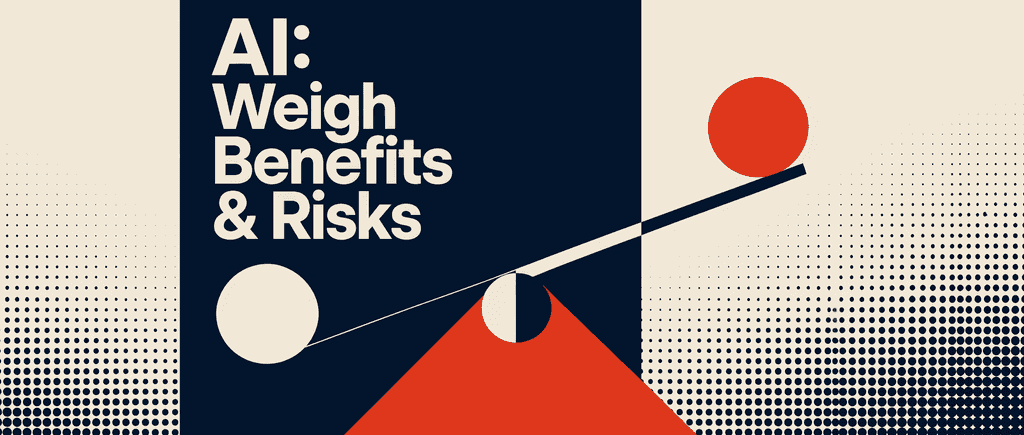
AI presents both perils and promise as we navigate concerns from privacy to jobs and climate impacts. We must balance these concerns while recognizing AI's potential and refining our understanding of its capabilities now and in the future. This uniquely powerful technology has become unexpectedly accessible-from room-sized computing machines to AI chatbots on pocket devices.
The risks span multiple timeframes: current concerns (job displacement, misinformation, privacy violations, bias, cyberattacks), medium-term dangers (autonomous weapons, economic inequality, skill loss, ethical dilemmas in critical sectors), and long-term threats (superintelligence alignment, over-reliance vulnerabilities, irreversible AI decisions in fields like ecology or genetics). Despite these risks, halting AI research isn't viable-bad actors would simply race ahead. Instead, we must direct AI's evolution with appropriate technical safeguards, regulations, and ethical guidelines.
As a technologist, I naturally gravitate toward practical solutions. If we can create phenomenal AI applications, we can equally design creative solutions to prevent misuse or harm. We should incentivize more students and startups to address these concerns, encouraging development of AI tools that detect bias, alert people to deepfakes, and defend against malicious actors.
We need better guardrails and defenses against bad actors while allowing for innovation. Guardrails and regulations have limited effect if companies can ignore them without consequences. The EU's AI Act takes a strong approach with severe penalties for non-compliance. Any accountability approach should support innovation while incentivizing compliance.
Despite concerns about job displacement, history shows technology typically creates more employment than it eliminates. MIT economist David Autor found that 85% of employment growth in the last eighty years has been technology-driven, with 60% of today's workers holding jobs that didn't exist in 1940. The wisest approach is focusing less on whether AI will "steal" jobs and more on how it will change them, with individuals preparing through upskilling and businesses rethinking operations to leverage these new technologies effectively.
Beyond practical applications, AI offers insights into human nature itself. While AI can create art and write books following human programming, it cannot capture Van Gogh's emotion or Socrates' philosophical depth. AI produces facsimiles, lacking the passion, knowledge, and experience behind humanity's greatest works. Our physical interaction with the world fundamentally distinguishes us from AI. While language models process vast data, they lack direct physical experience with reality. Humans possess self-awareness and consciousness that AI fundamentally lacks. These models have no desires, motivations, or sense of self.
The responsibility for steering AI's development lies with innovators, policymakers, and citizens-decisions made today will determine whether AI enhances human experience or causes societal upheaval. We're designing technological mirrors of our minds that should be used to protect each other, our future, and our planet.