1장
The Final Frontier: Your Brain Under Siege
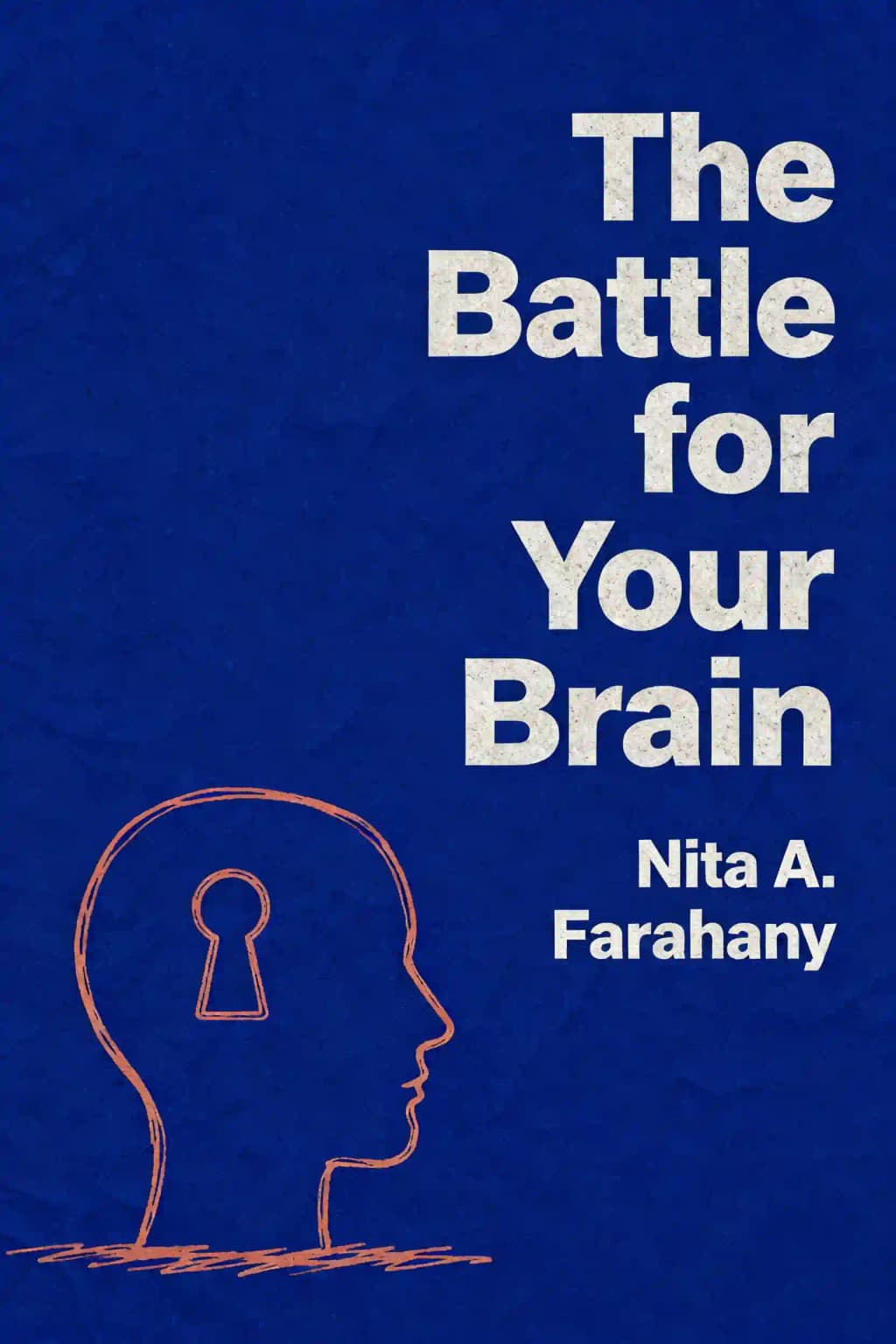
In a world where our every click, purchase, and location is tracked, one last private space remains-our minds. But for how long? While giving a TED talk in 2018, neuroscientist and legal scholar Nita A. Farahany demonstrated a sleek wristband that could detect electrical signals from her brain, translating them into commands for a computer. The audience gasped. This wasn't science fiction; it was a glimpse into our immediate future. What Farahany revealed that day was both thrilling and terrifying: consumer neurotechnology is going mainstream, and our brains-the last fortress of privacy-are about to be breached.
"The Battle for Your Brain" has been praised by tech luminaries like Tristan Harris (co-founder of the Center for Humane Technology) as "essential reading for anyone who cares about the future of humanity." The book has gained particular relevance as companies like Neuralink and Meta race to develop brain-computer interfaces, with Elon Musk recently announcing the first successful human implant. As neurotechnology advances from medical applications to consumer products, Farahany's warnings about the need for "cognitive liberty" have never been more timely or urgent.
2장
The Last Fortress Falls: How Your Brain Is Being Tracked
When Farahany attended a 2018 summit, she witnessed something remarkable: a sleek wristband from CTRL-labs that could detect brain signals sent to muscles using electromyography (EMG). Unlike earlier clunky neurotechnology, this elegant device could potentially replace keyboards and mice by allowing users to type with their minds. The revelation was stark-consumer neurotechnology was poised to go mainstream, and people would likely trade brain privacy for convenience, just as they've surrendered personal data for social media access.
This data commodification extends beyond tech giants to health companies. Consider 23andMe, which made headlines with its $300 million deal to share consumer genetic data with GlaxoSmithKline. Through its business model and privacy policies, 23andMe has included 80% of its 10.7 million customers in a database associating genome sequences with demographics. Board member Patrick Chung revealed this was always the plan: "The long game here is not to make money selling kits... Once you have the data, [23andMe] does become the Google of personalized health care."
Meta's acquisition of CTRL-labs for up to $1 billion signals a new frontier where mainstream tech companies use neurotechnology as their primary interface. Apple appears ready to integrate EEG sensors into AirPods, while companies like Emotiv and NextSense develop EEG-earbuds. Snap acquired NextMind to integrate brain wave controllers into augmented reality, and Microsoft has patented an EEG device for web browsing that rewards users with cryptocurrency.
What makes brain data uniquely sensitive? It's like a personal diary that someone not only reads but secretly copies to access anytime. Even when filtered for immediate use, this data can be stored and later mined for additional insights about health risks or personal characteristics without your knowledge. It reveals involuntary functions and emotional reactions that occur outside conscious control. Even when we try to conceal feelings or maintain privacy, our brains register these states, making them potentially decodable. Researchers have demonstrated how "brain spyware" can extract sensitive information like PIN codes from gamers using neural interfaces by measuring unconscious brain responses to subliminal images.
Will people willingly surrender their neural data? IKEA's marketing campaign suggests yes. In 2019, IKEA displayed limited-edition rugs in Belgium where prospective buyers wore EEG headsets to measure their emotional response. If their "uplift score" was sufficient, they could purchase the rug. Disturbingly, not a single customer objected to using the device. This signals a concerning future where brain access becomes normalized as a gateway to goods and services, potentially becoming mandatory in workplaces-no wearable, no job.
3장
Your Brain at Work: The New Frontier of Workplace Surveillance
Kerry Cuthbert was suspended after driving 1,470 miles non-stop from Wisconsin to Florida, far exceeding legal limits for long-haul truckers. His employer only discovered this dangerous violation when Kerry bragged about it on social media. This incident highlights why companies are turning to brain monitoring-to prevent accidents before they happen.
For over a decade, SmartCap Technologies has provided brain monitoring technology to thousands of companies across mining, construction, trucking, aviation, and railway industries. Their LifeBand, an EEG headband that can be integrated into various headwear, processes brain wave data to assess fatigue levels. When dangerous drowsiness is detected, the system alerts both employee and manager, helping prevent accidents caused by fatigue.
While consumers are tracked for marketing purposes, employees face increasing surveillance of their movements, keystrokes, and now even their brains. UK grocery chain Tesco pioneered workplace surveillance in 2013 with armbands tracking warehouse workers' movements and bathroom breaks. This trend has expanded globally, with companies like Amazon using wristbands and machine learning cameras to monitor workers. As Stacy Mitchell of the Institute for Local Self-Reliance explains, this creates an environment where workers feel constantly rushed and can "never actually succeed" as performance targets continuously increase.
Surveillance now extends to white-collar workers too, with 78% of employers using "bossware" to monitor remote employees through screenshots, keystroke tracking, and desk photos. Now, employers are beginning to monitor brain activity to detect fatigue and attention levels.
Companies like Emotiv with their MN8 earbuds can track cognitive states in real time, allowing employers to monitor when attention flags and suggest breaks. Other systems provide workload assessments to optimize workforce productivity. Research shows EEG can even classify the type of activity an employee is engaged in. While some applications could empower workers through self-monitoring, the punitive implementation is concerning, as employees fear employer access to their brain data more than any other entity. Current privacy laws offer little protection, as consent is often built into employment agreements.
Brain surveillance creates dangerous power imbalances in workplace negotiations. Imagine a manager monitoring an employee's brain activity during salary negotiations, detecting the employee's true emotional reactions despite verbal attempts to negotiate for more. This creates fundamentally unfair negotiations where employees "don't stand a chance." Beyond negotiations, employers could use neurotechnology to detect romantic feelings between employees, political views, cognitive decline, or even monitor brain synchrony patterns to identify potential union organizing before it begins.
To protect workers, we must limit brain data collection to narrowly tailored purposes, implement employee data audit rights, and establish clear notification policies when brain data might be used for sanctions. Without explicit laws, norms and expectations protecting mental privacy, the dignity of workers and the future of work itself are at risk.
4장
Big Brother Is Listening: Government Surveillance of Thought
The case of Chinese tennis star Peng Shuai, whose sexual assault allegations against a former vice premier were quickly censored, illustrates how governments already suppress free speech. Even more concerning is that neurotechnology now allows surveillance of people's thoughts themselves. China has implemented EEG monitoring for high-speed rail conductors, utility workers, and even primary school students, with one school requiring fifth-graders to wear headbands that signal their attention levels to teachers and parents. While some students reported improved performance, others faced punishment for low attention scores.
Governments worldwide are investing heavily in brain research. In 2013, President Obama launched the BRAIN Initiative with $100 million to develop tools for understanding brain function, which has since grown to nearly $5 billion. This funding has supported breakthroughs like Professor Edward Chang's "speech neuroprosthesis" that translates brain signals into text for paralyzed people. By 2016, scientific academies worldwide called for coordinated government funding of brain research, leading to the International Brain Initiative to encourage global research collaborations.
Freedom of thought, though explicitly protected as an absolute human right in international declarations, has been under-theorized outside of religious contexts. In the US, the First Amendment implicitly protects thought as a precursor to speech, but offers little guidance on what constitutes thought or what actions would violate that freedom. Now that AI and neurotechnology can potentially decode our emotions and thoughts, scholars and human rights advocates are calling for updated protections.
As neural interfaces potentially replace keyboards and mice, brain activity could soon be incorporated into nationwide identification systems. The uniqueness of each person's functional brain connectome makes it possible for algorithms to extract features that are both individual-specific and stable over time. Brain-based biometric authentication offers security advantages over other biometrics because it's concealed, dynamic, and complex. Governments are already investing heavily in biometric authentication systems-China has extensive facial recognition and DNA databases, while the US has expanded biometric collection across eighteen federal agencies.
Government surveillance has profound chilling effects on free expression and thought. Research by Dr. Elizabeth Stoycheff demonstrates that people primed to think about mass surveillance become significantly more reluctant to share nonconforming views. This reinforces decades of research on the "spiral of silence"-the phenomenon where people self-censor unpopular opinions.
Brain fingerprinting technology has already been used in criminal cases. In one instance, James Grinder, suspected in a 1984 rape and murder but lacking sufficient forensic evidence, agreed to brain fingerprinting, believing he could beat it. When results showed his brain recognized crime scene details, he pleaded guilty rather than risk a death penalty trial. Beyond brain fingerprinting, researchers are exploring N400 brain responses to detect "incongruent" versus "congruent" information, while DARPA's Neural Evidence Aggregation Tool investigates this approach. Other methods use fMRI to detect brain activity patterns associated with lying.
Constitutional protections like the Fourth and Fifth Amendments likely won't shield against brain probing. Courts may treat brain data like other physical evidence rather than as protected testimony. The difference is that brain fingerprinting requires actively provoking responses rather than passively collecting data-though future wearable neurotechnology might enable passive brain monitoring that could be used as evidence against us in criminal cases.
5장
Know Thyself: The Right to Access Your Own Brain Data
NFL prospect Justin Skyler Fields was expected to be a top-five draft pick in 2021, but eight days before the draft, he revealed his epilepsy diagnosis. Despite managing his condition well with medication and never missing a college game, Fields dropped to the eleventh pick overall. This illustrates the stigma still attached to neurological conditions, even when well-managed.
Epilepsy affects fifty million people worldwide, with seizures ranging from brief disorientation to full unconsciousness. About one-third of adults and 20-25% of children with epilepsy have drug-resistant forms, leaving them with limited options. Consumer neurotechnology offers promising alternatives. EEG combined with machine learning can identify neural signatures of imminent seizures. Researchers at Ben-Gurion University have developed Epiness, a wearable EEG device claiming to predict seizures up to an hour before they occur, sending smartphone warnings. With such technology, epilepsy patients could drive safely or take medication only when needed.
Dr. Richard Davidson, a neuroscientist who had meditated for over forty years, shifted his research focus after the Dalai Lama challenged him to study kindness and compassion using neuroscience tools. Davidson's team monitored Tibetan monk Yongey Mingyur Rinpoche's brain waves during compassion meditation, discovering remarkable bursts of electrical activity that occurred consistently across twenty-one other monks. These studies proved EEG can detect neural changes during meditation and that meditation significantly affects the brain.
Beyond meditation, EEG monitoring shows promise for early detection of brain tumors and neurological diseases. With 68-85% of brain tumor patients showing abnormal EEG profiles at diagnosis, regular monitoring could potentially catch deadly glioblastomas in treatable stages. South Korean startup iMediSync has developed an EEG device claiming 90% accuracy in detecting early Alzheimer's, Parkinson's, PTSD, and other conditions.
A decade ago, brain tracking was unthinkable for healthy individuals-you'd need a specialist to order medically warranted imaging that only provided a snapshot of your brain at a specific moment. Now, consumer-based self-quantification is transforming how we learn about our biological selves, with local pharmacies offering home testing kits for everything from heart rate to blood sugar to attention span.
Yet progress faces resistance as experts attempt to insert themselves between consumers and their data. This pattern repeats throughout medical history: clinical thermometers were once physician-only tools; home pregnancy tests weren't approved until the 1970s due to concerns about women's competence; and HIV home tests were blocked for 25 years over fears people might react "hysterically" to results.
In 2006, biologist Linda Avey revolutionized genetic testing by enabling people to extract DNA from saliva, scaling genetic research while empowering individuals to learn about their own genomes. With Paul Cusenza and Anne Wojcicki, she co-founded 23andMe, boldly challenging the expert intermediary system by marketing directly to consumers. After 23andMe launched a major TV campaign while inexplicably stopping communication with the FDA, the agency issued a 2013 warning letter ordering the company to "immediately discontinue marketing" its service.
The FDA's concerns centered on consumers potentially overreacting to information-like pursuing prophylactic surgery based on false positive BRCA results. Critics called this assumption "borderline absurd," noting no woman would undergo mastectomy without physician follow-up. Nevertheless, 23andMe complied, dramatically reducing available consumer reports.
A similar pattern is emerging with brain data, as experts worry consumers will misinterpret neuroscientific information. The FDA has already classified EEG, EMG, and fNIRS products as Class II medical devices requiring premarket submissions, foreshadowing a restricted future for consumer neurotechnology.
The fundamental question is whether individuals have a right to unmediated information about themselves. Traditionalists who oppose direct consumer access to brain data are on the wrong side of history, using "health literacy" as a justification to restrict autonomy. This paternalistic approach belittles average people and denies them opportunities to become more educated.
6장
Revving Up: The Ethics of Cognitive Enhancement
The quest for cognitive enhancement is increasingly common, as demonstrated by the growing market for brain-enhancing products. Between 2015 and 2017, the rate of healthy people using brain-enhancing drugs nearly tripled from 5% to 14%, with almost one in five Americans reporting such use.
Young adults aged 18-25 represent the largest group of users, typically taking Adderall or similar drugs obtained from friends or family with prescriptions. Research on these drugs shows mixed results, though some studies indicate modafinil can improve attention and learning in healthy people, while Ritalin may enhance memory and information processing.
In response to student pressure, Duke University classified the unauthorized use of cognitive-enhancing drugs as academic cheating in 2011, making it an expellable offense. Other institutions followed similar paths: Wesleyan University implemented an "Adderall clause" in its conduct code, and Britain's Academy of Medical Sciences equated neuroenhancers to steroids in sports.
While obtaining prescription drugs under false pretenses is illegal, universities misunderstand the moral implications of cognitive enhancement. Improving brain function represents a fundamental aspect of human flourishing that we already pursue through various means. Cognitive enhancements should be celebrated rather than prohibited when they improve focus, motivation, attention, and memory. Better cognitive functioning can enhance work success, earning potential, and overall health, making it central to cognitive liberty and self-determination.
The author uses Marion Jones's dramatic rise and fall as an Olympic champion to illustrate the clear boundaries of cheating in sports. Jones dominated track-and-field in the late 1990s, winning five Olympic medals in 2000 before eventually admitting to steroid use, which resulted in her medals being stripped and her records erased.
Sports are self-enclosed systems with voluntary participation and defined rules that determine what constitutes cheating. While performance-enhancing drugs like steroids can improve strength by 5-20%, they're banned to preserve "the spirit of sport" and protect athletes' health. Society permits natural advantages while prohibiting artificial ones in sports, and bans substances that pose health risks.
Cognitive enhancement restrictions make sense in zero-sum mental competitions like chess. When the World Chess Federation sought Olympic sport classification, they adopted cognitive doping prohibitions. Studies show modafinil improves chess performance by 15%, Ritalin by 13%, and even caffeine by 9%.
While such restrictions are appropriate for competitive games with defined rules, everyday cognitive enhancement shouldn't be similarly restricted because life isn't a zero-sum game-cognitive enhancements in daily life benefit everyone collectively. The right to decide if, when, and how to improve our brains is central to being human, and restrictions would only be justified if enhancements caused significant harm to others.
7장
Mental Manipulation: When Influence Becomes Control
The author describes her young daughter Alectra's developing "theory of mind"-the ability to recognize that others have different beliefs, desires, and intentions than one's own. This cognitive milestone, typically emerging between ages three and five, allows children to make inferences about others' mental states and predict their behavior based on nonverbal cues.
While such everyday persuasion is fundamental to human interaction, the line between ordinary persuasion and morally problematic manipulation or coercion becomes blurry as neurotechnology advances.
Neuromarketing has gone mainstream since James Cameron used it for Avatar. This hybrid of neuroscience and consumer research helps companies understand unconscious consumer preferences by directly measuring brain activity. In groundbreaking 2004 research, scientists discovered Coca-Cola's branding activated memory and cognitive control regions in loyal drinkers' brains during taste tests, while Pepsi didn't create the same effect. Similar research with wine showed pricing alone altered brain activity related to pleasure, despite identical products.
In 2017, former Facebook engineer Justin Rosenstein joined other tech executives in warning about social media's manipulative techniques. While tech critics like Rosenstein abandon ship, others like Nir Eyal teach companies how to build habit-forming products, arguing we "shouldn't blame the baker for making delicious treats." Tristan Harris, Google's former design ethicist, warns that our minds are being hijacked through exploitation of brain shortcuts-using notifications to trigger our attention to fearful stimuli, infinite scroll to keep us engaged, and algorithms that target specific vulnerabilities.
Our brains use cognitive shortcuts that make us susceptible to manipulation. The "seductive allure of neuroscience" phenomenon shows people find explanations more persuasive when they include brain references, even if logically irrelevant. Dr. Deena Weisberg's experiments revealed that while longer explanations were rated better than shorter ones, adding neuroscience had an even stronger effect and interfered with people's ability to distinguish good arguments from bad.
Dream incubation represents a disturbing frontier in mental manipulation. Companies like Coors and Xbox have used targeted dream campaigns to promote products. The technique exploits the 20-minute window after awakening when the dorsolateral prefrontal cortex has reduced blood flow, making us more suggestible. Modern sensors can detect sleep stages, allowing precise timing of dream prompts. Even smart speakers can detect breathing patterns to trigger soundscapes that incubate dreams.
8장
Beyond Human: The Transhumanist Future of Brain Technology
The chapter explores how emerging neurotechnologies are pushing humanity toward transhumanist goals of transcending our physical and mental limitations. It examines the tension between transhumanists who seek to overcome human limitations through technology and bioconservatives who worry about preserving human identity and meaning.
Transhumanism aims to solve the "tragedies" of the human condition-aging, physical limitations, and suffering-through technological intervention. Proponents like Elise Bohan and Nick Bostrom envision a future where human genomes are mapped at birth, consciousness is digitized, and death becomes optional. In opposition, bioconservatives like Leon Kass, Francis Fukuyama, and Michael Sandel worry about the dehumanizing effects of such technologies, fearing they'll undermine human dignity, parental love, and solidarity.
A 36-year-old man with late-stage ALS, having lost all voluntary movement, successfully communicated through a brain-computer interface. Using electrode arrays implanted in his brain before losing mobility, he expressed desires like wanting a beer, requesting music, and telling his four-year-old son "I love my cool son." Though typing at just one character per minute, this breakthrough represented the first instance of communication from someone with no remaining voluntary movement.
Brain-to-brain communication is already becoming reality. In a University of Washington experiment, three people played a Tetris-like game using only their minds-two "Senders" with EEG headsets transmitted rotation instructions via transcranial magnetic stimulation to a "Receiver" who controlled the game, achieving 81% success rate. Similarly, researchers from Singapore, China, and the UK demonstrated brain-to-text messaging where participants sent phrases like "HELLO WORLD" at twelve characters per minute.
Neurotechnology now offers the possibility of eliminating suffering through brain implants. At the University of California, San Francisco, researchers implanted a device in a patient named Sarah who suffered from intractable depression. The device maps brain areas active during depressive episodes and delivers targeted electrical pulses to disrupt these signals. Sarah described experiencing immediate joy when the stimulation began, and remains depression-free a year later.
As neurotechnology advances, our environment is becoming increasingly responsive to our brain activity. Penn State researchers are developing systems where workers wear EEG headsets to communicate with robot coworkers, who adjust their pace based on the human's stress levels and cognitive load. Microsoft's Human Factors team used EEG data to discover that video calls fatigue our brains after 30-40 minutes, leading them to redesign Outlook's calendar to schedule breaks between meetings.
To address the ethical challenges of neurotechnology, we need a model of deliberative democracy similar to what was used for synthetic biology after the creation of the first self-replicating synthetic cell in 2010. The Presidential Bioethics Commission's approach of engaging scientists, ethicists, faith leaders, and other stakeholders through public meetings created a framework for "robust public participation" in policy development.
9장
The Fight for Cognitive Liberty: Securing Our Mental Future
When Shoshana Zuboff coined the concept of surveillance capitalism, our personal data had already been widely commodified. With neurotechnology, we still have time to protect our brains from a similar fate. We stand at a fork in the road-neurotechnology could improve our lives or lead to a dystopian future where our brains are hacked and tracked.
The solution lies in recognizing a new human right to cognitive liberty. Such recognition would have symbolic value by establishing a clear global norm, strategically empower social movements, change default rules in favor of protecting our mental experiences, and bring this right within existing legal frameworks with enforcement mechanisms.
A right to cognitive liberty would make protecting our mental experiences a legal priority across healthcare, education, workplaces, and military contexts. It would update our concept of liberty for an era when even our minds can be revealed. International human rights law could implement this right immediately in some countries, while others would adopt specific laws regulating neurotechnology use.
This right encompasses mental privacy (shielding our brains from intrusion), freedom of thought (protecting robust thought processes), and self-determination (the right to choose how we change our own brains and mental experiences). With prudent vigilance and democratic deliberation, we must act now to protect cognitive liberty before it's too late.
What's at stake is nothing less than what makes us human-our ability to think freely, to maintain privacy in our innermost thoughts, and to determine our own cognitive destiny. As neurotechnology races ahead, the battle for your brain has already begun. The question is: who will win?