In "The Avoidable War," former Australian PM Kevin Rudd delivers the definitive roadmap for preventing US-China catastrophe. Praised as the best single-volume analysis on China relations, this 2022 geopolitical must-read reveals how "managed strategic competition" could save millions of lives.
Kevin Michael Rudd, author of The Avoidable War, is an Australian diplomat, former Prime Minister, and leading authority on geopolitical strategy and US-China relations. Serving as Australia’s 26th Prime Minister (2007–2010, 2013) and current Ambassador to the United States, Rudd draws on decades of experience in international diplomacy, including his fluency in Mandarin and deep expertise in Chinese politics.
His book, a sharp analysis of global power dynamics, reflects his career-long focus on conflict prevention and multilateral cooperation, informed by his academic background in Chinese studies and crisis leadership during the 2007–2008 financial crisis.
Rudd’s insights are regularly featured in The Financial Times, The New York Times, and major media networks like the BBC and CNN. He is also the author of On Xi Jinping: How Xi’s Marxist Nationalism is Changing China and the World, which expands on his analysis of contemporary Chinese governance. A Senior Fellow at Harvard Kennedy School and President Emeritus of the Asia Society Policy Institute, Rudd combines scholarly rigor with real-world policymaking experience. The Avoidable War has been praised for its actionable frameworks to navigate rising global tensions, cementing Rudd’s reputation as a preeminent voice in 21st-century geopolitics.
The Avoidable War analyzes escalating tensions between the U.S. and China, arguing that conflict is not inevitable despite deepening distrust. Kevin Rudd, a former Australian prime minister, explores Xi Jinping’s worldview, identifies 10 potential flashpoints (like Taiwan), and proposes a framework of “managed strategic competition” to prevent war. The book combines historical analysis, geopolitical forecasting, and policy recommendations aimed at fostering competitive coexistence.
This book is essential for policymakers, students of international relations, and readers interested in U.S.-China relations. It offers insights for professionals in defense, diplomacy, or global business seeking to understand systemic risks and strategies for de-escalation. Rudd’s blend of academic rigor and practical diplomacy makes it accessible to both experts and informed general audiences.
Rudd’s central concept advocates for structured rivalry where the U.S. and China compete economically and ideologically without military conflict. It involves mutual deterrence, diplomatic channels to manage crises, and agreements to avoid unintended escalation. Critics note the idea lacks detailed implementation steps but praise its focus on coexistence over confrontation.
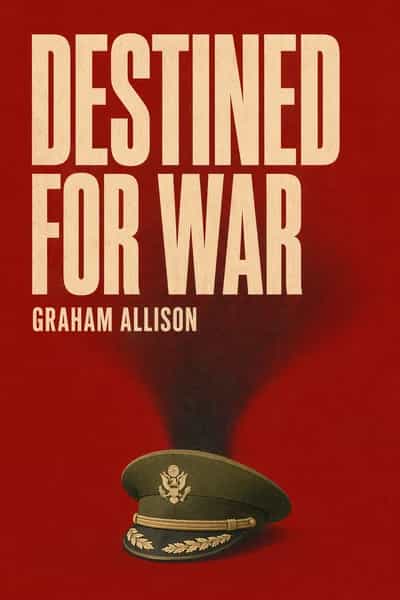
Unlike Allison’s “Thucydides Trap” framing, which emphasizes historical inevitability, Rudd argues war is preventable through deliberate policy choices. While both analyze U.S.-China rivalry, Rudd prioritizes actionable solutions like transparency measures and crisis hotlines, whereas Allison focuses on historical precedents.
Some experts argue Rudd’s “managed competition” framework is underdeveloped, lacking specifics on enforcement or balancing trade disputes. Others note his analysis of U.S. policymaking oversimplifies partisan dynamics. However, the book is widely praised for its nuanced exploration of Xi’s mindset and accessible synthesis of complex issues.
Rudd identifies 10 “concentric circles” shaping Xi’s ideology, including CCP legitimacy, nationalism, and the belief that the U.S. seeks to block China’s rise. He emphasizes Xi’s focus on total control, historical grievances, and China’s “rightful” global role, arguing these drivers make compromise difficult but not impossible.
The book details 10 scenarios, ranked by likelihood:
Rudd stresses that none are predestined but require proactive mitigation.
With U.S.-China tensions persisting over Taiwan, trade, and AI dominance, Rudd’s warnings about unmanaged rivalry remain urgent. The book provides a baseline for evaluating current policies, offering a structured lens to assess diplomatic developments or military posturing.
Rudd frames economic rivalry (e.g., semiconductor bans, Belt and Road Initiative) as inevitable but manageable. He advocates for “guardrails” to prevent disputes from spilling into military domains, stressing the need for bilateral crisis communication frameworks.
Taiwan is identified as the most likely trigger for conflict, with Rudd outlining scenarios ranging from blockade to invasion. He argues both sides must clarify redlines—for example, defining “strategic ambiguity” thresholds—to avoid misinterpretations during a crisis.
저자의 목소리로 책을 느껴보세요
지식을 흥미롭고 예시가 풍부한 인사이트로 전환
핵심 아이디어를 빠르게 캡처하여 신속하게 학습
재미있고 매력적인 방식으로 책을 즐기세요
Xi's understanding of America exceeds any American leader's understanding of China.
Washington no longer believes in China's peaceful rise.
The deepening chasm of distrust has grown over years, with each side viewing the other's diplomatic language as fiction.
The challenge for both nations lies in managing this rivalry without triggering the very conflict that historical precedent suggests is likely.
The Avoidable War의 핵심 아이디어를 이해하기 쉬운 포인트로 분해하여 혁신적인 팀이 어떻게 창조하고, 협력하고, 성장하는지 이해합니다.
The Avoidable War을 빠른 기억 단서로 압축하여 솔직함, 팀워크, 창의적 회복력의 핵심 원칙을 강조합니다.

생생한 스토리텔링을 통해 The Avoidable War을 경험하고, 혁신 교훈을 기억에 남고 적용할 수 있는 순간으로 바꿉니다.
무엇이든 물어보고, 목소리를 선택하고, 진정으로 공감되는 인사이트를 함께 만들어보세요.

샌프란시스코에서 컬럼비아 대학교 동문들이 만들었습니다
"Instead of endless scrolling, I just hit play on BeFreed. It saves me so much time."
"I never knew where to start with nonfiction—BeFreed’s book lists turned into podcasts gave me a clear path."
"Perfect balance between learning and entertainment. Finished ‘Thinking, Fast and Slow’ on my commute this week."
"Crazy how much I learned while walking the dog. BeFreed = small habits → big gains."
"Reading used to feel like a chore. Now it’s just part of my lifestyle."
"Feels effortless compared to reading. I’ve finished 6 books this month already."
"BeFreed turned my guilty doomscrolling into something that feels productive and inspiring."
"BeFreed turned my commute into learning time. 20-min podcasts are perfect for finishing books I never had time for."
"BeFreed replaced my podcast queue. Imagine Spotify for books — that’s it. 🙌"
"It is great for me to learn something from the book without reading it."
"The themed book list podcasts help me connect ideas across authors—like a guided audio journey."
"Makes me feel smarter every time before going to work"
샌프란시스코에서 컬럼비아 대학교 동문들이 만들었습니다

The Avoidable War 요약을 무료 PDF 또는 EPUB으로 받으세요. 인쇄하거나 오프라인에서 언제든 읽을 수 있습니다.
The world is entering what Kevin Rudd calls "the decade of living dangerously" - a period when U.S.-China tensions have escalated to their highest point in generations. This isn't just another foreign policy challenge; it's potentially the defining geopolitical relationship of our century. What makes Rudd's analysis so compelling is his rare combination of insider access and cultural fluency. As a Mandarin-speaking former Prime Minister who has met personally with Xi Jinping, Rudd offers insights few Western observers can match. The stakes couldn't be higher: these two superpowers possess the world's largest economies and most powerful militaries, yet they increasingly view each other through lenses of suspicion and strategic rivalry. The fundamental question isn't whether competition will continue - it's whether that competition can be managed without spiraling into catastrophic conflict.