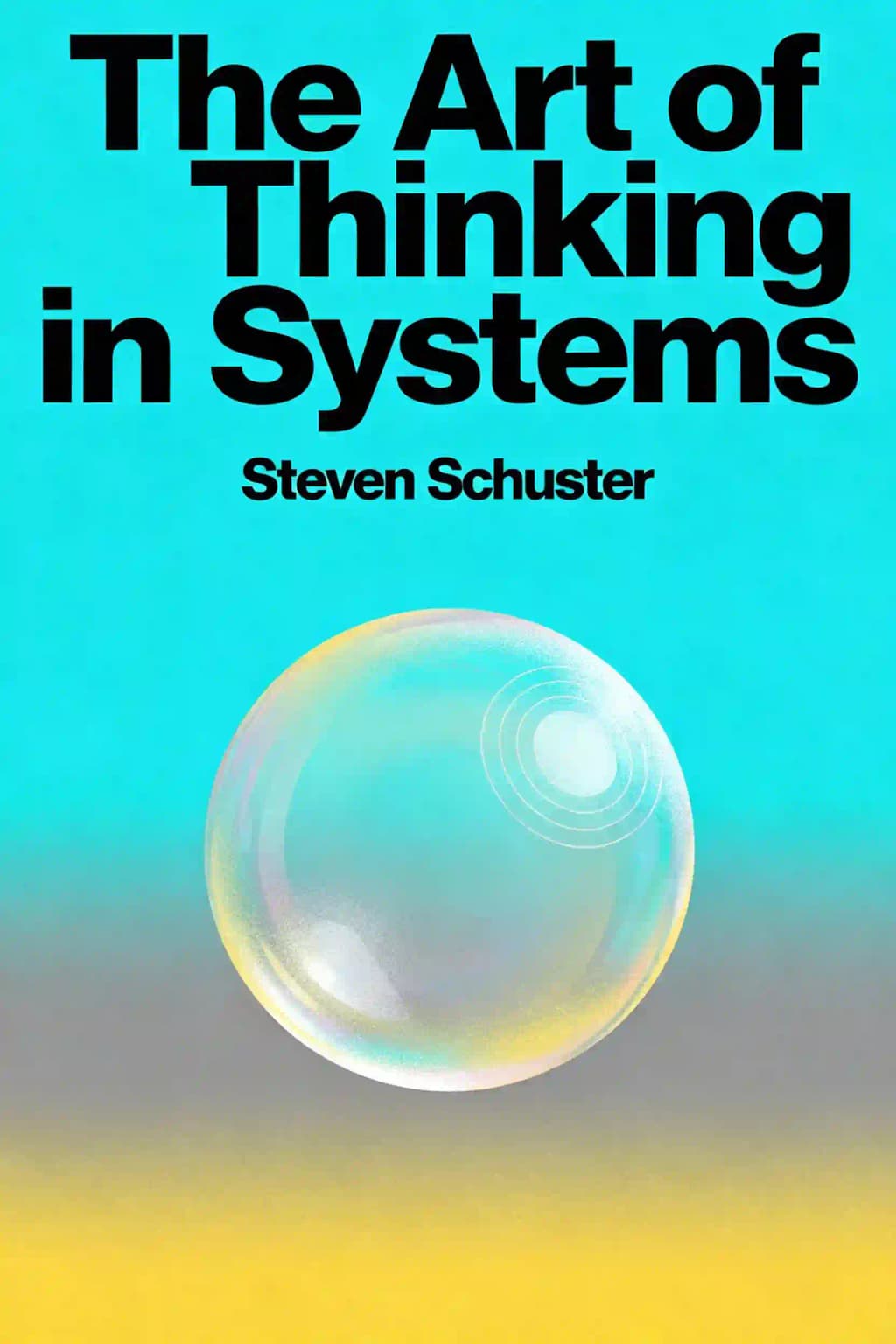
Discover how to decode life's complexities in "The Art of Thinking in Systems" - the guide that transformed thousands of readers from linear thinkers to strategic problem-solvers. Why do economics experts praise this 3.52-rated Goodreads favorite? The answer might revolutionize your decision-making forever.
Steven Schuster, author of The Art of Thinking in Systems, is a bestselling author and researcher renowned for his expertise in psychology, human behavior, and cognitive frameworks. With over 30 published books, Schuster has established himself as a leading voice in personal development and systems theory, distilling complex psychological concepts into actionable strategies. His work often explores decision-making, logical reasoning, and the interconnected patterns that shape individual and organizational outcomes.
A dedicated student of human cognition, Schuster’s career spans decades of investigating how mental models influence behavior, a theme central to The Art of Thinking in Systems. His other notable works, including titles on habit formation and critical thinking, further cement his reputation for bridging academic research with practical self-improvement tools.
Schuster’s writings have resonated globally, with The Art of Thinking in Systems earning widespread recognition for its clarity and depth. The book has become a staple in productivity circles and is frequently cited as a transformative resource for professionals seeking to optimize problem-solving skills.
The Art of Thinking in Systems by Steven Schuster is a practical guide to understanding interconnected systems and solving complex problems by analyzing root causes rather than symptoms. It introduces systems thinking as a framework to view challenges holistically, emphasizing elements like stock, flow, and feedback loops. Examples range from biological systems to workplace dynamics, with actionable strategies for personal and professional growth.
This book is ideal for professionals, students, and leaders seeking to improve decision-making, problem-solving, and strategic planning. It’s particularly valuable for those in management, education, or fields requiring adaptive thinking, as well as individuals navigating relationship or career challenges.
Yes, for its accessible introduction to systems thinking and real-world applications. While some critics note it lacks depth compared to academic texts like Donella Meadows’ Thinking in Systems, it offers concise frameworks for everyday problem-solving. Practical examples, such as restructuring communication patterns in relationships, make it a useful primer.
Key ideas include:
Schuster identifies toxic communication styles (the “Four Horsemen”: criticism, contempt, defensiveness, stonewalling) as systemic issues. By adjusting feedback loops—like replacing blame with collaborative problem-solving—relationships can evolve sustainably. For example, restructuring conversations to focus on shared goals rather than isolated conflicts.
| Aspect | The Art of Thinking in Systems | Thinking in Systems (Meadows) | |---------------------------|------------------------------------------|------------------------------------------| | Focus | Introductory, everyday applications | Academic, theoretical depth | | Structure | Case studies (e.g., workplace, family) | Abstract models (e.g., ecosystems) | | Audience | General readers, self-improvement seekers| Academics, policymakers |
Schuster’s work prioritizes practicality, while Meadows’ book is a foundational text for complex systems analysis.
Some readers find the content repetitive or overly simplistic compared to advanced systems literature. While it effectively introduces core concepts, deeper topics like nonlinear dynamics or leverage points are briefly addressed.
By shifting focus from linear cause-effect analysis to identifying systemic patterns. For instance, addressing chronic workplace turnover by examining hiring practices, team dynamics, and feedback mechanisms instead of blaming individuals.
Schuster is an educator and author focused on translating complex concepts into actionable strategies. His background in teaching informs relatable examples, such as classroom dynamics, to demystify systems thinking.
It advocates restructuring systems rather than blaming individuals. For example, improving employee retention by redesigning feedback loops (e.g., regular check-ins, career development pathways) to align with organizational goals.
저자의 목소리로 책을 느껴보세요
지식을 흥미롭고 예시가 풍부한 인사이트로 전환
핵심 아이디어를 빠르게 캡처하여 신속하게 학습
재미있고 매력적인 방식으로 책을 즐기세요
Purpose drives behavior and is the most powerful leverage point for change.
Changing interconnections dramatically transforms systems.
The power of systems thinking lies in its ability to reveal hidden connections.
A system's purpose is revealed through its behavior rather than stated intentions.
The Art of Thinking in Systems의 핵심 아이디어를 이해하기 쉬운 포인트로 분해하여 혁신적인 팀이 어떻게 창조하고, 협력하고, 성장하는지 이해합니다.
The Art of Thinking in Systems을 빠른 기억 단서로 압축하여 솔직함, 팀워크, 창의적 회복력의 핵심 원칙을 강조합니다.

생생한 스토리텔링을 통해 The Art of Thinking in Systems을 경험하고, 혁신 교훈을 기억에 남고 적용할 수 있는 순간으로 바꿉니다.
무엇이든 물어보고, 목소리를 선택하고, 진정으로 공감되는 인사이트를 함께 만들어보세요.

샌프란시스코에서 컬럼비아 대학교 동문들이 만들었습니다
"Instead of endless scrolling, I just hit play on BeFreed. It saves me so much time."
"I never knew where to start with nonfiction—BeFreed’s book lists turned into podcasts gave me a clear path."
"Perfect balance between learning and entertainment. Finished ‘Thinking, Fast and Slow’ on my commute this week."
"Crazy how much I learned while walking the dog. BeFreed = small habits → big gains."
"Reading used to feel like a chore. Now it’s just part of my lifestyle."
"Feels effortless compared to reading. I’ve finished 6 books this month already."
"BeFreed turned my guilty doomscrolling into something that feels productive and inspiring."
"BeFreed turned my commute into learning time. 20-min podcasts are perfect for finishing books I never had time for."
"BeFreed replaced my podcast queue. Imagine Spotify for books — that’s it. 🙌"
"It is great for me to learn something from the book without reading it."
"The themed book list podcasts help me connect ideas across authors—like a guided audio journey."
"Makes me feel smarter every time before going to work"
샌프란시스코에서 컬럼비아 대학교 동문들이 만들었습니다

The Art of Thinking in Systems 요약을 무료 PDF 또는 EPUB으로 받으세요. 인쇄하거나 오프라인에서 언제든 읽을 수 있습니다.
Have you ever noticed how some problems in your life refuse to stay solved? You patch up a recurring argument with your spouse, only to find yourself in the same fight three weeks later. Your company launches a new initiative to boost morale, but within months, everyone's back to their old complaints. You finally organize your cluttered home, yet somehow the chaos creeps back in. Here's the uncomfortable truth: these problems persist not because you're failing, but because you're solving the wrong thing. You're treating symptoms while the disease thrives beneath the surface. Systems thinking offers a radically different approach-one that reveals the hidden patterns and relationships actually driving these outcomes. Instead of asking "What went wrong?" it asks "What interconnections created this result?" This shift in perspective has transformed how leaders from Ray Dalio to environmental scientists approach complex challenges, and it can fundamentally change how you navigate your own life. Your life isn't a collection of separate boxes-work here, relationships there, health somewhere else. It's an intricate web where everything touches everything else. When you stay up late scrolling through social media, you're not just losing sleep; you're triggering a cascade that affects hormone regulation, food cravings, energy levels, relationships, and stress-bringing you back to your phone again.