Trapped in procrastination? "The Art of Taking Action" blends Japanese psychology with practical wisdom, helping 10,000+ students embrace discomfort and find purpose. Featured in "Heroic Wisdom Daily," Krech's Eastern approach asks: Why wait for motivation when action itself creates it?
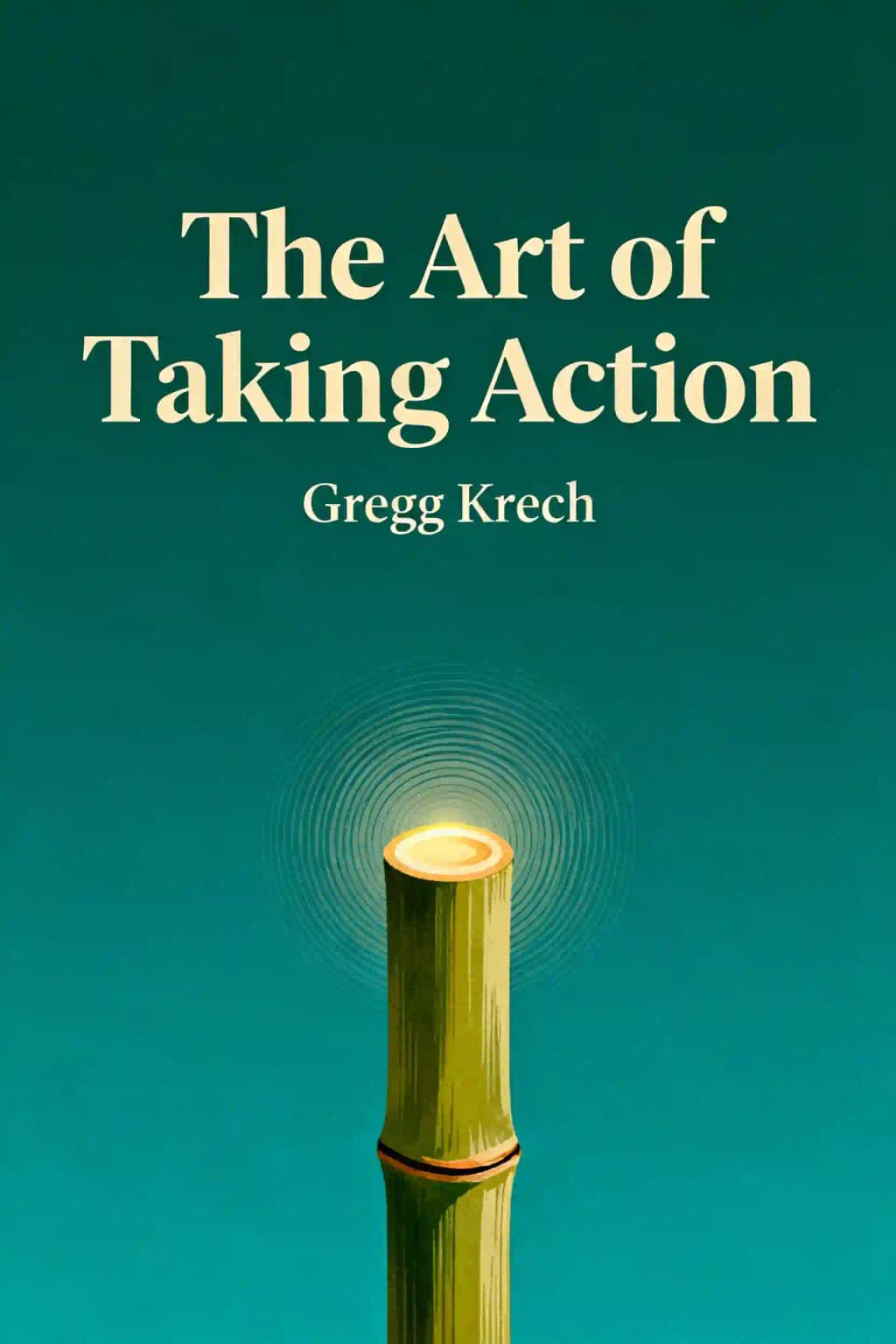
Gregg Krech, author of The Art of Taking Action: Lessons from Japanese Psychology, is a leading authority on Japanese psychology and purposeful living. As a co-founder of Vermont’s TōDō Institute, Krech integrates Morita Therapy, Naikan reflection, and kaizen principles to address modern challenges like procrastination and self-doubt.
His work blends Eastern philosophy with practical action, emphasizing behavioral change over emotional control. Krech’s expertise is further showcased in his award-winning book Naikan: Gratitude, Grace, and the Japanese Art of Self-Reflection, which explores gratitude through structured self-reflection.
As Editor-in-Chief of Thirty Thousand Days: A Journal for Purposeful Living, he curates insights on intentional living, and his ideas have been featured in The Sun, Tricycle, and Utne Reader, as well as on public television and podcasts.
With over 25 years of teaching, Krech’s methods are practiced globally in workshops, retreats, and therapeutic settings, helping individuals align action with purpose. The Art of Taking Action remains a cornerstone text in mindfulness-based productivity, endorsed by mental health professionals and translated into multiple languages.
The Art of Taking Action blends Japanese psychology principles like Morita Therapy, Kaizen, and Naikan to teach readers how to overcome procrastination and embrace purposeful action. It emphasizes acting despite discomfort, clarifying life goals, and using self-reflection to align behavior with values. Key themes include resilience, gratitude, and incremental progress.
This book is ideal for individuals struggling with indecision, procrastination, or feeling stuck. It’s valuable for personal development enthusiasts, professionals seeking productivity frameworks, and readers interested in Eastern psychology. Those navigating career transitions or existential uncertainty will find actionable strategies to reframe challenges and prioritize meaningful tasks.
Yes, particularly for its unique fusion of Japanese psychology and practical tools. Readers praise its focus on action over emotion, bite-sized kaizen principles for gradual change, and exercises like Naikan reflection to cultivate gratitude. While some critique its simplicity, it offers fresh perspectives for those tired of conventional self-help approaches.
The “demons of inaction” are mental barriers like fear, perfectionism, and confusion that block action. Krech identifies strategies people use to avoid discomfort, such as overthinking or prioritizing trivial tasks. Solutions include accepting emotions without letting them dictate behavior and breaking tasks into manageable steps.
Morita Therapy, a Japanese method, teaches action-first living—prioritizing behavior over fleeting feelings. Krech applies this by encouraging readers to act despite anxiety, using techniques like purpose-driven task selection and embracing imperfection. This contrasts with Western psychology’s focus on internal states.
Krech outlines four decision-making guides:
Unlike habit-focused titles (e.g., Atomic Habits), Krech’s work integrates Eastern philosophy with psychological resilience. It avoids rigid routines, instead teaching adaptability through acceptance of emotions and value-driven action. Critics note its narrower focus on mindset over tactical systems.
Gratitude, via Naikan reflection, helps readers recognize interdependence and counteract self-centered worries. By journaling daily on three questions—What did I receive?, What did I give?, What troubles did I cause?—users gain perspective to act compassionately.
This metaphor from Krech’s 21 Maxims advises focusing energy on actionable steps (the “tunnel”) rather than obsessing over uncontrollable external factors (the “sunlight”). It reinforces Morita’s emphasis on engaged doing over passive worrying.
Yes, by reframing anxiety as a natural signal rather than a barrier. The book teaches readers to acknowledge fear while taking small, purposeful steps—a method shown to reduce avoidance patterns and build confidence through incremental exposure.
Some readers find its Japanese psychology concepts overly abstract without concrete examples. Others note repetitive sections or a lack of scientific citations. However, most praise its originality in addressing emotional resistance holistically.
True productivity isn’t mere busyness but purposeful action aligned with values. Krech contrasts this with “urgent” tasks, urging readers to prioritize legacy-building work, relationship-building, and self-reflection—even if progress feels slow.
저자의 목소리로 책을 느껴보세요
지식을 흥미롭고 예시가 풍부한 인사이트로 전환
핵심 아이디어를 빠르게 캡처하여 신속하게 학습
재미있고 매력적인 방식으로 책을 즐기세요
The fourth horse isn't broken-it simply responds differently.
Thoughts and feelings are largely uncontrollable.
What needs doing?
It's rarely the actions we took that we regret, but rather the actions we failed to take.
The Art of Taking Action의 핵심 아이디어를 이해하기 쉬운 포인트로 분해하여 혁신적인 팀이 어떻게 창조하고, 협력하고, 성장하는지 이해합니다.
The Art of Taking Action을 빠른 기억 단서로 압축하여 솔직함, 팀워크, 창의적 회복력의 핵심 원칙을 강조합니다.

생생한 스토리텔링을 통해 The Art of Taking Action을 경험하고, 혁신 교훈을 기억에 남고 적용할 수 있는 순간으로 바꿉니다.
무엇이든 물어보고, 목소리를 선택하고, 진정으로 공감되는 인사이트를 함께 만들어보세요.

샌프란시스코에서 컬럼비아 대학교 동문들이 만들었습니다
"Instead of endless scrolling, I just hit play on BeFreed. It saves me so much time."
"I never knew where to start with nonfiction—BeFreed’s book lists turned into podcasts gave me a clear path."
"Perfect balance between learning and entertainment. Finished ‘Thinking, Fast and Slow’ on my commute this week."
"Crazy how much I learned while walking the dog. BeFreed = small habits → big gains."
"Reading used to feel like a chore. Now it’s just part of my lifestyle."
"Feels effortless compared to reading. I’ve finished 6 books this month already."
"BeFreed turned my guilty doomscrolling into something that feels productive and inspiring."
"BeFreed turned my commute into learning time. 20-min podcasts are perfect for finishing books I never had time for."
"BeFreed replaced my podcast queue. Imagine Spotify for books — that’s it. 🙌"
"It is great for me to learn something from the book without reading it."
"The themed book list podcasts help me connect ideas across authors—like a guided audio journey."
"Makes me feel smarter every time before going to work"
샌프란시스코에서 컬럼비아 대학교 동문들이 만들었습니다

The Art of Taking Action 요약을 무료 PDF 또는 EPUB으로 받으세요. 인쇄하거나 오프라인에서 언제든 읽을 수 있습니다.
There's a peculiar modern suffering we rarely name: the agony of knowing exactly what we should do while doing precisely nothing about it. You know you should call your aging parent more often. You know that side project could change your career. You know the conversation needs to happen. Yet weeks turn to months, and the gap between knowing and doing widens into a chasm of quiet self-betrayal. Gregg Krech's "The Art of Taking Action" doesn't offer another motivational pep talk or productivity hack. Instead, it presents something far more radical: Japanese psychological traditions that have guided people through this paralysis for over a century. Drawing from Morita Therapy, Kaizen, and Naikan reflection, Krech reveals a counterintuitive truth-your feelings about a task matter far less than your response to what needs doing. This isn't about forcing yourself through gritted teeth. It's about discovering that action itself creates the clarity and motivation we mistakenly believe must come first.