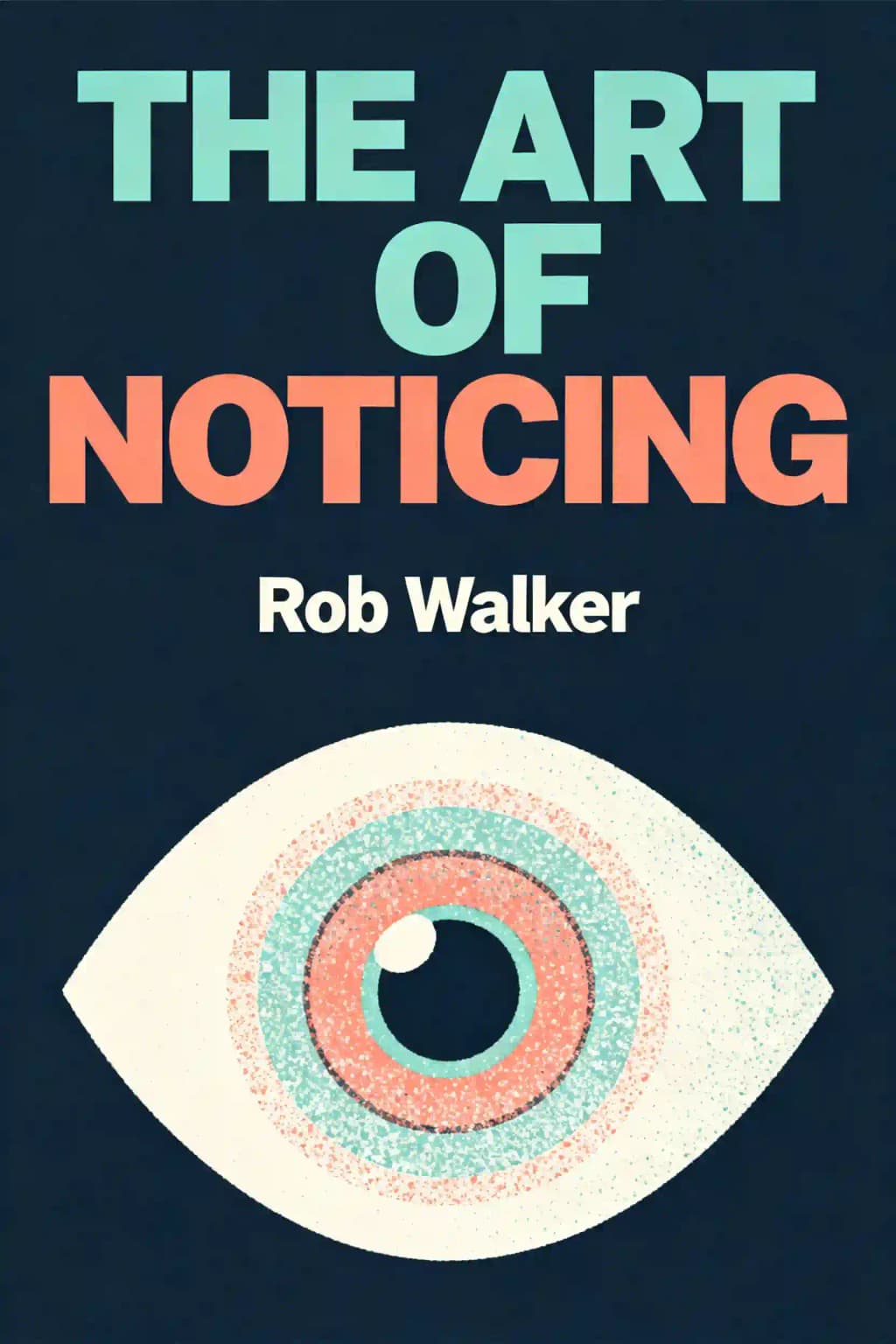
In a world of digital distraction, Rob Walker's "The Art of Noticing" offers 131 exercises to reclaim your attention. Endorsed by Seth Godin and taught at the School of Visual Arts, this New York Times-featured manual transforms ordinary moments into extraordinary discoveries. What might you see today that everyone else misses?
Rob Walker is the author of The Art of Noticing: 131 Ways to Spark Creativity, Find Inspiration, and Discover Joy in the Everyday, and a journalist specializing in design, technology, and the psychology of attention. This mindfulness and creativity guide provides 131 practical exercises to help readers combat digital distraction and rediscover presence in everyday life.
Walker brings extensive authority to the subject, having contributed to The New York Times, Fast Company, Bloomberg Businessweek, and The Atlantic. He writes the Human Resource column for Lifehacker and shares regular insights through his newsletter, The Art of Noticing. He teaches at the School of Visual Arts' Products of Design MFA program, where he focuses on creative observation and critical thinking. His latest book, Lost Objects, co-edited with Joshua Glenn, explores how everyday objects shape our lives and memories.
The New York Times praised the book for offering "simple, low-stakes activities [that] can open up the world," establishing it as an essential guide for creativity and mindful living in the digital age.
The Art of Noticing by Rob Walker is a practical guide containing 131 exercises designed to help readers spark creativity, find inspiration, and discover joy in everyday life. The book teaches how to overcome modern distractions and pay closer attention to familiar environments, transforming mundane surroundings into sources of creative inspiration. Each short chapter offers simple techniques for adjusting perspective and seeing the ordinary in extraordinary ways.
Rob Walker is an author, journalist, and columnist for Fast Company who has been a longtime contributor to The New York Times. After years covering technology, consumer culture, and the modern workplace, Walker noticed that the ability to be present was lost in an "age of nonstop distraction". He wrote The Art of Noticing to solve this epidemic by providing exercises that help people reclaim their attention and notice what others overlook.
The Art of Noticing should be on the compulsory reading list for anyone pursuing creative courses including writing, art, and filmmaking. It's ideal for creative professionals, entrepreneurs, and anyone feeling disconnected from their surroundings due to modern distractions. The book benefits people seeking to develop clearer thinking, better listening skills, enhanced creativity, and a more mindful approach to daily life.
The Art of Noticing is worth reading for anyone wanting to cultivate creativity and mindfulness through simple, actionable exercises. While the lack of sequential narrative structure makes it somewhat tiring to read straight through, the book's 131 perspective-altering techniques deliver real value. It's lightweight yet profound, teaching readers to find creative inspiration without traveling or seeking new experiences—just by noticing what's already around them.
The Art of Noticing contains 131 short exercises that engage all senses including sight, sound, smell, touch, taste, and temperature. Specific exercises include:
Other activities involve looking slowly at art, counting with numbers found in the environment, and digging into backstories of everyday objects.
The Art of Noticing teaches that creativity begins with noticing what others have overlooked or taken for granted. Rob Walker demonstrates that major innovations—from Velcro to the iPhone—started when someone noticed overlooked details that everyone else missed. By cultivating attention skills through deliberate practice, readers develop more original perspectives and distinct points of view essential for creative breakthroughs. Regular noticing exercises help overcome mass distraction and stimulate imagination.
The central idea of The Art of Noticing is that attention is vitality—paying attention is crucial for connecting with others and staying eager and engaged with life. Walker argues that we've allowed media, technology, and marketing to direct our attention instead of experiencing the world directly. By deliberately practicing the art of noticing through simple exercises, readers can regain focus, ground themselves in the present moment, and transform familiar environments into unmissable adventures.
The Art of Noticing teaches mindfulness through practical, fun rituals rather than complicated meditation practices. Rob Walker encourages mindful observation by having readers engage directly with their environment—taking note of details they normally cruise through or switch off from in daily life. The exercises build "attention muscles" through activities like:
The key takeaways from The Art of Noticing include that attention is vitality for connecting with others and staying engaged with life. Regularly practicing noticing leads to more original perspectives and distinct viewpoints. The book emphasizes overcoming modern distractions to regain focus and creativity while finding joy and inspiration in everyday mundane experiences. Ultimately, readers have power over how they direct their attention—noticing what you observe can reveal something about yourself.
The Art of Noticing helps professionals become clearer thinkers, better listeners, and more creative colleagues by teaching them to notice what everybody else missed. Rob Walker draws on examples of successful individuals like Warren Buffett and Jerry Seinfeld who excelled by noticing overlooked details in their fields. The attention skills cultivated through the book's exercises apply across various professional contexts—from science to entrepreneurship—making it valuable for anyone seeking competitive advantage through thoughtful observation.
The main criticism of The Art of Noticing is that the lack of a larger narrative through the content makes reading somewhat tiring. The 131 short chapters have no sequential order, which can feel disconnected and exhausting to read straight through. Some readers may find that certain suggested exercises don't appeal to their personal style or preferences. However, most reviewers acknowledge that despite this structure, the book delivers valuable perspective-altering techniques.
Books similar to The Art of Noticing include works by John Berger and Susan Sontag that focus on seeing versus merely looking. For readers interested in mindfulness and attention, related titles explore observational skills and creative thinking. Rob Walker's book shares thematic connections with works on consumer culture, design thinking, and cultivating presence in an age of distraction. His other work, Lost Objects: 50 Stories About The Things We Miss and Why They Matter, extends similar themes about noticing and appreciating overlooked objects.
저자의 목소리로 책을 느껴보세요
지식을 흥미롭고 예시가 풍부한 인사이트로 전환
핵심 아이디어를 빠르게 캡처하여 신속하게 학습
재미있고 매력적인 방식으로 책을 즐기세요
We've reached what might be called 'peak distraction' in modern society.
A wealth of information creates a poverty of attention.
The world becomes richer and more textured.
What am I not seeing?
Humans possess the unique ability to outmaneuver our own base instincts.
Macbeth의 핵심 아이디어를 이해하기 쉬운 포인트로 분해하여 혁신적인 팀이 어떻게 창조하고, 협력하고, 성장하는지 이해합니다.
Macbeth을 빠른 기억 단서로 압축하여 솔직함, 팀워크, 창의적 회복력의 핵심 원칙을 강조합니다.

생생한 스토리텔링을 통해 Macbeth을 경험하고, 혁신 교훈을 기억에 남고 적용할 수 있는 순간으로 바꿉니다.
무엇이든 물어보고, 목소리를 선택하고, 진정으로 공감되는 인사이트를 함께 만들어보세요.

샌프란시스코에서 컬럼비아 대학교 동문들이 만들었습니다
"Instead of endless scrolling, I just hit play on BeFreed. It saves me so much time."
"I never knew where to start with nonfiction—BeFreed’s book lists turned into podcasts gave me a clear path."
"Perfect balance between learning and entertainment. Finished ‘Thinking, Fast and Slow’ on my commute this week."
"Crazy how much I learned while walking the dog. BeFreed = small habits → big gains."
"Reading used to feel like a chore. Now it’s just part of my lifestyle."
"Feels effortless compared to reading. I’ve finished 6 books this month already."
"BeFreed turned my guilty doomscrolling into something that feels productive and inspiring."
"BeFreed turned my commute into learning time. 20-min podcasts are perfect for finishing books I never had time for."
"BeFreed replaced my podcast queue. Imagine Spotify for books — that’s it. 🙌"
"It is great for me to learn something from the book without reading it."
"The themed book list podcasts help me connect ideas across authors—like a guided audio journey."
"Makes me feel smarter every time before going to work"
샌프란시스코에서 컬럼비아 대학교 동문들이 만들었습니다

Macbeth 요약을 무료 PDF 또는 EPUB으로 받으세요. 인쇄하거나 오프라인에서 언제든 읽을 수 있습니다.
In a world where the average person checks their smartphone 150 times daily (once every six waking minutes), we've reached what might be called "peak distraction." Our attention has become the most valuable-and endangered-commodity of the modern age. This isn't entirely new; as far back as 1903, sociologist Georg Simmel lamented the overwhelming stimulation of modern life. What's different today is both the scale and intentionality of the attention economy. Tech companies employ thousands of engineers specifically to make their products more addictive, while our environments grow increasingly cluttered with up to 10,000 advertisements daily. The cost? Studies show constantly divided attention impairs cognitive performance by up to 40%, increases stress levels, and diminishes our capacity for deep thought. But there's hope-our brains remain remarkably plastic throughout our lives, meaning we can train ourselves to resist the pull of constant distraction and rediscover the joy of deep engagement with the world around us.