1장
Redefining Time to Transform Your Life
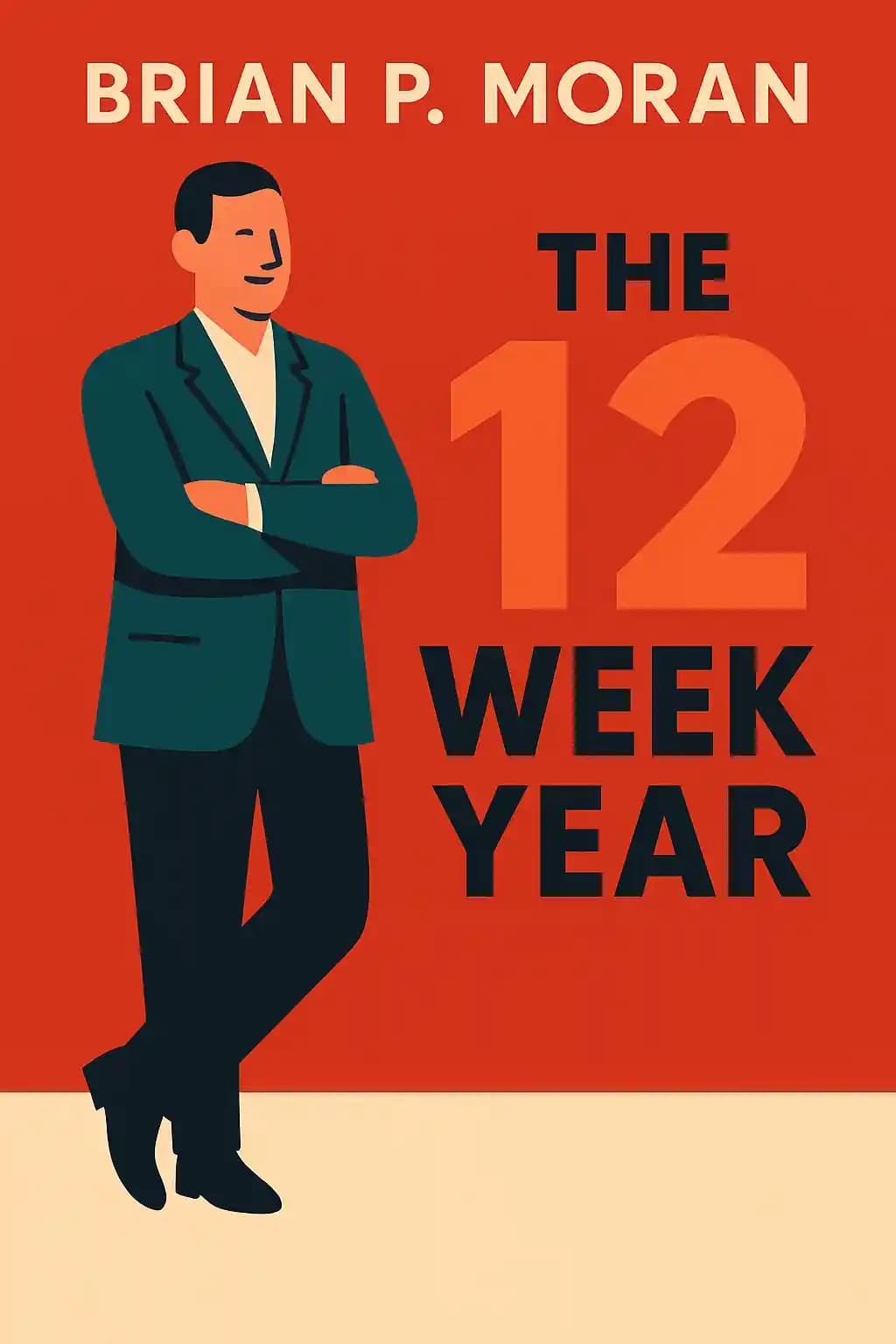
What if you could accomplish more in 12 weeks than most people do in 12 months? This isn't just a catchy promise-it's the proven reality behind Brian P. Moran's groundbreaking system that has transformed businesses and lives worldwide. "The 12 Week Year" has become a staple on the bookshelves of Fortune 500 executives, professional athletes, and productivity enthusiasts alike. Even Dwayne "The Rock" Johnson has publicly praised its methodology for helping him structure his impossibly busy schedule. Since its publication, the book has sold over a million copies and been translated into 27 languages, with companies reporting productivity increases of 30-50% after implementation. What makes this approach so powerful? It taps into the psychology of urgency and focus that naturally emerges at year-end deadlines, but creates that same energy every single day. Are you ready to discover how redefining your "year" could completely transform your results?
2장
Breaking Free from Annual Thinking
Most of us don't lack ideas or knowledge-we lack effective execution. The traditional annual planning cycle creates an illusion of abundant time that sabotages our performance. When we fall behind in January, we comfort ourselves with "I've got 11 more months," and this pattern continues throughout the year, robbing us of urgency. We mistakenly believe some magical improvement will happen later, but the truth is every week counts, every day counts, every moment counts.
Consider what happens at year-end across industries. December typically sees activity spike as deadlines approach. In insurance and financial services, the final month often represents the best sales period, with the fourth quarter generating 30-40% of annual revenue. This happens because the arbitrary December 31 deadline creates urgency, reduces procrastination, and generates focus. With clear objectives and little time, people concentrate on critical projects, pushing aside less important tasks.
The 12 Week Year system harnesses this year-end energy but maintains it continuously. By redefining a "year" as just 12 weeks, deadlines remain visible, creating constant urgency and focused action. You can't afford many bad weeks in this compressed timeframe, making every day crucial. This narrows your focus to daily execution, where results actually happen.
This approach originated from the athletic training concept of periodization, where athletes focus on maximizing one skill at a time for 4-6 weeks before moving to the next. First used by Eastern European Olympians in the 1970s, this technique has been adapted for business and personal success with remarkable results.
The beauty of the 12 Week Year is that if you have a tough cycle, you get a fresh start every 12 weeks. If you have a strong one, you build momentum. Either way, you take breaks to celebrate, reflect, and reload, giving you four times as many opportunities to recognize progress annually. This creates continuous energy and focus rather than just at traditional year-end.
3장
The Emotional Engine of Achievement
Execution isn't complicated, but it isn't easy either-most people and organizations struggle with it. Taking new actions often means facing discomfort, uncertainty, and potential failure. Without a compelling reason to choose differently, people naturally gravitate toward comfort over the uncomfortable actions that lead to greatness. This tendency toward comfort is deeply wired into our survival instincts, making it particularly challenging to break free from established patterns.
The secret to reaching your potential lies in valuing important outcomes more than short-term comfort. Creating and maintaining a compelling vision that you want more than comfort is the critical first step to executing well. Your brain actually works differently when you have a powerful vision. The amygdala, often called the fear center, reacts negatively to uncertainty and risk, triggering stress responses and resistance to change. Meanwhile, the prefrontal cortex (PFC) lights up when imagining future greatness, enabling strategic thinking and goal-directed behavior.
Through neuroplasticity, our brains physically change based on how we use them. By regularly thinking about a compelling vision, you strengthen the PFC and literally train your brain to act on your vision-the same neurons fire when thinking about your vision as when acting on it. This neurological connection explains why visualization practices used by elite athletes and successful entrepreneurs are so effective. Regular visualization creates neural pathways that make execution more natural and automatic, similar to how physical practice improves performance.
Consider Sal Durso's story: after losing key team members in his financial services practice, he faced a critical moment of truth. Rather than succumbing to defeat, he reconnected with why his business mattered to him personally-providing for his family and helping clients achieve financial security. This emotional connection gave him the energy to rebuild, implementing new systems, mentoring fresh talent, and eventually creating a practice twice as successful as before. His experience demonstrates how connecting with a deeper purpose can fuel remarkable comebacks.
The most powerful visions align personal aspirations with professional dreams and should be big enough to make you feel slightly uncomfortable. They often combine multiple life domains - career advancement, personal growth, family legacy, and community impact. When properly engaged, vision enables you to confront fears, take bold consistent action, and live with significance. Top performers regularly spend time refining and reconnecting with their vision, using techniques like journaling, meditation, and creating vision boards to strengthen their emotional connection to their goals.
Understanding this power encourages spending more time connecting with your vision to overcome self-imposed limitations. Regular vision work isn't just motivational practice - it's strategic mental training that reshapes your brain's circuitry and decision-making patterns. Successful individuals often schedule dedicated time for vision work, treating it as essential as any other business activity. This might include daily morning visualization, weekly review sessions, or quarterly vision-setting retreats.
4장
Strategic Planning for Breakthrough Results
Once you have a clear vision, you need a plan to achieve it. Working from a plan reduces mistakes, saves time, and provides focus. Most people spend more time planning a vacation than planning their business or life, yet having a strategic plan is essential for achieving meaningful goals.
Unlike traditional annual planning, 12-week planning offers greater predictability. The farther you plan into the future, the less certain your plan becomes. With a 12-week timeframe, you can define with high certainty what actions to implement each week. These plans are both numbers-based and activity-based, creating a strong connection between today's actions and desired results.
The purpose of planning is to identify and implement the critical few actions needed to reach your goal. Your plan should start by establishing overall goals for the 12 weeks that represent both success for the period and progress toward your longer-term vision. Once goals are set, break them down into specific tactics-the daily to-do's that drive goal attainment.
Many business plans fail because they're like bad driving directions-missing steps, lumping complicated processes into single tactics, or having actions out of sequence. An effective 12-week plan defines specific actions needed each week to reach your goal, with tactics that start with verbs, form complete sentences, and are executable as written in the week they're due.
Plans can both build future capacity and drive short-term results. Every plan should target income or results in the current 12 weeks. Some plans may also build future capacity through education, hiring, technology updates, or new systems. Since capacity-building benefits are realized in the future, it's important to always include activity creating required short-term results.
Remember General Patton's wisdom: "A good plan today is better than a perfect plan tomorrow." Planning is simply problem-solving to close the gap between current results and your goal. Before finalizing your plan, identify potential struggles and strategies to overcome them. Without a well-written plan, execution will suffer.
5장
Weekly Execution: Where Results Are Created
Long-term results come from daily actions. While we plan for the future, we act in the day. The greatest predictor of your future is your daily actions-not your desires or intentions. Consistent action on critical tasks is the key to achieving what you want. Your current actions are creating your future, whether in health, relationships, or career.
The weekly plan translates your 12-week plan into daily action, focusing your activities on what's truly important. It's not just a to-do list but reflects critical strategic activities from your 12-week plan that need to happen this week. Unlike a to-do list, it contains only critical strategic activities derived from your 12-week plan. Because it connects to your long-term vision, you can be confident these actions are truly the most important.
Studies show that working from a written plan makes you 60-80% more likely to execute than keeping the plan in your head. The process is simple: spend 15-20 minutes at the beginning of each week reviewing progress and planning ahead, then 5 minutes each morning reviewing the day's activities. Carry your plan with you and check it throughout the day, ensuring critical tactics get completed.
If these tactics get done, you've had a great week; if not, you've lost a week. This clarity is life-changing. Never start a week without a written plan-pull tactics due from your 12-week plan and transfer them to your weekly plan.
The weekly routine consists of three simple yet powerful steps: 1) Score your week, 2) Plan your week, and 3) Participate in a Weekly Accountability Meeting. This routine takes just 15 minutes but dramatically increases your chances of success. Most clients perform this task Monday morning, though timing doesn't matter as long as you're consistent each week.
Many resist written plans, believing they already know what to do or need more flexibility. These are excuses to avoid accountability. A plan between your ears is not nearly as effective as one on paper-written plans eliminate ambiguity and create transparency.
6장
Measurement: The Reality Check That Drives Success
Scorekeeping is what makes sports so motivating-it provides immediate feedback on performance. In business and life, measurement drives the process by letting us know if our actions are effective. Research shows achievement and recognition are top motivators, and measurement builds self-esteem by documenting progress. Effective measurement removes emotion from evaluation and forces us to confront reality, even when uncomfortable.
Effective measurement captures both lead and lag indicators. Lag indicators represent end results (sales, income, weight loss), while lead indicators track activities that produce those results (sales calls, workouts). The most important lead indicator is your execution measure-tracking whether you did what you said was most important.
The Weekly Scorecard measures execution by tracking the percentage of planned tactics completed each week. Striving for excellence (85% completion) rather than perfection is sufficient to achieve your goals, as your plan contains your highest-priority actions. Scorekeeping creates productive tension-that uncomfortable feeling when you're not doing what you know you should. High achievers use this tension as a catalyst for change rather than quitting.
More than 60% of breakdowns occur in execution, not plan content, yet people usually blame and change the plan before fully implementing it. Only change your plan if you're executing at a high level but not seeing results. This provides immediate feedback for quick adjustments, unlike results which may lag weeks or months behind actions.
The thinking shift around measurement is twofold: First, embrace measurement rather than avoiding it. Though measurement can be harsh and unsympathetic to excuses, it's necessary to track progress and make adjustments. Second, focus more on actions than results. Your outcomes are driven by your actions, and the weekly scorecard measures whether you completed what was most important. If you faithfully complete critical actions daily and weekly, results will follow.
Common pitfalls include thinking measurement is too complicated, failing to schedule weekly assessment time, and abandoning the system after poor scores. For success: review your weekly score with peers, commit to weekly progress (even small improvements from 45% to 55% show growth), and don't be afraid to confront what your numbers reveal about performance breakdowns.
7장
Intentional Time Management: The Secret Weapon
To improve results, you must use your limited time intentionally rather than reactively. Many people cite lack of time as their barrier to achievement, but the real issue is how they allocate their available hours. Research shows distractions significantly impact productivity-after interruptions like emails, phone calls, or instant messages, workers take an average of 15 minutes to return to their original task, with professionals losing about 28% of their workday to interruptions and recovery time. Studies from UC Irvine found that workers switch tasks every three minutes on average, creating a constant state of divided attention.
Being purposeful about time means organizing life around priorities rather than letting the day control you. Intentionality requires consciously choosing activities that align with your goals, knowing when to say yes and no. This means evaluating each commitment against your long-term objectives and being willing to decline opportunities that don't advance your core priorities. By using your 12-week plan to drive daily activities, you take control rather than letting circumstances dictate your actions. Successful professionals often review their calendars weekly to ensure alignment between time allocation and strategic goals.
Performance Time is a sophisticated time-blocking system with three key components: Strategic Blocks (three-hour periods of uninterrupted focus on high-value activities like strategic planning or product development), Buffer Blocks (30-60 minute periods for handling emails, returning calls, and addressing low-value tasks), and Breakout Blocks (three-hour periods away from work to refresh creativity and maintain work-life balance). Creating an "ideal week" template helps organize routine tasks and schedule important activities during your peak performance times. For example, many executives schedule Strategic Blocks during morning hours when mental energy is highest, while using afternoon Buffer Blocks for administrative tasks.
To achieve breakthrough results requires valuing your own time at least as much as you value others'. Many professionals immediately discard their schedules to accommodate client requests, effectively building someone else's future instead of their own. This pattern of constant availability creates a cycle of reactivity that prevents strategic progress. Another limiting belief is that you can "get it all done." The average professional has about 40 hours of unfinished work at any given time, equivalent to a full work week. Continually postponing strategic work for urgent tasks means you'll never accomplish great things. High performers recognize that saying no to good opportunities creates space for exceptional ones.
Creating breakthroughs requires changing how you allocate time, not just working harder. People earning $1,000,000 aren't working ten times harder than those earning $100,000-they're working differently by focusing on high-leverage activities and delegating lower-value tasks. Different results require doing things differently and doing different things. Even controlling just a few hours each week can dramatically improve results while reducing stress. For instance, protecting just two Strategic Blocks per week (6 hours total) can increase creative output by 40% or more. Successful entrepreneurs often credit their breakthroughs to protecting time for strategic thinking rather than constantly responding to daily demands.
8장
Accountability as Empowerment, Not Punishment
Accountability is widely misunderstood as punishment rather than its true meaning: ownership. It's impossible to "hold someone accountable"-accountability is a character trait, a willingness to own your actions and results regardless of circumstances. The foundation of accountability is recognizing that everything we do represents a choice. When we approach tasks as "choose-to" rather than "have-to," we tap into our best resources.
While our culture increasingly supports a victim mentality, successful people recognize that accountability empowers them to shape their destiny and fulfill their potential. When we acknowledge our accountability, our focus shifts from defending our actions to learning from them. True accountability means owning your thinking and actions, which is empowering rather than passive.
To foster greater accountability, take these four actions: First, resolve never to be the victim again by focusing on what you can control. Second, stop feeling sorry for yourself, as self-pity produces nothing but depression. Third, be willing to take different actions-if you want something you don't have, do something you're not currently doing. Finally, associate with "Accountables" and avoid excuse-makers, treating victim mentality like a contagious disease.
Accountability represents a massive thinking shift from consequences to ownership. It's recognizing that while you don't control circumstances, you always control your response. The quality of your choices determines the quality of your life. Even in difficult situations, you always have choices-they may not be attractive options, but acknowledging this distinction is empowering.
Organizations benefit tremendously when accountability becomes part of the culture rather than something imposed. Leaders often mistakenly try to "hold people accountable," which creates defensiveness and a victim culture. Instead, leaders should foster ownership, as people deliver on what they own.
Two major pitfalls undermine accountability: viewing it as consequences rather than ownership, and looking outside yourself for change. To overcome these, first acknowledge reality-as Elizabeth Cady Stanton said, "Truth is the only safe ground to stand on." Accountability deals in reality and requires honest candor. Second, focus exclusively on what you can control-your thinking and actions-rather than wasting energy on circumstances or other people you can't control.
9장
The Power of Commitment and Support
Commitments are powerful tools that can transform lives, as illustrated by Mick White's story of calling his mother daily before her unexpected death-a simple commitment that created profound connection. Commitment functions as accountability projected into the future, where you decide beforehand to do whatever it takes to reach your goal.
Personal commitments often fail because our stated intentions conflict with hidden intentions-like the iceberg metaphor where only 10% is visible above water. For example, someone might state they want to lose weight while harboring hidden desires for comfort food or avoiding exercise. Successful commitment happens when stated intentions overcome hidden ones, or when we consciously reconcile the conflict.
The four keys to successful commitments are: strong desire, keystone actions, counting the costs, and acting on commitments rather than feelings. When we break promises, we damage relationships, causing loss of integrity, trust, and confidence. Most relational pain stems from broken promises-both explicit (stated) and implicit (inferred, like a parent's duty to protect children).
Successfully maintaining commitments requires fundamental belief shifts. First, embrace that saying "no" is better than breaking promises-people prefer honesty over disappointment. Second, train yourself to value long-term benefits over short-term comfort through delayed gratification. Finally, don't give yourself psychological "outs"-Jim Collins distinguishes between "failure" (giving up) and "fallure" (falling while giving your absolute best).
Peer support dramatically increases success rates. Studies show patients needing lifestyle changes achieved 80% success with peer support versus just 10% without it. As George Shinn said, "There is no such thing as a self-made man. You will reach your goals only with the help of others."
Weekly Accountability Meetings (WAMs) with 2-4 committed individuals foster individual accountability, confront breakdowns, recognize progress, create focus, and encourage action-all in just 15-30 minutes each week. These aren't punitive sessions but structured meetings where members report progress, share successful techniques, and provide encouragement.
When making commitments, avoid three common pitfalls: giving up after missing one commitment, failing to confront missed commitments, and not valuing your word. For success: don't overcommit (two or three personal commitments is plenty), make your commitments public to create accountability, and find a commitment partner for support and encouragement.
10장
Implementing Your First 12 Week Year
Change requires effort, which is what prevents many from reaching their potential. The barriers to change-like childhood monsters under the bed-seem less frightening when brought to light. Understanding these barriers is the first step to overcoming them.
People naturally choose immediate comfort over potential long-term benefits unless given compelling reasons not to. The 12 Week Year addresses this by bringing your vision into the present through 12-week goals, connecting daily actions to your long-term vision. One sales professional overcame his aversion to meeting new people by reading his vision before each prospect meeting, realigning his motivation and choosing his vision over short-term comfort.
Research shows that our perception of change affects our ability to execute it. When we view our plan as manageable, we're more likely to follow through-even with multiple goals. The 12 Week Year system creates this manageability by breaking goals into immediate progress markers. Your first day with a weekly plan already puts you in an elite group of action-takers, while the system's disciplines keep you focused even with multiple goals by providing turn-by-turn directions through daily and weekly actions.
Creating new results requires breaking free from old behavior loops. As Charles Duhigg explains in The Power of Habit, written action plans-what psychologists call "implementation intentions"-help create new behaviors even amid familiar environmental triggers. The 12 Week Year's weekly execution routine establishes a new environment with fresh action cues and planned behaviors that override old habits.
Your initial 12 Week Year is pivotal. Casey Johnson's story illustrates this perfectly: after initially dabbling without improvement, he fully committed with coaching support. He established execution habits, focused on high-value activities like weekly sales calls, and implemented the complete system. Within his second 12-week cycle, he closed more business than in the previous year and a half, becoming a top-four agent nationally.
The initial month is critical for establishing new habits. Focus on mastering the foundational practices: planning your week, scoring your execution, and participating in Weekly Accountability Meetings. Block your time and track key measures. The middle weeks are when many people falter as novelty fades and the finish line remains distant. This period is crucial for cementing success. By now, you should see progress in your metrics, improving weekly scores approaching 85 percent, and momentum toward your goal.
The final month is your opportunity to finish strong, regardless of whether you're on track to hit your goal. The 13th week serves three purposes: providing extra time if needed to reach your goals, assessing what worked and what didn't, and celebrating your progress and success before beginning your next cycle.
As Thomas Edison observed, if we did what we're capable of doing, we would astound ourselves. Stop waiting for perfect conditions and start where you stand, never settling for less than what you're capable of achieving. The 12 Week Year system only realizes its power through application-thousands have embraced it, executed their plans, and achieved remarkable results far beyond what they thought possible.