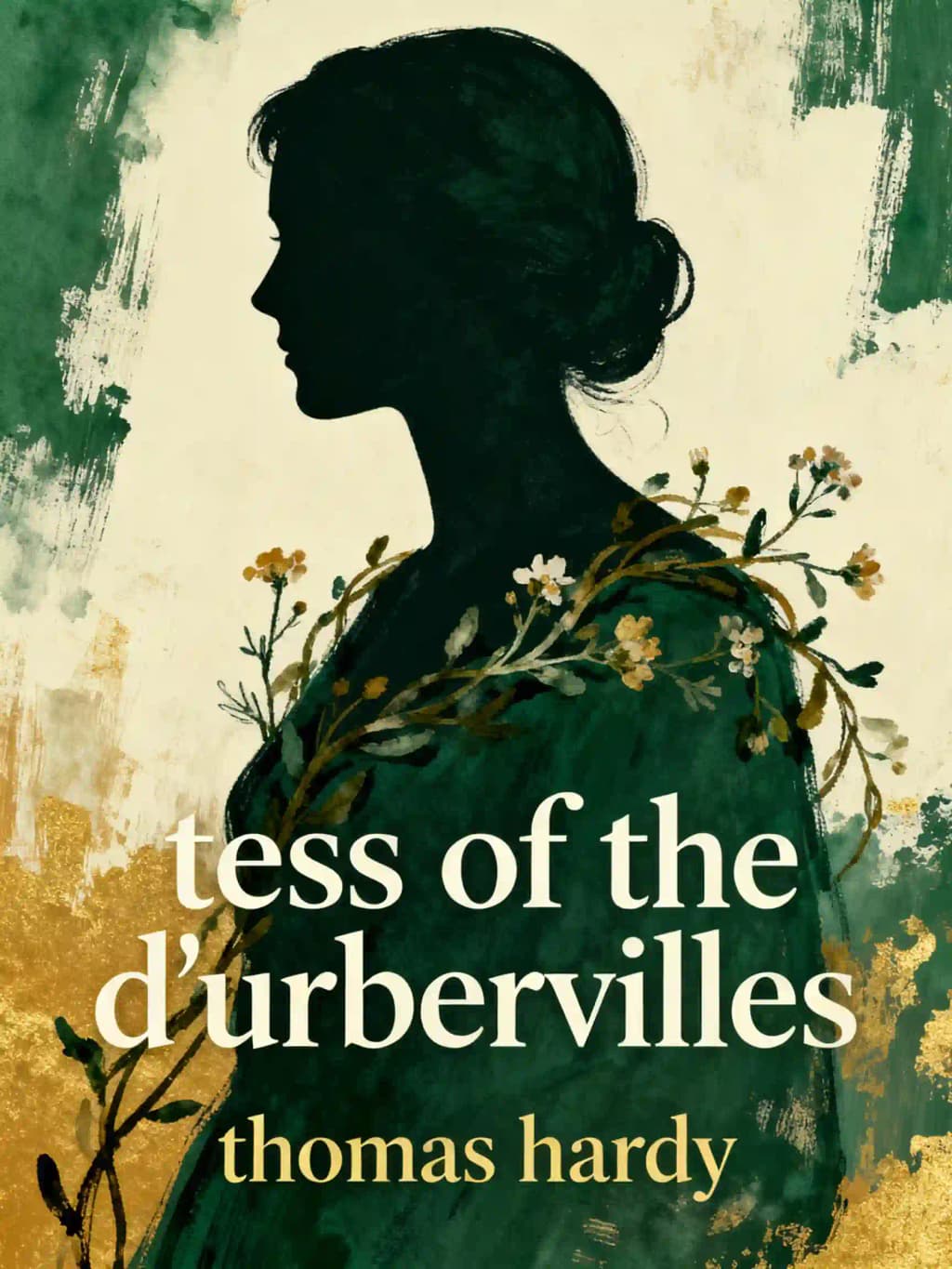
Thomas Hardy's controversial masterpiece follows Tess Durbeyfield's tragic journey through Victorian England's cruel social hierarchy. Initially censored for its "immorality," this feminist icon sparked Roman Polanski's acclaimed 1979 film adaptation. What makes a woman's fall from grace still hauntingly relevant today?
Thomas Hardy (1840–1928) was an English novelist, poet, and Victorian realist whose exploration of rural life and social injustice made Tess of the d’Urbervilles a cornerstone of 19th-century literature.
Born in Dorset, England, Hardy drew inspiration from the landscapes and social dynamics of his native Wessex, a fictionalized region central to his "novels of character and environment."
Tess of the d’Urbervilles (1891), a tragic critique of Victorian morality and gender inequality, cemented Hardy’s reputation for blending poetic prose with unflinching social commentary. His other major works, including Far from the Madding Crowd, The Mayor of Casterbridge, and Jude the Obscure, similarly dissect themes of fate, class, and human resilience.
Though controversial in his time for challenging societal norms, Hardy’s works are now celebrated as classics, with Tess adapted into numerous films, plays, and operas. His novels have sold millions of copies worldwide and remain required reading in literary studies.
Tess of the d'Urbervilles follows Tess Durbeyfield, a poor rural girl who discovers her family’s noble lineage. After being exploited by Alec d’Urberville and abandoned by her husband Angel Clare due to Victorian double standards, Tess faces societal condemnation, leading to tragic consequences. Thomas Hardy critiques rigid social hierarchies, gender inequality, and moral hypocrisy in this 1891 classic.
This novel appeals to readers of Victorian literature, feminists exploring historical gender dynamics, and those interested in social critique. Fans of tragic heroines, pastoral settings, and themes like fate versus free will will find it compelling. Hardy’s rich symbolism and unflinching portrayal of injustice resonate with modern audiences examining systemic oppression.
Yes—it’s a cornerstone of English literature for its bold critique of Victorian morality and vivid depiction of rural life. Hardy’s nuanced exploration of Tess’s resilience amid societal cruelty remains culturally relevant, especially for discussions on consent, class, and female agency. The novel’s lyrical prose and tragic arc make it a timeless study of human suffering.
Key themes include:
Hardy subtitled the novel A Pure Woman Faithfully Presented, challenging Victorian notions of virtue. Tess’s moral integrity—her loyalty, resilience, and compassion—contrasts with societal labels of “fallen woman.” Her tragic end underscores Hardy’s critique of a world that conflates purity with sexual chastity.
Alec embodies patriarchal exploitation, using wealth and manipulation to control Tess. His actions—whether interpreted as seduction or rape—highlight power imbalances in class and gender. Unlike Angel, Alec represents unchecked entitlement, making him a catalyst for Tess’s suffering and a symbol of systemic corruption.
Angel idealizes Tess as a “pure” rural maiden, but upon learning of her past, he embodies Victorian hypocrisy. His rejection stems from societal conditioning, not personal morality. Hardy contrasts Angel’s intellectual progressivism with his emotional rigidity, critiquing the era’s conflicting values.
The ancient Stonehenge altar, where Tess is arrested, symbolizes her role as a sacrificial victim to societal norms. The pagan site contrasts with Christian morality, emphasizing primal human instincts and the timelessness of her struggle against injustice.
Hardy condemns:
Critics dispute whether Alec rapes or seduces Tess. Hardy’s ambiguous portrayal reflects publisher constraints, but the power imbalance—Tess’s poverty versus Alec’s privilege—suggests coercion. This ambiguity fuels discussions about consent, accountability, and narrative silencing of female trauma.
Like Jude the Obscure, Tess critiques societal oppression, but its focus on female suffering distinguishes it. Hardy’s Wessex setting and tragic structure align with Far From the Madding Crowd, though Tess is bleaker, rejecting romanticized endings to emphasize systemic injustice.
The novel’s themes—gender inequality, victim-blaming, and class disparity—mirror modern debates. Tess’s struggle for agency in a judgmental world resonates in discussions about #MeToo, economic inequality, and the persistence of patriarchal norms. Hardy’s empathy for the marginalized remains a powerful cultural touchstone.
저자의 목소리로 책을 느껴보세요
지식을 흥미롭고 예시가 풍부한 인사이트로 전환
핵심 아이디어를 빠르게 캡처하여 신속하게 학습
재미있고 매력적인 방식으로 책을 즐기세요
She was a fine and handsome girl—not handsomer than some others, possibly, but her mobile peony mouth and large innocent eyes added eloquence to colour and shape.
Why it was that upon this beautiful feminine tissue, sensitive as gossamer, and practically blank as snow as yet, there should have been traced such a coarse pattern as it was doomed to receive; why so often the coarse appropriates the finer thus, the wrong man the woman, the wrong woman the man, many thousand years of analytical philosophy have failed to explain to our sense of order.
Once victim, always victim—that’s the law!
The beauty or ugliness of a character lay not only in its achievements, but in its aims and impulses; its tendencies and possible habits; the delicate adjustments of the inner mechanism, which might be altogether hidden from the eye if the structure were not disturbed by some unusual situation.
‘Justice’ was done, and the President of the Immortals, in Aeschylean phrase, had ended his sport with Tess.
Tess of the D'Urbervilles의 핵심 아이디어를 이해하기 쉬운 포인트로 분해하여 혁신적인 팀이 어떻게 창조하고, 협력하고, 성장하는지 이해합니다.
Tess of the D'Urbervilles을 빠른 기억 단서로 압축하여 솔직함, 팀워크, 창의적 회복력의 핵심 원칙을 강조합니다.

생생한 스토리텔링을 통해 Tess of the D'Urbervilles을 경험하고, 혁신 교훈을 기억에 남고 적용할 수 있는 순간으로 바꿉니다.
무엇이든 물어보고, 목소리를 선택하고, 진정으로 공감되는 인사이트를 함께 만들어보세요.

샌프란시스코에서 컬럼비아 대학교 동문들이 만들었습니다
"Instead of endless scrolling, I just hit play on BeFreed. It saves me so much time."
"I never knew where to start with nonfiction—BeFreed’s book lists turned into podcasts gave me a clear path."
"Perfect balance between learning and entertainment. Finished ‘Thinking, Fast and Slow’ on my commute this week."
"Crazy how much I learned while walking the dog. BeFreed = small habits → big gains."
"Reading used to feel like a chore. Now it’s just part of my lifestyle."
"Feels effortless compared to reading. I’ve finished 6 books this month already."
"BeFreed turned my guilty doomscrolling into something that feels productive and inspiring."
"BeFreed turned my commute into learning time. 20-min podcasts are perfect for finishing books I never had time for."
"BeFreed replaced my podcast queue. Imagine Spotify for books — that’s it. 🙌"
"It is great for me to learn something from the book without reading it."
"The themed book list podcasts help me connect ideas across authors—like a guided audio journey."
"Makes me feel smarter every time before going to work"
샌프란시스코에서 컬럼비아 대학교 동문들이 만들었습니다

Tess of the D'Urbervilles 요약을 무료 PDF 또는 EPUB으로 받으세요. 인쇄하거나 오프라인에서 언제든 읽을 수 있습니다.
Imagine a world where a single mistake-or worse, a violation beyond your control-forever brands you as fallen. This is the world of Tess Durbeyfield, whose journey from innocence to tragedy forms the heart of Thomas Hardy's masterpiece. Published in 1891, "Tess of the d'Urbervilles" scandalized Victorian England with its sympathetic portrayal of a "ruined" woman and its indictment of society's sexual double standards. The novel follows Tess, a beautiful country girl whose life unravels after she's sexually exploited by a wealthy "cousin." When she later finds true love with Angel Clare, her past returns to haunt her, triggering a cascade of events that lead to her ultimate destruction. Through Tess's story, Hardy poses a question that still resonates today: how much of human suffering stems from cruel fate, and how much from an unforgiving society that punishes women for the very experiences it allows men?