1장
The Silicon Valley Blueprint: How Any City Can Build a Thriving Startup Ecosystem
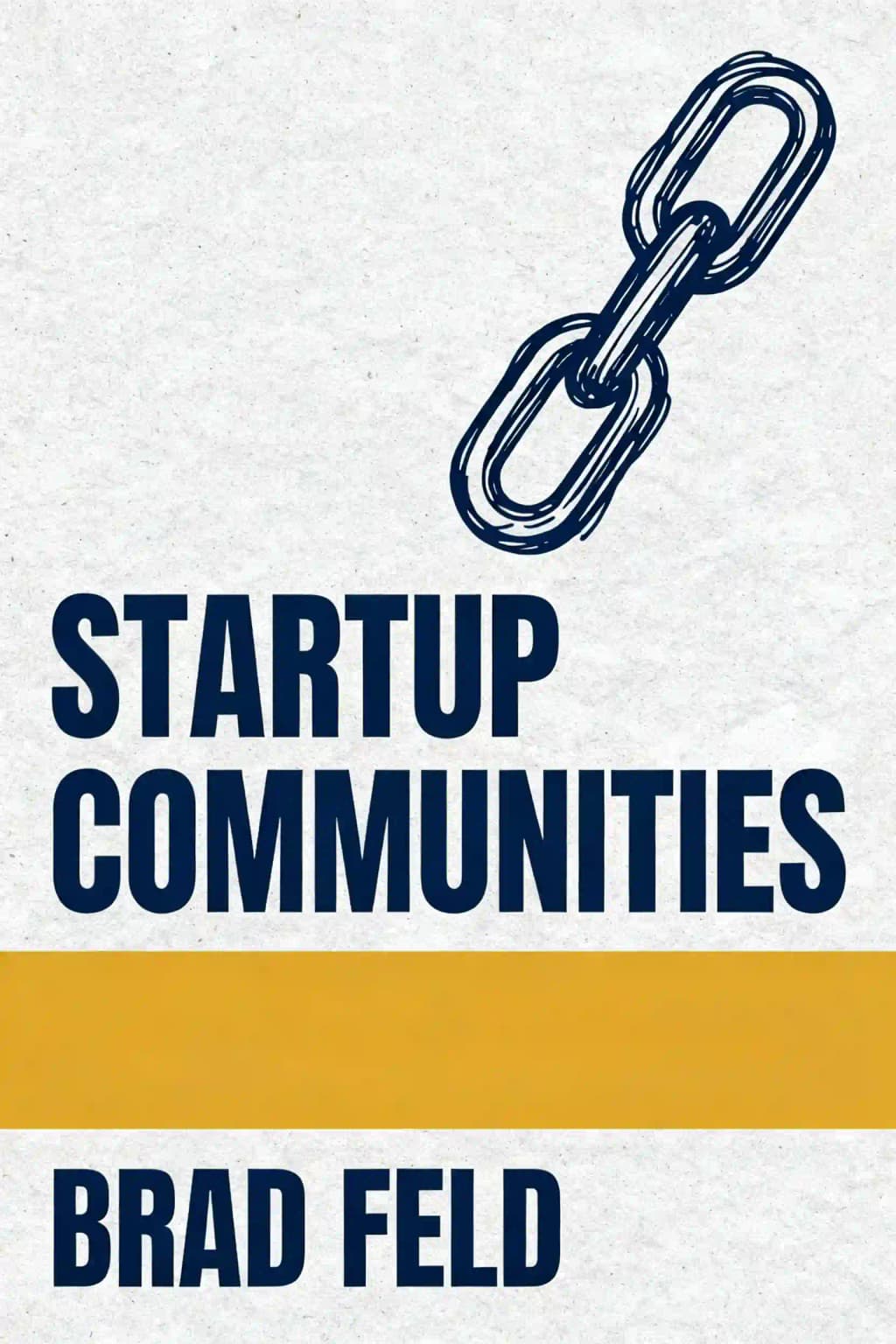
When Brad Feld moved to Boulder, Colorado in 1995, he knew exactly one person in town. Twenty-five years later, Boulder-a city of just 107,000 people-is mentioned alongside Silicon Valley, New York, and Boston as a thriving entrepreneurial hub. What happened? In "Startup Communities," Feld revealed his "Boulder Thesis," a framework explaining how entrepreneurs can build vibrant startup ecosystems in any city. Now, in his sequel "The Startup Community Way," Feld and co-author Ian Hathaway expand this vision, incorporating complexity theory to explain why traditional top-down approaches to building entrepreneurial ecosystems consistently fail. The book has become required reading for entrepreneurs, investors, and policymakers worldwide. Even Eric Ries, creator of the Lean Startup methodology, credits Feld's work with transforming entrepreneurial communities globally by establishing clear practices for managing bottom-up startup communities built on networks of trust rather than hierarchical control.
2장
Why Startup Communities Matter: The Foundation of Innovation
Startup communities exist because entrepreneurs need access to ideas, talent, and resources that extend beyond their companies. Unlike the industrial era where businesses operated in isolation, today's knowledge economy requires "fuzzy boundaries" where information flows freely between classrooms, universities, competitors, and users. The market for these intangible resources operates through relationships rather than transactions, creating dependencies where startups are especially vulnerable due to their reliance on external factors they can't control.
What makes startup communities thrive is the shift from industrial-era hierarchies to information-age networks. While hierarchies function through control and rigidity, networks enable the free flow of information that startups need. Annalee Saxenian's landmark comparison of Silicon Valley and Boston's Route 128 Corridor demonstrates this perfectly-Silicon Valley's "collaborative competition" culture allowed it to adapt to technological disruption while Boston's rigid hierarchical structure caused it to stagnate.
The most valuable relationships for startups are local, making geographic density crucial. Dense co-location creates "agglomeration effects" that lower transaction costs and improve matching between companies, workers, and resources. Knowledge transfers most effectively through close proximity-"learning by doing" and "learning by seeing." Research confirms this with studies showing benefits of knowledge sharing in the software industry are 10 times greater within one mile compared to 2-5 miles away, and benefits among Manhattan advertising agencies diminish after just 750 meters.
Quality of place matters tremendously because highly skilled founders and employees can choose where they live. Unlike traditional economic development that focused on "smokestack-chasing" to attract large firms with tax incentives, today's knowledge economy workers seek more than affordable housing and good schools. They desire cultural, social, and natural amenities, and proximity to other creative people. Richard Florida's "creative class" theory explains how these individuals create "meaningful new forms" and want to live in delightful places with tolerance for new ideas.
Jerusalem's startup community demonstrates this principle perfectly. Once vibrant in the late 1990s, it crashed in 2002 due to the dot-com bubble burst and political instability, remaining dormant for over a decade. Revival began in 2013 when entrepreneurs who chose to live in Jerusalem for quality-of-life reasons began organizing grassroots events in bars. Mayor Nir Barkat's investment in making Jerusalem Israel's cultural capital, influenced by Richard Florida's creative class theory, indirectly catalyzed startup activity about five years later, demonstrating how funding creative activities can spark entrepreneurial ecosystems more effectively than directly funding startups.
3장
The Essential Players: Leaders, Feeders, and Instigators
A startup community's primary purpose is to help entrepreneurs succeed by creating an environment where innovation can thrive and new ventures can scale. Without dynamic, growing entrepreneurs, communities become stagnant and lose their competitive edge. Three distinct but interconnected types of actors form the backbone of these ecosystems: leaders, feeders, and instigators.
Leaders are successful entrepreneurs who provide core direction and momentum for the community. They typically have founded and scaled companies, understand the challenges of building businesses, and possess both the credibility and networks to guide others. Research from Endeavor and the Kauffman Foundation demonstrates that communities with dense, interconnected networks where successful entrepreneurs actively mentor and invest in the next generation achieve significantly better outcomes in terms of company formation, job creation, and economic growth. These leaders often establish informal mechanisms like founder dinners, mentorship programs, and investment syndicates that accelerate knowledge sharing.
Feeders encompass a broad ecosystem of support organizations including universities, government agencies, investors, accelerators, and professional service providers. While essential to the community's health, feeders must resist the temptation to control or overly structure entrepreneurial activity. The text particularly cautions against over-reliance on government initiatives, noting that while startup communities generate public benefits, government bodies typically lack the agility, risk tolerance, and practical expertise needed to effectively lead them. Successful feeders focus on removing obstacles and providing resources rather than directing entrepreneurs' activities.
Instigators represent a crucial bridge between the entrepreneurial and institutional worlds. These individuals often emerge from feeder organizations but take on influential leadership roles despite not being entrepreneurs themselves. They might be university professors who champion student ventures, corporate executives who facilitate partnerships with startups, or economic development professionals who coordinate community initiatives. Instigators initiate programs, sustain momentum, and fill critical gaps when founders are consumed with building their companies.
Mentors serve as the lifeblood of thriving startup communities by working with entrepreneurs on a volunteer basis, embracing a #GiveFirst philosophy that prioritizes relationship building over immediate returns. Unlike paid advisors who operate under defined compensation agreements, mentors share expertise, connections, and guidance without expectation of immediate benefit. This approach often leads to deeper, more authentic relationships that may naturally evolve into formal advisory roles, investment opportunities, or business partnerships as companies mature.
Universities function as critical anchors for startup communities by creating and disseminating knowledge while attracting global talent. Beyond providing educated workforces and stable local economies, universities offer unique assets including research facilities, technology transfer offices, entrepreneurship programs, and student talent. Progressive institutions actively engage through multiple channels - supporting student ventures, facilitating faculty startups, commercializing research innovations, and partnering with industry on applied R&D projects.
Large corporations play increasingly vital roles in startup ecosystems through multiple mechanisms. They serve as training grounds for future entrepreneurs, spin off new ventures when employees pursue innovations, attract skilled talent to regions, and disseminate technical knowledge through R&D activities and industry partnerships. Most crucially, corporations can dramatically impact startup trajectories by becoming customers, strategic partners, or investors. Early corporate contracts often provide the validation and revenue that enables startups to scale, while strategic investments can accelerate growth and provide access to global markets.
4장
The Seven Capitals: Resources That Drive Entrepreneurial Success
The Seven Capitals framework identifies core assets that produce economic value in startup communities. Like traditional capital, these resources can be depleted and require ongoing investment:
1. Intellectual capital: ideas, technologies, education
2. Human capital: talent, skills, diversity
3. Financial capital: revenue, debt, equity financing
4. Network capital: connectedness, relationships
5. Cultural capital: attitudes, behaviors, inclusiveness
6. Physical capital: density, infrastructure, quality of place
7. Institutional capital: laws, functioning public sector, market stability
The first three provide essential inputs (ideas, talent, funding), while the others create the critical infrastructure that enables the startup community to function properly.
Local beliefs and norms significantly shape startup communities. Vibrant ecosystems have a buzz around entrepreneurship where founders are role models or local heroes. The foundational cultural norms include supportive views of entrepreneurship, understanding of risk and reward, tolerance of failure and ambiguity, and embrace of new ideas and people. Communities that value creativity, experimentation, ambition, wealth creation, and entrepreneurship education thrive.
The connectedness of people is central. This network capital is primarily local but can extend globally through diaspora networks, university alumni, and professional ties. Organizations like professional associations, entrepreneurship clubs, and innovation centers facilitate these connections, while experienced entrepreneurs and board directors often serve as super-connectors. Entrepreneurship is fundamentally a team sport-95 percent of founders involve others substantively, with half of ventures started by teams drawing from core networks.
Access to customers-especially those willing to engage with early-stage or proof-of-concept products-is crucial for startups to gain traction, develop products, and establish financial stability. Initial customers and suppliers can provide expertise in product development and market fit, forge partnerships, serve as references, and help with feedback and distribution. Local organizations including government, universities, and large corporations can play significant roles as early customers.
5장
Startup Communities vs. Entrepreneurial Ecosystems: Understanding the Distinction
While communities and ecosystems are related, they serve different functions. Startup communities form the beating heart of entrepreneurship in a city with a collective identity, shared purpose, common values, and commitment to putting founders first. In contrast, entrepreneurial ecosystems are broader structures that wrap around and depend on startup communities, though their participants often face incentive structures and organizational constraints that don't align with the startup community.
The community layer consists of people with a deep commitment to entrepreneur success, while the ecosystem includes many actors with different primary objectives. A startup community can be defined as "a group of people that-through their interactions, attitudes, interests, goals, sense of purpose, shared identity, fellowship, collective accountability, and stewardship of place-are fundamentally committed to helping entrepreneurs succeed."
While entrepreneurial ecosystems aim to produce startups, generate jobs, and create economic value, startup communities exist simply to help entrepreneurs succeed. These purposes are mutually reinforcing but distinct. At the ecosystem layer, engagement is primarily economic, while the community layer responds more to a drive for common good.
The most critical factor in improving entrepreneurial ecosystems is entrepreneurial success-when companies grow and generate liquidity for founders, employees, and shareholders. This success creates a positive feedback loop as these individuals recycle their time, expertise, and wealth into the next generation of founders. Beyond providing money and experience, successful entrepreneurs inspire the broader community through living examples of what's possible.
Madison's transformation from an anti-business climate to an emerging entrepreneurial hub demonstrates how building a startup community first can lead to ecosystem development. Starting in 2009 with Capital Entrepreneurs, a group of just seven founders that grew to over 300 members, Madison created the connective tissue needed before attempting larger infrastructure projects. StartingBlock, a 50,000-square-foot innovation center that opened in 2018, succeeded because: (1) the startup community had grown large and cohesive enough to represent a formidable constituency; (2) ecosystem partners like the city and local utility provided financial resources; and (3) business leaders embraced supporting next-generation companies.
6장
Complex Systems: The Key to Understanding Startup Communities
While many people casually use the term "startup ecosystem," they often propose actions that contradict how systems actually work. This disconnect between systems language and practice hinders progress in startup communities. Leaders frequently attempt to force specific outcomes through direct intervention, failing to recognize that startup communities are complex adaptive systems with nonlinear properties that require holistic thinking rather than reductionist approaches. These misaligned efforts often manifest in initiatives like mandatory networking events, prescribed innovation districts, or rigid funding programs that ignore the organic nature of entrepreneurial activity.
Complex systems are fundamentally different from simple or complicated ones. Simple systems contain few elements, require minimal expertise, and produce predictable outcomes through straightforward instructions - like following a recipe or assembling basic furniture. Complicated systems involve more elements, require greater expertise and precision, yet remain predictable and controllable, such as building an airplane or performing surgery. Complex systems-like traffic patterns, family dynamics, and startup communities-are not fully knowable, cannot be controlled (only influenced), lack clearly defined successful outcomes, emerge through bottom-up processes, and behave nonlinearly. A small change in one area might create dramatic effects elsewhere, while major interventions might yield minimal impact.
Organizations often fail when they apply complicated-system approaches to complex systems, as with corporate culture initiatives that impose top-down policies rather than nurturing organic norms. Common mistakes include trying to replicate Silicon Valley's exact formula, implementing rigid metrics for innovation, or forcing collaboration through artificial structures. Effective engagement with complex systems requires embracing their unpredictability, supporting what's already working organically, and exemplifying desired values rather than dictating them. This might mean identifying and amplifying natural community leaders, supporting spontaneous meetups, or providing resources to grassroots initiatives.
Brad Bernthal's New Venture Challenge at the University of Colorado exemplifies complex systems thinking through four key elements: functioning as a pre-accelerator that complements existing startup resources rather than competing with them; maintaining inclusivity for anyone with a university connection, from undergraduates to alumni and faculty; breaking down silos between campus and community through mentor engagement and student recruitment opportunities; and reflecting entrepreneurship's interdisciplinary nature by operating across departments rather than being housed in a single school. This approach acknowledges that innovation emerges from unexpected connections and collaborations, not from prescribed pathways. The program's success stems from its role as a catalyst that enables natural interactions and relationships to form, rather than trying to force specific outcomes.
The implications for startup community builders are significant: rather than attempting to control or engineer specific outcomes, leaders should focus on creating conditions that enable natural emergence and evolution. This might include removing barriers to collaboration, providing flexible resources, and fostering environments where serendipitous connections can occur. Success in complex systems comes from adaptation and responsiveness rather than rigid planning and control.
7장
Emergence and Self-Organization: How Communities Evolve Naturally
Emergence represents both the process of coming into existence and the unpredictable creativity that arises when system components interact. In complex systems, this interaction produces patterns and value that cannot be anticipated or replicated, even with perfect understanding of individual components. Entrepreneurship itself exemplifies emergence, as demonstrated by user-driven innovations like Twitter's @ replies, hashtags, and retweets-all generated bottom-up by users rather than designers.
Complex systems create synergies where interactions produce value greater than the sum of individual parts. These systems exhibit nonlinearity-outputs aren't proportional to inputs, making cause-effect relationships difficult to identify. Boulder's startup community demonstrates this through the concentration of entrepreneurial activity downtown around 2007. Multiple simultaneous factors-Foundry Group's relocation, Techstars' opening, the St Julien hotel, Rally Software's move, landlord flexibility during the financial crisis, and university engagement-created exponential growth in entrepreneurial density.
Complex systems self-organize as broader patterns emerge from countless interactions without central control. Like schools of fish or flocks of birds, these systems develop ordered forms organically from the bottom up. In social contexts like startup communities, this manifests as "spontaneous order" where patterns emerge naturally rather than through intentional planning.
Complex systems exist in constant transformation as parts and the whole co-evolve through feedback loops. The dimension of time creates further challenges through path dependency, where past conditions heavily influence future states, making meaningful change slow to materialize. This explains why startup communities require generational timeframes to develop fully.
The true power of complex systems lies in the interactions between components rather than the components themselves. Many startup community efforts mistakenly focus on individual parts (capital, programs, accelerators) because they're tangible and measurable, while neglecting the crucial intangible interactions between them. A more effective approach is improving connections between existing actors and resources, which creates a virtuous cycle attracting more resources over time.
8장
Beyond Quantity: Why Quality and Outliers Matter More
One of the most significant errors in startup communities is the belief that simply increasing inputs will produce better outcomes. This "more-of-everything" approach assumes that adding more capital, innovation centers, accelerators, and programs will automatically create a vibrant startup community. However, since startup communities are nonlinear and complex, this quantity-based thinking is fundamentally flawed.
The "more-of-everything problem" stems from placing excessive faith in blindly increasing system inputs with the mistaken belief that this will proportionally increase desired outputs and outcomes. Research reveals what actually matters most is a density of smart, mid-career people oriented toward entrepreneurship in knowledge-intensive activities, plus difficult-to-measure factors like networks and culture. Notably absent from this list are many elements communities often focus on: venture capital, patents, university programs, accelerators, and government innovation initiatives.
The quantity-driven mindset incorrectly assumes startup success follows a normal statistical distribution, when in reality it follows a power law with fat-tailed distributions. A small number of outlier successes drive total value in the system, not averages. Since most startups fail, a few massive wins matter more than hundreds of mediocre outcomes. These high-impact companies create profound psychological impacts by providing tangible markers for founders to dream big.
When startups achieve successful outcomes, the resulting wealth, experience, and talent gets recycled back into the community. This recycling process improves the local talent base, grows the labor market, makes talent attraction easier, and creates visible success stories that make entrepreneurial ambition tangible. Experienced entrepreneurs possess invaluable experiential knowledge that cannot be learned in classrooms, and research confirms the productivity advantage of serial entrepreneurs as knowledge spills over from one venture to the next.
Scott Dorsey's story of co-founding ExactTarget in Indianapolis in 2000 demonstrates how entrepreneurial recycling transforms communities. Despite starting during the dot-com bust in a city with modest tech success, they turned Indianapolis into a competitive advantage by building downtown, leveraging local university talent, and gaining government support. ExactTarget achieved tremendous success with an IPO and $2.5 billion acquisition by Salesforce, creating 1,500 tech jobs and proving scalable tech companies could be built anywhere. After the acquisition, Dorsey and other ExactTarget alumni founded High Alpha, a venture studio combining company creation with venture capital to mentor the next generation of tech founders.
9장
The Boulder Thesis: A Framework for Building Startup Communities
The Boulder Thesis explains why Boulder, Colorado consistently produces high-impact startups despite its small size. The framework consists of four key principles that have been adopted globally:
1. Entrepreneurs must lead the startup community, not government or other institutions
2. Leaders must maintain a long-term commitment with at least a 20-year rolling horizon
3. The community must be inclusive of anyone wanting to participate
4. There must be continual activities that engage the entire entrepreneurial stack through tangible, focused engagement
The first principle connects to the concept of contagion in complex systems-ideas, behaviors and information can spread quickly through networks, with both positive and negative effects. When positive behaviors are working well, increasing returns create exponential improvement through feedback loops. Conversely, startup community leaders must actively avoid reinforcing negative contagions by not engaging with bad actors or unhealthy behaviors.
The second principle demands leaders maintain a perpetual 20-year view that resets annually. This aligns with how complex systems change: not steadily but through nonlinear shifts and phase transitions. Complex systems like startup communities show unpredictable, inconsistent progress with periods of significant advancement followed by stagnation or decline. Startup community leaders must transcend the short-term rhythms that dominate modern society-quarterly business cycles, academic years, political calendars.
The third principle demands that startup communities be inclusive of anyone who wants to participate. Diversity is essential for startup communities, not merely desirable. Complex systems like startups require teamwork with diverse perspectives to drive innovation and resilience. Research demonstrates that diverse teams consistently outperform homogeneous teams of "the best" individuals. Startup communities should reject "culture fit" thinking, which often serves as code for "like us," and instead seek "culture add"-embracing differences that bring new value and perspectives.
The fourth principle states that startup communities must have continual activities that engage the entire entrepreneurial stack. Meaningful connections require regular, active engagement (like hackathons and competitions) rather than passive events (like cocktail parties). Complex systems exhibit self-similarity by replicating small-scale patterns into higher-order ones. This means efforts to improve behavior and mindset, even among small groups within a startup community, can profoundly impact the overall system over time.
10장
Putting It All Together: The Startup Community Way
The Startup Community Way presents a comprehensive framework for nurturing entrepreneurial ecosystems, while emphasizing that each city must find its own unique path. The central message revolves around four key pillars: collaboration across sectors, continuous support mechanisms, open knowledge-sharing networks, and a #GiveFirst mentality that puts entrepreneurs at the heart of the community. Since startup communities function as complex human social systems, they develop organically through interconnected relationships built on trust, reciprocity, and a shared commitment to place - a transformation that typically spans generations rather than years.
The authors emphasize the importance of simple, focused actions over elaborate programs or initiatives. They advocate for direct, practical support mechanisms like mentor networks, peer groups, and regular community events that help entrepreneurs overcome specific challenges. Examples include monthly founder meetups, expert office hours, and collaborative workspace environments that facilitate natural interactions and knowledge exchange.
While many seek a universal blueprint for success, the book argues against one-size-fits-all solutions, noting how factors like local culture, existing industry strengths, and available resources create unique contexts that require tailored approaches. Instead of following predetermined steps, communities should embrace experimentation and learning through iterative cycles of activity, guided by clear principles and transparent processes. This might mean testing different event formats, funding mechanisms, or support programs, then adapting based on community feedback and results.
The framework's applications extend far beyond startup ecosystems. The same principles of trust-building, reciprocal relationships, and embracing complexity prove valuable in various contexts - from developing corporate innovation cultures to fostering civic engagement initiatives. Organizations like accelerators, coworking spaces, and economic development agencies can apply these concepts to create more dynamic, collaborative environments.
The book emphasizes three critical success factors for any startup community: patient leadership that maintains consistent support over time, inclusive networks that welcome diverse participants and ideas, and metrics that focus on relationship quality and community engagement rather than just quantitative outcomes. By focusing on these elements while remaining adaptable to local conditions, cities can develop robust entrepreneurial ecosystems that not only support individual startup success but also generate sustained economic growth and innovation capacity.
The authors conclude by stressing that building effective startup communities requires a fundamental shift in how we think about economic development - moving from top-down planning to bottom-up emergence, from rigid structures to flexible networks, and from short-term programs to long-term relationship building. This approach, while more challenging to implement, creates more resilient and sustainable entrepreneurial ecosystems that can adapt and thrive in an increasingly complex global economy.