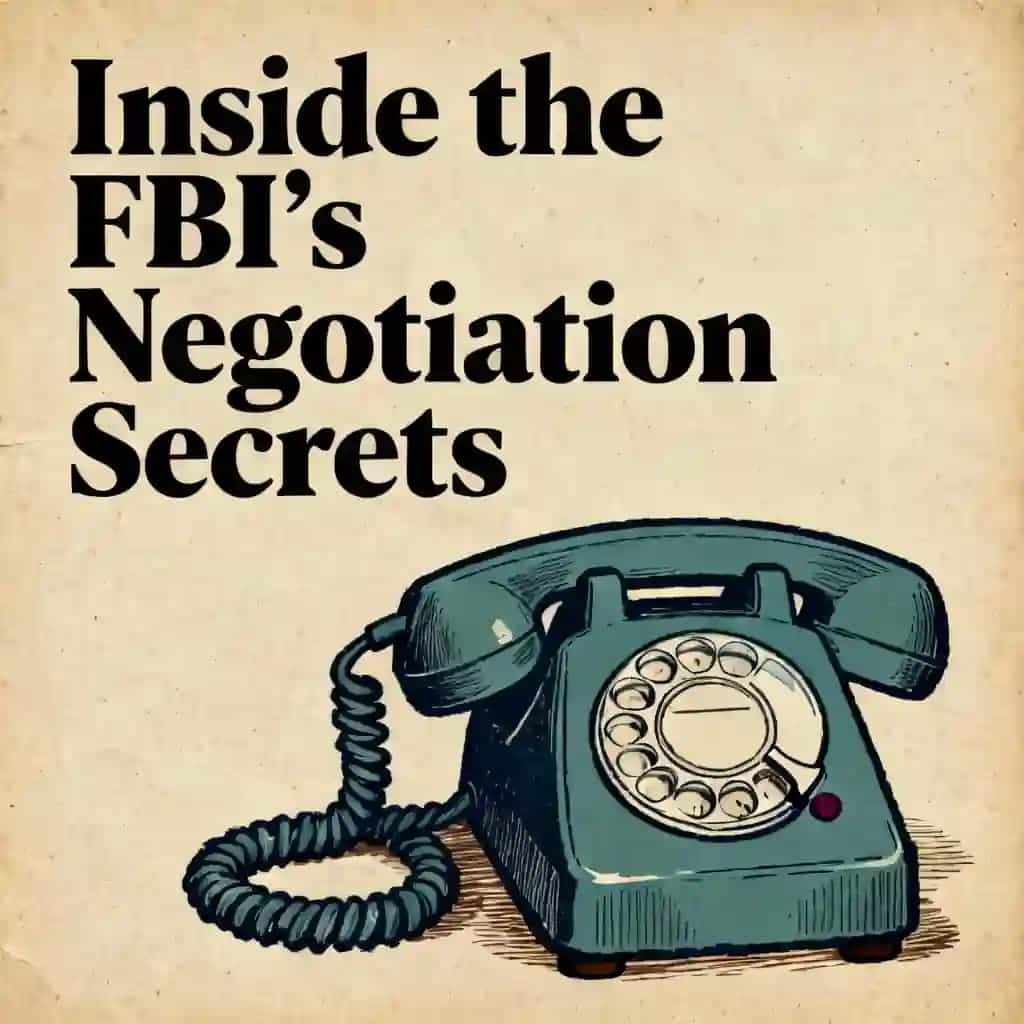
Inside the FBI's highest-stakes standoffs, Gary Noesner's memoir reveals the psychological chess of hostage negotiation. The inspiration behind Netflix's "Waco" series shows how active listening saved lives when bullets couldn't. What would you say to someone holding lives in their hands?
Gary Noesner, author of Stalling for Time: My Life as an FBI Hostage Negotiator, is a renowned crisis management expert and former Chief of the FBI’s Crisis Negotiation Unit.
His memoir blends firsthand accounts of high-stakes negotiations—including the infamous 1993 Waco siege with David Koresh—with insights into de-escalation tactics, establishing it as essential reading in law enforcement and leadership circles.
With 30 years at the FBI, Noesner resolved over 120 international kidnappings, militia standoffs, and terrorist incidents, later applying this expertise as a Senior Vice President at global risk firm Control Risks. His work has been featured in documentaries by the History Channel, CNN, and NPR, while his portrayal by Michael Shannon in the Paramount Network’s Waco series brought his methods to mainstream audiences.
The book, praised for its gripping narrative and tactical wisdom, was adapted into audiobook format narrated by Noesner himself and remains a training staple for crisis negotiators worldwide.
Stalling for Time is Gary Noesner’s memoir detailing his 30-year career as an FBI hostage negotiator, offering firsthand accounts of high-profile crises like the Waco siege, D.C. sniper attacks, and overseas kidnapping cases. The book emphasizes negotiation tactics, crisis management strategies, and the psychological dynamics of diffusing conflicts without violence.
This book is ideal for law enforcement professionals, true crime enthusiasts, and readers interested in psychology, negotiation techniques, or crisis resolution. It’s also valuable for corporate leaders seeking insights into conflict management and workplace violence prevention.
Yes, Stalling for Time is praised for its gripping storytelling and actionable negotiation lessons. While some critics note Noesner’s biased perspective against tactical teams, the book remains a seminal work for understanding hostage negotiation’s human-centric approach.
Noesner highlights active listening, empathy-building, and stalling tactics to de-escalate crises. Key principles include avoiding ultimatums, addressing emotional needs, and creating rapport to steer subjects toward peaceful surrender.
Noesner critiques the FBI’s handling of the 1993 Branch Davidian standoff, arguing excessive tactical escalation undermined negotiation progress. His firsthand account reveals internal conflicts between negotiators and tactical teams during the 51-day crisis.
Beyond law enforcement, the book’s negotiation frameworks apply to business disputes, family conflicts, and workplace dynamics. Noesner stresses treating adversaries with respect, identifying unmet needs, and avoiding power struggles.
Some reviewers note Noesner’s repeated blame of tactical teams for failures, creating a one-sided narrative. Others find the writing overly technical in sections, though most praise its accessibility.
Unlike action-focused accounts, Noesner’s memoir prioritizes psychological nuance over tactical heroics. It complements works like Mindhunter but stands out for its negotiation-specific focus.
These emphasize empathy and strategic patience.
His post-retirement role as a kidnapping consultant for Control Risks adds credibility, showcasing real-world applications of his FBI-developed methods in corporate and international contexts.
The book’s lessons on de-escalation and communication remain critical amid modern tensions like workplace violence, terrorism, and political standoffs. Its human-centered approach contrasts with today’s polarized discourse.
The book covers underreported incidents, including Middle East hijackings (e.g., TWA Flight 847), prison riots, and his involvement in the Pan Am Flight 103 bombing investigation.
저자의 목소리로 책을 느껴보세요
지식을 흥미롭고 예시가 풍부한 인사이트로 전환
핵심 아이디어를 빠르게 캡처하여 신속하게 학습
재미있고 매력적인 방식으로 책을 즐기세요
You're going to have to kill me.
Stalling for Time의 핵심 아이디어를 이해하기 쉬운 포인트로 분해하여 혁신적인 팀이 어떻게 창조하고, 협력하고, 성장하는지 이해합니다.
Stalling for Time을 빠른 기억 단서로 압축하여 솔직함, 팀워크, 창의적 회복력의 핵심 원칙을 강조합니다.

생생한 스토리텔링을 통해 Stalling for Time을 경험하고, 혁신 교훈을 기억에 남고 적용할 수 있는 순간으로 바꿉니다.
무엇이든 물어보고, 목소리를 선택하고, 진정으로 공감되는 인사이트를 함께 만들어보세요.

샌프란시스코에서 컬럼비아 대학교 동문들이 만들었습니다
"Instead of endless scrolling, I just hit play on BeFreed. It saves me so much time."
"I never knew where to start with nonfiction—BeFreed’s book lists turned into podcasts gave me a clear path."
"Perfect balance between learning and entertainment. Finished ‘Thinking, Fast and Slow’ on my commute this week."
"Crazy how much I learned while walking the dog. BeFreed = small habits → big gains."
"Reading used to feel like a chore. Now it’s just part of my lifestyle."
"Feels effortless compared to reading. I’ve finished 6 books this month already."
"BeFreed turned my guilty doomscrolling into something that feels productive and inspiring."
"BeFreed turned my commute into learning time. 20-min podcasts are perfect for finishing books I never had time for."
"BeFreed replaced my podcast queue. Imagine Spotify for books — that’s it. 🙌"
"It is great for me to learn something from the book without reading it."
"The themed book list podcasts help me connect ideas across authors—like a guided audio journey."
"Makes me feel smarter every time before going to work"
샌프란시스코에서 컬럼비아 대학교 동문들이 만들었습니다

Stalling for Time 요약을 무료 PDF 또는 EPUB으로 받으세요. 인쇄하거나 오프라인에서 언제든 읽을 수 있습니다.
A man holds a .357 Magnum to his wife's head. Their eight-year-old son watches in terror from across the room. Outside, heavily armed tactical teams wait for the signal to breach. But before bullets fly, one voice cuts through the chaos-calm, measured, searching for connection. This is the world of crisis negotiation, where the right words can mean the difference between tragedy and salvation. For three decades, Gary Noesner stood at this razor's edge, pioneering techniques that transformed how law enforcement handles life-or-death situations. His methods didn't just save hostages-they revolutionized how we think about human communication under extreme pressure. What he discovered challenges everything we assume about power, control, and heroism: sometimes the bravest thing you can do is simply listen.