1장
Beyond the Sea: A Journey of Magical Acceptance
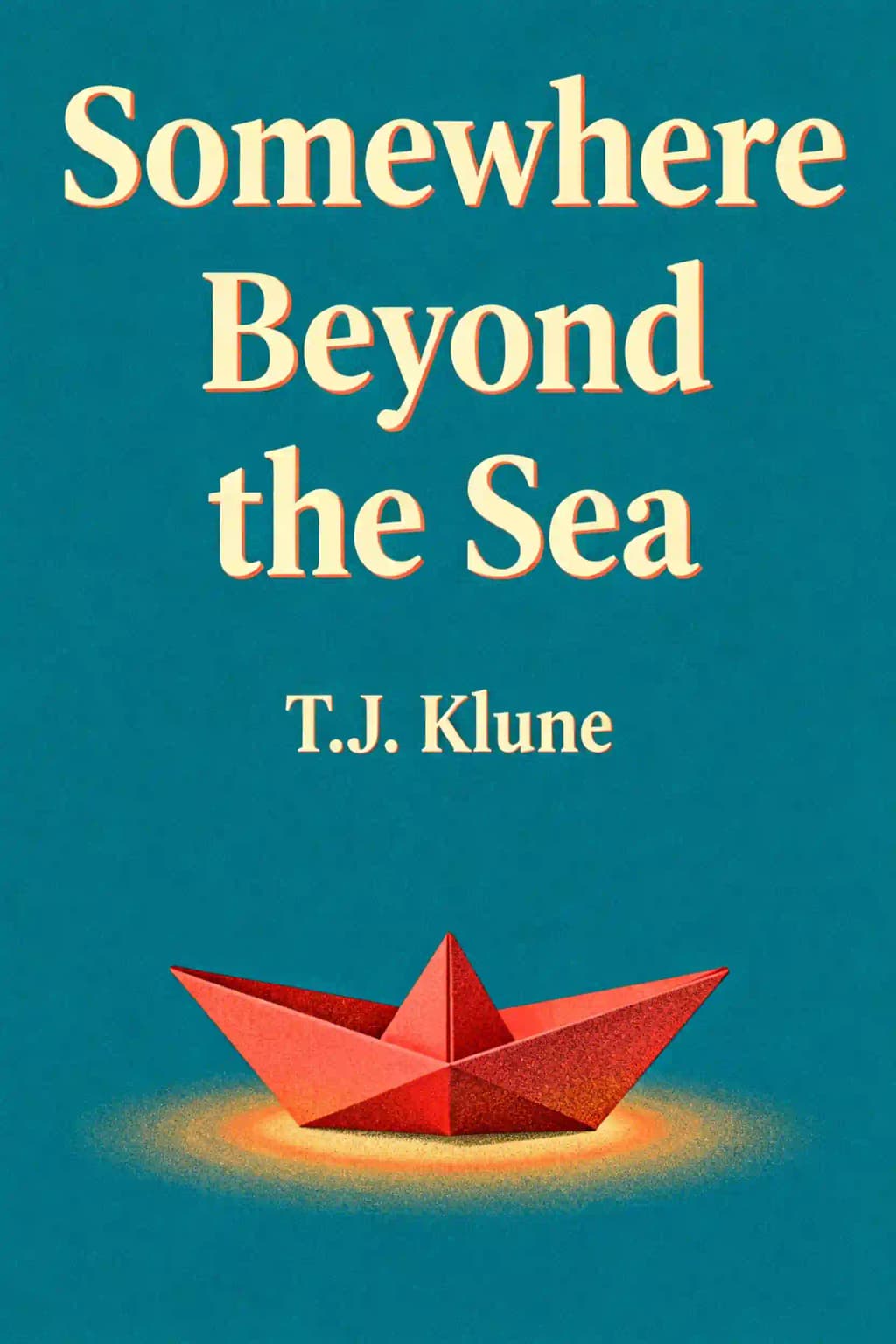
What if the most powerful magic isn't supernatural ability, but the courage to create a family against all odds? In TJ Klune's "Somewhere Beyond the Sea," we return to the enchanting world first introduced in his bestselling "The House in the Cerulean Sea," where magical beings face systemic discrimination and one extraordinary household fights for their right to exist. This sequel has captured readers' hearts worldwide, becoming a New York Times bestseller within its first week of publication and earning praise from critics as "a masterclass in found family storytelling." Celebrities like Neil Gaiman have championed the book, with Gaiman tweeting that it "reminds us why fantasy matters - it shows us both the world as it is and as it could be." At its core, this story asks a profound question: What happens when those deemed "monsters" by society prove to be more humane than the institutions meant to protect us?
2장
The Return to Marsyas Island
Arthur Parnassus returns to Marsyas Island decades after his traumatic childhood there, determined to transform the place of his suffering into a sanctuary for magical orphans. As he walks through the property, memories assault him-particularly of the cellar where he was imprisoned and forced to call himself "an abomination" for being a phoenix. Despite nearly abandoning his plan, a small yellow flower growing through the cracked porch step gives him courage to stay and rebuild.
With the help of Zoe Chapelwhite, a fairy-like being with translucent wings and flowers in her white afro, Arthur spends nearly a year renovating the dilapidated house. Their relationship is complex-Zoe carries guilt for not helping Arthur during his childhood imprisonment, while Arthur insists she isn't to blame. Together, they meticulously restore the property, with Arthur obsessing over every detail to ensure it's perfect for the children who will come.
When renovations are complete, Arthur writes to the Department in Charge of Magical Youth (DICOMY), proposing to reopen the house as a home for orphaned magical children. After months of anxious waiting, a representative named Charles Werner arrives with a counter-proposal. Soon after, Arthur stands on the dock awaiting the ferry carrying the first child, singing softly, "Somewhere beyond the sea..."
Years later, this once-broken place has become a true home. Arthur now shares his life with Linus Baker, formerly a DICOMY caseworker who fell in love with both Arthur and the children during an inspection. Together, they've created something extraordinary-a family bound not by blood but by choice, where six magical children flourish under their care: Sal (a were-Pomeranian), Chauncey (an amorphous green boy with tentacles), Phee (a forest sprite), Talia (a garden gnome), Theodore (a wyvern), and Lucy (the Antichrist).
3장
The Delicate Balance of Protection and Freedom
On a rare quiet morning, Arthur and Linus discover the children are planning something secretive in the kitchen. This seemingly ordinary moment reveals the delicate balance Arthur maintains - wanting to protect his children while allowing them independence to grow. When they overhear that Theodore might be breathing fire, they rush downstairs, concerned yet prepared for the chaos that defines their household. Lucy, the Antichrist, stands ready with a fire extinguisher, while Talia tends her garden through the window, pretending not to notice the commotion.
The family dynamic showcases how Arthur has created the exact opposite of his own traumatic upbringing. Where he once experienced cruelty and imprisonment in sterile institutions, he offers unconditional love and acceptance in a home filled with warmth and controlled chaos. The children are encouraged to explore their abilities safely - whether that's Chauncey's practice with his bell-ringing, Phee's experiments with her sprite magic, or Theodore learning to control his dragon form. Even when things go wrong, as they often do, Arthur's response is never punitive but always instructive and loving.
When Arthur must leave the island to testify about his childhood abuse, he's reluctant to expose the children to these painful truths. The prospect of discussing the systematic discrimination against magical youth - the very system he escaped - fills him with dread. However, Sal, the thoughtful teenager who was once terrified of his own werewolf nature, insists they have a right to know what's happening in the world. His transformation from a frightened child to an advocate for awareness reflects Arthur's successful parenting.
"We need to learn about the world," Sal explains, his quiet voice carrying the weight of experience. "Even the parts that might hurt us. We have that right. Hiding from it won't make it go away."
This tension between sheltering and preparing the children runs throughout the story. Arthur wants to shield them from prejudice, yet knows they must eventually face society's hostility toward magical beings. His approach to parenting reflects his own journey - learning that protection without freedom can become another form of imprisonment. He creates safe spaces for the children to test their boundaries, from supervised trips to the mainland to carefully planned interactions with visitors to the island.
The children's gift to Linus - framed photographs showing him with each child, arranged in a circle with a powerful poem written by Sal in the center - becomes a testament to Arthur's success where his own caretakers failed. Each photo captures a moment of genuine connection: Linus reading with Lucy, gardening with Talia, listening to Chauncey's music, watching Theodore's first controlled flight, and helping Phee tend to her sprites. The accompanying poem speaks of found family and chosen love, themes that echo throughout their shared journey. These children feel seen, valued, and loved for exactly who they are - magical abilities and all.
4장
Confronting the Past to Secure the Future
Arthur's testimony before the Council of Utmost Importance forms the emotional core of the novel. In the imposing Netherwicke chambers, he faces four black-robed officials who represent the government's attitude toward magical beings-dismissive at best, hostile at worst. The elderly Burton leads the proceedings, while the calculating Jeanine Rowder, with her conspicuously large stack of tabbed folders, reveals herself as Arthur's primary adversary.
For nearly three hours, Arthur details his childhood abuse at Marsyas Island, including six months of imprisonment in a dark cellar for attempting to report mistreatment. When Burton attempts to diminish Arthur's testimony by noting he received a financial settlement, Arthur counters with government records showing 76 masters accused of abuse, many still employed. "Does DICOMY deliberately recruit abusers," he asks pointedly, "or do you simply turn a blind eye?"
The hearing takes a shocking turn when Arthur admits to breaking laws he considered unjust, helping magical beings escape DICOMY's registration system during his missing years. "I broke your laws," he acknowledges without apology, "because your laws were wrong." He cites examples of registered magical beings who were executed or murdered, drawing parallels to civil rights movements and quoting Martin Luther King Jr.'s distinction between just and unjust laws.
When Rowder suggests Arthur is building an "army" at Marsyas Island and demands he demonstrate his phoenix form, Arthur initially resists. But after Rowder implies he might be abusing the children as he was once abused, Arthur loses control. Fire races down his arms as his magnificent phoenix form emerges-wings spreading ten feet wide, feathers burning bright orange-red. Only Linus stands firm in the panicked crowd, approaching the phoenix and gently coaxing Arthur back to human form.
This confrontation illustrates the central conflict-a government that claims to protect magical children while treating them as threats to be controlled. Arthur's testimony isn't just about seeking justice for his past; it's about creating a future where children like his won't need to hide who they are.
5장
The Unexpected Addition: David the Yeti
Following the hearing, Arthur and Linus visit 349 Chesterhill Lane to meet David, a young yeti orphan. Their first encounter is memorable-David performs an elaborate theatrical murder mystery, playing both a hard-boiled detective named Dirk Dasher and a wealthy widow named Jacqueline St. Bartholomew, complete with costume changes and dramatic monologues.
When the performance ends, David becomes shy and anxious, revealing he believed he needed to "audition" to be accepted. Arthur gently explains they're actually there to convince David to choose them. This shift in power dynamics-giving David agency rather than treating him as someone to be placed-reflects Arthur's philosophy of respecting children's autonomy.
David tests Arthur with pointed questions about whether he's ever hit children or slammed their fingers in drawers, revealing glimpses of past trauma. When David rudely comments on Arthur's short trousers, Arthur responds with kindness, explaining his "sock problem"-how he deliberately wears his trousers short to show off his decorative socks. This metaphor becomes a teaching moment about how people often hide their true selves beneath layers of protection.
When David eventually visits Marsyas Island, his integration into the family reveals both the children's capacity for acceptance and the lingering effects of trauma. Having never been on a train before, David devises a bizarre "disguise"-walking on blocks of ice he creates from his feet, wearing an oversized trench coat, fedora, mirror shades, and an enormous fake mustache. His childlike wonder emerges despite his attempts to appear nonchalant.
The other children welcome David enthusiastically, showing him a bedroom they've created in the cellar-transformed from Arthur's place of imprisonment into a cold sanctuary perfect for a yeti, complete with aurora borealis painted on the ceiling. When David realizes this space is entirely his own-something he's never had before-he begins to cry tears that materialize as ice cubes falling to the floor.
6장
The Government's Renewed Threat
The family's peace is shattered when official DICOMY folders arrive announcing an upcoming investigation, threatening to remove the children if any deception is discovered. Miss Harriet Marblemaw arrives as inspector-a tall, severe woman with a skeletal appearance, painted-on eyebrows, and blood-red lips, wearing an unusual red coat despite the summer heat.
From the start, Marblemaw makes it clear she believes Arthur has manipulated his way into power. Her clinical precision in examining the house and her declaration that she's "incapable of experiencing fear" establish her as the antithesis of the warmth and emotional openness that defines the Baker-Parnassus household.
The children respond to her presence with creative resistance. When David boldly enters their first meeting, cape billowing and fangs displayed, Marblemaw demands to know what "that" is. David plays along brilliantly, claiming to be a 47-year-old yeti whose growth was stunted after being trapped between rocks, insisting he's Arthur's adult friend who likes to "drink beers and talk about the economy."
Throughout her stay, the children undermine Marblemaw's authority with clever pranks and honest challenges to her prejudices. During a history lesson about power and gatekeeping, Sal questions her definition of "race," exposing her biases. When she attempts to "rescue" Calliope the cat from Sal in his Pomeranian form, both Sal and Calliope defend themselves, forcing her retreat.
The tension escalates when Marblemaw misinterprets David and record shop owner J-Bone playing as a dangerous chase. She grabs David roughly in the street, publicly humiliating him while declaring him a dangerous animal with prey instincts. Before Arthur can intervene, the other children arrive to surround Miss Marblemaw protectively. Phee threatens to turn her into a tree if she touches any of them again, while the townspeople cheer for David, demonstrating how the entire community has embraced these magical children.
7장
The Phoenix Unleashed
The confrontation with Marblemaw reaches its explosive climax on a moonlit evening when Arthur, following his instincts, discovers her crouched behind a cluster of sea grape bushes on a secluded beach. Through the rustling leaves, he spots her speaking urgently into what appears to be an antiquated communication device - one cleverly disguised as a compact mirror. From his concealed position behind a weathered piece of driftwood, Arthur overhears a chilling conversation with Jeanine Rowder that confirms his worst fears.
Their disturbing exchange reveals an elaborate plan to forcibly remove Lucy - whom they repeatedly refer to as "the Antichrist" - from the island. Rowder's manipulation of Marblemaw becomes evident as she weaponizes both professional obligations and apocalyptic prophecies, methodically laying out a scheme to sedate and kidnap Lucy under cover of darkness. Despite Marblemaw's visible hesitation, shown through her trembling hands and faltering voice, Rowder's threatening reminder cuts through the night air: Arthur would "burn her to the ground" before she made it three steps from the orphanage - a statement that proves ironically prophetic.
This revelation catalyzes Arthur's most dramatic transformation yet. The phoenix within him erupts with unprecedented force, his human form dissolving in a cascade of golden flames that shatter a nearby window. He soars upward in a spiral of fire, climbing higher and higher until he detonates in a catastrophic explosion that turns night into day, sending shockwaves across the island that rattle windows and wake sleeping birds.
Returned to his human form, Arthur plummets toward the dark waters below, seemingly destined for a tragic end. However, salvation arrives in an extraordinary form - hundreds of fish, led by Frank (the very same fish Chauncey had claimed to communicate with) create a swirling vortex of water that gently breaks his fall. This impossible rescue validates Chauncey's abilities and demonstrates the island's mysterious interconnectedness.
On the beach, Arthur experiences a complete emotional breakdown - decades of suppressed feelings finally breaking free. He weeps not just for the children under his care, but for every injustice he's witnessed, every child he couldn't save, and finally, for his own lost childhood. Linus discovers him sitting naked beneath an ancient palm tree, immediately wrapping him in his worn cotton robe with gentle care. When Arthur confesses his deep-seated fear of parental inadequacy, Linus offers a profound observation about Arthur's lifelong pattern of selfless sacrifice: "You've been strong your entire life. You've had to be. But I think you also believe you're still alone... You have me. I can help you carry the weight."
This vulnerable moment marks Arthur's crucial emotional metamorphosis - an acceptance that strength doesn't mean isolation. When they finally return to the house, they find the children huddled together in anxious vigilance. Zoe, demonstrating remarkable control over her abilities, maintains a powerful containment field around the guesthouse where Marblemaw remains trapped, while the household steels itself for the inevitable confrontation to come.
8장
The Family United Against Injustice
In the aftermath of Marblemaw's confinement, the children make a profound announcement-they've decided to call Arthur "Dad" and Linus "Papa." This simple change in terminology represents the solidification of their family bond. When David expresses uncertainty about his place, Arthur assures him he's equally loved whether or not he's ready to use those terms.
Together, they develop a plan to give the government "a taste of their own medicine," showing just how "monstrous" they can be-not through violence, but through unified resistance. Over the following days, the children and staff cleverly undermine Marblemaw at every turn. Theodore leads her on a wild chase after a fly instead of showing his treasured button collection. Lucy magically gives her a permanent mustache when she insults Talia's gnomish beard. During a history lesson, the children simply walk out when Marblemaw interrupts with prejudiced comments.
The confrontation culminates when Marblemaw demands to see Zoe's residence and register her with DICOMA. Zoe flatly refuses, and when Marblemaw accuses them of being uncooperative and childish, Arthur defends Zoe's centuries of experience with broken promises from people like Marblemaw.
Sal steps forward to defend Arthur, explaining that Arthur was the first person to be honest with him. The children each demonstrate their accomplishments-Chauncey as a bellhop, Phee's intelligence, Talia's renowned gardens, Theodore's button collection, and Lucy's mud people. Sal challenges Marblemaw's authority by testing her knowledge of the children, revealing she knows nothing about them despite claiming to know what's best.
Arthur finally orders Marblemaw to leave immediately. Zoe escorts her to the docks, where she officially banishes her from the island using magic that prevents her return. This victory is temporary, however, as Arthur knows Rowder won't give up her pursuit of Lucy.
9장
A New World Beyond the Sea
The final confrontation arrives when DICOMY agents form a silent semicircle around the Baker-Parnassus family. Jeanine Rowder emerges from a white sedan with Harriet Marblemaw, announcing she's come to take custody of the children. The villagers of Marsyas gather around-shopkeepers, hotel staff, magical beings-refusing Rowder's order to disperse.
Rowder reveals the orphanage was an "experiment" to see if the Antichrist could learn from others. When Lucy confronts her, he demonstrates remarkable insight, seeing the "darkness" inside her and sympathizing about her father's accidental death at the hands of someone with uncontrolled magic. When Rowder attempts to slap Lucy, he unexpectedly teleports away, and a photographer captures the moment-Rowder with hand raised to strike, Lucy standing defiantly before her.
This photograph becomes a rallying point as the magical community demands equal rights. Two weeks later, Prime Minister Carmine announces Rowder's "retirement" and introduces Doreen Blodwell as the new DICOMY head. In a stunning moment, Doreen removes her wig, revealing stunted satyr horns that had been painfully "disbudded" when she was four. "This was my armor," she declares, tossing the wig aside. "I no longer need it."
The epilogue shows Marsyas transformed into a peninsula dotted with stone dwellings in pastel colors, some built into trees, others beneath hillsides. New magical families have settled there, including Billy, a boy with purple eyes and black scaly skin, and Alice, who can turn invisible. Arthur and Zoe attend a wedding-Arthur's own, to Linus-where over five hundred guests, magical and non-magical alike, gather beneath a cloudless sky by the sea.
The seven children wait at the altar: Phee and Sal in pale pink suits, Theodore with a daisy crown, Lucy in navy blue, Chauncey in his decorated bellhop cap, Talia in her finest Gnomish attire, and David in a perfect black tuxedo with beaded braids. When they exchange vows, Arthur tells Linus he sees "magic in the ordinary" in him, while Linus confesses he didn't know what living meant before finding this home.
When David pronounces them married, calling Linus "Papa" for the first time, they embrace their son as the other children join in a joyful pile. Arthur's phoenix spirit reflects: "Hope is the thing with feathers, yes, and hope is the thing with fire."
In this moment, we understand that the true magic of Marsyas Island isn't in supernatural abilities, but in the revolutionary act of creating a family where everyone belongs exactly as they are. Beyond the sea lies not just an island, but a vision of what our world could become-where differences are celebrated, not feared, and where love transforms even the deepest wounds into sources of strength and connection.
10장
The Power of Chosen Family
At its heart, "Somewhere Beyond the Sea" explores how families form not through blood but through choice and commitment. Arthur's journey from abused orphan to loving father demonstrates how cycles of generational trauma can be broken through conscious choice and dedication. His relationship with each child reveals different facets of healing and acceptance - from Lucy's complex struggle with his Antichrist nature to David's deep-seated fear of rejection, and Maria's initial inability to trust male authority figures. Through patient love and unwavering presence, Arthur shows how acceptance can heal even the deepest wounds, transforming fear into trust and isolation into belonging.
The novel doesn't shy away from difficult questions about parenting in extraordinary circumstances. When is protection actually control? How do we prepare children for a world that may fear or hate them? Arthur and Linus navigate these questions imperfectly but with unwavering love, showing that good parenting isn't about having all the answers but about being willing to grow alongside your children. This becomes particularly evident in their handling of Sophie's emerging powers, where they must balance nurturing her gifts with ensuring she understands the responsibility they carry.
The story masterfully illustrates how marginalized communities create family when biological or institutional structures fail them. Zoe, who has lived for centuries watching humans destroy what they fear, learns to trust again through her connection with Arthur and the children. Her transformation from isolated observer to fierce protector demonstrates how chosen families can heal ancient wounds. The villagers of Marsyas, many magical beings themselves, form a protective community around the orphanage - from Mrs. Weathersby's weekly baking deliveries to Mr. Thompson's magical carpentry lessons for the children.
The theme of chosen family extends beyond the immediate household to create a tapestry of interconnected relationships. Helen's role as the children's advocate in the magical bureaucracy, Chauncey's evolution from reluctant neighbor to devoted uncle figure, and even the ghost in the garden shed who becomes an unlikely storyteller for the younger children - all demonstrate how family bonds can form in unexpected places.
In a world increasingly divided, "Somewhere Beyond the Sea" reminds us that family can transcend difference - that we can choose to see the humanity in those society labels as "other." As Arthur tells Lucy during their philosophical discussion about moral responsibility, "The hardest thing in the world is to see people as they truly are." This novel invites us to do just that - to look beyond labels and fear to recognize the complex, beautiful humanity in everyone, even those we might initially perceive as monsters. Through its diverse cast of characters and their intertwining relationships, the story shows how chosen families can provide strength, healing, and belonging in ways that traditional structures sometimes cannot.