Discover the extraordinary life of Frank Oppenheimer, who created the revolutionary Exploratorium museum that transformed science education worldwide. Alan Alda called this biography "a thrilling ride" that reveals how one physicist's vision sparked a movement that continues to make explorers of us all.
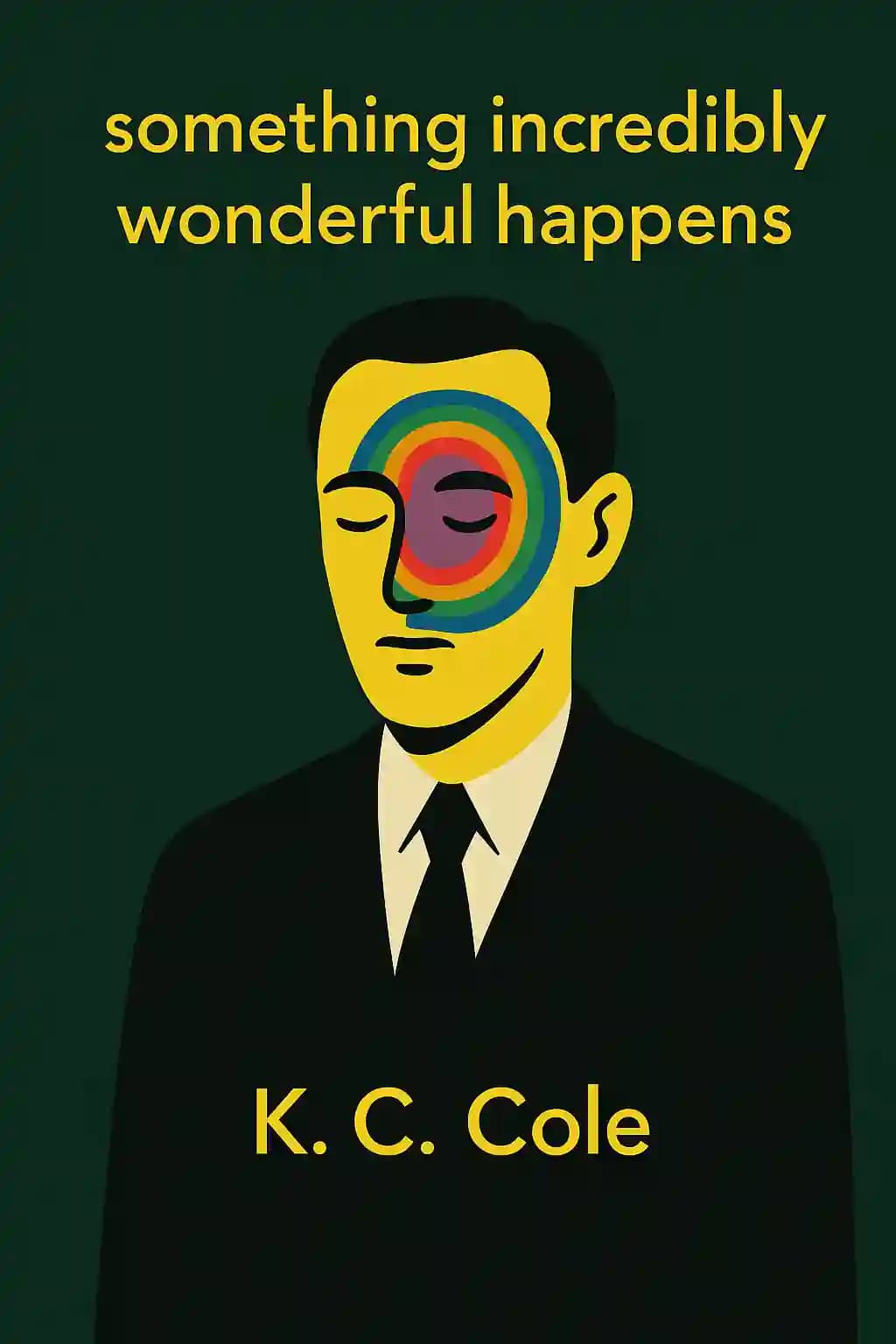
K.C. Cole, award-winning science writer and professor emerita at USC Annenberg, explores the intersection of science, art, and human curiosity in Something Incredibly Wonderful Happens: Frank Oppenheimer and the World He Made Up. This memoir/biography blends personal narrative with scientific history, chronicling her mentorship under Frank Oppenheimer—physicist, atomic bomb researcher, and founder of San Francisco’s groundbreaking Exploratorium museum.
Cole’s decades of science journalism for the Los Angeles Times, The New Yorker, and NPR’s Science Friday inform her lucid examination of science as a tool for social change.
Her bestselling book The Universe and the Teacup: The Mathematics of Truth and Beauty—translated into 12 languages—showcases her talent for making complex concepts accessible. A visiting scholar at UPenn’s Annenberg Public Policy Center and former writer-in-residence at Princeton’s Institute for Advanced Study, Cole has received the American Institute of Physics Science Writing Award and an EMMA for science communication. Something Incredibly Wonderful Happens reflects her career-long mission to demystify science while honoring one of its most visionary advocates.
Something Incredibly Wonderful Happens chronicles Frank Oppenheimer's journey from physicist to founder of San Francisco’s Exploratorium, blending biography with science education philosophy. It explores how his hands-on teaching methods and advocacy for curiosity-driven learning revolutionized museums, while addressing his political struggles post-Manhattan Project and decade-long exile as a rancher.
Educators, science enthusiasts, and biography readers will appreciate this book. It offers insights for museum professionals on interactive learning design, history buffs on Cold War-era scientific politics, and general readers interested in Oppenheimer’s lesser-known legacy beyond his brother’s atomic bomb work.
Yes—it combines rich historical research with vivid storytelling about scientific curiosity. Reviewers praise its portrayal of Frank’s resilience and the Exploratorium’s lasting impact on science literacy, though some note repetitive sections about museum operations.
Oppenheimer emphasized "playful experimentation," using DIY tools like wooden carts for physics demonstrations and shadow-play installations. His approach let students discover concepts through tactile interaction, mirroring real scientific discovery processes.
While Robert led the atomic bomb project, Frank’s Manhattan Project involvement and subsequent pacifism drove his focus on science education. Their shared physics background contrasted with Frank’s rejection of militarized science post-Hiroshima.
Blacklisted during the McCarthy era for past Communist Party ties, Frank lost his University of Minnesota position in 1949. He spent 10 years ranching in Colorado before returning to education—an experience that shaped his later inclusive teaching ethos.
The Exploratorium featured interactive exhibits like depth-perception illusions, heat-focusing mirrors, and pitch-black sensory chambers. Designed as a “library of experiments,” it replaced static displays with open-ended exploration, influencing modern science centers worldwide.
Cole highlights Frank’s belief that science and art both rely on creative observation. The Exploratorium collaborated with artists like August Coppola (igloo installation) to demonstrate perceptual overlaps between disciplines.
Some reviewers note excessive detail about museum logistics and a romanticized view of Frank’s leadership. However, most praise its balanced portrayal of his flaws and achievements in science communication.
With STEM education debates ongoing, Frank’s student-centered methods remain relevant. The book underscores the importance of accessible science spaces—a model adopted by modern makerspaces and interactive museums.
These lines encapsulate his belief in self-guided discovery over rigid instruction.
Cole blends archival research with firsthand Exploratorium experiences, using vivid exhibit descriptions (e.g., blood cell observations and infinite kaleidoscopes) to mirror Frank’s engaging teaching style.
저자의 목소리로 책을 느껴보세요
지식을 흥미롭고 예시가 풍부한 인사이트로 전환
핵심 아이디어를 빠르게 캡처하여 신속하게 학습
재미있고 매력적인 방식으로 책을 즐기세요
Frank considered works by Rembrandt, van Gogh, and Picasso "old friends."
The physicists have known sin, and this is a knowledge they cannot lose.
Frank saw parallels between containing the atomic bomb and his earlier work on "racetracks"
"On all these fronts there was the sense that I could make a difference and my friends could make a difference."
Frank found the party too authoritarian and more interested in "petty bickering" than social justice.
Something incredibly wonderful happens의 핵심 아이디어를 이해하기 쉬운 포인트로 분해하여 혁신적인 팀이 어떻게 창조하고, 협력하고, 성장하는지 이해합니다.
Something incredibly wonderful happens을 빠른 기억 단서로 압축하여 솔직함, 팀워크, 창의적 회복력의 핵심 원칙을 강조합니다.

생생한 스토리텔링을 통해 Something incredibly wonderful happens을 경험하고, 혁신 교훈을 기억에 남고 적용할 수 있는 순간으로 바꿉니다.
무엇이든 물어보고, 목소리를 선택하고, 진정으로 공감되는 인사이트를 함께 만들어보세요.

샌프란시스코에서 컬럼비아 대학교 동문들이 만들었습니다
"Instead of endless scrolling, I just hit play on BeFreed. It saves me so much time."
"I never knew where to start with nonfiction—BeFreed’s book lists turned into podcasts gave me a clear path."
"Perfect balance between learning and entertainment. Finished ‘Thinking, Fast and Slow’ on my commute this week."
"Crazy how much I learned while walking the dog. BeFreed = small habits → big gains."
"Reading used to feel like a chore. Now it’s just part of my lifestyle."
"Feels effortless compared to reading. I’ve finished 6 books this month already."
"BeFreed turned my guilty doomscrolling into something that feels productive and inspiring."
"BeFreed turned my commute into learning time. 20-min podcasts are perfect for finishing books I never had time for."
"BeFreed replaced my podcast queue. Imagine Spotify for books — that’s it. 🙌"
"It is great for me to learn something from the book without reading it."
"The themed book list podcasts help me connect ideas across authors—like a guided audio journey."
"Makes me feel smarter every time before going to work"
샌프란시스코에서 컬럼비아 대학교 동문들이 만들었습니다

Something incredibly wonderful happens 요약을 무료 PDF 또는 EPUB으로 받으세요. 인쇄하거나 오프라인에서 언제든 읽을 수 있습니다.
The brother of the man who built the atomic bomb stood in the snow at 8,000 feet, trying to figure out how to keep cattle alive through a Colorado winter. Frank Oppenheimer-once a Manhattan-born physicist working on uranium separation for the Manhattan Project-now wore rancher's overalls and mucked out stalls. His crime? Joining the Communist Party in 1937 to fight fascism, then lying about it when fear overtook him. The FBI had ended his career, denied his passport, and driven him from the laboratories where he'd studied cosmic rays. Yet this exile would become the crucible for something extraordinary: a museum that would transform how millions experience science. The Exploratorium, opening in 1969 in San Francisco's Palace of Fine Arts, didn't just display science behind glass-it invited people to touch, break, and discover. Frank's journey from privilege to blacklist to revolutionary educator reveals how sometimes our greatest contributions emerge not despite our detours, but because of them.