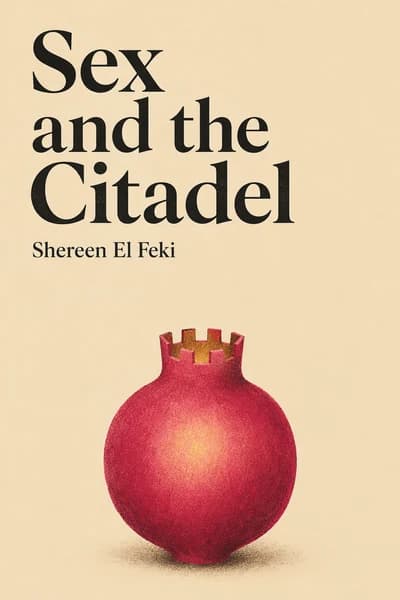
Unveiling sexuality in the Arab world, Shereen El Feki's Kirkus Best Book explores taboos from marriage to LGBTQ+ relationships. What hidden truths lie behind closed doors in a region where 75% of Egyptian girls face genital mutilation? A brave journey beyond headlines.
Shereen El Feki, author of Sex and the Citadel: Intimate Life in a Changing Arab World, is a British-Egyptian journalist and expert on social change in the Middle East.
With a PhD in molecular immunology from the University of Cambridge, El Feki transitioned from science to journalism, serving as a healthcare correspondent for The Economist and a presenter for Al Jazeera English.
Her groundbreaking exploration of sexuality, politics, and culture in the Arab world is informed by decades of reporting and her role as vice-chair of the United Nations’ Global Commission on HIV and Law. A TED Global Fellow, she has delivered widely viewed talks on sensuality and societal transformation.
El Feki’s work bridges academic rigor and accessible storytelling, reflecting her dual expertise in science and media. Sex and the Citadel has been recognized for its unflinching analysis of intimate life amid regional upheaval, establishing her as a leading voice on gender and social dynamics in the Arab region. She divides her time between London and Cairo.
Sex and the Citadel explores shifting sexual attitudes in the Arab world, blending historical context with contemporary issues like LGBTQ+ rights, women’s autonomy, and the impact of colonization on intimate life. Shereen El Feki combines personal narratives, cultural analysis, and scholarly research to reveal how politics, religion, and tradition shape sexuality in Egypt and beyond.
This book suits readers interested in Middle Eastern sociology, gender studies, or cultural anthropology. It’s also valuable for policymakers and activists addressing human rights, sexual health, or women’s empowerment in the Arab world. El Feki’s accessible writing makes complex topics approachable for general audiences.
Yes—it’s a groundbreaking, thought-provoking examination of a taboo subject. El Feki balances academic rigor with engaging storytelling, offering rare insights into how sexual norms intersect with religion, politics, and social change in the Arab world.
El Feki argues that European colonization eroded historical sexual openness in Arab societies by imposing Victorian morality. Post-colonial regimes then weaponized conservative interpretations of Islam to control populations, linking sexual restraint to anti-Western nationalism.
Women face systemic challenges, including virginity stigma, limited sexual agency, and legal inequities. El Feki highlights grassroots activists challenging norms while navigating risks like honor-based violence and societal shame.
The book documents growing visibility of LGBTQ+ communities despite criminalization and societal stigma. El Feki critiques how “morality laws” suppress queer identities while profiling activists advocating for acceptance in hostile environments.
El Feki analyzes how interpretations of Islamic texts (like Sharia) fluctuate between sexual liberty and repression. Reformist scholars argue for sex-positive readings, while conservative authorities weaponize religion to enforce patriarchal norms.
Interviews with sex workers, activists, and everyday Egyptians humanize statistics. A pregnant virgin discusses societal pressure to “prove” chastity, while a gay man recounts navigating secret relationships under threat of imprisonment.
Medieval Arabic texts, like The Perfumed Garden, celebrated sexual pleasure and LGBTQ+ relationships. El Feki contrasts this with modern repression tied to 19th-century colonial influence and 20th-century Islamist movements.
El Feki rejects Orientalist stereotypes of Arab hypersexuality or puritanism. Instead, she frames sexual norms as dynamic—shaped by internal debates about tradition versus modernity, not static cultural traits.
Some scholars argue El Feki overemphasizes elite urban perspectives. Others note limited coverage of non-Egyptian Arab nations or deeper economic drivers behind sexual inequality.
As Arab nations grapple with post-revolutionary reforms, the book remains a critical lens for understanding how sexual rights intersect with broader struggles for democracy and human rights.
저자의 목소리로 책을 느껴보세요
지식을 흥미롭고 예시가 풍부한 인사이트로 전환
핵심 아이디어를 빠르게 캡처하여 신속하게 학습
재미있고 매력적인 방식으로 책을 즐기세요
bedrooms provide a revealing window into Arab society.
sexual and intellectual freedom are deeply intertwined.
marriage is the sun at the center of the sexual universe.
sexual repression creates individuals 'adjusted to the authoritarian order'
sex is 'God's gift to mankind.'
Sex and the citadel의 핵심 아이디어를 이해하기 쉬운 포인트로 분해하여 혁신적인 팀이 어떻게 창조하고, 협력하고, 성장하는지 이해합니다.
Sex and the citadel을 빠른 기억 단서로 압축하여 솔직함, 팀워크, 창의적 회복력의 핵심 원칙을 강조합니다.

생생한 스토리텔링을 통해 Sex and the citadel을 경험하고, 혁신 교훈을 기억에 남고 적용할 수 있는 순간으로 바꿉니다.
무엇이든 물어보고, 목소리를 선택하고, 진정으로 공감되는 인사이트를 함께 만들어보세요.

샌프란시스코에서 컬럼비아 대학교 동문들이 만들었습니다
"Instead of endless scrolling, I just hit play on BeFreed. It saves me so much time."
"I never knew where to start with nonfiction—BeFreed’s book lists turned into podcasts gave me a clear path."
"Perfect balance between learning and entertainment. Finished ‘Thinking, Fast and Slow’ on my commute this week."
"Crazy how much I learned while walking the dog. BeFreed = small habits → big gains."
"Reading used to feel like a chore. Now it’s just part of my lifestyle."
"Feels effortless compared to reading. I’ve finished 6 books this month already."
"BeFreed turned my guilty doomscrolling into something that feels productive and inspiring."
"BeFreed turned my commute into learning time. 20-min podcasts are perfect for finishing books I never had time for."
"BeFreed replaced my podcast queue. Imagine Spotify for books — that’s it. 🙌"
"It is great for me to learn something from the book without reading it."
"The themed book list podcasts help me connect ideas across authors—like a guided audio journey."
"Makes me feel smarter every time before going to work"
샌프란시스코에서 컬럼비아 대학교 동문들이 만들었습니다

Sex and the citadel 요약을 무료 PDF 또는 EPUB으로 받으세요. 인쇄하거나 오프라인에서 언제든 읽을 수 있습니다.
A simple mistranslation in Cairo-"women's center" becoming "center for sluts"-captures something profound about Arab sexuality today. One misplaced vowel reveals how language itself has become a minefield, where even discussing women's issues risks moral condemnation. Yet beneath this surface of silence, a fascinating paradox emerges: the same region that once produced explicit erotic encyclopedias now confines sexuality strictly within marriage. How did the culture that gave us detailed medieval sex manuals become one where young people can't even ask basic questions about their bodies? This isn't just about prudishness or religious conservatism. Five years of research across the Arab world reveals that bedrooms function as mirrors reflecting deeper political, economic, and social realities. The same authoritarian structures that governed nations for decades also governed bodies and desires. When protestors filled Tahrir Square demanding freedom, they were rebelling against systems that controlled not just their votes but their most intimate choices-whom to love, when to marry, how to express desire.