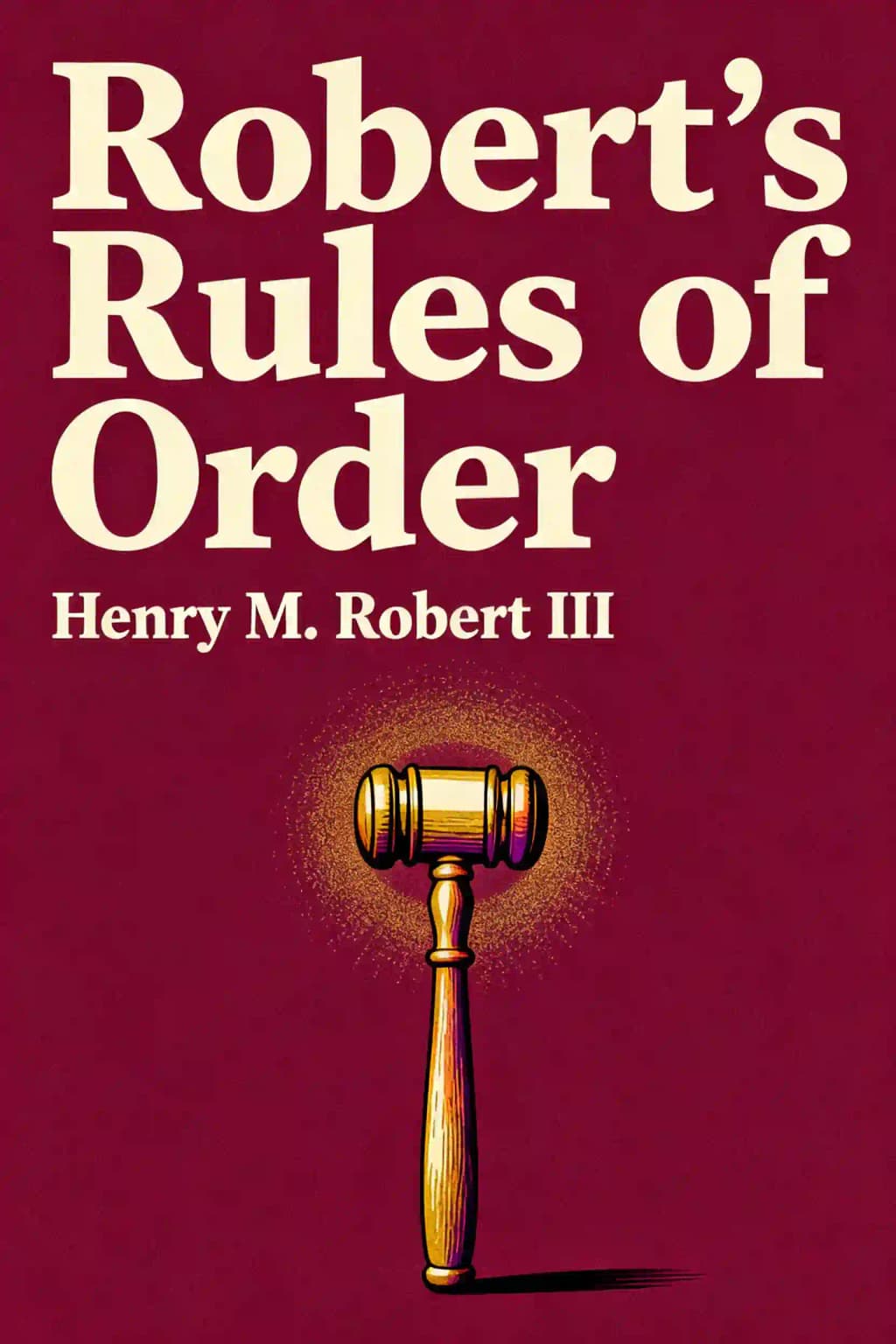
The ultimate guide to parliamentary procedure, Robert's Rules of Order has shaped meeting conduct for 145+ years, growing from 176 to 714 pages. Considered the "gold standard" by governments and organizations worldwide, it transforms chaotic discussions into fair, efficient decision-making processes.
저자의 목소리로 책을 느껴보세요
지식을 흥미롭고 예시가 풍부한 인사이트로 전환
핵심 아이디어를 빠르게 캡처하여 신속하게 학습
재미있고 매력적인 방식으로 책을 즐기세요
Imagine walking into a meeting where everyone speaks at once, decisions seem arbitrary, and a vocal minority dominates the discussion. This frustrating scenario is precisely what Robert's Rules of Order was designed to prevent. Created in 1876 by Henry Martyn Robert, a retired Army brigadier general, what began as a brief pamphlet evolved into the definitive guide for conducting meetings effectively. Today, these rules transform potentially chaotic gatherings into models of efficiency and fairness across organizations worldwide. From Oprah Winfrey's business meetings to government bodies and nonprofits, this system addresses a fundamental challenge: how can groups make fair decisions when opinions differ and emotions run high? Think of parliamentary procedure as the operating system for group decision-making - you wouldn't wait until your computer crashes to install an operating system, so why wait until conflict erupts to implement proper meeting procedures? Structure in meetings doesn't limit freedom - it creates it. Once a group grows beyond 3-4 people, the need for formal procedures becomes essential. By the time you reach 12-15 members, meetings without rules can devolve into frustrating free-for-alls where little gets accomplished. A well-structured meeting follows a predictable pattern: the chair calls the meeting to order, confirms a quorum (typically a majority of members), and proceeds through a logical sequence - from minutes approval to reports, unfinished business, and finally new business. This isn't arbitrary bureaucracy - it ensures ongoing matters receive proper attention before new topics are introduced. And here's a common misconception worth correcting: there's no such thing as "old business" in proper procedure. The correct term is "unfinished business," referring specifically to matters previously introduced but not completed. This structured approach might initially seem overly formal, but its value becomes apparent when contentious issues arise or when meetings involve numerous participants with competing priorities.
Robert's Rules of Order의 핵심 아이디어를 이해하기 쉬운 포인트로 분해하여 혁신적인 팀이 어떻게 창조하고, 협력하고, 성장하는지 이해합니다.
Robert's Rules of Order을 빠른 기억 단서로 압축하여 솔직함, 팀워크, 창의적 회복력의 핵심 원칙을 강조합니다.

생생한 스토리텔링을 통해 Robert's Rules of Order을 경험하고, 혁신 교훈을 기억에 남고 적용할 수 있는 순간으로 바꿉니다.
무엇이든 물어보고, 목소리를 선택하고, 진정으로 공감되는 인사이트를 함께 만들어보세요.

샌프란시스코에서 컬럼비아 대학교 동문들이 만들었습니다
"Instead of endless scrolling, I just hit play on BeFreed. It saves me so much time."
"I never knew where to start with nonfiction—BeFreed’s book lists turned into podcasts gave me a clear path."
"Perfect balance between learning and entertainment. Finished ‘Thinking, Fast and Slow’ on my commute this week."
"Crazy how much I learned while walking the dog. BeFreed = small habits → big gains."
"Reading used to feel like a chore. Now it’s just part of my lifestyle."
"Feels effortless compared to reading. I’ve finished 6 books this month already."
"BeFreed turned my guilty doomscrolling into something that feels productive and inspiring."
"BeFreed turned my commute into learning time. 20-min podcasts are perfect for finishing books I never had time for."
"BeFreed replaced my podcast queue. Imagine Spotify for books — that’s it. 🙌"
"It is great for me to learn something from the book without reading it."
"The themed book list podcasts help me connect ideas across authors—like a guided audio journey."
"Makes me feel smarter every time before going to work"
샌프란시스코에서 컬럼비아 대학교 동문들이 만들었습니다

Robert's Rules of Order 요약을 무료 PDF 또는 EPUB으로 받으세요. 인쇄하거나 오프라인에서 언제든 읽을 수 있습니다.