1장
The Anxious Brain: Understanding and Rewiring Your Fear Response
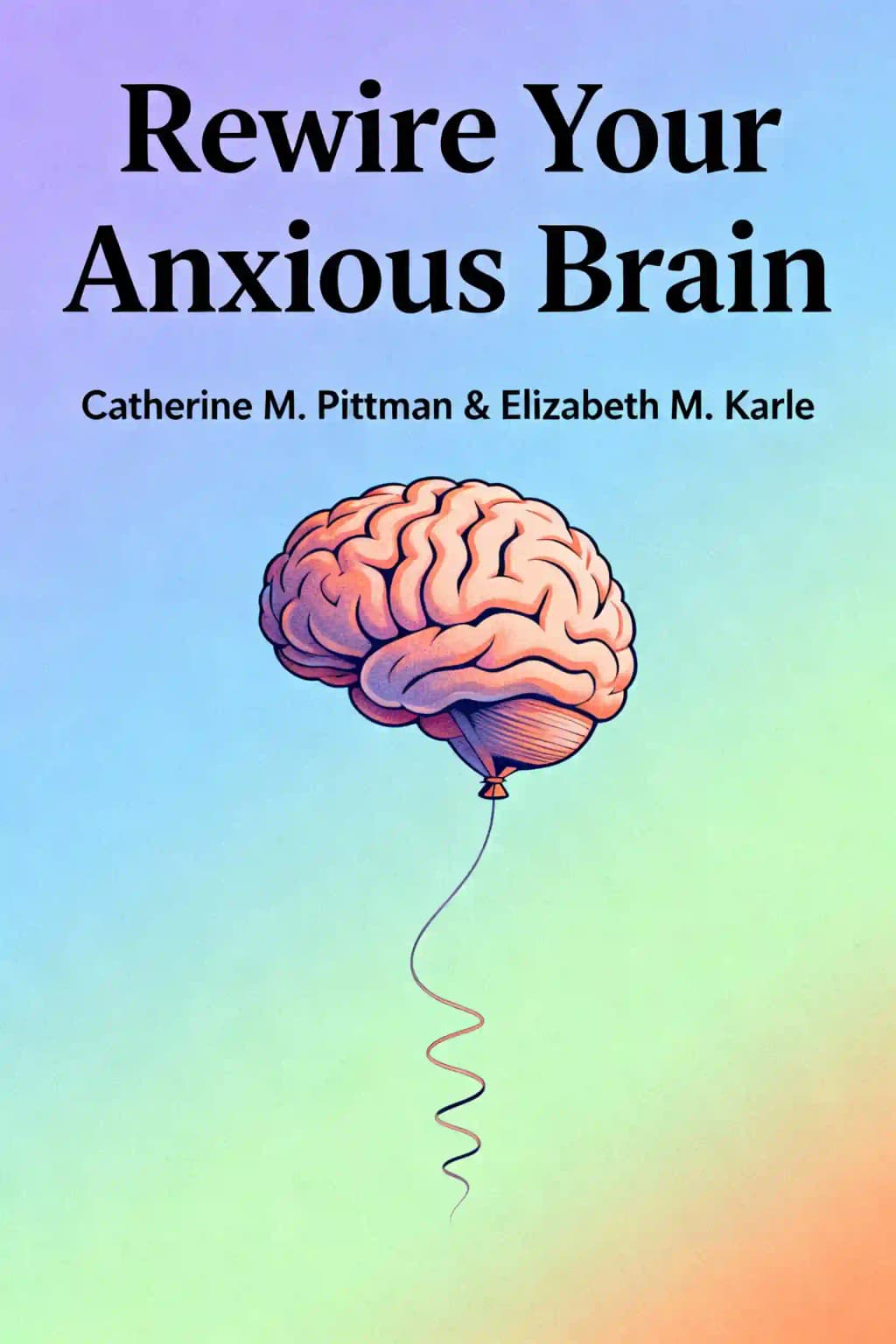
Have you ever wondered why logical reassurance fails to calm your racing heart during a panic attack? Or why you can't simply "think your way out" of certain fears? The answer lies in your brain's complex anxiety pathways. "Rewire Your Anxious Brain" by Catherine M. Pittman and Elizabeth M. Karle reveals groundbreaking neuroscience that explains why traditional approaches to anxiety often fall short. This book has become a cornerstone text in anxiety treatment, praised by clinicians and patients alike for its accessible explanation of the brain's fear circuitry. Celebrities like Emma Stone and Ryan Reynolds have cited its principles when discussing their own anxiety management strategies, and its practical approach has influenced anxiety treatment protocols in clinical settings worldwide. What makes this book truly revolutionary is its dual-pathway approach to anxiety-revealing that anxiety can originate in either the thinking brain (cortex) or the emotional brain (amygdala), requiring different strategies for each pathway.
2장
Two Distinct Anxiety Pathways: The Key to Understanding Your Fear Response
Anxiety isn't a single phenomenon but rather emerges from two distinct brain pathways that operate on different timetables and respond to different interventions. The cortex pathway involves conscious thoughts, worries, and interpretations, processing information through a sophisticated but slower network of neural connections. This pathway is responsible for complex worry scenarios, future planning, and risk assessment. The amygdala pathway, in contrast, creates immediate physical responses like racing heart, muscle tension, and the fight-flight-freeze reaction, operating as our brain's emergency response system.
Understanding these pathways explains why traditional talk therapy sometimes fails-when anxiety originates in the amygdala, logical reasoning has limited effect because the amygdala operates faster than conscious thought. The amygdala can trigger full-blown anxiety within a tenth of a second, often before the cortex even processes the situation. This explains why you might intellectually know your fear is irrational yet still experience intense physical symptoms. For example, someone with a fear of flying might thoroughly understand airplane safety statistics but still experience panic attacks during takeoff. Similarly, a person with social anxiety might logically know that public speaking won't harm them but still feel overwhelming physical symptoms before giving a presentation.
The good news lies in neuroplasticity-your brain's remarkable ability to change throughout life. Even structures once thought unchangeable in adults, like the amygdala, can form new neural connections. Stroke victims can recruit different brain regions for movement, and visual circuits can develop sound response capabilities within days. Research has shown that taxi drivers' hippocampi enlarge as they learn complex city navigation, and musicians develop enhanced motor cortex regions through practice. Simple activities promote neural growth: exercise creates widespread brain cell development, particularly in the hippocampus and prefrontal cortex, and merely thinking about piano playing changes motor cortex areas.
This neuroplasticity means you can literally rewire your anxious brain through targeted interventions. Rather than being permanently defined by your anxiety, you can create new neural pathways that bypass anxiety circuits. For cortex-based anxiety, cognitive restructuring techniques and mindfulness practices can help reshape thought patterns. For amygdala-based anxiety, exposure therapy and body-based interventions like deep breathing and progressive muscle relaxation prove more effective. The key is understanding which pathway-cortex or amygdala-initiates your particular anxiety, then applying the appropriate techniques to modify that specific circuitry. Success often comes from combining approaches that address both pathways, creating a comprehensive strategy for anxiety management.
3장
The Amygdala: Your Brain's Alarm System
Despite its small size, the amygdala plays the most influential role in anxiety. Like an orchestra conductor, it controls various reactions throughout the brain and body, triggering the cascade of physical symptoms we recognize as anxiety.
The amygdala functions primarily as a protector, constantly vigilant for potential harm. This explains why public speaking ranks as our most common fear-from an evolutionary perspective, being watched by multiple pairs of eyes signals potential danger. The amygdala's primary goal is protecting us from vulnerability, even when that protection isn't necessary in modern contexts.
What makes the amygdala particularly challenging is that it communicates through associations, not logic. When sensory information is processed simultaneously with threatening events, these elements become connected, creating triggers that can activate the amygdala's alarm system without logical relationships. Consider Josefina's grandson who developed fear of teddy bears after falling and injuring himself while running toward one, or a Vietnam veteran who experienced panic attacks while showering until he realized his wife had switched to the same soap brand he'd used during the war.
The amygdala forms emotional memories that we experience directly as feelings rather than as images or verbal information. When activated, these memories manifest as immediate emotional states-often anxiety or fear-that feel like reactions to present circumstances rather than memories. This explains why someone might experience intense anxiety as a passenger in cars after an accident without consciously recalling the accident each time.
Understanding this mechanism reveals why logical arguments fail against amygdala-based anxiety. The amygdala learns only through experience, not through rational argument or logic. This explains why reassurances like "Don't worry about my dog, he's never bitten anyone" fail to help someone with dog phobia.
4장
The Cortex: How Thoughts Generate Anxiety
While the amygdala pathway triggers immediate physical anxiety responses, anxiety can also originate in the cortex through completely different mechanisms. The cortex, our brain's most sophisticated region, can either misinterpret neutral sensory information as threatening or generate anxiety-producing thoughts without any external triggers. This cognitive pathway to anxiety often creates more persistent and complex anxiety patterns than immediate amygdala responses.
Cortex-generated anxiety without sensory input typically manifests in two forms: thought-based anxiety (primarily from the left hemisphere) and imagery-based anxiety (primarily from the right hemisphere). The left hemisphere, dominant for language in most people, produces worry and verbal rumination-repetitively analyzing problems without resolution. This process strengthens anxiety-producing neural circuits through repetition, following the principle of "survival of the busiest." For example, someone might repeatedly rehearse an upcoming presentation in their mind, generating increasingly catastrophic scenarios about potential failures, each repetition strengthening the anxiety pathway.
The right hemisphere creates anxiety through frightening mental imagery and visualization, often producing more visceral and emotionally intense experiences. Research shows it's more strongly connected to intense fear and arousal than the left hemisphere. People with panic disorder typically experience right hemisphere-based anxiety, characterized by strong arousal and intense fear rather than apprehensive worry. These individuals might vividly imagine themselves collapsing in public or losing control, with the images feeling as real and threatening as actual experiences.
Beyond generating anxiety independently, the cortex can create anxiety by misinterpreting neutral sensory information as threatening. Consider Damon, who sees a fire truck heading toward his neighborhood and immediately assumes his house is on fire. His anxiety stems not from the fire truck itself, but from his cortex's interpretation of what it means. Similarly, someone might interpret a colleague's brief email as evidence of disapproval, or a minor chest pain as an impending heart attack. These misinterpretations often become self-reinforcing, as the anxiety they produce can create physical symptoms that seem to confirm the original fears.
The human cortex's ability to predict future events creates anticipation-both a blessing and curse. Originating primarily in the left prefrontal cortex, anticipation can generate positive excitement or negative expectations. When negative, anticipation produces threatening thoughts and images that trigger anxiety responses. For instance, someone might spend weeks dreading a dental appointment, creating detailed mental scenarios of pain and discomfort. This anticipatory anxiety often involves complex chains of "what-if" thinking, where one worried thought leads to increasingly catastrophic possibilities. Ironically, anticipatory anxiety is often more distressing than the actual feared event, as the mind can generate countless variations of potential threats, each feeling equally real and dangerous.
The cortex's role in anxiety is particularly challenging because it can maintain anxiety through purely internal processes, requiring no external triggers. This self-sustaining nature of cortical anxiety explains why many people find themselves caught in cycles of worry even in objectively safe situations.
5장
Identifying Your Anxiety's Origin: The First Step to Rewiring
Understanding whether your anxiety begins in the amygdala, the cortex, or both is crucial for selecting effective intervention strategies. When anxiety begins in the amygdala, it often feels sudden, creates strong physical responses, and seems disproportionate to the situation. Traditional cognitive approaches using logic and reasoning are less effective for amygdala-based anxiety, much like trying to reason with someone during a panic attack rarely helps in the moment.
Key indicators of amygdala-based anxiety include unexplained anxiety that seems to come "out of the blue" with no obvious cognitive trigger, such as suddenly feeling panicked while grocery shopping or driving on a familiar route. The physical symptoms manifest rapidly - racing heart, sweating, shallow breathing - often before conscious thought processes engage. Unplanned aggressive reactions representing the "fight" component of the stress response might appear as snapping at loved ones or road rage incidents. The inability to think clearly under pressure becomes evident in situations like freezing during presentations or blanking during important conversations. These extreme responses seem disproportionate to situations, like having a full-blown panic attack over a minor schedule change.
Cortex-based anxiety begins with thought patterns or mental images that eventually trigger the amygdala's stress response. Left hemisphere-based anxiety manifests as excessive worrying and rumination, such as replaying conversations repeatedly or creating elaborate "what-if" scenarios about future events. Right hemisphere-based anxiety involves visualization of distressing scenarios, like vividly imagining worst-case outcomes or experiencing intrusive images of potential disasters. Anxiety arising from interpretations occurs when neutral situations are perceived as threatening - for example, interpreting a colleague's brief email as signs of disapproval or assuming silence from a friend means anger.
Anticipatory anxiety involves excessive focus on potential future problems, such as spending hours preparing for a meeting that's weeks away or being unable to enjoy current moments due to worry about future scenarios. Obsessions manifest as repetitive, uncontrollable thoughts often paired with compulsive behaviors, like checking locks multiple times or needing to follow specific routines to feel safe.
Understanding these distinctions helps explain why certain coping strategies work better than others. For instance, deep breathing exercises might effectively calm amygdala-based anxiety, while cognitive restructuring techniques better address cortex-based anxiety patterns. This self-assessment prepares you to explore specific techniques that will help control your particular anxiety responses, whether they originate in the amygdala, cortex, or both, leading to more targeted and effective intervention strategies.
The key is to recognize your personal anxiety patterns and triggers, as this awareness becomes the foundation for selecting appropriate coping mechanisms. Many people experience a combination of both types, requiring a mixed approach to management strategies. Keeping a detailed anxiety journal can help identify these patterns and their origins more clearly.
6장
Rewiring Amygdala-Based Anxiety: The Power of Experience
Since the amygdala learns through association rather than logic, rewiring it requires specialized techniques. Exposure therapy has proven most effective for panic attacks, phobias, and OCD. This approach involves confronting feared situations or objects until anxiety peaks and subsides naturally. The power lies in providing corrective information to the amygdala, teaching it that previously feared triggers are actually safe.
To rewire the amygdala, you must activate the exact neural circuits that hold emotional memories you want to modify. Remember the phrase "activate to generate"-you must experience fear to conquer it. Without proper exposure, anxiety becomes self-perpetuating as people avoid feared situations. Research shows higher initial emotional arousal during exposure creates better outcomes, as the ventral medial prefrontal cortex develops new circuitry that can override (but not erase) the amygdala's fear response.
Creating effective new neural connections requires multiple exposures to anxiety triggers across different settings. Experiences must be neutral or positive, though not anxiety-free. The more you face anxiety and allow it to diminish naturally during exposure, the stronger your new circuitry becomes.
When designing exposure exercises, select situations based on your goals, distress level, or frequency of occurrence. For systematic desensitization, create an exposure hierarchy-a rank-ordered list breaking down anxiety-provoking situations into smaller components, starting with less challenging tasks and progressing to more difficult ones. During exposures, use relaxation techniques to manage anxiety, and stay in each situation until your anxiety decreases by at least half. Don't leave while fear is high, avoid safety-seeking behaviors, and monitor your thoughts to prevent cortex-based anxiety from interfering.
7장
Physical Strategies for Calming the Amygdala
Beyond exposure therapy, several physical strategies directly influence amygdala activity. When anxiety strikes, simply telling yourself not to worry is ineffective because this cortex-based approach can't directly influence the amygdala-initiated stress response. More effective interventions target the amygdala directly by activating the parasympathetic nervous system (PNS), which counteracts the sympathetic nervous system's fight-flight-freeze response.
Breathing-focused relaxation techniques directly affect the amygdala and can immediately reduce anxiety. When we breathe deeply and slowly, we counter the shallow breathing patterns that accompany stress. Diaphragmatic breathing, where the stomach expands rather than the chest during inhalation, is particularly effective at activating the parasympathetic nervous system.
Progressive muscle relaxation involves systematically tensing and releasing muscle groups throughout the body to create awareness of the difference between tension and relaxation. With practice, this thirty-minute process can be shortened to just five minutes, and eventually most people learn to relax muscles without tensing them first.
Aerobic exercise effectively utilizes muscles prepared for action by the sympathetic nervous system, lowering adrenaline levels and using up glucose released during the stress response. This leads to substantial muscle relaxation afterward, helping ease anxiety. Exercise also directly changes the chemistry of the amygdala, altering levels of norepinephrine and serotonin. Regular physical activity makes certain serotonin receptors in the lateral nucleus of the amygdala less active, resulting in a calmer amygdala less prone to anxiety responses.
Sleep quality significantly impacts amygdala function. Research shows sleep deprivation dramatically increases amygdala reactivity-in one study, people deprived of sleep for 35 hours showed 60% more amygdala activation when viewing negative images compared to well-rested subjects. REM sleep is particularly important for calming the amygdala, with studies showing lower amygdala reactivity correlates with more REM sleep.
8장
Rewiring Cortex-Based Anxiety: Changing Thought Patterns
The cortex plays a crucial role in anxiety, and we can influence its neurological processes just as we can with the amygdala. Cognitive therapy focuses on identifying and changing thoughts that create or worsen anxiety. The approach recognizes that anxiety results from how we interpret events, often distorting reality through certain thinking processes such as catastrophizing, overgeneralization, and black-and-white thinking. For instance, someone might interpret a minor mistake at work as evidence they're completely incompetent, triggering an anxiety spiral.
Cognitive fusion-treating thoughts as absolute truths rather than mental events-exacerbates cortex-based anxiety. This process leads people to treat their thoughts and emotions as reflecting ultimate reality that cannot be questioned. For example, the thought "I'm going to fail" becomes "I am a failure," transforming a temporary situation into a fixed identity. The cortex tends to believe it possesses the real meaning of every thought, emotion, or physical sensation, yet it's surprisingly prone to misinterpretations and errors. Common misinterpretations include assuming others are judging us negatively without evidence or believing that feeling anxious means something terrible is about to happen.
After identifying your most common anxiety-igniting thoughts, you can target them for change rather than letting your cortex run rampant. Cognitive restructuring techniques literally change your cortex through skepticism of anxiety-igniting thoughts, disputing them with evidence, ignoring them, or replacing them with more adaptive coping thoughts. For instance, if you're anxious about public speaking, you might challenge the thought "Everyone will laugh at me" by recalling past successful presentations or recognizing that most audiences are supportive. The principle of "survival of the busiest" means that repeatedly interrupting anxiety-provoking thoughts and replacing them with new cognitions can literally change brain circuitry, creating stronger neural pathways for balanced thinking.
Trying to erase negative thoughts simply doesn't work-studies show that attempting to silence a thought makes it more persistent, a phenomenon known as ironic processing. Instead of erasing, replace! Use "thought stopping" by telling yourself "Stop!" when an anxiety-provoking thought appears, then immediately replace it with something engaging and preferably pleasant. This might involve shifting focus to a favorite memory, planning an upcoming activity, or engaging in a mentally challenging task like solving a puzzle. With practice, these new thought patterns will become habitual, strengthening adaptive neural pathways while weakening anxiety-producing ones. Research shows that consistent practice of these techniques for 8-12 weeks can lead to significant changes in both thought patterns and anxiety levels.
The key is persistence and consistency in applying these techniques. Just as physical exercise requires regular practice to build muscle, mental exercises require repetition to create new neural pathways. Keeping a thought diary can help track progress and identify patterns in anxiety-triggering situations, making it easier to apply appropriate cognitive restructuring techniques when needed.
9장
Mindfulness: A Revolutionary Approach to Anxiety
Mindfulness offers a powerful way to use your cortex to observe anxiety from a distance rather than being trapped in it. This ancient practice, rooted in Buddhist traditions but now validated by modern neuroscience, involves friendly acceptance and deep awareness of your current experience without trying to escape, control, or suffer through anxiety. By training your cortex to lovingly observe anxiety responses-like a patient parent watching a child's tantrum-you develop a new relationship with anxiety that transforms your experience of it.
When feeling anxious, find a quiet place to practice mindfulness by focusing completely on your bodily experience of anxiety. Notice physical sensations in detail - perhaps a racing heart, shallow breathing, tension in your shoulders, or butterflies in your stomach. Observe their intensity, precise location, and how they shift and change over time. Pay attention to any impulses to speak, fidget, or leave without acting on them. Watch thoughts float by like clouds without analyzing or engaging with them. Accept anxiety as a normal physiological process, experiencing it without fighting or encouraging it, simply observing as it moves through you and naturally evolves.
The cortex has limited ways to directly control amygdala-based responses once they occur, but mindfulness offers an alternative: observing anxiety without getting caught up in its story. By accepting anxiety rather than fighting it, you allow it to pass more quickly through your system. Much of anxiety's power comes from our struggle against it - the secondary fear, shame, and resistance that amplify the original response. Paradoxically, giving up attempts to control anxiety can actually give you more control over your brain's threat response system.
Research demonstrates that regular mindfulness practitioners experience both immediate anxiety reduction during practice and lasting changes in the cortex that make them more resistant to anxiety over time. Brain imaging studies reveal that mindfulness activates key regions of the cortex (particularly the ventral medial prefrontal cortex and anterior cingulate cortex) that have direct neural connections to the amygdala. These areas act as a brake on the fear response, helping to regulate emotional reactivity.
The practice can be integrated into daily life through both formal meditation sessions and informal moments of mindful awareness throughout the day. Start with just a few minutes of practice and gradually extend the duration. Notice opportunities to bring mindful awareness to anxiety-provoking situations - whether it's public speaking, social interactions, or specific phobias. Over time, this consistent practice rewires the brain's response to anxiety, building new neural pathways that support emotional regulation and resilience.
Remember that mindfulness is not about achieving a particular state or eliminating anxiety completely. Rather, it's about changing your relationship with anxiety through patient, non-judgmental awareness. This shift in perspective allows you to respond to anxiety with wisdom rather than reacting automatically from fear.
10장
Living an Anxiety-Resistant Life
Understanding how anxiety is created in both the amygdala and cortex helps you recognize that anxiety isn't completely within conscious control. While you can't change your brain's design to produce anxiety, you can learn to cope with it and even rewire your brain to alter your experience. No one lives entirely free of anxiety, but you can diminish its effects using both amygdala-based and cortex-based strategies.
Begin by focusing on calming your amygdala through relaxation techniques. Learn to slow your breathing and relax muscles to deactivate your sympathetic nervous system. Use positive imagery, exercise, sleep, and music to further calm your amygdala. Next, implement cortex-based strategies by identifying your most problematic anxiety-igniting thoughts and using approaches to combat them. Target anxiety triggers with exposure exercises until you feel your fear decrease, signaling that rewiring has occurred in your amygdala.
Breaking down the approach into manageable steps makes it less overwhelming. Each improvement will encourage further progress. Remember that your ultimate goal is rewiring your brain, which requires ongoing practice. Act despite your anxiety-courage means acting despite fear. Take pride in what you accomplish while contending with anxiety, even if others don't recognize your challenges.
Whether your anxiety tendencies are innate or acquired through experience, you can cope with anxiety. Even when anxiety pathways activate, you can change your responses and gradually rewire your brain. The key is focusing on the positive without letting anxiety control you. With consistent practice of these evidence-based techniques, you can literally rewire your anxious brain to create a calmer, more confident life.