1장
The Digital Detox Revolution: Finding Humanity in a Screen-Obsessed World
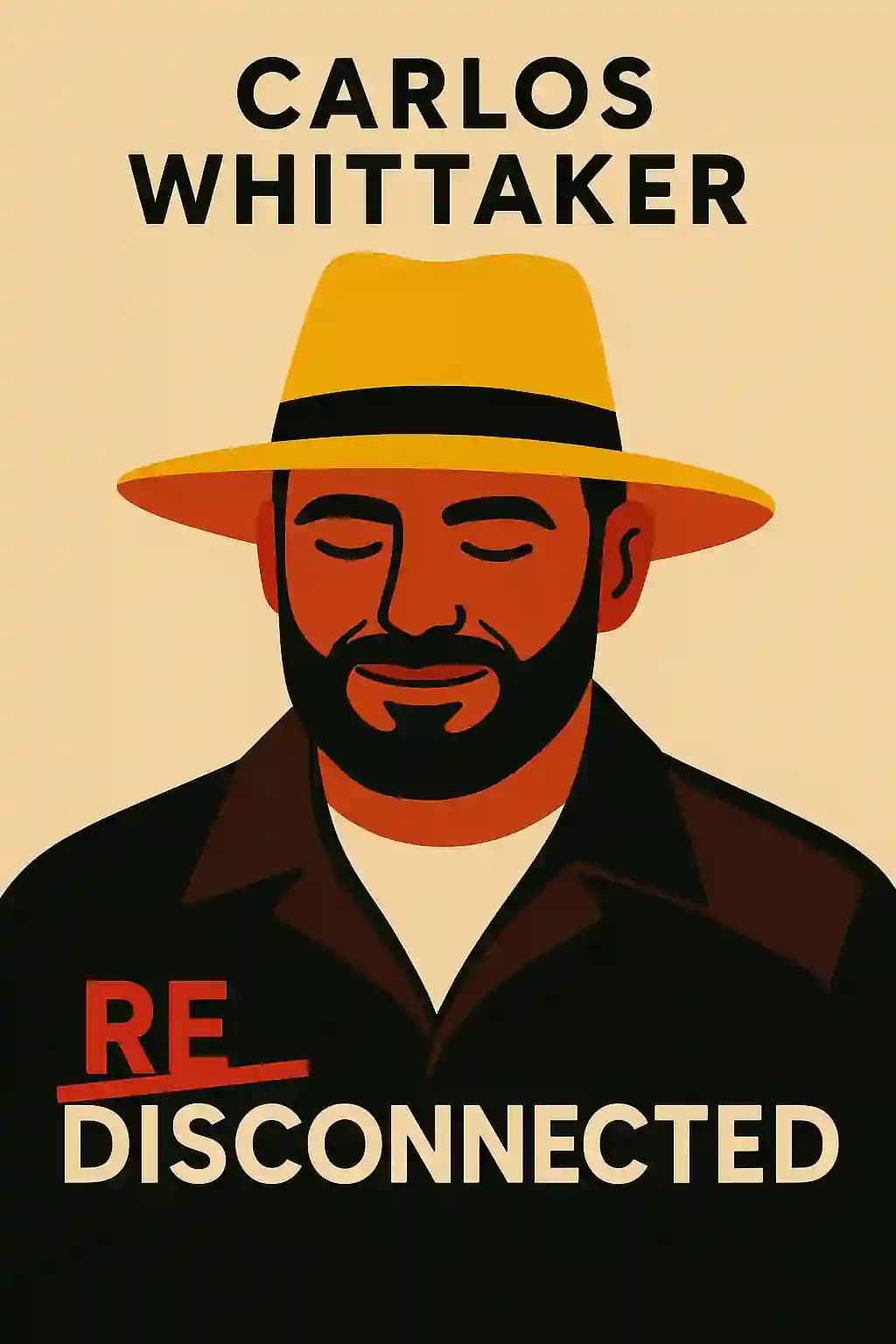
In a world where the average American spends over seven hours daily staring at screens, Carlos Whittaker's "Reconnected" arrives as a timely cultural intervention. This isn't just another book about digital minimalism-it's an immersive journey into what happens when we deliberately disconnect from technology to rediscover our humanity. The experiment began when Whittaker realized those seven hours daily on his phone could translate to seven years of his remaining life spent scrolling. What would happen if he went completely screen-free for seven weeks? The results were so transformative that even neuroscientist Dr. Daniel Amen, who conducted brain scans before and after the experiment, was astonished by the changes. Since its release, "Reconnected" has become a favorite among celebrities like Reese Witherspoon and Brene Brown, who have championed its message about authentic connection in our increasingly isolated digital landscape. As mental health concerns related to social media continue to dominate headlines, Whittaker's radical experiment offers a refreshing counternarrative that doesn't demonize technology but instead asks: What might we be missing while our eyes are fixed on screens?
2장
The Experiment: From Panic to Purpose
Standing "digitally naked" in a Southern California parking lot, Whittaker watched his friend drive away, leaving him at Saint Andrew's Abbey to begin his seven-week screen-free experiment. The panic was immediate and visceral. Without his phone-his constant companion, work tool, and social lifeline-he felt exposed and vulnerable. This wasn't just about avoiding screens; it was about confronting himself without digital distractions.
The experiment's structure was deliberately immersive: two weeks with Benedictine monks in California, two weeks with an Amish family in Ohio, and three weeks at home applying what he'd learned. Before starting, Whittaker visited neuroscientist Dr. Daniel Amen for brain scans to measure the physiological effects of his digital detox. The results would later prove startling.
Those first hours at the monastery revealed how deeply technology had shaped his identity and behaviors. His hand actually hurt from writing with a pen-something he rarely did anymore. His thoughts raced without the numbing distraction of social media. Looking out at monks walking slowly around a pond, he realized how much of his confidence had become built on others' opinions of his carefully curated online self.
The monastery schedule was rigorous: 6:00 a.m. Vigils, followed by multiple prayer services throughout the day, work periods, silent meals, and ending with 7:30 p.m. Compline. No air conditioning in the desert heat, no technology to distract him, just silence and the rhythms of monastic life. This radical departure from his normal existence triggered an identity crisis: Who was he without his online audience? What defined him beyond his digital presence?
The experiment quickly transcended its original purpose. What began as an investigation into screen time became an exploration of his very self. As Whittaker noted in his journal: "We've become human doings rather than human beings." Without the constant pressure to document, share, and perform online, he was forced to simply exist-something that proved surprisingly difficult after years of digital living.
This experiment wasn't about rejecting technology wholesale but discovering what might be possible when we create intentional space away from it. For Whittaker, that space would become transformative in ways he never anticipated, challenging not just his relationship with screens but with himself, others, and even God.
3장
God Speed: Learning to Move at Human Pace
The concept of "God speed" emerged as one of the experiment's first profound lessons. At the monastery, Whittaker found himself constantly rushing-racing down fifty-seven stone steps to make it to vespers, impatiently enduring the "painfully slow" thirty-minute service, and growing frustrated with the monks' deliberate movements. Everything seemed to operate at an excruciatingly unhurried pace.
Then came the revelation: he wasn't moving at the wrong speed-the monks were moving at the right one. They were operating at what he came to call "God speed"-approximately three miles per hour, the natural human walking pace and, not coincidentally, the speed at which Jesus conducted his entire earthly ministry.
"If I'm moving at one hundred miles per hour while Jesus moves at three," Whittaker realized, "who's really following whom?" This insight cut to the heart of modern existence. Our technology-accelerated lives have separated us from the natural rhythms that governed human experience for millennia. We've become so accustomed to instantaneous results and constant stimulation that we've lost touch with the pace at which meaningful human connection and spiritual growth actually occur.
The monks embodied this counter-cultural pace in everything they did. Their prayer wasn't rushed. Their meals weren't hurried. Their work was methodical and present. Even their walking reflected a commitment to being fully in each moment rather than racing to the next. This deliberate slowness wasn't inefficiency but intentionality-creating space for presence, contemplation, and genuine encounter.
Whittaker began experimenting with this slower pace himself. He found that walking without his phone allowed him to notice details he'd previously missed-squirrels playing, ducks quacking, the texture of morning light on desert rocks. He discovered that conversations unfolded differently when not interrupted by notifications. Even his coffee tasted remarkably better when savored without scrolling.
This "God speed" became more than just physical pace-it represented a fundamental reorientation toward time itself. Rather than viewing time as a scarce resource to be maximized through multitasking and efficiency hacks, the monastic approach treated time as a gift to be received and experienced fully. Each moment contained its own value, not merely as a means to the next moment.
The implications extended far beyond the monastery. How might our relationships, work, and spiritual lives transform if we operated at human speed rather than digital speed? What connections might we foster if we walked together without technology, experiencing the world as we were designed to? What might we notice about ourselves and others if we slowed down enough to truly see?
4장
The Lost Arts: Noticing, Wonder, and Solitude
Without screens constantly commanding his attention, Whittaker began rediscovering three fundamental human capacities that technology had gradually eroded: noticing, wonder, and solitude.
The practice of noticing emerged during a sunrise coffee on his porch. Initially planning to abandon the experiment and go home, he suddenly became aware of details he'd overlooked for years-squirrels playing, ducks quacking, monks gliding to morning prayers. He realized that his relationship with screens had trained him to look down rather than up, missing the world unfolding around him. Jesus, he reflected, was a master at noticing-seeing the woman at the well, Zacchaeus in the tree, the woman caught in adultery-perceiving not just their presence but their deeper needs and humanity. Noticing requires keeping our gaze up and going beyond merely seeing to truly understanding.
Wonder, too, had diminished in his screen-saturated life. When questions arose at the monastery-like why monks devoted so many hours to prayer-his immediate instinct was to google the answer. Unable to scratch this "wondering itch" instantly, he experienced the discomfort and eventual reward of sustained curiosity. "We don't wonder anymore because we can find answers instantly," he realized, "and consequently, we've lost our sense of awe." When he finally tracked down a monk who directed him to a pamphlet by Saint Jerome from AD 385 explaining their prayer practices, the discovery felt more meaningful precisely because it required effort and patience.
Perhaps most profound was his rediscovery of solitude-that uniquely human capacity to wrestle with conscience and engage in self-reflection. Unlike his dog who operates on pure instinct, humans are built for deeper contemplation. Yet for most of us, solitude has been "virtually eradicated by our 24/7 connectivity." We avoid it not primarily because of our relationship with phones, but because of our uncomfortable relationship with ourselves.
Seven days into his screen-free journey, after detoxing from smartphone addiction, Whittaker experienced what he calls an "explosion" of solitude. Without digital distractions, every worry about his family and every doubt about God flooded in. He questioned God's goodness in the face of global suffering, writing in his journal: "Does all the evil in the world even allow for the possibility that a loving God exists?"
This wasn't a crisis created by the absence of screens-it was a crisis that had always existed beneath the surface, silenced whenever it emerged by the convenient distraction of his phone. Solitude hadn't created these questions; it had merely created space for them to be acknowledged and addressed.
To reclaim these lost arts in our constantly-connected lives, Whittaker suggests practical approaches: wake before sunrise when nobody expects responses; commute occasionally in silence; experiment with 24-hour digital detoxes; and pursue tech-free hobbies that occupy both hands. The goal isn't monastic withdrawal but intentional practice of these fundamental human capacities.
5장
Beholding: Seeing Beyond the Small Screen
Following Father Francis's advice during a spiritual crisis, Whittaker hiked to the monastery's "Eye of the Needle"-a thirty-foot stone monument with an oval opening large enough for a person to sit in. Perched within this opening contemplating the vast sky, he experienced a profound realization: "You have spent the last fifteen years holding the world in your hand and have stopped beholding me in the world."
This insight captured a fundamental truth about our relationship with screens-they shrink our perspective rather than expand it. By reducing the infinite complexity of existence to what fits on a small rectangular device, we inadvertently diminish our capacity to perceive grandeur, mystery, and transcendence. We haven't stopped believing in bigger things-we just don't have enough room in our lives to see what we want to believe.
When Whittaker later met with Father Francis about his spiritual doubts, the monk shared the complete Saint Irenaeus quote that had been resonating in his mind: "The glory of God is man fully alive, and the life of the human consists in beholding God." This concept of "beholding" became central to his understanding of what screens often prevent-the ability to perceive and contemplate that which exceeds our grasp.
Ironically, Whittaker's screen-free experiment led him to confront questions he'd previously avoided for fear they would undermine his faith. He marched to the monastery bookstore to find "The First Three Minutes," a book about the Big Bang theory-a topic he'd shunned believing it might erase his belief in God. Reading about neutron stars and unexplainable cosmic explosions, he found his faith strengthened rather than weakened by engaging with the full complexity of creation. The order evident in the universe convinced him of divine design in a way that simplified religious content on social media never had.
This experience of beholding culminated in a night spent watching 38 shooting stars from the monastery ridge-what he called "the most majestic cathedral" he'd ever experienced. The grandeur of creation spoke more powerfully than any curated religious content online ever could.
To cultivate this practice of beholding, Whittaker suggests three approaches: sit and contemplate the grandness of creation without documenting it; read "behold stories" in scripture that announce God's grandeur; and chase after theological questions that scare you-God isn't afraid of our faith crises or deconstruction.
The lesson extends beyond spiritual matters. Our screens often reduce everything-relationships, politics, culture, nature-to digestible but ultimately diminished versions of reality. True connection with ourselves, others, and the world requires stepping back from these reductions to behold the full, complex, sometimes overwhelming reality that no screen can fully capture.
6장
The Illusion of Control in a Digital Age
As his time at the abbey progressed, Whittaker realized how much our phones give us the illusion of control over our lives. We track our children's movements, monitor our homes remotely, research every decision exhaustively, and maintain the comforting fiction that we can manage life's uncertainties through our devices.
This false sense of control manifests in countless ways: parents obsessively checking tracking apps to monitor their teenagers; individuals googling symptoms at 3 a.m. instead of waiting to see a doctor; couples tracking each other's locations "just to be sure"; and people researching restaurants so thoroughly before visiting that the experience itself becomes secondary to its online representation.
The monks offered a radical alternative-embracing the fundamental truth that control is largely an illusion. "We're tiny specks on a planet rotating at 1,000 mph while orbiting the sun at 67,000 mph," Whittaker reflected. "We aren't in control-and that's okay. Because God is, and he can be trusted."
This relinquishment of control doesn't mean abandoning responsibility or prudent planning. Rather, it means acknowledging the limits of our control and finding peace within those boundaries. The monks demonstrated this through their commitment to prayer-devoting at least three scheduled hours daily, totaling the equivalent of forty-five full days per year. This wasn't escapism but a practical acknowledgment that much of life exceeds our control and requires trust in something larger than ourselves.
To begin relinquishing this false sense of control, Whittaker suggests three practical approaches. First, turn off tracking apps that create the illusion of safety while often fostering suspicion and hindering trust. Second, bring doubts and fears directly to God rather than endless internet searches-telling him your fears directly rather than seeking certainty through information accumulation. Third, devote one-tenth of your screen time to reading the Bible or other wisdom literature that provides perspective beyond immediate concerns.
The paradox Whittaker discovered was that surrendering the illusion of control actually led to greater peace and presence. Without constantly checking his phone to manage potential problems or gather information, he found himself more fully engaged with his immediate experience and more trusting of outcomes he couldn't determine. This surrender didn't eliminate life's uncertainties but transformed his relationship with them.
7장
The Power of Presence in a Distracted World
By day ten at the abbey, Whittaker had made a profound discovery: he had experienced complete presence with whoever was before him, including God, without a single interruption from someone who wasn't physically present. "This had to be some sort of world record!" he marveled.
This uninterrupted presence stood in stark contrast to modern life, where conversations, meals, and even intimate moments are routinely fragmented by notifications, calls, and the gravitational pull of our devices. Whittaker witnessed this epidemic when new guests arrived at the abbey, awkwardly staring at their phones during the five-minute wait for lunch rather than engaging with strangers around them. His airport experiment confirmed this pattern-all 100 people he observed coming up an escalator were looking at their phones rather than watching their step.
The power of presence became dramatically evident when Whittaker encountered a ninety-pound bobcat blocking his path while walking to morning prayers. With no one around to help and no phone to call for assistance, he was forced to be fully present to the danger, eventually scaring the animal away by throwing traffic cones. When he breathlessly warned a monk about the "killer" bobcat, the monk laughed, suggesting it was probably just looking at the ducks behind him. The encounter illustrated how presence isn't just about enhanced experience-it can be literally lifesaving.
Jesus modeled this perfect presence throughout his ministry. Whether engaging the woman at the well or acknowledging Zacchaeus in the tree, his full attention transformed lives. Our presence has the same power to change not only our lives but others' too.
To reclaim presence in our lives, Whittaker recommends three practical steps: First, buy a point-and-shoot camera to capture moments without the distraction of sharing them instantly. Second, consider using a "dumb phone" sometimes-they're making a comeback for good reason. Third, set clear phone boundaries with accountability-limiting notifications and committing to never bringing phones to the table.
The most striking evidence of presence's power came when Whittaker's wife Heather visited the monastery. Their twenty-four hours together had a quality unlike anything they'd experienced in years. Without his phone interrupting their connection, they hiked, attended prayer services, shared meals, and watched the sunset with a depth of engagement that felt like rediscovering each other. "I could see in her eyes that she was genuinely drawn to this version of me," he noted-a version fully present rather than partially elsewhere.
8장
Embracing Boredom and Savoring Life
In our hyperconnected world, two essential human experiences have nearly vanished: the capacity to be comfortably bored and the ability to truly savor life's moments. At the monastery, Whittaker rediscovered both.
Father Carlos, who managed the monks' ceramics operation, observed: "People don't know how to be bored anymore. Even the monks. There are some monks who have phone problems." This insight highlighted an important distinction between boredom and solitude. Boredom is a feeling of disinterest or lack of stimulation, while solitude is simply the state of being alone. When Whittaker first arrived at the abbey, he was constantly watching the clock, bored out of his mind. Eventually, he learned to experience solitude without boredom-to be comfortable with minimal stimulation.
Our phones function like Cheetos for boredom-providing quick satisfaction but nothing nutritious for our brains or souls. When we allow ourselves to be bored, however, we unlock untapped creative potential. The Frisbee, for instance, was invented when Walter Frederick Morrison and his girlfriend Lucile were bored on a beach, throwing a pie tin back and forth. Our inability to be bored has destroyed our attention spans and capacity for sustained focus.
To foster healthy boredom, Whittaker suggests three practices: schedule time for solitude; start with small periods of boredom and gradually work up to longer stretches; and practice mindlessness by letting your mind wander freely without trying to be productive.
Closely related to embracing boredom is learning to savor life's moments. Whittaker discovered this during his wife's visit to the monastery. They savored every experience-hiking to her father's grave, visiting the bookstore, attending prayer services, sharing silent dinner, and watching the sunset. Without digital distractions, they squeezed every drop of goodness from these experiences.
We tend to focus more on what makes us unhappy than what brings us joy, partly because our brains are hardwired to protect us from pain. Additionally, we quickly become numb to repetition-like walking into a bakery and initially being overwhelmed by delicious aromas only to stop noticing them minutes later. Savoring requires slowing down and practicing mindful awareness-what psychologists call metacognition.
To truly savor life's moments, Whittaker discovered four key practices: anticipate experiences beforehand; stay fully present using all your senses; celebrate moments by looking back and reflecting; and look for both external things (sunsets, breezes) and internal experiences (accomplishment, gratitude) to savor.
Despite life's demands, we must remember: the days are long, but the years are short. Learning to be comfortably bored and intentionally savoring life's moments helps us live more fully in those years rather than merely passing through them.
9장
From Monks to Amish: Rediscovering Community
After his monastery experience, Whittaker faced the second phase of his experiment-living with an Amish family in Ohio. His preconceptions about the Amish, formed largely through reality television, were quickly shattered upon meeting the Miller family.
Willis Miller-built like a wrestler with fingers thick with calluses from a lifetime of physical labor-immediately put him to work: "This ain't a museum, Carlos. Let's get you to work." The family was a surprising mix of Amish and non-Amish members. Willis and Kathy remained Amish, while their children Christa and Tim had left the Amish church to become Mennonite. This contradicted Whittaker's assumptions about Amish shunning those who leave.
What defined Amish life, Whittaker discovered, wasn't rejection of technology but preservation of community. When he questioned their seemingly inconsistent relationship with technology-why e-bikes but not cars, why fifteen-passenger vans for special occasions-Willis explained: "Community, Carlos. The community is more important than anything else."
Their technological choices weren't based on rejecting modernity but on preserving community cohesion. "If we all had cars, and we were spread all over Ohio doing different things tonight, and if Mrs. Yoder's house burned down, we would never have been able to rebuild her home in four days flat-which we did."
Different Amish communities make varying decisions about acceptable technology-some allow e-bikes while more conservative groups permit only electric scooters. But all agree on rejecting technologies that fragment community, like television.
Most striking was their approach to healthcare: "If someone is sick, we all pitch in to cover the bills. Nobody has to worry about it. And if we don't have enough money, we will have a community auction." This system ensures that every genuine need is met through community support-a stark contrast to Whittaker's own large but disconnected church community.
The Amish approach to meals further illustrated their community focus. While the average American meal today lasts about twelve minutes, a century ago it averaged ninety minutes. Meals with the Miller family lasted between forty-five minutes and four hours, creating space for genuine connection. When Whittaker asked why they took so long to eat, Willis challenged his perspective: "Maybe you take way too short of a time to eat, and we are taking the correct time."
From his Amish experience, Whittaker implemented changes in his own family: having everyone help with cooking, banning technology at the table, eating exclusively at the table (not on sofas or counters), and scheduling dinner at consistent times. The Amish scheduled their days around meals rather than fitting meals into busy schedules.
The Amish aren't anti-technology; they're pro-community. They evaluate each new technology based on whether it enhances or diminishes their connections. This intentionality creates reliability and security that many of us crave in our increasingly isolated digital lives.
10장
Reconnecting in a Screen-Saturated World
After seven weeks screen-free, Whittaker faced the terrifying task of turning his phone back on. Standing outside Dr. Amen's office following his second brain scan (which revealed significant positive changes), he paced nervously before finally plugging in his device. When the Apple logo appeared, he set it down and tried to remember to breathe. The notifications began immediately-1,492 text messages awaited him. Without hesitation, he selected all and deleted them, then posted a photo on Instagram of himself holding his phone incorrectly, as if he'd forgotten how to use it.
The experiment had transformed him in countless ways. He now walked more slowly, deliberately noticing things around him like his monk friends taught him. He observed details about people and nature that he previously missed. He'd stopped immediately looking up answers to questions and never walked while looking at his phone. He embraced silence during car rides instead of filling the void with podcasts or audiobooks.
Though still using his phone about five and a half hours daily (down from seven), he occasionally slipped back into old habits. The difference was he now knew there was a better way of living-one that nourished rather than depleted.
From his experiences with both monks and Amish, Whittaker distilled practical wisdom for reconnecting in our screen-saturated world:
First, practice moving at "God speed"-walking more, walking together, and walking without technology to experience the world at human pace.
Second, reclaim the lost arts of noticing, wonder, and solitude by keeping your gaze up, allowing questions to linger without immediate answers, and scheduling regular time away from screens.
Third, cultivate beholding by contemplating creation's grandeur, engaging with challenging ideas rather than simplified versions, and pursuing questions that exceed easy answers.
Fourth, relinquish the illusion of control by limiting tracking apps, bringing concerns directly to God rather than endless internet searches, and balancing screen time with wisdom literature.
Fifth, prioritize presence by setting clear boundaries around phone use, especially during meals and conversations, and practicing giving your complete attention to whoever is before you.
Sixth, embrace boredom as a catalyst for creativity and practice savoring life's moments through anticipation, full sensory engagement, reflection, and gratitude.
Finally, evaluate technology based on its impact on community, moving relationships offline whenever possible, and creating spaces for genuine connection around shared meals and experiences.
We may never escape our screens entirely in today's world, but we can reclaim our lives while living with them. True life awaits on the other side of "Do Not Disturb"-a life of deeper connection with ourselves, others, and the world beyond our small screens.