1장
The Quantum Revolutionary Who Changed Physics Forever
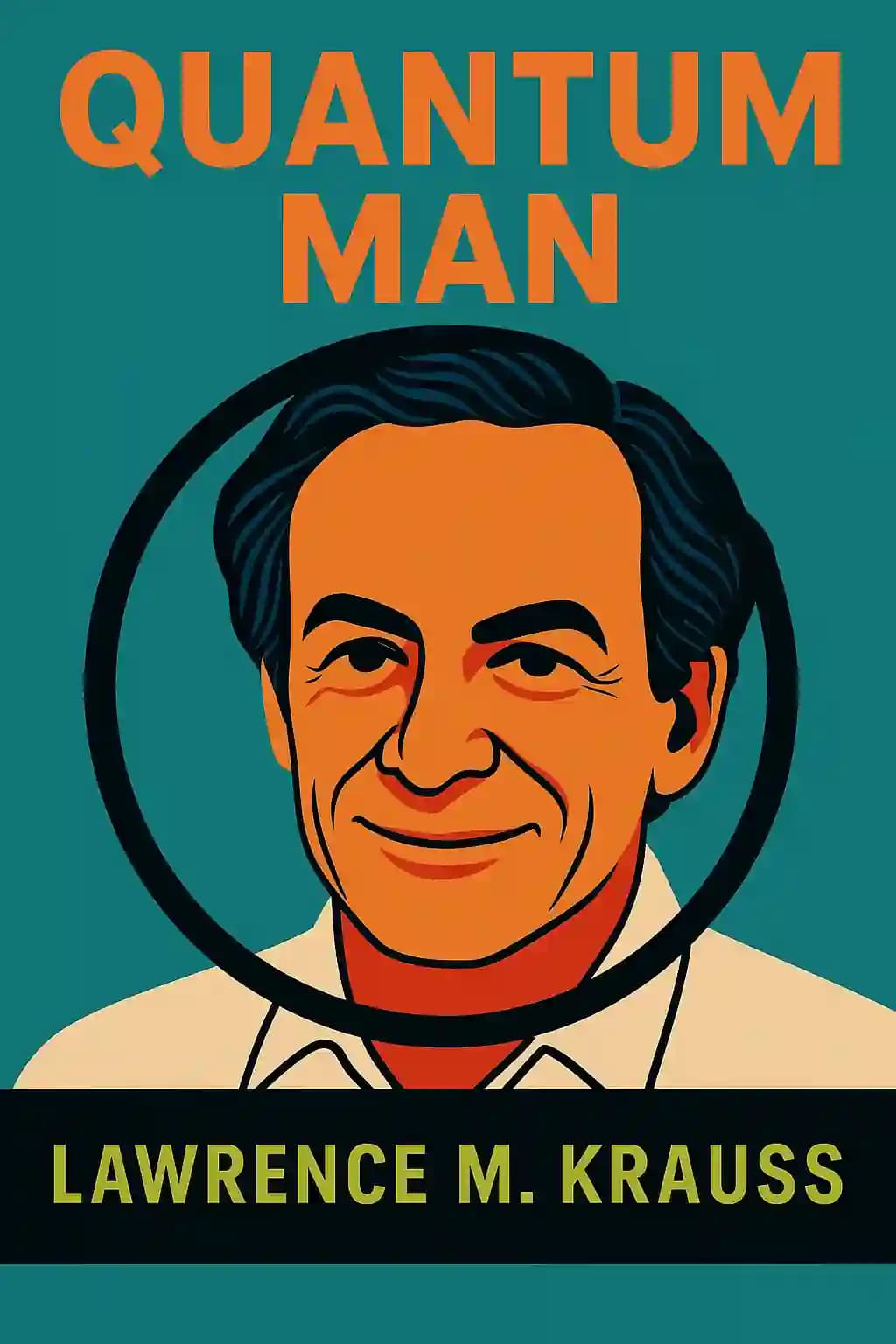
Richard Feynman wasn't just a physicist-he was a force of nature. With his Queens accent, bongo-playing antics, and irreverent humor, he became the rare scientist who transcended academia to become a cultural icon. Einstein may have captured the public's imagination first, but Feynman's accessible genius made quantum physics almost approachable. His bestselling books like "Surely You're Joking, Mr. Feynman!" have sold millions of copies worldwide, and Bill Gates once called him "the greatest teacher I never had." When Stephen Hawking was asked who he'd most like to meet from history, he named Feynman. Even today, decades after his death, his lectures rack up millions of views on YouTube, and his revolutionary approach to physics continues to influence everything from quantum computing to nanotechnology. What made this Nobel Prize winner so extraordinary wasn't just his brilliance, but his insistence that understanding the universe should be an adventure filled with wonder.
2장
The Making of a Physics Maverick
From his earliest days in Queens, Richard Feynman displayed the qualities that would make him the greatest physicist of the latter 20th century. Though seemingly a typical smart Jewish kid from a middle-class neighborhood, his extraordinary mind remained firmly grounded in reality. His father Melville, a uniform salesman with a deep appreciation for science, nurtured his independence and curiosity through unconventional methods. Rather than simply providing answers, he would pose questions that made young Richard think deeply about natural phenomena. Whether examining the behavior of ants in their backyard or discussing why a ball thrown upward falls back down, Melville encouraged his son to develop his own understanding of the world.
During these formative years, young Richard developed remarkable concentration, focusing indefatigably on problems for hours. He would often retreat to his room with complex puzzles or mathematical challenges, emerging only after finding solutions. This intense focus became a defining characteristic that would serve him throughout his career. He also developed a habit of questioning established wisdom, frequently challenging his teachers' explanations and seeking deeper understanding.
Feynman's fascination with the principle of least action - which states that objects move along paths where the difference between kinetic and potential energy is minimized - began when his high school teacher Mr. Bader introduced this concept. Though initially resistant to Lagrange's elegant mathematical formulation (preferring Newton's more intuitive force-based approach), this principle would later become central to his greatest work. The seeming mystery of how objects "know" to take paths that minimize this quantity captivated him, despite its unintuitive nature. He would spend countless hours contemplating this principle, developing thought experiments and mathematical proofs to understand it better.
At MIT, Feynman found his intellectual match in Ted Welton, sharing advanced physics studies and engaging in intense debates about quantum mechanics and electromagnetic theory. Together they would work through complex problems late into the night, learning crucial lessons about trusting experimental evidence over mathematical beauty. Under Philip Morse's mentorship, he mastered physics by his senior year, publishing groundbreaking work in Physical Review and impressing faculty with his innovative approaches to problem-solving. Despite winning the prestigious Putnam Mathematical Competition and receiving offers from multiple institutions, he chose Princeton over Harvard, drawn not just by Einstein's presence but by the university's commitment to theoretical physics research.
At Princeton, Feynman became deeply immersed in the electron self-energy problem - a fundamental paradox in quantum electrodynamics. Since like charges repel, bringing all of an electron's charge to a single point would require infinite energy, creating a theoretical impossibility that puzzled the greatest minds in physics. This seemingly abstract problem would eventually lead him to revolutionize our understanding of quantum electrodynamics (QED), though the path there would require years of intellectual evolution and the development of his famous diagrams.
Nature ultimately forced Feynman to bend his intuition to the demands of unsolved problems. The principle of least action that first turned him on to physics would eventually become crucial to his breakthrough work in QED, requiring months of mental retraining to tackle what the greatest minds in physics had failed to solve. His ability to combine mathematical rigor with physical intuition, developed throughout his early years, would prove essential in his revolutionary approach to quantum mechanics.
3장
Diving Into the Quantum Rabbit Hole
The quantum world that Feynman was about to conquer truly embodies J.B.S. Haldane's observation that "The Universe is not only queerer than we suppose, but queerer than we can suppose." At quantum scales, particles appear to exist in multiple places simultaneously while performing different actions in each location.
Quantum mechanics introduced two counterintuitive characteristics: particles can exist in multiple configurations simultaneously (quantum multitasking), and Heisenberg's uncertainty principle limits our ability to precisely measure certain paired quantities like position and momentum. Experiments like the two-slit setup demonstrated that electrons behave as waves when unobserved but as particles when measured, creating completely different patterns depending on observation.
In quantum mechanics, probability works fundamentally differently than in classical physics. While classical probability for traveling from point A to C through point B is simply the product of individual probabilities (P(AB) x P(BC)), quantum mechanics deals with probability amplitudes that can be positive or negative. The probability is determined by squaring the sum of these amplitudes, allowing for interference effects.
This explains why particles like electrons can create interference patterns even when fired one at a time-each electron interferes with itself by existing in multiple possible paths simultaneously. If we measure which path a particle takes, we force it to choose one specific route, destroying the interference pattern. As Feynman concluded, "Quantum mechanics works, whether or not it makes sense."
Adding Einstein's relativity to quantum mechanics created an even stranger picture where electrons exist surrounded by clouds of "virtual particles"-photons they constantly emit and reabsorb within timeframes too short to measure. These virtual photons also explain electromagnetic forces as particle exchanges rather than field interactions. Despite quantum theory's experimental success, calculations involving multiple photon exchanges produced troubling infinities.
At Princeton, Feynman found the perfect mentor in John Wheeler-fearless, creative, and willing to entertain radical ideas. When Feynman shared his concept of eliminating the electromagnetic field entirely, Wheeler identified its flaws but then suggested an even more radical solution: what if particles could react backward in time? Together they calculated whether this could work without violating causality, determining that as long as charged particles existed in all directions of the universe, no violations of common sense would occur.
4장
Love, Loss, and Scientific Breakthrough
While Feynman's scientific journey was accelerating, his personal life took both beautiful and tragic turns. Despite his mother's concerns, Richard fell deeply in love with Arline Greenbaum, his high school sweetheart who had been diagnosed with tuberculosis. Their relationship would prove both profoundly meaningful and heartbreaking.
Arline had reinforced Richard's determination to follow his ideas wherever they led, ensuring his intellectual integrity. When they married, Richard borrowed a station wagon, outfitted it with mattresses for Arline, and drove her to Staten Island for a private ceremony before taking her to a charity hospital in New Jersey. Their relationship ended tragically when she died of tuberculosis on June 16, 1945, six weeks before the atomic bomb Richard helped build was dropped on Hiroshima. When the clock by her bedside stopped at precisely her time of death (9:21 p.m.), Feynman-ever rational-deduced the nurse must have disturbed it while checking the time.
Meanwhile, the war provided Feynman with extraordinary opportunities despite its disruptions. It gathered brilliant minds in close quarters, allowing him to impress peers like Robert Oppenheimer, who would lead the atomic bomb project and personally recruit Feynman to Los Alamos. At Los Alamos, Feynman flourished under Hans Bethe, who became his mentor and collaborator. Bethe, the renowned physicist who had solved how the sun shines through nuclear fusion, recognized Feynman's exceptional talent and made the young physicist a group leader in the Theoretical Division.
Feynman's contributions at Los Alamos were diverse and vital: developing numerical integration methods for complex differential equations, calculating neutron diffusion in uranium bombs, and eventually supervising all computational aspects of the plutonium implosion bomb. He even assembled and maintained the new electromechanical computing machines needed for these calculations, impressing even IBM professionals with his mechanical aptitude.
From Bethe, Feynman learned the crucial discipline of connecting every theoretical calculation to numbers that could be experimentally verified. Their complementary styles-Bethe methodical and unflappable, Feynman creative and excitable-proved remarkably productive. This mentorship would shape Feynman's approach to physics for the rest of his career.
5장
Taming the Quantum Beast
Following the war and Arline's death, Feynman entered what would become the most intense two-year period of creative activity in his life. Experimental discoveries made solving previously obscure mathematical problems increasingly urgent for physics to progress. The discovery of the positron in 1932 had validated Dirac's relativistic quantum electrodynamics (QED), but it also introduced new infinite complications. Whenever physicists tried to calculate beyond the simplest approximations, their answers remained infinite and physically untenable.
The frustration was palpable among the greatest physicists of the time. Heisenberg was "forever irritated by Dirac." Pauli worried the theory was losing touch with physics. Bohr feared quantum mechanics itself might need revision. The problem wasn't just the electron's self-energy that had obsessed Feynman since undergraduate days, but new infinities from virtual electron-positron pairs in "vacuum polarization."
The breakthrough came through experiment. Willis Lamb decided in 1946 to measure hydrogen's fine structure more precisely than ever before to test Dirac's theory. On April 26, 1947, Lamb and his student Robert Retherford completed a remarkable measurement showing that two different states with the same total angular momentum in hydrogen actually had different energies-contradicting Dirac's predictions. This tiny but measurable difference provided concrete experimental evidence of QED's problems.
In June 1947, the National Academy of Sciences convened a small conference at Shelter Island where Lamb presented his results. On the train back to Ithaca, Hans Bethe performed a calculation that estimated the magnitude of what became known as the "Lamb shift." By introducing an arbitrary cutoff in the energy of virtual particles, Bethe predicted a frequency shift closely matching Lamb's observation.
Following Lamb's presentation, physicists immediately questioned what caused the discrepancy between observations and Dirac's QED theory. The key insight came from Kramers, who proposed focusing on observable quantities and distinguishing between the "bare mass" in equations and the experimentally measured mass-a process called "renormalization."
Feynman's brilliant insight was treating positrons as electrons traveling backward in time, which tremendously simplified quantum electrodynamics calculations. This approach allowed him to represent complex quantum processes with space-time diagrams (later called Feynman diagrams) that visually depicted particle interactions. In these diagrams, electrons could travel both forward and backward in time, with the backward-traveling electrons appearing as positrons moving forward in time.
Using these methods, Feynman successfully calculated the electron's self-energy by "regularizing" interactions at very small scales in a way consistent with relativity. When expressed in terms of physical mass and charge, the corrections remained finite and matched experimental results like the Lamb shift, vindicating quantum electrodynamics as a viable theory.
6장
The Battle for Recognition
Despite his breakthrough, Feynman's first opportunity to present his ideas at the 1948 Pocono Conference was "a hopeless presentation" by his own admission. Following Julian Schwinger's nearly day-long presentation of his own QED solution, Feynman attempted to formalize his approach on Bethe's advice, but distinguished physicists repeatedly interrupted him with fundamental objections.
Dirac questioned whether his theory was unitary. Others challenged his description of positrons as electrons moving backward in time, suggesting this violated the Pauli exclusion principle. Niels Bohr argued that Feynman's space-time paths contradicted quantum mechanics' basic tenets. Though Bohr was mistaken-Feynman's approach explicitly required considering multiple trajectories simultaneously-the skepticism was overwhelming.
Schwinger, like Feynman, tackled quantum electrodynamics after contributing to the war effort, but their approaches and personalities couldn't have been more different. Schwinger projected supreme confidence and organization. Recruited to Columbia at seventeen, he became Harvard's youngest tenured professor, delivering polished, elegant lectures without notes. He advised over 150 doctoral students, three becoming Nobel laureates.
Freeman Dyson, a brilliant young mathematician-turned-physicist from Cambridge, became the bridge between Feynman's revolutionary ideas and the wider physics community. During a cross-country Greyhound bus journey in 1948, Dyson completed the mental framework proving that Feynman's approach and Schwinger's were mathematically equivalent. His paper "The Radiation Theories of Tomonaga, Schwinger, and Feynman" demonstrated that Feynman's methods were as trustworthy as Schwinger's but far more practical.
Feynman's methods proved their power when young physicist Murray Slotnick presented calculations about meson interactions that Oppenheimer dismissed. After learning about the controversy, Feynman spent just one evening translating his QED methods to this new context and reproduced Slotnick's results. When Slotnick revealed he'd spent two years on calculations Feynman completed in hours, Feynman realized the true value of his techniques: "That was the moment when I got my Nobel prize... When I got the real prize it was really nothing, because I already knew I was a success."
7장
Beyond Quantum Electrodynamics
After his groundbreaking QED work in 1949, Feynman sought new challenges both intellectually and personally. Tired of Ithaca and entangled in romantic complications, he accepted a position at Caltech, negotiating a sabbatical year in Brazil first. His marriage to Mary Louise Bell quickly deteriorated, with her later complaint revealing their fundamental incompatibility: "He begins working calculus problems in his head as soon as he awakens. He did calculus while driving his car, while sitting in the living room and while lying in bed at night."
At Caltech, Feynman found the perfect institutional fit where he would spend the rest of his career. While physics experienced turmoil with newly discovered elementary particles proliferating from accelerators, Feynman recognized his diagrammatic methods were inappropriate for these strongly interacting particles. He turned instead to the mysteries of the very cold, particularly superfluidity in liquid helium.
Using his path integral formulation of quantum mechanics, he demonstrated how strongly interacting helium atoms could behave as free particles with slightly increased mass, enabling a Bose-Einstein condensation transition. This insight-that strongly interacting particles could behave as if they were free-fascinated him and would guide his work for decades.
Feynman tackled the fundamental question of why superfluid helium maintains its quantum coherence despite the fact that quantum effects typically disappear at macroscopic scales. His deceptively simple argument centered on helium atoms being bosons. He demonstrated that the lowest-energy state would have uniform density due to atomic repulsion. Since all helium atoms are identical bosons, any displacement of particles could be represented as exchanges of identical particles, which wouldn't change the quantum state. This meant no low-lying excited states existed that could cause resistance to flow.
When considering what would happen if superfluid helium were rotated, Feynman realized the fluid's angular momentum would be quantized. Rather than rotating as a whole, the fluid would form tiny vortex lines-like miniature tornadoes-distributed throughout the non-rotating background fluid. These vortices could curl into rings, which Feynman connected to Landau's "rotons"-the lowest-energy local excitations.
Feynman's intuitive approach using "test wave functions" to find minimum energy states established the variational method in condensed matter physics, a technique used for nearly all key problems in the field since. Though he never solved superconductivity himself, his ideas heavily influenced Bardeen, Cooper, and Schrieffer's breakthrough work.
8장
Particles, Partons, and the Standard Model
At Caltech, Feynman found a worthy intellectual sparring partner in Murray Gell-Mann, who would come to dominate particle physics in the decade following Feynman's reign. Though Feynman later claimed "Our knowledge of fundamental physics contains not one fruitful idea that does not carry the name of Murray Gell-Mann," the two were opposites in many ways. Gell-Mann was a child prodigy who had mastered not just physics but seemingly everything, especially languages. Unlike Schwinger, however, Gell-Mann despised pomposity and appreciated Feynman's straightforward presentation of powerful ideas.
Their continuous arguments-what Gell-Mann called "twisting the tail of the cosmos"-influenced generations of physicists through their students and collaborators. This marriage of opposites proved immensely productive as both scientists approached their creative peaks.
Gell-Mann cracked open particle physics by applying group theory to classify the plethora of new particles according to their symmetry properties. His "eightfold way" (named after Buddha's path to nirvana) used the SU(3) symmetry group to organize particles into multiplets. When his classification predicted a missing particle-the omega-minus-with specific properties, experimenters discovered it with precisely those characteristics, validating his approach.
By 1967, Feynman finally returned to particle physics after showing little enthusiasm for Gell-Mann's work. Rather than embracing group theory (which he dismissed as "simple baby talk, like boo-boo"), Feynman developed his own phenomenological approach. Drawing from his liquid helium work, he conceived of strongly interacting particles (hadrons) as boxes containing "partons" that didn't interact strongly on small scales.
When Feynman visited SLAC in 1968, he discovered that experimenters were analyzing electron-proton collision data according to Bjorken's scaling predictions. After talking with the experimentalists, Feynman had an epiphany and realized the scaling behavior had a simple explanation: electrons were bouncing off individual partons within protons. Over time, data analysis revealed partons had fractional charges matching Gell-Mann's hypothetical quarks, though Feynman continued using parton language while physics gradually adopted the quark picture.
Within five years, physicists developed fundamental understanding of both the strong and weak forces, completing one of the most significant theoretical revolutions in physics history. Feynman's work directly contributed to this revolution and implied his QED approach wasn't merely a mathematical trick but provided fundamental physical understanding of why sensible theories produce finite results.
9장
The Visionary's Final Frontiers
In December 1959, Feynman delivered a visionary lecture titled "There's Plenty of Room at the Bottom," which laid the groundwork for what would later become nanotechnology. Despite his focus on particle physics, Feynman never lost his fascination with the tangible world and mechanical devices. He argued that people were thinking too timidly about miniaturization, failing to explore the vast space between human-scale machines and atomic dimensions.
Feynman's lecture demonstrated remarkable prescience about technological developments that would unfold over the next half-century. He envisioned merging the quantum universe with human experience by engineering at the atomic level. His predictions included storing all books on a speck of dust (now approaching reality with modern storage technology), atomic-scale biology (which has led to genome sequencing and synthetic biology), observing and manipulating individual atoms (achieved through scanning-tunneling microscopes), and quantum engineering (now the focus of half the American Physical Society's members).
Computing remained Feynman's most enduring technological interest, reignited when his son Carl studied computer science at MIT. Through Carl, Feynman met Danny Hillis, who was building a massive parallel-processing computer with a million processors. Fascinated by this modern version of the human parallel computer he'd created at Los Alamos, Feynman volunteered to work at Hillis's company, Thinking Machines, during summer 1983.
Between 1981 and 1985, Feynman produced groundbreaking papers investigating whether classical computers could simulate quantum mechanical systems. He demonstrated they fundamentally couldn't-a quantum world is mathematically richer than anything embeddable in a classical framework. This led him to propose a revolutionary concept: a computer whose fundamental bits were quantum objects. In his 1985 paper, he developed a theoretical model for a universal quantum computer and showed it could operate without energy dissipation.
Feynman's insight was profound: quantum systems naturally explore infinite paths simultaneously, making them nature's perfect parallel processors. Though he didn't live to see it, his speculations launched quantum computing, which exploded after Peter Shor's 1994 demonstration that a quantum computer could efficiently factor large numbers-potentially threatening all modern encryption while simultaneously enabling new secure communication methods.
10장
The Feynman Legacy
Richard Feynman died on February 15, 1988, at sixty-nine, having changed not only our understanding of the world but the lives of everyone he met. Though his brilliant mind and rigid integrity led to great discoveries, his insistence on discovering everything himself may have limited his accomplishments. Yet this wasn't his concern-he valued learning about the world above all, finding joy in discovery even when others had reached the same conclusions first.
Those who knew Feynman recall his remarkable abilities. Student Richard Sherman witnessed Feynman seamlessly switch between complex calculations in completely different fields during a single afternoon of phone interruptions. Danny Hillis observed how Feynman would initially refuse to give advice on problems outside "his department" only to return days later with insights. David Goodstein described how, just days before cancer surgery, Feynman spent an entire day on an "utterly obscure" elastic theory problem, calling Goodstein at home that evening with the solution, "absolutely walking on air."
Feynman's path-integral methodology revolutionized physics, becoming the standard approach for dealing with both Yang-Mills gauge theories and gravity. His techniques allowed physicists like Kenneth Wilson to systematically examine how theories change across different distance scales by "integrating out" small-scale fluctuations. This revealed that renormalization wasn't merely a mathematical trick but physically essential-all theories are merely "effective theories" valid only within certain scale ranges.
In 1961, Feynman found a new creative outlet that would cement his iconic status in physics. At Matthew Sands' suggestion, Caltech asked him to revamp the two-year introductory physics course. Feynman threw himself into the challenge with characteristic intensity, developing completely original presentations that connected fundamental principles to everyday phenomena. The lectures were recorded, transcribed, and published as "The Feynman Lectures on Physics"-a three-volume set that remains a physics staple decades later.
Perhaps Feynman's greatest legacy was his approach to understanding-his insistence on clarity, his refusal to accept authority without evidence, and his ability to find joy in the process of discovery. As he once told Stephen Wolfram, "You know, you and I are very lucky. Because whatever else is going on, we've always got our physics." This sentiment captures the essence of Feynman-a man who found profound meaning in understanding how the universe works, and who shared that wonder with everyone fortunate enough to cross his path.