1장
Finding Meaning in a Darwinian World
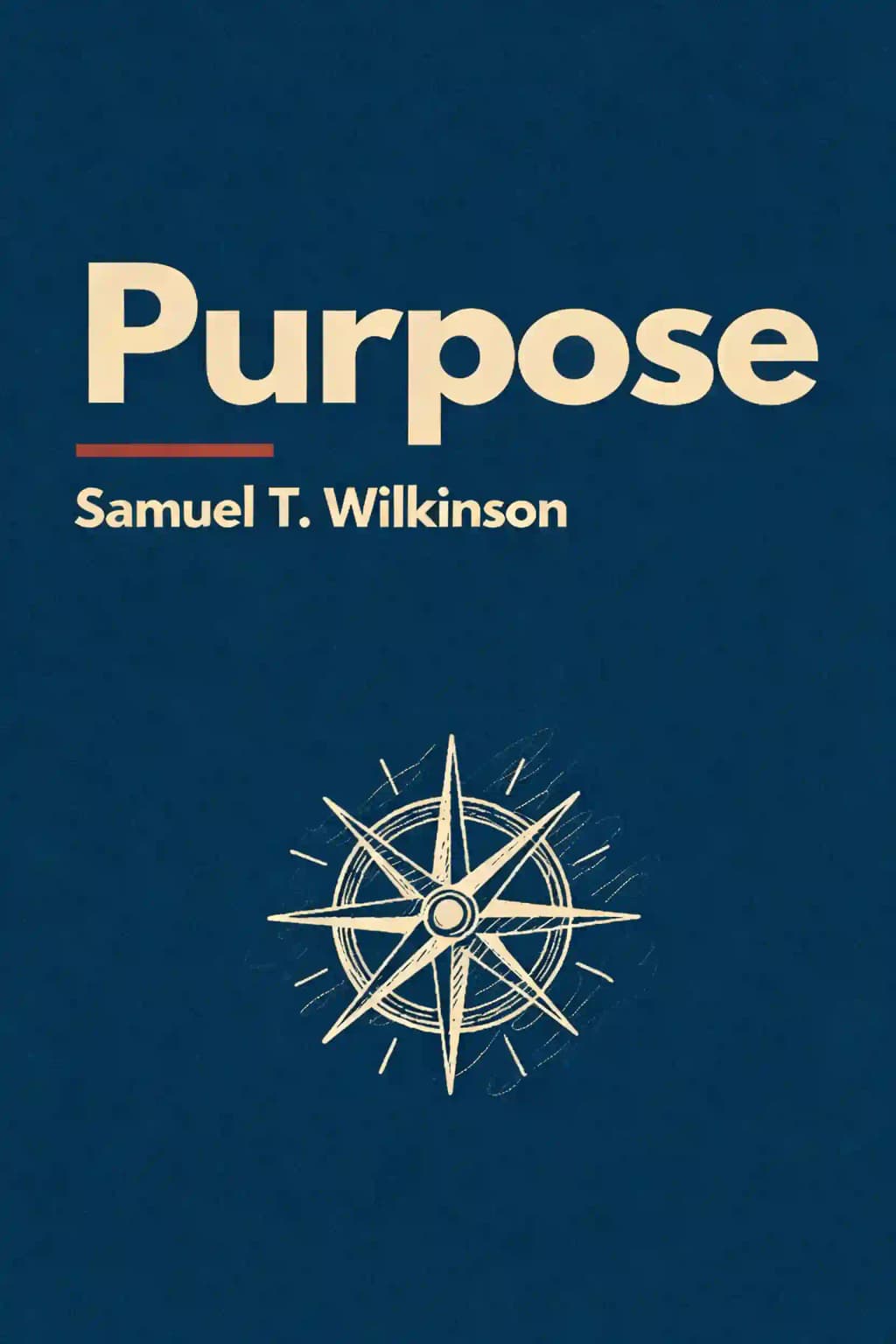
In 2023, "Purpose" by Samuel T. Wilkinson became one of the most talked-about books in intellectual circles, earning praise from both scientific and religious communities. Francis Collins, the renowned geneticist who led the Human Genome Project, called it "intellectually rigorous and spiritually compelling," while bestselling author Greg McKeown described it as "life changing." What makes this book particularly fascinating is Wilkinson's background-he's not a theologian but an associate professor of psychiatry at Yale University with publications in prestigious medical journals and mainstream media outlets like The New York Times and Wall Street Journal.
The book emerged from Wilkinson's personal struggle during medical school at Johns Hopkins, where he found himself torn between his scientific education and religious faith. Rather than abandoning either perspective, he developed a framework that harmonizes evolutionary biology with purpose and meaning. His approach has resonated with readers seeking to reconcile scientific understanding with deeper questions of human existence-a timely contribution as surveys show increasing rates of existential despair despite material prosperity in developed nations.
2장
The False Doctrine of Randomness
For decades, prominent scientists have portrayed evolution as an entirely random, purposeless process. Biologist Edward O. Wilson famously claimed that no species possesses purpose beyond genetic imperatives, while Richard Dawkins described humans as "survival machines" for our genes. This perspective has contributed to what I call the "doctrine of randomness"-the belief that humans are merely molecular accidents in an indifferent universe.
This doctrine has profound psychological consequences. Despite unprecedented access to medicine, technology, and leisure in developed countries, depression rates are soaring worldwide, becoming the leading cause of disability. "Deaths of despair" including suicide have increased dramatically, with suicide rates rising nearly 40% in twenty years. This existential crisis stems partly from a loss of faith-in God, in humanity's goodness, and in life's purpose.
However, modern evolutionary biology reveals that evolution isn't actually random in its outcomes. While evolution may begin with random mutations, its results appear guided by natural laws and constraints. The primary evidence for this non-random picture comes from evolutionary convergence-the independent development of similar structures or functions in unrelated species.
Convergent evolution was once thought unusual but is now recognized as extremely common. Wings evolved independently in birds, bats, and butterflies. Camera-type eyes developed independently about half a dozen times, including in humans and squids. Even at the cellular level, C4 photosynthesis evolved independently at least sixty times in different land plants. Cambridge paleobiologist Simon Conway Morris notes, "Convergence is ubiquitous. I can't think of anything which has only evolved once."
This widespread convergence suggests evolution isn't random in its outcomes. While chance may determine evolution's path, the end results appear constrained and predictable. Evolution operates like injection molding-at the microscopic level, molecular movement appears random, but when viewed macroscopically, the process is clearly constrained by the mold's boundaries. Similarly, genetic mutations may seem random up close, but are guided by physical, chemical, and biological laws that shape life's development.
3장
Our Dual Nature: The Tension Within
To understand human nature, we must examine our evolutionary origins, for as Theodosius Dobzhansky famously stated, "Nothing makes sense in biology except in the light of evolution." Human nature contains an inherent tension: we are profoundly social beings, biologically wired to form complex societies, yet we also possess selfish instincts that evolution has instilled in us. These opposing drives-social cooperation and self-interest-both have strong evolutionary foundations that shape our behavior and societies, manifesting in everything from workplace dynamics to international relations.
This tension exists because natural selection operates at multiple levels simultaneously. At the individual level, selection favors traits that benefit the organism itself-promoting selfishness and eliminating altruism. However, at the kin and group levels, selection can favor traits that benefit others, especially genetic relatives or group members. This multilevel selection has created competing tendencies within human nature, visible in phenomena ranging from family dynamics to corporate culture to political movements.
Individual selection produced selfishness while kin selection fostered altruism. Aggression stems from individual selection while cooperation comes from higher-level selection. As evolutionary biologist W.D. Hamilton noted, many social traits have this dual nature-language enables both truthtelling and persuasive lying; conscience benefits groups while potentially disadvantaging individuals. This duality appears in numerous human behaviors: sharing resources can benefit the group while potentially leaving individuals with less; warfare may benefit the tribe while risking individual lives; and moral codes often require personal sacrifice for collective benefit.
The Enron scandal exemplifies how ruthless individualism can destroy an organization. Under Jeffrey Skilling's leadership, Enron implemented a brutal "rank and yank" evaluation system that pitted employees against each other in Darwinian competition. This culture of fear and self-preservation led employees to inflate transaction values to survive reviews, ultimately causing the company's catastrophic collapse. Similar patterns have emerged in other corporate failures, from WorldCom to Lehman Brothers, where excessive focus on individual gain undermined organizational stability.
This tension between individual and group selection continues to shape modern institutions. Successful organizations typically balance individual incentives with team cohesion. Companies like Google and Toyota have demonstrated how combining individual recognition with collaborative work environments can harness both aspects of human nature. Similarly, democratic societies struggle to balance individual rights with collective needs, creating systems of checks and balances that acknowledge both our selfish and cooperative tendencies.
Understanding this fundamental tension in human nature helps explain many social phenomena: why we simultaneously compete and cooperate, why we need both individual rights and social responsibilities, and why successful societies must carefully balance individual and collective interests. Skilling's fundamental error at Enron was failing to recognize that natural selection operates beyond the individual level. His system maximized short-term individual selfishness but destroyed the company's long-term viability, illustrating how ignoring our dual nature can lead to catastrophic results.
4장
Altruism: Our Better Angels
While some biologists once argued that altruism is merely culturally learned, research now reveals our biological predisposition toward helping others. Psychologists Felix Warneken and Michael Tomasello demonstrated that even eighteen-month-old infants will spontaneously help adults in need, without rewards or prompting. These experiments confirm that from our earliest development, humans are naturally primed for altruistic behavior-even toward strangers-revealing how deeply cooperation is woven into our evolutionary heritage.
The contrasting fates of two shipwrecks on the Auckland Islands in 1864 dramatically illustrate how altruism enhances group survival. When the Grafton wrecked with five men aboard, they established a "true and honest brotherhood" that ensured their survival. They formed a democracy, elected a leader, and made a solemn oath to follow their contract. After building a boat for escape, their captain promised to return for those left behind-a promise he kept.
In stark contrast, the Invercauld crew immediately established a pattern of selfishness. They abandoned injured crewmates who soon died, and their social dynamic was characterized by frequent splintering and lack of leadership. Of nineteen survivors, only three lived. This natural experiment demonstrates how cooperation rather than selfishness enhances survival.
Humans often act altruistically even in one-time anonymous encounters-donating blood, giving to distant charities, tipping servers we'll never see again. Indirect reciprocity explains this through reputation management. People who develop reputations for generosity are more likely to receive help when needed, essentially earning higher "social credit scores" than selfish individuals.
Research confirms we behave more altruistically when observed. In Melissa Bateson's ingenious experiment, university students contributed three times more money to a communal coffee fund when a mug displaying human eyes watched over them compared to when it displayed flowers. Even non-human observers can trigger our reputation-protecting instincts, showing how deeply this mechanism is wired into our social behavior.
5장
Aggression and Cooperation: Our Paradoxical Nature
We are paradoxically both the most aggressive and most cooperative species on Earth. While human history reveals unmatched cruelty and intraspecies violence, we also demonstrate remarkable tolerance, trust and understanding. Our cooperative achievements-from stadium waves to heart transplants and space travel-are unparalleled in the animal kingdom.
Biology is not destiny when it comes to aggression. Genetic differences and biological factors alone only weakly predict aggressive behavior. As Harvard anthropologist Richard Wrangham notes, genes can "influence [aggressive] behavior" but "rarely determine it."
Cultural and environmental factors play crucial roles in shaping aggression. Albert Bandura's famous Bobo doll experiments demonstrated how children readily imitate aggressive behaviors they observe in adults. More recent research shows violence can spread like a contagious disease through social exposure. Rowell Huesmann's studies of children in the Israeli-Palestinian conflict revealed those most exposed to violence were significantly more likely to become violent themselves-twelve times more likely to choke a peer and twice as likely to knife or threaten to knife someone.
Human aggression falls into two broad categories: impulsive (hot, reactive, reflexive) and premeditated (cold, proactive, deliberate). Compared to our closest animal relatives, humans display remarkably low levels of impulsive aggression but high capacity for premeditated aggression.
Richard Wrangham argues that humans achieved this reduction in impulsive aggression through self-domestication-a process similar to how we've domesticated animals. Though primarily driven by culture, this process affected our biology through mating preferences and social group efforts to guard against overly aggressive leaders. Evidence for self-domestication appears in hunter-gatherer societies like the !Kung people of Botswana, where verbal criticism commonly targets "big-shot" behavior in arrogant males-a practice potentially dating back 45,000 years.
Despite our capacity for aggression, humans excel at cooperation beyond any other primate. Studies by Felix Tomasello and Michael Warneken demonstrate that young children cooperate spontaneously without prompting, help strangers without reward expectations, and actually become less cooperative when external rewards are introduced-suggesting cooperation itself is intrinsically rewarding.
6장
Love and Lust: The Evolution of Attachment
Humans possess dual, often contradictory mating instincts-one toward promiscuity and another toward monogamous pair bonding. While many philosophers and social theorists have declared monogamy unnatural, the evidence suggests a more complex and nuanced picture. From an evolutionary standpoint, male promiscuity offers obvious reproductive advantages in terms of maximizing potential offspring, yet committed relationships exist universally across human cultures, from hunter-gatherer societies to modern civilizations.
Stanford primatologist Robert Sapolsky offers a revealing framework for understanding human mating behaviors by comparing two hypothetical primate species. Species A shows minimal sexual dimorphism with similar male-female sizes and features, widespread male reproduction, high paternal investment, and monogamous pair bonding - similar to gibbons or marmosets. Species B exhibits dramatic sexual dimorphism with males up to twice the size of females, elaborate male ornamental features, intense male competition where fewer than 20% of males do most of the mating, minimal paternal investment, and promiscuous behavior - like gorillas or mandrills. Humans fall between these extremes-men are typically 10-20% larger than women with some distinguishing secondary sexual characteristics, yet less dramatically different than in highly dimorphic species. This middle position reflects our dual capacity for both promiscuous mating and committed relationships with substantial paternal investment.
While promiscuity offers clear evolutionary advantages through maximizing genetic diversity and reproductive opportunities, humans are among the rare 9% of mammalian species that form long-term monogamous relationships. This capacity likely evolved around five million years ago alongside bipedalism, which freed hands for tool use and made intelligence increasingly advantageous in survival and mate selection. As human brains grew larger - eventually tripling in size - an evolutionary compromise emerged: babies would be born with relatively immature brains that continued developing after birth, a process known as secondary altriciality. This created extraordinarily helpless infants requiring constant care for an extended period, making it virtually impossible for mothers to gather sufficient food or provide adequate protection alone.
Fathers became essential caregivers in this evolutionary context, and their reproductive success shifted from quantity of mates to ensuring offspring reached maturity through sustained investment. This paternal investment created strong evolutionary pressure for pair bonding mechanisms, including emotional attachment and jealousy. Additionally, concealed ovulation in human females (unlike 95% of mammals) further reinforced monogamy by increasing paternity certainty through exclusive sexual relationships. This unique feature means men cannot detect when women are fertile, promoting consistent sexual activity and stronger pair bonds rather than opportunistic mating.
The hormonal systems supporting both attachment and attraction reflect this evolutionary history. Oxytocin and vasopressin - sometimes called the "bonding hormones" - promote pair bonding and parental care, while testosterone and dopamine drive sexual attraction and novelty-seeking. These competing systems help explain the human capacity to form deep emotional bonds while still experiencing attraction to others, creating the complex dynamics of love and lust that characterize human relationships.
7장
Free Will: The Key to Purpose
Free will requires two key components: freedom (having genuine alternative possibilities-the "could-have-done-otherwise" principle) and will (causal mental control, where our thoughts and intentions cause our actions). This definition forms the foundation for moral and legal responsibility, as when we hold someone accountable because they not only could have acted differently, but should have.
Determinism-the idea that every event inevitably results from previous causes-represents the primary challenge to free will. In a deterministic universe, all actions would be predetermined before birth. However, determinism isn't scientifically settled. Quantum mechanics demonstrates indeterministic behavior at the subatomic level, while Newtonian physics appears deterministic for observable objects. Our lived experience suggests we encounter genuine alternative possibilities throughout life, from small choices to life-altering decisions.
Emergence explains how different levels of nature relate to one another, with each level requiring its own principles and laws. As we move from lower to higher levels (like from biochemistry to biology), new properties emerge that aren't present in the component parts. The laws governing one level may not apply to another-quantum mechanics appears indeterministic while general relativity seems deterministic. Human psychology may operate at a level not bound by determinism.
While unconscious factors can influence behavior, conscious thought clearly has causal power over our actions. Studies consistently show that mental practice improves physical performance in sports, music, and medical procedures. Implementation intention research demonstrates that detailed mental planning significantly increases goal achievement-from exercise adherence (90% vs 40%) to health behaviors like breast self-examinations (100% vs 50%) to reducing binge drinking. These findings wouldn't exist if our thoughts were mere "bystanders" to our actions.
Despite unconscious influences from upbringing, culture, and biology affecting our choices, evidence strongly supports that humans have genuine causal mental control. Even in the extreme conditions of Nazi concentration camps, Viktor Frankl observed that prisoners retained the freedom to choose their attitudes and behaviors-some became cruel while others maintained kindness and humanity, contradicting Freud's deterministic prediction that harsh conditions would produce uniform behaviors.
8장
The Good Life: Relationships as Central
In 1937, Arlie Bock initiated the Harvard Study of Adult Development to investigate factors leading to a good life. The study followed over 700 men for more than seventy years, including Harvard sophomores and teenagers from Boston's poorest neighborhoods. George Vaillant, who directed the study from the 1970s until 2005, concluded that relationships with family and friends were crucial to mental health and well-being. Men who maintained enduring relationships showed better mental and physical health outcomes. As Vaillant summarized: "The only thing that really matters in life are your relationships to other people."
British psychiatrist John Bowlby challenged Freud's view that relationships merely satisfied physical drives, developing attachment theory in the 1950s. Drawing on animal behavior research and Rene Spitz's studies of orphaned children, Bowlby demonstrated that humans have deep social needs independent of biological ones.
Spitz's research compared infants in sterile orphanages with babies raised by incarcerated mothers. Despite similar physical environments, the prison babies thrived because their mothers spent time with them, while orphanage infants languished from lack of human contact. Thirty-seven percent of orphanage children died, while none from the prison group did.
Modern positive psychology confirms that relationships remain vital for adult well-being. Martin Seligman identifies five elements of well-being: positive emotion, engagement (flow), meaning (serving something bigger than oneself), accomplishment, and positive relationships. Though theoretically independent, all these elements connect to relationships. As Seligman notes: "Very little that is positive is solitary... The last time you felt indescribable joy? The last time you sensed profound meaning and purpose? The last time you felt enormously proud of an accomplishment? Even without knowing the particulars of these high points in your life, I know their form: all of them took place around other people."
We often sabotage our most important relationships due to human nature's dual potential for selfishness and Western culture's excessive valuation of economic and social status. Many devote extraordinary time to career advancement, driven by what Adam Smith called our "insatiable appetite" for material possessions. This drive for status and wealth damages personal relationships, which ironically provide far greater satisfaction than professional achievement.
Another cognitive illusion is the belief that maximizing freedom leads to maximum happiness. Psychological science has demonstrated that "keeping options open" often results in less satisfaction, not more. In a revealing study, college students who were forced to commit to keeping one photograph (without option to exchange) were more satisfied with their choice than students who could swap photos later. The researchers concluded that "owning" an outcome makes someone more satisfied with it-"irrevocably owned apples are sweeter than those that are merely tasted."
9장
The Good Society: Family as Foundation
When adults actively engage in rearing their children and family relationships flourish, their better natures predominate. This is especially important for men, who commit the vast majority of violent crimes and social problems across cultures.
When men become fathers, they often experience a significant transformation, channeling their energy and aggression toward constructive ends. However, men need to be actively engaged in child-rearing for these prosocial behaviors to emerge. Unlike women, who have strong biological ties to their children through pregnancy and nursing, men have comparatively fragile biological links to their offspring. Marriage has traditionally served to strengthen this connection.
Marriage transforms men's behavior by providing intrinsic motivation to provide and protect. Married men work harder, earn more, have better health, engage in fewer risky behaviors, and commit fewer crimes than their single counterparts. While some of this may reflect selection effects (better men being more likely to marry), research shows marriage itself has transformative effects on men's behavior.
When controlling for factors like education, ethnicity, and intelligence, married men still outperform single peers across social indices. Studies of identical twins show married men earn 26% more than their single twins. When married men divorce, many benefits erode.
Beyond improving men's character, engaged fatherhood dramatically benefits children. Sociological research overwhelmingly shows that children fare best with two biological parents in a married relationship. Children from intact families experience fewer mental health issues, perform better academically, and rarely experience poverty compared to those from single-parent homes. Boys without fathers present show higher rates of violent crime and drug use, while girls have higher rates of teenage pregnancy. Even at the community level, family structure proves to be the strongest predictor of upward mobility-stronger than the proportion of college-educated adults in an area.
10장
A Purposeful Existence
The evidence presented throughout this journey points to a profound conclusion: our existence has purpose. The non-random nature of evolution, guided by higher-order principles, suggests intention behind creation. Complex systems like DNA, the precise calibration of universal constants, and the emergence of consciousness itself all hint at an underlying design. Our dual nature-pulled between selfishness and altruism, aggression and cooperation, lust and love-combined with our free will indicates that life is a test between competing impulses, aligning with religious teachings throughout history. This internal struggle, found across cultures and eras, suggests a universal aspect of human experience that transcends mere biological imperatives.
Forming families represents another fundamental purpose of life. Despite the sacrifices parenthood demands, it transforms adults (especially men) into less selfish beings while providing profound meaning and joy. Research shows that parents experience significant neurological and hormonal changes that facilitate bonding and nurturing behaviors. These deep family bonds-our most meaningful relationships-suggest a divine plan extending beyond our current existence. The universal human desire to create lasting legacies through children, teach values across generations, and build enduring family traditions points to an inherent understanding of life's larger purpose.
Like Darwin's later revision to include "by the Creator" in his famous conclusion about evolution's grandeur, recognizing our divine purpose allows us to fully appreciate life's meaning. Evolution has shaped us not through random chance but through principles that guide us toward our highest potential-loving relationships that transcend self-interest and connect us to something greater than ourselves. The emergence of moral behavior, artistic expression, and spiritual seeking across all human societies suggests these qualities are fundamental to our design, not mere byproducts of survival.
When viewed through this lens, science and faith need not conflict. Instead, they complement each other, offering different perspectives on the same profound reality: that we are beings created for purpose, designed to find our greatest fulfillment in relationships of love and care. Scientific discoveries about the brain's reward systems for altruism, the genetic basis for empathy, and the health benefits of meaningful relationships all support this understanding. In this view, evolution becomes not a doctrine of meaninglessness but a testament to the remarkable way we were designed to flourish-through choices that elevate our better nature and connections that give our lives their deepest meaning. The convergence of scientific findings with ancient wisdom about human purpose suggests we are part of a greater design, one that encourages our growth toward higher consciousness and deeper connections.