I don't have specific facts about "Powerful" by Patty McCord to create an accurate introduction. To write a compelling 40-word hook, I would need verified information about the book's content, impact, and reception. Without these facts, I cannot responsibly craft an introduction that meets your requirements.
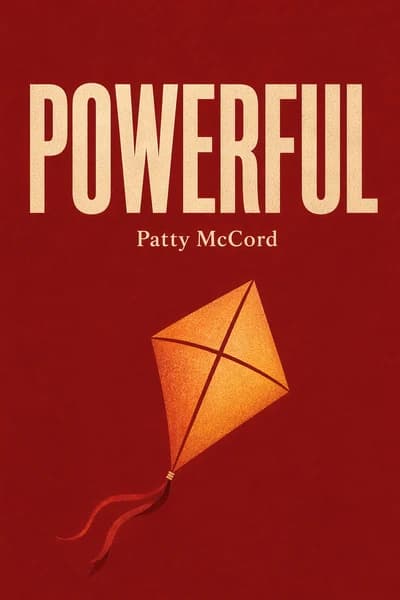
Patty McCord, author of Powerful: Building a Culture of Freedom and Responsibility, is a renowned HR innovator and workplace culture architect. Best known as Netflix’s former Chief Talent Officer, she co-created the viral Netflix Culture Deck, a blueprint for modern organizational culture praised by Sheryl Sandberg as “the most important document ever to come out of Silicon Valley.”
With over 14 years at Netflix and prior roles at Sun Microsystems and Borland, McCord redefined HR practices by advocating for radical transparency, scrapping performance reviews, and fostering environments where employees operate as “fully formed adults.” Her book distills these insights, offering actionable strategies for building agile, high-performing teams.
A frequent speaker at CEO forums and top business schools, McCord’s ideas have been featured in Harvard Business Review, Fast Company, and TED Talks. Her consulting work helps startups and Fortune 500 companies alike align culture with business goals.
Powerful earned spots on Inc. Magazine’s “8 Books Every Entrepreneur Should Read” and Business Insider’s “Best Business Books of 2018,” solidifying its status as a modern management classic. The Netflix Culture Deck, viewed over 15 million times, remains a cornerstone of her legacy in reimagining work.
Powerful challenges traditional HR practices by advocating transparency, minimal bureaucracy, and performance-driven cultures. Patty McCord, Netflix’s former Chief Talent Officer, shares insights on fostering high-performance teams through radical honesty, continuous feedback, and aligning employees with evolving business needs. The book emphasizes treating workplaces like sports teams—prioritizing adaptability over rigid policies.
HR professionals, business leaders, and managers seeking to innovate workplace culture will find this book transformative. It’s particularly relevant for organizations aiming to replace outdated HR systems with agile practices and those navigating rapid growth or industry disruption.
Yes—McCord’s actionable advice on transparency and team dynamics offers fresh perspectives for modern workplaces. While critics argue her approach may seem elitist or too radical for traditional companies, the book’s focus on empowering employees through challenge (not perks) makes it a valuable read for leaders prioritizing adaptability.
McCord argues that transparency builds trust and accountability. Sharing business challenges openly—even about layoffs or pivots—empowers employees to solve problems proactively. This contrasts with traditional HR’s tendency to withhold information to “protect” staff, which she believes fosters cynicism.
She rejects performance reviews, retention plans, and excessive policies, calling them bureaucratic. Instead, she advocates for:
Yes—McCord’s ideas are scalable across industries. For example, her emphasis on agility and transparency helps healthcare, education, or manufacturing sectors adapt to market shifts. However, implementation requires leadership commitment to cultural overhaul.
Critics argue McCord’s focus on top performers may neglect mid-tier employees. Others note her strategies assume abundant talent pools, which smaller markets lack. Traditional organizations might also struggle with her dismissal of tenure-based loyalty.
McCord asserts that meaningful work and impact—not bonuses or job security—drive engagement. She advocates tying individual roles to clear business outcomes (e.g., “Your code reduces customer wait times”) to foster ownership and pride.
As remote work and AI reshape workplaces, McCord’s emphasis on adaptability and trust aligns with trends toward flatter hierarchies and project-based teams. Her critique of stagnant HR systems resonates with companies battling turnover in competitive markets.
저자의 목소리로 책을 느껴보세요
지식을 흥미롭고 예시가 풍부한 인사이트로 전환
핵심 아이디어를 빠르게 캡처하여 신속하게 학습
재미있고 매력적인 방식으로 책을 즐기세요
People want to know the truth about what’s happening.
Traditional HR systems constrain people.
People walk in the door with power.
Radical honesty is necessary for trust.
Don't assume employees are too stupid.
Powerful의 핵심 아이디어를 이해하기 쉬운 포인트로 분해하여 혁신적인 팀이 어떻게 창조하고, 협력하고, 성장하는지 이해합니다.
Powerful을 빠른 기억 단서로 압축하여 솔직함, 팀워크, 창의적 회복력의 핵심 원칙을 강조합니다.

생생한 스토리텔링을 통해 Powerful을 경험하고, 혁신 교훈을 기억에 남고 적용할 수 있는 순간으로 바꿉니다.
무엇이든 물어보고, 목소리를 선택하고, 진정으로 공감되는 인사이트를 함께 만들어보세요.

샌프란시스코에서 컬럼비아 대학교 동문들이 만들었습니다
"Instead of endless scrolling, I just hit play on BeFreed. It saves me so much time."
"I never knew where to start with nonfiction—BeFreed’s book lists turned into podcasts gave me a clear path."
"Perfect balance between learning and entertainment. Finished ‘Thinking, Fast and Slow’ on my commute this week."
"Crazy how much I learned while walking the dog. BeFreed = small habits → big gains."
"Reading used to feel like a chore. Now it’s just part of my lifestyle."
"Feels effortless compared to reading. I’ve finished 6 books this month already."
"BeFreed turned my guilty doomscrolling into something that feels productive and inspiring."
"BeFreed turned my commute into learning time. 20-min podcasts are perfect for finishing books I never had time for."
"BeFreed replaced my podcast queue. Imagine Spotify for books — that’s it. 🙌"
"It is great for me to learn something from the book without reading it."
"The themed book list podcasts help me connect ideas across authors—like a guided audio journey."
"Makes me feel smarter every time before going to work"
샌프란시스코에서 컬럼비아 대학교 동문들이 만들었습니다

Powerful 요약을 무료 PDF 또는 EPUB으로 받으세요. 인쇄하거나 오프라인에서 언제든 읽을 수 있습니다.
What if the very systems designed to manage people are actually holding them back? At Netflix, this question led to something radical: eliminating vacation policies, expense approvals, and performance reviews. The result? A culture so powerful that its internal presentation went viral with 15 million views, earning praise from Sheryl Sandberg as "the most important document to come out of Silicon Valley." This wasn't reckless abandon-it was a calculated bet that adults don't need to be managed like children. When Netflix realized it would soon consume a third of U.S. internet bandwidth, traditional management wouldn't cut it. The solution wasn't more rules, but fewer. By stripping away bureaucracy, they discovered something profound: people walk through the door with power already inside them. The question isn't how to empower them-it's how to stop getting in their way. Think about the last time you needed three approvals to spend $50. Frustrating, right? Netflix eliminated virtually all approval processes, telling employees to simply "act in Netflix's best interest." No vacation policy-take what you need. No travel restrictions-spend company money like it's your own. No annual budgets-they're outdated within months anyway. This wasn't chaos disguised as freedom. The flip side was radical responsibility. Everyone was expected to practice brutal honesty, engage in fact-based debate, and check their ego at the door. When Netflix cut middle management layers after a painful 2001 layoff, something unexpected happened: everything moved faster. Teams became more proactive. Innovation flourished. Ted Sarandos doubled content production yearly while earning critical acclaim by giving creators freedom without micromanagement. The most powerful motivation isn't bonuses or perks-it's the chance to do meaningful work alongside brilliant colleagues. Freedom without responsibility is anarchy. Responsibility without freedom is prison. Netflix found the sweet spot between them, proving that when you treat people like adults, they rise to meet that expectation.




