1장
When Promises Are Sealed with Pinkies
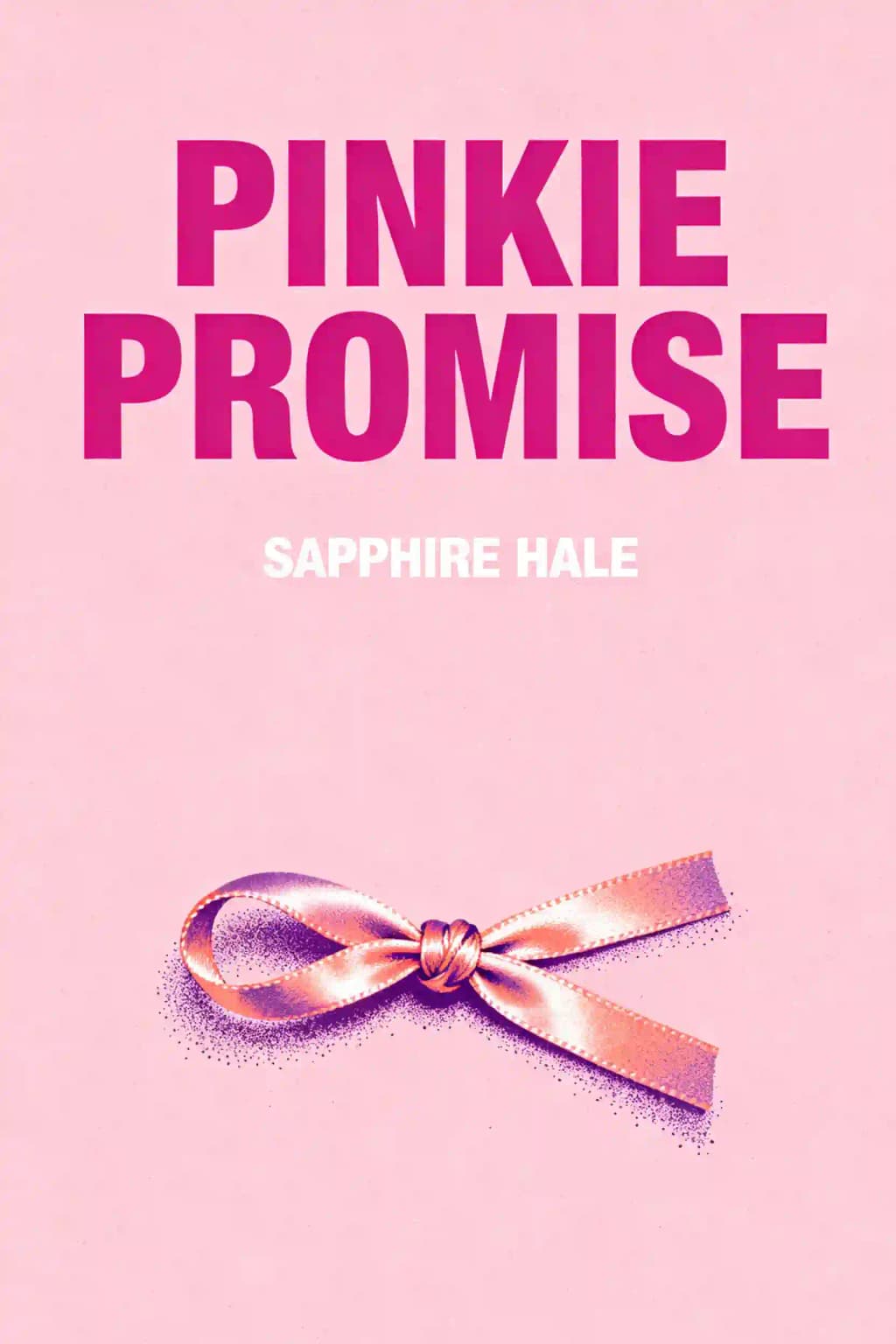
In a world where romance novels often follow predictable patterns, Sapphire Hale's "Pinkie Promise" stands out as a refreshing take on college romance that has captured readers' hearts worldwide. This sports romance between a cheerleader with a troubled past and a protective hockey captain has become a TikTok sensation, with countless readers creating aesthetic edits and passionate reviews. The novel's popularity stems from its authentic portrayal of young love built on mutual support rather than toxic dynamics. With its dual perspective narrative and emotional depth, "Pinkie Promise" has earned Hale recognition as one of the rising stars in contemporary New Adult fiction, building on her success from her previous trilogy that established her devoted fanbase.
2장
Never Rely on Others: The Foundation of Fallon's Walls
Fallon enters her senior year at Carter University with one guiding principle that's been drilled into her since childhood: never depend on anyone. As an elite cheerleader with Olympic champion parents - her mother a gymnast who took silver in Seoul, her father a track star with three gold medals - she's been conditioned to believe that excellence is the only acceptable outcome and weakness inevitably leads to abandonment. Her entire future balances precariously on maintaining perfection; her full-ride scholarship depends on the cheer team making it to American Elite, the prestigious national competition that could secure her continued education and dreams of graduate school.
The pressure weighs heavily as she leads practice sessions, spending extra hours in the gym perfecting routines until her muscles scream in protest. Her position as head flyer comes with expectations - she's the one who soars highest, who makes the crowd gasp, who carries the team's hopes on her shoulders. When freshman Blair joins the squad, Fallon notices the girl's tendency to lose focus during crucial moments, her grip sometimes faltering during basic maneuvers. Despite multiple corrections and increasingly stern warnings, Blair's attention continues to wander.
During a critical practice session three months before nationals, disaster strikes. Though Fallon's roommate Aisling briefly stabilizes her during their first attempt, Blair's sweaty, uncertain grip gives way during their second try at the double pyramid - their signature move that's won them regionals three years running. As Fallon launches into their highest flip, twelve feet above the mat, the horrifying realization hits her - no one will catch her. The world spins, then goes black as she plummets.
Two weeks after this catastrophic fall, Fallon's carefully constructed life begins to crumble like a house of cards. The arrival of new competition uniforms - including a special metallic ribbon for nationals that she won't get to wear - confirms her worst fears. With two severe concussions and a hairline fracture in her wrist, she's been permanently benched from the competition team, jeopardizing not just her scholarship but her entire future at Carter University. Without her position as head flyer and with no viable campus job prospects in sight, her application for the prestigious Thompson Graduate Program grant looks increasingly hopeless.
The prospect of moving back home to her parents' compound in Colorado looms like a prison sentence. For Fallon, Carter U represents her first and only taste of freedom from controlling parents who treated her more like an Olympic training investment than a daughter - tracking her calories, monitoring her sleep schedule, and dictating every aspect of her life since she could walk. Now demoted from star athlete to mere helper at team fundraisers, selling raffle tickets and manning the bake sale table, she faces the collapse of everything she's worked for, with her hard-won independence hanging by an increasingly frayed thread.
3장
When Worlds Collide: The Hockey Captain and the Cheerleader
Hunter Wilde, captain of Carter University's hockey team, has earned his reputation through years of fierce dedication to protecting his teammates - sometimes at the expense of clean play. During a tense meeting with Coach Benson in his wood-paneled office, he's severely reprimanded for his excessive aggression in what should have been a routine preseason exhibition game. Not only did he spend forty-five minutes in the penalty box - a record even for him - but he nearly started three fights and sent an opposing player to the medical tent. The coach's warning rings with career-defining gravity: control your volatile temper or risk being benched for crucial games, potentially destroying his chances of being signed as a free agent after graduation. The NHL scouts watching from the stands weren't impressed by his lack of discipline.
Fate takes an unexpected turn when Hunter, still fuming from the coach's lecture, accidentally slams a heavy library door into a petite girl with a distinctive purple bow in her perfectly styled hair. The impact sends her sprawling across the polished floor, scattering her books and notes everywhere. Despite his immediate attempts to apologize and help her up, she reacts with justified anger, muttering about "another concussion" and how she can't afford to miss any more practices before storming off. Something about her fierce determination despite her small stature - and those wounded eyes that flash with defiance - catches Hunter off guard. When he discovers her forgotten Advanced Biochemistry textbook, complete with detailed notes in the margins, he learns she's not just any cheerleader - she's pre-med.
Several days later, Hunter deliberately drives his mud-splattered truck to the cheerleaders' car wash fundraiser, approaching from the wrong direction just to get a better look at the mysterious girl. Her forgotten textbook sits on his passenger seat, now filled with his own sticky notes marking passages he's actually found himself reading out of curiosity. When she spots him and marches over - water dripping from her Carter University cheer uniform - the confrontation crackles with unexpected chemistry. Hunter smoothly introduces himself and offers his prized team jumper to protect her book from the increasing drizzle. Despite her initial frostiness, there's an unmistakable spark between them as they dance around their mutual attraction. His invitation to the upcoming Halloween festival and corn maze challenge comes spontaneously, and though she cites her demanding pre-med course load as a reason to decline, her lingering gaze suggests otherwise.
After she leaves with her carefully wrapped book, Fallon discovers Hunter's clever addition - his team photo bookmark complete with phone number and a note that reads "In case you need a study break." It's a bold move that perfectly captures his confidence on the ice, marking the beginning of their unlikely connection. The hockey captain known for his aggressive plays and the ambitious pre-med cheerleader - two dedicated athletes from vastly different worlds - find themselves drawn together by circumstances neither could have predicted, setting the stage for a relationship that will challenge both their carefully planned futures.
4장
Breaking Through Defenses: Building Trust After Betrayal
Five tense days pass without Fallon calling Hunter, leaving him increasingly frustrated and channeling his pent-up emotions into aggressive plays during hockey practice - so much so that his teammates notice his unusual intensity. When they finally reconnect at the Halloween carnival event, the autumn air crackles with unspoken tension as they navigate the corn maze together. In the shadowy paths between towering stalks, their chemistry intensifies with each "accidental" brush of shoulders and shared nervous laughter. Hunter seizes the moment to invite Fallon to his upcoming hockey game, and though she regretfully explains she can't make his first home game due to work commitments, she agrees to attend another match. Finally - after what feels like an eternity of missed connections - she gives him her number, scribbling it on his palm with slightly trembling fingers.
Meanwhile, Fallon grapples with her own set of challenges. Desperate to secure funding for her Master's degree and facing mounting bills, she takes a position at Rodeo Bar, a notorious establishment on the dusty outskirts of Carter Ridge. During her interview, the gruff manager, Mike, doesn't sugarcoat the reality of the environment - warning her about handsy customers, late-night shifts, and the occasional bar fight. He emphasizes their strict "no boyfriend trouble" policy, a rule born from hard experience. Despite the red flags, Fallon's financial situation leaves her no choice but to accept.
Hunter's discovery of her new workplace triggers his protective instincts - amplified by liquid courage and stories he's heard about Rodeo Bar's reputation. His drunken confrontation with both customers and management results in Fallon being terminated on her very first shift. She's left not just without income, but humiliated and furious at his presumption to "protect" her without her consent.
For six excruciating days, Hunter bombards Fallon's phone with increasingly desperate apologies. Their eventual meeting at the campus gym becomes a turning point when Hunter, voice raw with emotion, tells her, "you're not a burden" - words that pierce straight through Fallon's carefully constructed walls. These four words resonate deeply with someone who has spent her entire life feeling like an inconvenience, first to the foster care system and then to every relationship she's attempted to form. Just as the moment verges on something deeper, Connell appears - Aisling's twin brother whose lingering gazes at Fallon haven't gone unnoticed. The testosterone-laden tension between the two men is palpable, with Connell's casual familiarity clearly setting Hunter on edge.
Unknown to Fallon, Hunter has been orchestrating a solution to her employment crisis. He's arranged for her to work at his mother's diner, The Griddle, sacrificing his own Sunday shift to create an opening. Having worked there since his sophomore year of high school, Hunter stopped accepting payment when he turned eighteen, ensuring there's sufficient funds in the budget to offer Fallon competitive wages. This secret arrangement demonstrates the depth of his care, though anxiety gnaws at him about her eventual discovery of his involvement. He understands all too well how Fallon's fierce independence might interpret this as overstepping - yet another risk he's willing to take for her welfare.
5장
The Pinkie Promise: A Symbol of Unbreakable Trust
As Hunter and Fallon's relationship deepens, a simple gesture becomes their symbol of commitment - the pinkie promise. What begins as a playful way to seal their agreements transforms into something profoundly meaningful for both of them, reflecting their journey from cautious beginnings to deep, lasting trust.
Their first pinkie promise happens during a cozy movie night in Hunter's dorm room. While sharing popcorn and watching an old romantic comedy, Hunter confesses he hasn't dated anyone else in college - Fallon is the only one he wants. Despite her warnings that she might not be "the best option" due to her complicated past and trust issues, Hunter remains determined. Instead of making grand declarations, he extends his pinkie finger, hooks it with hers, and seals the promise with a gentle kiss on her finger. This innocent gesture, reminiscent of childhood pledges, becomes their sacred ritual.
The significance of this symbol deepens during a pivotal moment at the ice rink. When Fallon hesitates to let Hunter lift her, revealing her fear of being dropped again, he makes another pinkie promise that resonates with profound meaning. This moment unveils the layers of trauma behind her concussions - multiple incidents of being dropped during cheerleading stunts that left both physical and emotional scars. Hunter's pinkie promise here represents not just a guarantee of physical safety but becomes a pledge of emotional protection and unwavering support.
Their unique ritual evolves alongside their relationship, marking important moments and commitments. They make pinkie promises about daily communications - Hunter swearing to text good morning every day, Fallon promising to share her worries instead of bottling them up. These small commitments build a foundation of reliability and openness. During their first major argument, they reconcile with linked pinkies, promising to always communicate honestly, no matter how difficult the conversation might be.
In a world where both have experienced significant betrayals - Hunter's past relationships marked by manipulation and deceit, Fallon's complicated history with parents who prioritized appearances over her well-being - the simplicity of linking pinkies represents something pure and untainted. It becomes their way of saying "I trust you" without words, carrying more weight than elaborate vows or formal promises.
By the novel's end, their pinkie promises extend to lifetime commitments. When Hunter proposes, he does it with their signature gesture, proving that sometimes the most meaningful traditions grow from spontaneous moments. What started as a cute quirk becomes the cornerstone of their relationship - a physical reminder that true love often manifests in the simplest gestures, maintained through countless small promises kept faithfully over time.
6장
Healing Through Vulnerability: Fallon's Journey to Self-Worth
Fallon's journey throughout the novel is one of learning to accept support without sacrificing independence. Raised by Olympic champion parents who treated her more like a project than a daughter, she enters adulthood believing that relying on others is a weakness and that her value lies solely in her performance.
Her concussions and subsequent removal from the competition cheer team force her to confront this belief system. Without her identity as the star flyer, who is she? Her desperation for financial independence leads her to take a job at Rodeo Bar, where her first shift ends in disaster. Yet this seeming setback opens the door to working at a diner where she finds genuine acceptance.
Hunter's persistent care gradually breaks through Fallon's defenses. When he tells her "you're not a burden," he unknowingly addresses the core wound that has shaped her life. His willingness to help her train for cheerleading, his genuine interest in her writing aspirations, and his unwavering belief in her abilities all contribute to her healing.
Perhaps most significantly, Fallon learns to open up about her traumatic childhood. She reveals how her parents enforced brutal training regimens, unfair diets, and isolated her from her sisters. When she was a junior in high school, her parents "lost their shit" when she mentioned going out with a boy-her father broke down the bathroom door she hid behind, and they grounded her for her entire senior year. Books became her escape, and college represented freedom from her controlling parents.
This vulnerability marks a turning point in their relationship. By sharing her darkest experiences, Fallon takes the first step toward genuine intimacy. Hunter's response-anger on her behalf rather than pity-validates her feelings and helps her recognize the abnormality of her upbringing.
By the novel's conclusion, Fallon has transformed from someone terrified of dependence to someone who can accept love without feeling diminished by it. When she discovers Hunter arranged her job at his mother's diner, her initial shock gives way to recognition of what true love looks like-supporting someone's independence rather than controlling them.
7장
The Power of Unconditional Support: Hunter's Growth
Hunter Wilde begins the novel as the aggressive hockey captain with a reputation for fighting, but his character development reveals a man of profound loyalty and unexpected tenderness. His protective instincts initially manifest as possessiveness, but through his relationship with Fallon, he learns to channel this trait in healthier ways.
Coach Benson's early warning about Hunter's aggression jeopardizing his professional prospects sets up a key conflict. Hunter must learn to control his temper while still standing up for what matters. This tension comes to a head during the game against Larch Peak when an opposing player's crude comments about Fallon provoke Hunter into a fight that leaves his face bloodied.
Rather than reinforcing Hunter's problematic behavior, this incident leads to growth for both him and Coach Benson. The coach acknowledges that his policy forbidding players from having relationships was misguided; instead, he should have been teaching them how to handle trash talk. He recognizes that having someone like Fallon who cares for Hunter is valuable rather than distracting.
Hunter's most significant growth comes through his relationship with Fallon. While he initially tries to solve her problems by arranging a job for her behind the scenes, he gradually learns to support her ambitions without taking over. When she reveals her dream of writing a novel, he encourages her to pursue it seriously rather than treating it as a mere hobby. His belief in her talent helps Fallon envision possibilities beyond what she previously allowed herself to imagine.
His vulnerability emerges as their relationship deepens. Despite his physical strength and confident demeanor, Hunter admits his inexperience and insecurities to Fallon. He confesses that he's taking things slowly not from lack of desire but because he wants their relationship to be meaningful. This emotional honesty creates a foundation of mutual trust that strengthens their bond.
By the novel's conclusion, Hunter has evolved from someone who expresses care through control to someone who understands that true support means helping others achieve their own goals. His pride in Fallon's cheerleading performance and her academic achievements demonstrates his growth into a partner who celebrates her independence rather than feeling threatened by it.
8장
Finding Home in Each Other: Building a Future Together
As Hunter and Fallon's relationship deepens, they begin to envision a future together that neither had previously dared to imagine. For Fallon, whose concept of home has always been fraught with painful memories, Hunter represents the possibility of creating something entirely new-a relationship built on mutual respect rather than conditional approval.
A pivotal moment occurs when Hunter takes Fallon to a cabin near Larch Peak University. This rustic summer house belongs to his friend Tanner's family, but Hunter reveals his plan to buy it once he secures an NHL contract with Larch Peak's professional team. More significantly, he shares that he brought Fallon there to see if she'd be happy moving with him after graduation. "If you let me keep you as my girlfriend after we graduate, I'm gonna want you living with me," he confesses, revealing that his future plans include her.
This vision of their future together represents more than just living arrangements-it symbolizes Hunter's commitment to building a life where Fallon feels secure and valued. For someone who has never experienced unconditional love, the prospect is both thrilling and terrifying.
Their journey toward this future faces challenges, particularly when Fallon discovers Hunter arranged her job at his mother's diner. This revelation forces her to confront her fear of dependency. After years of being treated like a burden by her parents, being treated like a prize leaves her unsure how to respond. His promise from months ago on the ice rink-"I would never let you fall"-takes on deeper meaning as she realizes he's been supporting her in ways she never knew about.
Rather than running from this discovery, Fallon embraces it as evidence of genuine love. She explains to Hunter that she wasn't freaked out by his gesture-she was just in shock because she doesn't know how to handle affection. She realizes she's been afraid of letting people into her life but now wants to break that cycle. She tells Hunter she wants him "for, like, ever" and hopes he still wants her too.
The epilogue, set two and a half months after the championship, shows them celebrating Fallon's acceptance into the Master's program with the grant she needed. As they make love, Hunter contemplates their future-her completing another year at college while they spend weekends together, eventually having her move in permanently, and even the possibility of marriage. They exchange declarations of love and promises to be together, sealing it with their signature pinkie promise-a simple gesture that has come to represent their unbreakable bond.
9장
When Vulnerability Becomes Strength: The Heart of "Pinkie Promise"
At its core, "Pinkie Promise" explores how genuine connection requires the courage to be vulnerable. Both Fallon and Hunter enter their relationship carrying protective armor-she with her fierce independence and he with his aggressive defensiveness. Their journey involves gradually lowering these defenses to allow for authentic intimacy.
Fallon's transformation is particularly poignant. Having been raised to view vulnerability as weakness, she initially approaches relationships with caution, keeping others at arm's length. Her academic excellence and cheerleading prowess serve as shields, allowing her to feel in control while avoiding emotional exposure. When her concussions force her off the competition team, these shields are stripped away, leaving her feeling exposed and worthless.
Hunter's patient persistence helps her recognize that true strength lies not in self-sufficiency but in the courage to trust another person with your heart. When he tells her "I love you" repeatedly-something no one has ever said to her before-he promises his love is unconditional, sealing it with a pinkie promise. This moment represents Fallon's greatest fear and greatest desire: to be loved completely, without having to earn it through performance.
For Hunter, vulnerability takes a different form. As the hockey team captain known for his fighting prowess, he struggles to express his gentler emotions. His tendency to solve problems through action rather than communication initially creates misunderstandings with Fallon. Learning to articulate his feelings-to admit his inexperience, his insecurities, and ultimately his love-requires him to step outside the traditionally masculine role he's comfortable with.
Their relationship flourishes when they both recognize that vulnerability isn't weakness but the foundation of genuine connection. The pinkie promise, childlike in its simplicity, becomes their shorthand for this understanding-a reminder that sometimes the most profound commitments are expressed through the simplest gestures.
In the final scenes, as they celebrate Fallon's academic achievement together, we see two people who have learned that independence and intimacy aren't mutually exclusive. True love doesn't demand sacrifice of self but rather creates space for both partners to grow while knowing they have each other's unwavering support. Their linked pinkies symbolize this balance-two separate individuals choosing to connect, promising to catch each other if they fall.