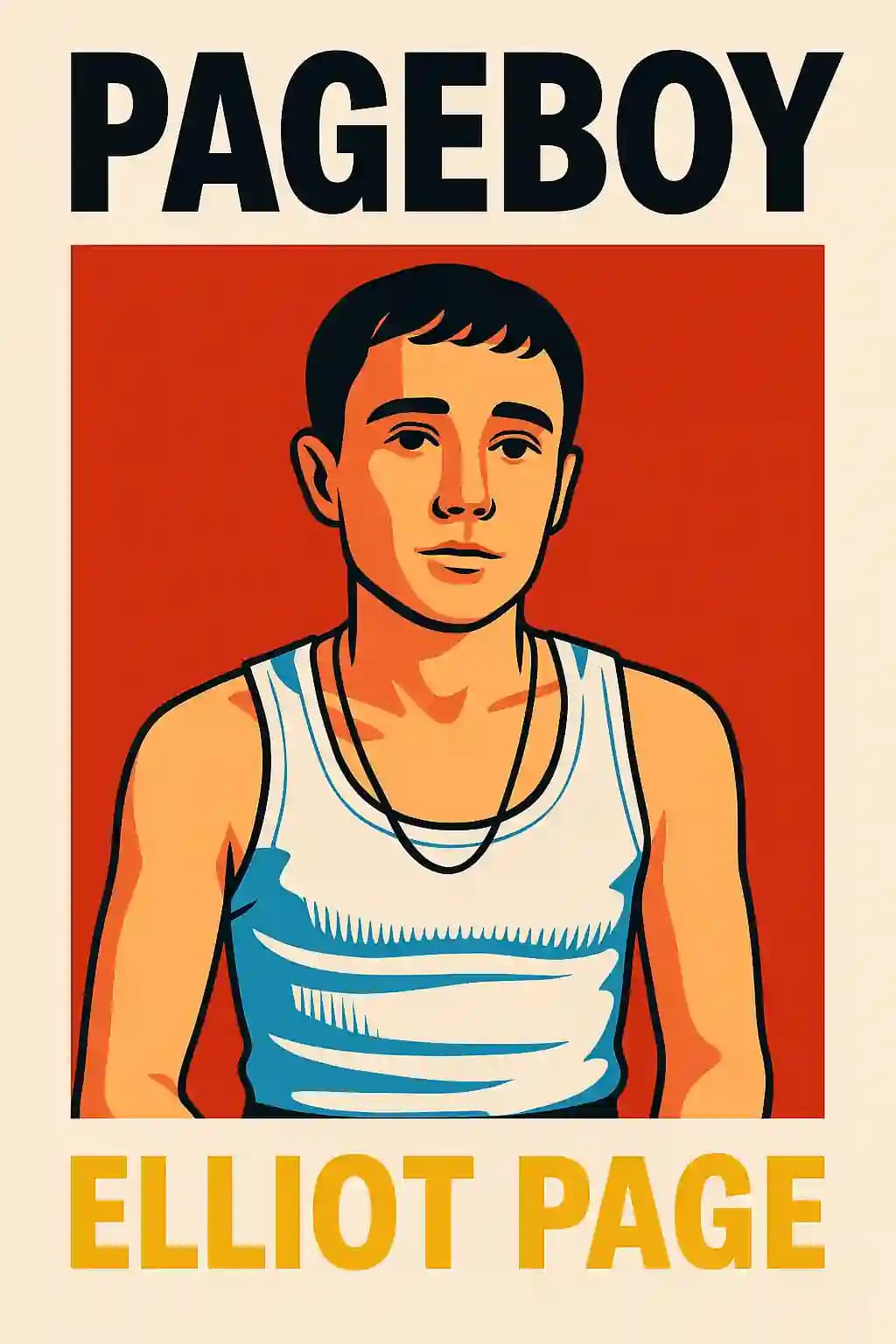
In "Pageboy," Oscar-nominee Elliot Page delivers a raw, non-linear journey through gender dysphoria, Hollywood homophobia, and self-discovery that transcends typical celebrity memoirs. What makes this acclaimed 2023 release so powerful? Its unflinching honesty has become a rallying cry for trans authenticity worldwide.
Elliot Page, Academy Award-nominated actor, producer, and LGBTQ+ advocate, explores raw introspection in his debut memoir Pageboy. The genre-defining work intertwines memoir with candid examinations of gender identity, Hollywood pressures, and personal transformation, informed by Page’s public transition in 2020 and decades of activism.
Known for his breakthrough role in Juno (2007)—which earned him an Oscar nomination—and blockbusters like Inception (2010) and The Umbrella Academy (2019–2024), Page channels his experiences as one of Hollywood’s most visible transgender figures into this narrative.
His documentary There’s Something in the Water (2019), highlighting environmental racism, further underscores his commitment to social justice, a theme echoing throughout Pageboy. The memoir debuted atop The New York Times Nonfiction Bestseller list and has been praised by critics for its unflinching honesty, with Time magazine featuring Page as its first openly transgender male cover star in 2021.
Pageboy is Elliot Page's raw memoir exploring his journey of self-discovery as a transgender man, navigating Hollywood's pressures, gender dysphoria, and personal trauma. The book delves into his eating disorder recovery, toxic relationships, and moments of trans joy, culminating in his decision to embrace authenticity. Structured nonlinearly, it blends behind-the-scenes Hollywood insights with intimate reflections on identity, resilience, and societal expectations.
This memoir resonates with LGBTQ+ audiences, fans of celebrity coming-of-age stories, and readers interested in mental health or gender identity. It’s particularly valuable for those seeking firsthand accounts of transitioning, surviving abuse, or reconciling public persona with private struggles. Page’s candid writing also offers insight into Hollywood’s treatment of queer individuals.
Yes, for its unflinching honesty about gender dysphoria, trauma, and self-acceptance. Page’s vivid prose immerses readers in his struggles with anorexia, sexual assault, and Hollywood’s exploitation, while celebrating trans resilience. Though the nonlinear structure may confuse some, the memoir’s emotional depth and societal critique make it a standout in LGBTQ+ literature.
Page describes gender dysphoria as a persistent, visceral discomfort with his body and societal expectations. He recounts childhood moments of identifying as male, struggles with puberty, and the liberation of transitioning. The memoir juxtaposes this anguish with trans joy, such as post-top surgery euphoria, offering a nuanced portrait of self-reclamation.
Some reviewers note the nonlinear narrative can feel disjointed, and a few criticize Page’s introspection as repetitive. Detractors also argue certain traumatic experiences lack contextual resolution. However, most praise its vulnerability, with The Spinoff calling it “a story told honestly and told well”.
Page details his battles with anorexia, self-harm, and PTSD from sexual assault, linking them to repressed gender identity and industry pressures. He emphasizes how transition and therapy fostered recovery, writing, “Deciding to love yourself… leads you to you.” The memoir frames mental health as intertwined with societal acceptance and self-authenticity.
Page exposes sexism and queerphobia in Hollywood, including agents pressuring him to conform to a “girl-next-door” image post-Juno. He critiques photographers sexualizing his body and producers dismissing LGBTQ+ narratives. These anecdotes reveal systemic exploitation faced by young, queer actors.
The nonlinear timeline mirrors Page’s fragmented self-perception pre-transition, with flashbacks to childhood, film sets, and relationships. This approach emphasizes his eventual psychological integration, though some readers find it challenging to follow.
Key lines include:
Unlike superficial Hollywood autobiographies, Pageboy prioritizes emotional truth over glamour. It aligns with Glennon Doyle’s Untamed in its focus on self-liberation but stands apart through its trans lens and critique of industry exploitation.
Page examines fraught relationships with his divorced parents, including a distant father and complex bond with his mother. These dynamics fueled his people-pleasing tendencies and delayed self-advocacy, highlighting how familial acceptance impacts queer mental health.
As anti-trans legislation persists globally, Page’s story humanizes transgender experiences. Its themes of resilience, authenticity, and systemic critique remain urgent, offering a roadmap for marginalized individuals navigating hostile environments.
저자의 목소리로 책을 느껴보세요
지식을 흥미롭고 예시가 풍부한 인사이트로 전환
핵심 아이디어를 빠르게 캡처하여 신속하게 학습
재미있고 매력적인 방식으로 책을 즐기세요
Elliot knew with absolute certainty that he wasn't a girl.
Acting became Elliot's salvation.
That doesn't exist!
we were cheated out of our love by societal pressures.
a space beyond the binary.
Pageboy의 핵심 아이디어를 이해하기 쉬운 포인트로 분해하여 혁신적인 팀이 어떻게 창조하고, 협력하고, 성장하는지 이해합니다.
Pageboy을 빠른 기억 단서로 압축하여 솔직함, 팀워크, 창의적 회복력의 핵심 원칙을 강조합니다.

생생한 스토리텔링을 통해 Pageboy을 경험하고, 혁신 교훈을 기억에 남고 적용할 수 있는 순간으로 바꿉니다.
무엇이든 물어보고, 목소리를 선택하고, 진정으로 공감되는 인사이트를 함께 만들어보세요.

샌프란시스코에서 컬럼비아 대학교 동문들이 만들었습니다
"Instead of endless scrolling, I just hit play on BeFreed. It saves me so much time."
"I never knew where to start with nonfiction—BeFreed’s book lists turned into podcasts gave me a clear path."
"Perfect balance between learning and entertainment. Finished ‘Thinking, Fast and Slow’ on my commute this week."
"Crazy how much I learned while walking the dog. BeFreed = small habits → big gains."
"Reading used to feel like a chore. Now it’s just part of my lifestyle."
"Feels effortless compared to reading. I’ve finished 6 books this month already."
"BeFreed turned my guilty doomscrolling into something that feels productive and inspiring."
"BeFreed turned my commute into learning time. 20-min podcasts are perfect for finishing books I never had time for."
"BeFreed replaced my podcast queue. Imagine Spotify for books — that’s it. 🙌"
"It is great for me to learn something from the book without reading it."
"The themed book list podcasts help me connect ideas across authors—like a guided audio journey."
"Makes me feel smarter every time before going to work"
샌프란시스코에서 컬럼비아 대학교 동문들이 만들었습니다

Pageboy 요약을 무료 PDF 또는 EPUB으로 받으세요. 인쇄하거나 오프라인에서 언제든 읽을 수 있습니다.
What happens when every glance in the mirror shows you a stranger? When the body you inhabit feels like a costume you can't remove? At four years old, standing in a YMCA preschool bathroom, a small child tried to pee standing up-not out of curiosity, but necessity. This wasn't experimentation. It was instinct. By six, the question came directly: "Can I be a boy?" The answer-gentle but crushing-was no. Yet something fundamental had already been established: a knowing that would persist through decades of denial, fame, and carefully constructed facades. Growing up in Halifax, Nova Scotia, freedom existed only in fragments. Building forts on a bunk bed became sacred space. Love letters signed "Jason" to imaginary girlfriends weren't fantasy-they were rehearsals for a truth not yet speakable. A mother who judged action figure diving competitions and shared Saturday night hockey also insisted on dresses for special occasions, creating a painful contradiction: acceptance at home, performance in public. Then puberty arrived like a betrayal-chest growing, periods starting, weight redistributing in ways that felt profoundly wrong. One summer day brought unexpected euphoria: wearing a friend's red Speedo, grinning at a reflection that finally felt right. Nothing had changed except everything-the colors brighter, sounds sharper, joy undeniable. These weren't random moments. They were breadcrumbs leading toward an inevitable truth.