1장
A Journey Through Shadows: One Man's Fight for Identity
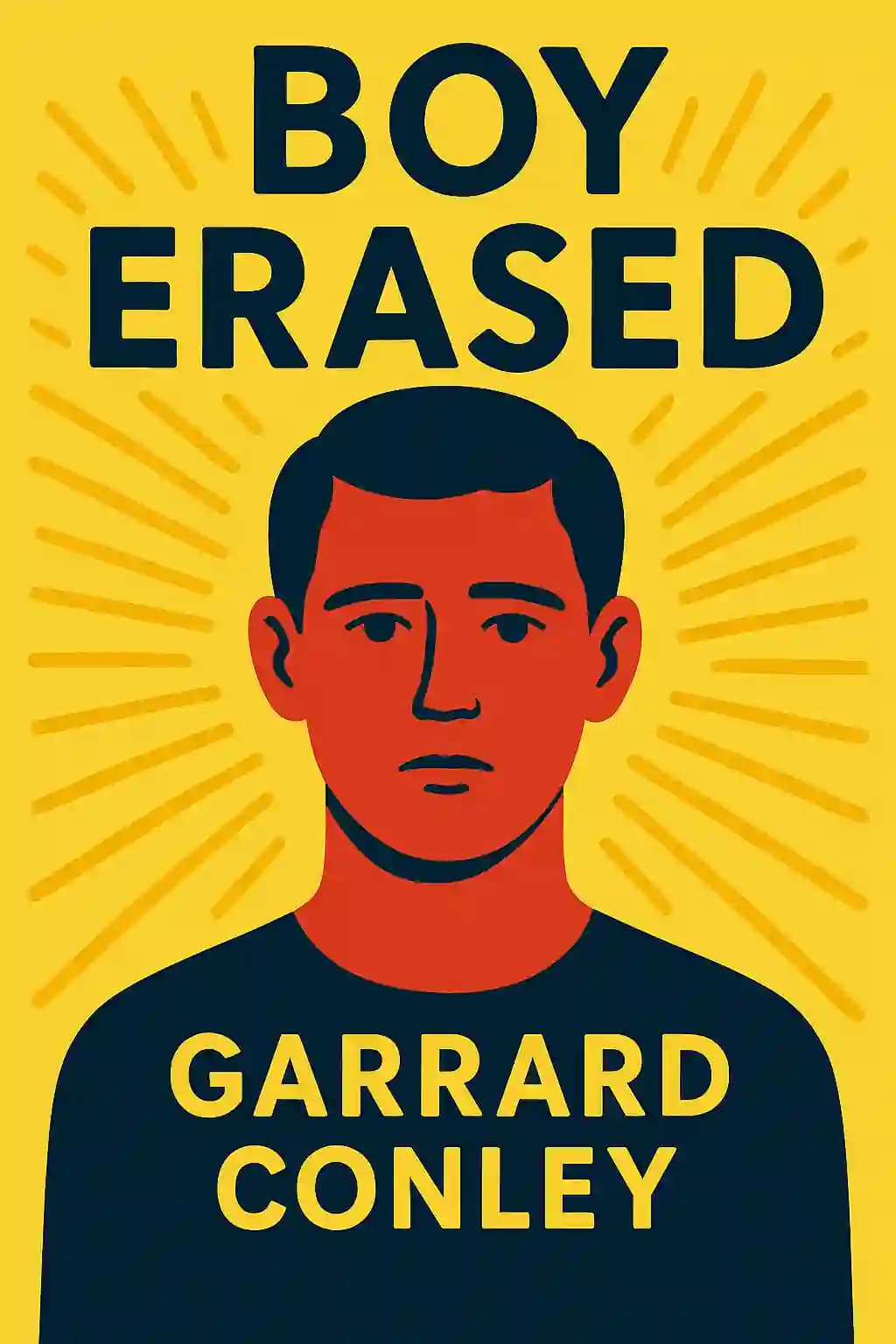
In 2004, nineteen-year-old Garrard Conley found himself sitting in a sterile room at Love in Action, an "ex-gay" conversion therapy program in Memphis, Tennessee. His personal journal had just been ripped apart, his phone confiscated, and his identity systematically dismantled-all in the name of curing his homosexuality. This powerful memoir, which Augusten Burroughs called "a necessary, beautiful book," chronicles Conley's harrowing journey through religious fundamentalism and the psychological trauma of conversion therapy. Since its publication in 2016, "Boy Erased" has become a cultural touchstone, adapted into a critically acclaimed film starring Nicole Kidman and Lucas Hedges, and praised by The New York Times as "a brave, powerful meditation on identity and faith." The book's unflinching examination of the collision between sexuality and religion has made it required reading in many college courses on LGBTQ+ studies, with Conley's story serving as both warning and testament to the resilience of the human spirit.
2장
The Architecture of Shame
The Love in Action facility stood in stark contrast to its upscale Memphis suburb location-a whitewashed red brick building with glass double doors opening to a sterile foyer adorned with fake plants and the organization's logo: an inverted red triangle with a heart-shaped hole. This symbol would come to represent everything about the program's philosophy-the cutting away of what was deemed sinful, the removal of the heart itself.
Upon arrival, Garrard was handed a 274-page handbook outlining the program's strict rules: men must shave daily and never wear sleeveless shirts; women must wear bras at all times except during sleep and skirts below the knee. The handbook declared in no uncertain terms: "You are NOT YOUR OWN, but you have been bought for a price." This philosophy of complete surrender permeated every aspect of the program.
The intake process involved surrendering all personal items that might connect patients to their "inappropriate past." A friendly receptionist who looked more like a hip youth pastor than the "wan-faced wraith" Garrard had expected checked him in while explaining that his mother couldn't tour the facility for "security reasons." This "safe zone" supposedly protected clients from potential triggers related to "repressed family issues."
Staff scrutinized Garrard's possessions for any "False Images"-defined as anything from "hyper-masculinity" and "campy behavior" to "excessive jewelry on men." When they discovered his journal of short stories, they deemed it forbidden "journaling" and ripped out the pages before tossing them in the trash. After a pat-down that felt uncomfortably intimate, with the receptionist's hands lingering on his shoulders as he assured Garrard he'd "come to love it here," he watched helplessly as his creative work was discarded.
The physical environment of Love in Action reflected its philosophy-unadorned white walls created an atmosphere of sterile holiness, with inspirational literature and testimonies from "successful ex-gays" who claimed recovery from homosexuality. This clinical setting, combined with the program's rigid rules and invasive procedures, established the foundation for what would become a systematic attempt to deconstruct and rebuild Garrard's identity according to their fundamentalist blueprint.
3장
The Moral Inventory: Confession as Control
At the heart of Love in Action's methodology was the "Moral Inventory" (MI)-a nightly ritual where patients detailed past sins in excruciating detail to share with their therapy group. This practice of forced confession became a powerful tool of control, requiring participants to continuously mine their pasts for shameful moments and reframe their life experiences through the lens of sin and redemption.
"Every night I had to complete a Moral Inventory, detailing past sins in excruciating detail to share with my therapy group," Garrard explains. Without access to books, journals, or video games, he was forced to confront what the program defined as the shameful parts of himself. The process assumed patients were "under the control of a sovereign God" while simultaneously "affected by a sinful world system, our sinful flesh, and the manipulative attacks of Satan."
The MI structure followed a strict flowchart in the handbook, guiding participants through a process that systematically pathologized their sexuality. Garrard observed fellow patients like S, a teenage girl forced to confess to "disgusting" relationships with another girl and something involving a dog, her voice trembling until she reached the redemptive conclusion filled with stock phrases about trusting God's grace.
Perhaps most insidiously, patients were encouraged to manufacture confessions when they ran out of real material. J, another patient who had developed respect for Garrard, admitted that he simply made up stories. "If I repent for sins I haven't even committed," he explained, "I figure God might even bump me up to Step Five." This fabrication of sin created a cycle where patients could never be "cured" because there was always more to confess.
The program's focus on confession extended beyond sexuality to family dynamics. Patients were required to complete "genograms"-family trees marked with symbols representing various sins: alcoholism (A), divorce (lines with diagonal slashes), deaths (X's), drug problems (D), and gambling ($). This exercise provided an unsettling comfort; patients could reduce themselves to symbols, blaming ancestral sins for their "condition."
"It looks like you've got a lot of A on both sides," J observed monotonously while looking at Garrard's genogram. "You must be really gay." This reduction of complex human experiences to simplistic cause-and-effect relationships created a framework where sexuality became just another "sin" to be traced, confessed, and ultimately "cured."
4장
The Fundamentalist Blueprint: Erasing Identity
Love in Action operated on the premise that homosexuality was not an identity but a collection of behaviors that could be unlearned through strict adherence to gender norms and religious principles. This approach required the systematic erasure of personal identity, replacing it with a prescribed set of behaviors and beliefs.
The program's handbook explicitly warned against "False Images"-a broad category that included everything from "hyper-masculinity" and "campy behavior" to personal expression through clothing or accessories. Patients were taught to identify and eliminate these "false" aspects of themselves, creating a void that would supposedly be filled with "authentic" Christian identity.
Cosby, an ex-alcoholic counselor without personal experience with "same-sex attraction," lectured patients about sports being essential to proper masculinity. Unlike John Smid, the program's director who at least attempted compassion, Cosby viewed the patients with barely concealed disgust. Garrard endured documentaries about sports meant to cure his "deficiencies," wondering what it felt like to be straight-"to see yourself reflected in every movie, to not have to lie daily."
The program's approach to gender was equally rigid. During emotional exercises, patients created masks representing their dual selves-the face they show the world versus their true inner selves. This exercise, while potentially valuable in a legitimate therapeutic context, became another tool for reinforcing the program's message that patients' authentic selves were fundamentally broken.
Perhaps most disturbing was the "Lie Chair" exercise, where patients pretended their fathers sat opposite them while they confessed everything they'd ever felt toward them. The underlying assumption was that homosexuality resulted from dysfunctional father-son relationships. When Garrard couldn't manufacture the anger they expected-"I'm not angry," he insisted, "it's more complicated than that"-a fellow patient accused him of hiding his feelings, growing increasingly hostile until Garrard finally snapped, "You're all completely crazy."
This moment of resistance marked a turning point. Finding unexpected strength, Garrard walked out, ignoring Smid's warning that he'd "never be cured." At the reception desk, he demanded his phone and called his mother: "Mom, I need your help." This act of self-preservation, of refusing to erase his identity to conform to their blueprint, would ultimately save him from further psychological damage.
5장
The Road to Memphis: A Family's Desperate Gamble
Garrard's journey to Love in Action began not with his own choice but with his parents' desperate attempt to "save" their son. After being outed by a fellow student named David who had sexually assaulted him, Garrard faced an ultimatum from his parents: either change or lose their financial support for his education.
His mother, upon receiving Love in Action's brochure, was struck by the portrait of a boy whose haunting green eyes reminded her of her son. "His eyes were so sad," she would tell Garrard nine years later. "They were calling out to me. I wanted to save the boy in that picture. I wanted to save you." The brochure featured portraits of "ex-gays" with unnaturally stretched smiles-what she would come to recognize as the distinctive "ex-gay smile" that would haunt her for years.
The decision to send Garrard to conversion therapy came after consulting with their church pastor, Brother Stevens, who urged them to act quickly to prevent Garrard from falling into "greater sin." This urgency reflected the fear-based approach to sexuality common in their fundamentalist community, where homosexuality was viewed not as an identity but as a dangerous behavior that could spread if not contained.
For Garrard's father, a car dealership owner who had recently been ordained as a minister, his son's sexuality represented not just a personal failure but a professional one. How could he lead others to salvation if he couldn't "save" his own son? During his ordination ceremony, Garrard's father vowed to "fight against the sin of homosexuality in the church," unaware of the pain these words caused his son sitting in the congregation.
Before Love in Action, Garrard had already begun internalizing his community's shame around homosexuality. He described jumping into his campus's half-frozen lake in winter as a self-baptism, praying "Lord, make me pure" while watching water drip in the shower afterward. This desperate attempt at self-purification reflected the depth of his internalized homophobia, cultivated through years of religious messaging that equated homosexuality with impurity and sin.
The family's journey to Memphis represented a last resort-a desperate gamble that two weeks at Love in Action's Source program might "fix" what they perceived as broken in their son. What they couldn't have known was that this decision, made out of a misguided sense of love and religious duty, would cause lasting trauma that would take years to heal.
6장
The Collision of Faith and Identity
At the core of Garrard's struggle was the seemingly irreconcilable conflict between his religious faith and his sexual identity. Raised in a Missionary Baptist household where his father conducted daily Bible studies and scanned news headlines for signs of Armageddon, Garrard had internalized a worldview where salvation required strict adherence to biblical teachings-including those condemning homosexuality.
This collision became particularly evident during his brief friendship with David, a fellow college student who invited Garrard to attend a Pentecostal church service. While observing the theological differences between denominations-his father had preached against Pentecostals' "hand flailing" and emotional worship, preferring the Baptist path of literal Bible interpretation and righteous deeds-Garrard found himself drawn to the promise of divine inspiration that seemed to offer both protection and intimacy.
"The promise of such spiritual intimacy became everything to me in that moment," he reflects. "I might find my real inspiration there, entering David's secret language, our separate bodies unified through Christ's body." This longing for spiritual connection paralleled his suppressed desire for human intimacy, creating a complex emotional landscape where religious ecstasy and sexual desire became dangerously intertwined.
This complexity was entirely lost on the counselors at Love in Action, who reduced homosexuality to a simple behavioral problem with clear spiritual causes. During preliminary therapy sessions, Garrard's counselor asked if his "gay business" connected to his relationship with his parents, suggesting his mother and he were "extremely close." With his first ex-gay utterance-agreeing they were "too close"-their bond became less magical, reduced to assigned descriptors in his "narrow little production of sin."
The program's approach to faith was equally reductive, focusing on behavioral compliance rather than spiritual growth. When Garrard struggled to engage with the program's religious exercises, staff members questioned his commitment to change. During an Authority and Trust session, he nodded along as Smid condemned self-sufficiency, pretending to agree while internally repeating "Fuck God" whenever the words threatened to pull him back into self-loathing.
This internal resistance reflected Garrard's growing realization that the God presented by Love in Action-a deity who demanded the erasure of core aspects of human identity-was incompatible with the God of unconditional love he had once known. "While I'd prayed for purification," he reflects, "I began opening myself to another possibility: unconditional love, the original flame that had drawn me closer to God, my family, and the world."
7장
The Aftermath: Reconstructing a Fractured Self
Two years after leaving Love in Action, while pursuing a creative writing master's at Auburn, Garrard was jolted back to his conversion therapy experience when he heard John Smid's voice on a This American Life podcast. Smid was publicly admitting what Garrard had known all along: "The transformation for the vast majority of homosexuals will not include a change of sexual orientation."
This was the first of many public apologies from ex-gay counselors, including Smid's memoir where he claimed to promote "openness and honesty"-words that made Garrard's body shake with anger. In the decade following his time at LIA, he struggled to reconstruct his identity, fighting against ingrained suspicions that learning and growth might be Satan's work.
The psychological impact of conversion therapy extended far beyond Garrard's time in the program. He connected with other "ex-ex-gay" survivors who shared similar stories of suicide attempts, mental health diagnoses, and difficulties forming intimate relationships. These shared experiences highlighted the widespread damage caused by programs like Love in Action, which continued operating until public pressure and changing social attitudes finally forced their closure.
Perhaps most painfully, Garrard's relationship with God remained broken-"my therapists took Him from me," he writes, describing a "dead weight in my chest" despite exploring different denominations. This spiritual trauma represents one of the most insidious aspects of conversion therapy: in attempting to "save" people through religious intervention, these programs often destroy the very faith they claim to protect.
The impact extended to his family as well. A deacon refused to let Garrard's father preach because of his "openly homosexual" son, creating ongoing tension in their relationship. When Garrard finally called his father to tell him he must write this memoir to know who he is, his father responded tightly, "I just want you to be happy," and despite everything, Garrard believed him.
This tentative reconciliation points to the possibility of healing, even after profound trauma. By writing his story, Garrard reclaimed the narrative that Love in Action had tried to erase, transforming his experience into a powerful testimony that has helped countless others understand the dangers of conversion therapy and the complex relationship between faith, family, and identity.
8장
The Breaking Point: Finding Freedom
The turning point in Garrard's Love in Action experience came during the "Lie Chair" exercise, when he finally refused to participate in the program's manufactured narrative about his life. After walking out and calling his mother, they drove home through the Ozarks with Garrard feeling "the familiar straightjacket tightening across my chest," knowing they needed to break their pattern of secrets and unsaid words.
When his mother saw him digging his fingernails into the dashboard, she pulled over and asked if he was going to kill himself. What emerged was "an animal cry"-a primal expression of the pain he had been suppressing. "We're stopping all of this now," she declared, taking his reaction as confirmation that the therapy needed to end.
This moment of authentic connection between mother and son contrasted sharply with their earlier complicity in the conversion therapy process. When completing his Love in Action application over the phone, they had encountered invasive questions about sexual history that forced them into uncomfortable territory. His mother had read aloud a checklist of "sexual sins" that horrifyingly grouped homosexuality with pedophilia and bestiality. Though some part of them must have known this categorization was wrong, they had lacked the framework to challenge it.
Their escape from Love in Action marked the beginning of a long healing process. Without photographs to document this period-"a whole year of my life, undocumented"-Garrard and his mother would later joke it was the year they were "abducted by aliens." The truth was they knew even then they would never want to look back.
This breaking point represented not just an escape from Love in Action but the beginning of Garrard's journey toward authentic self-acceptance. By rejecting the program's narrative about his life and identity, he took the first step toward reclaiming his story and finding freedom on his own terms.
9장
The Power of Narrative: Reclaiming Identity Through Story
Garrard's journey from conversion therapy survivor to acclaimed memoirist highlights the transformative power of storytelling. When Love in Action staff ripped out the pages of his journal and discarded them as "False Images," they weren't just destroying paper-they were attempting to erase his ability to make meaning of his own experiences through narrative.
The program's approach relied heavily on replacing patients' personal narratives with a predetermined script about sin and redemption. The Moral Inventory process forced participants to reframe their life experiences through this narrow lens, while exercises like the genogram encouraged them to trace their "condition" to family dysfunction rather than accepting it as a natural aspect of human diversity.
By writing "Boy Erased," Garrard reclaimed his narrative authority, transforming his traumatic experience into a powerful testimony that has helped countless others understand the dangers of conversion therapy. The memoir's unflinching examination of the collision between sexuality and religion has made it a cultural touchstone, adapted into a critically acclaimed film and praised for its brave, nuanced exploration of identity and faith.
The epilogue reveals that Garrard's journey toward healing included reconnecting with his creative voice. He began the memoir with encouragement from fellow writers at UNC-Wilmington's MFA program and was guided by numerous mentors and teachers. This community of support contrasted sharply with the isolation he experienced during and after conversion therapy, offering a new framework for understanding his experiences.
When Garrard finally called his father to tell him he must write this book "to know who I am," he was asserting his right to author his own story-to make meaning of his experiences on his own terms rather than accepting the narrative imposed by others. His father's response-"I just want you to be happy"-suggests the possibility of a new relationship built on acceptance rather than the demand for change that had driven them to Love in Action years before.
Through writing, Garrard transformed from victim to witness, using his experience to shed light on the harmful practices of conversion therapy while offering hope to others struggling with similar conflicts between faith, family, and identity. His story reminds us that even after profound attempts to erase one's authentic self, it remains possible to reclaim one's narrative and find freedom through the power of storytelling.
10장
The Ripple Effects: Beyond Personal Trauma
While "Boy Erased" chronicles Garrard's personal journey through conversion therapy, the memoir also illuminates the broader social and political context in which these practices flourish. The timeline included in the book traces the ex-gay movement from 1973, when the American Psychological Association declassified homosexuality as a mental illness and Love in Action opened its doors promising to "cure" LGBT people, through its expansion into a global network.
Key events in this timeline include the formation of Exodus International in 1976, suicides of program participants, LIA's move to Memphis under John Smid's leadership in 1994, and the controversial opening of the Refuge program in 2003 that brought together teenagers and adults with various "sex-based addictions." This historical context helps readers understand that Garrard's experience was not an isolated incident but part of a systematic effort to pathologize and "cure" homosexuality.
The memoir also highlights the particular vulnerability of LGBTQ+ youth in religious communities. Garrard's therapy group included unfaithful spouses, educators shamed by sexuality rumors, and teenagers in the controversial Refuge program, held against their will. Most came from the Bible Belt, and all faced ultimatums: change or be homeless, penniless, excommunicated. This reality continues today in many communities where religious beliefs about sexuality create impossible choices for LGBTQ+ individuals.
Since the publication of "Boy Erased" in 2016, the landscape of conversion therapy has changed significantly. Many states have banned the practice for minors, and major ex-gay organizations like Exodus International have closed, with leaders apologizing for the harm they caused. John Smid himself eventually came out as gay, married a man, and publicly renounced conversion therapy-a development that would have seemed impossible during Garrard's time at Love in Action.
These changes reflect growing awareness about the harm caused by conversion therapy, awareness that memoirs like "Boy Erased" have helped create. By sharing his story, Garrard contributed to a broader cultural shift toward understanding and accepting LGBTQ+ identities, particularly within religious contexts.
Yet the work remains unfinished. Conversion therapy continues in many communities, often rebranded with different terminology but employing the same harmful techniques. Religious trauma related to sexuality continues to affect countless individuals who struggle to reconcile their faith with their identity.
Through his writing and advocacy, Garrard has helped create space for a more nuanced conversation about faith and sexuality-one that rejects the false choice between religious belief and authentic identity. His story reminds us that the personal is indeed political, and that sharing our truths can create ripples of change that extend far beyond our individual experiences.