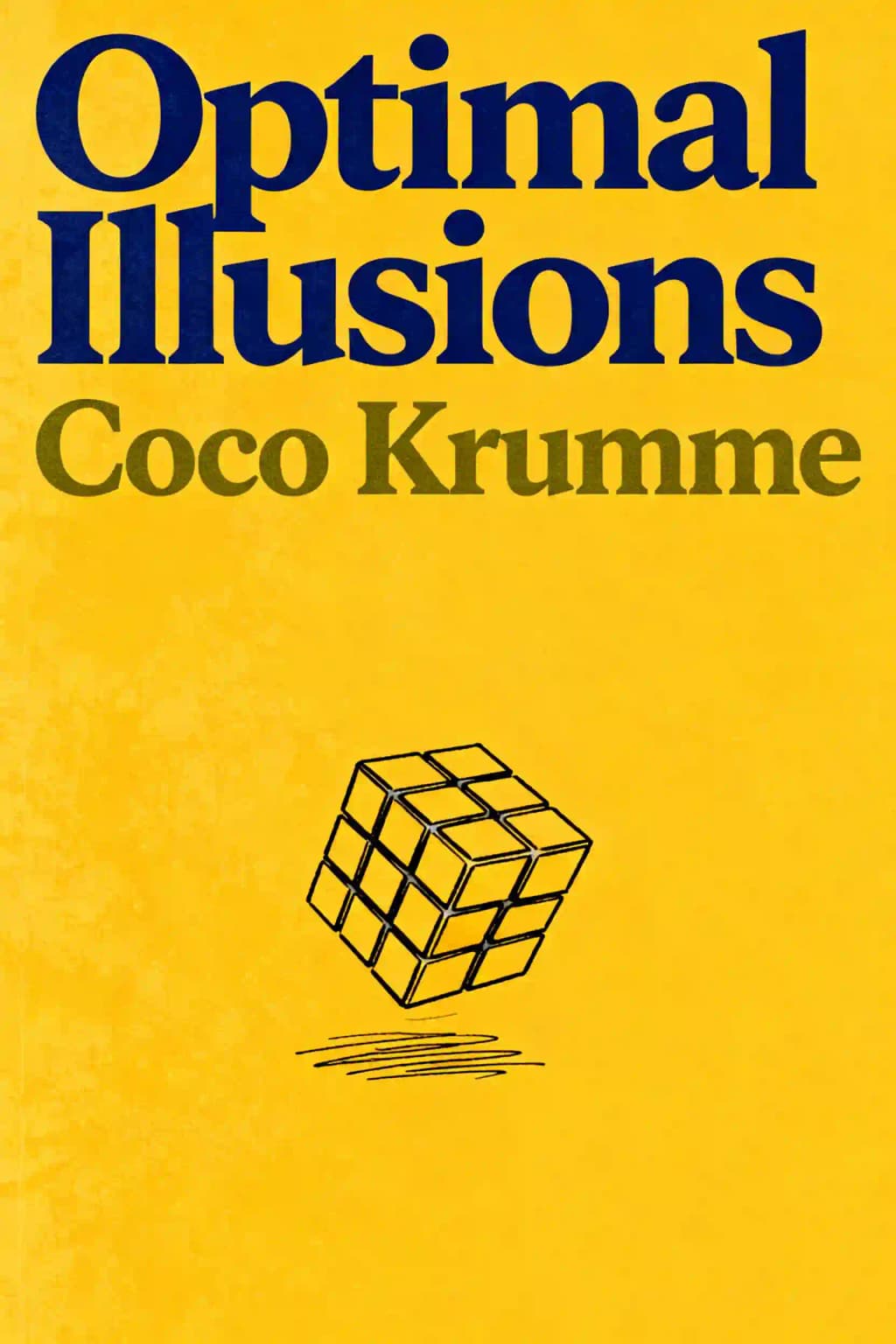
In "Optimal Illusions," mathematician Coco Krumme exposes how our obsession with optimization secretly limits our lives. Cal Newport calls it "incredibly timely" - a provocative wake-up call that questions whether efficiency algorithms are stealing what makes us human. What's your optimization blindspot?
Coco Krumme, applied mathematician and author of Optimal Illusions: The False Promise of Optimization, is a leading voice critiquing the cultural and systemic impacts of efficiency-driven technologies.
A MIT PhD graduate and Yale alumna, Krumme merges her academic rigor with firsthand Silicon Valley experience, where she witnessed optimization’s pitfalls while working as a data scientist and computational modeler. Her book, blending historical analysis and fieldwork—from interviews with North Dakota farmers to critiques of AI—exposes how the relentless pursuit of “best solutions” undermines resilience and human agency.
She founded Leeward Co., a scientific consultancy advising Fortune 500 companies and startups on sustainable data strategies. A featured speaker at venues like PBS’s The Open Mind and the NEXT Conference, Krumme’s insights bridge mathematics, ethics, and societal change. Optimal Illusions has been highlighted as a critical examination of tech culture, resonating in academic and industry circles alike.
Optimal Illusions examines how society’s obsession with efficiency and mathematical optimization has reshaped industries, technology, and daily life, often at the expense of human values. Coco Krumme combines historical analysis, personal anecdotes, and critiques of systems like Silicon Valley tech culture and industrial agriculture to argue for a more balanced approach to progress.
This book appeals to readers interested in technology ethics, societal impacts of algorithms, and critiques of modern efficiency culture. It’s particularly relevant for professionals in tech, data science, or policy-making, as well as general audiences concerned about unchecked optimization’s consequences.
While praised for its provocative ideas and interdisciplinary approach, some critics note uneven depth in technical explanations. It’s recommended for those seeking a thought-provoking exploration of optimization’s societal trade-offs, though readers wanting rigorous mathematical analysis may find it lacking.
Krumme highlights how optimization stifles diversity in agriculture, creates fragile systems in tech infrastructure, and dehumanizes workplaces by prioritizing metrics over creativity. She argues this pursuit often ignores long-term resilience and cultural heritage.
Unlike Merchant’s historical focus on labor movements, Optimal Illusions critiques modern systemic efficiency through a mathematical lens. While both address technology’s societal impacts, Krumme’s work leans more on personal narrative than exhaustive case studies.
With a PhD from MIT and experience in Silicon Valley, Krumme bridges technical expertise with philosophical inquiry. Her shift from optimizer to critic lends authenticity to discussions about tech’s limitations.
The book advocates for embracing imperfection, diversifying systems beyond pure efficiency metrics, and reintegrating human intuition into decision-making processes.
Krumme’s warnings about over-reliance on algorithmic systems resonate with concerns about AI ethics, biased models, and automation’s impact on employment.
Yes, it encourages readers to question “optimal” choices in daily life, prioritize resilience over convenience, and support locally adapted systems rather than globalized efficiency.
Krumme traces optimization from Enlightenment-era rationalism to its modern tech incarnation, showing how ideals of progress became entangled with narrow efficiency metrics.
저자의 목소리로 책을 느껴보세요
지식을 흥미롭고 예시가 풍부한 인사이트로 전환
핵심 아이디어를 빠르게 캡처하여 신속하게 학습
재미있고 매력적인 방식으로 책을 즐기세요
Optimization transformed from mathematical technique to cultural religion.
Get big or get out.
Our vocabulary has been colonized by optimization's language.
Modern optimization looks forward, imagining all possible worlds to determine the best.
Scale distorts when short-term metrics override long-term community values.
Optimal Illusions의 핵심 아이디어를 이해하기 쉬운 포인트로 분해하여 혁신적인 팀이 어떻게 창조하고, 협력하고, 성장하는지 이해합니다.
Optimal Illusions을 빠른 기억 단서로 압축하여 솔직함, 팀워크, 창의적 회복력의 핵심 원칙을 강조합니다.

생생한 스토리텔링을 통해 Optimal Illusions을 경험하고, 혁신 교훈을 기억에 남고 적용할 수 있는 순간으로 바꿉니다.
무엇이든 물어보고, 목소리를 선택하고, 진정으로 공감되는 인사이트를 함께 만들어보세요.

샌프란시스코에서 컬럼비아 대학교 동문들이 만들었습니다
"Instead of endless scrolling, I just hit play on BeFreed. It saves me so much time."
"I never knew where to start with nonfiction—BeFreed’s book lists turned into podcasts gave me a clear path."
"Perfect balance between learning and entertainment. Finished ‘Thinking, Fast and Slow’ on my commute this week."
"Crazy how much I learned while walking the dog. BeFreed = small habits → big gains."
"Reading used to feel like a chore. Now it’s just part of my lifestyle."
"Feels effortless compared to reading. I’ve finished 6 books this month already."
"BeFreed turned my guilty doomscrolling into something that feels productive and inspiring."
"BeFreed turned my commute into learning time. 20-min podcasts are perfect for finishing books I never had time for."
"BeFreed replaced my podcast queue. Imagine Spotify for books — that’s it. 🙌"
"It is great for me to learn something from the book without reading it."
"The themed book list podcasts help me connect ideas across authors—like a guided audio journey."
"Makes me feel smarter every time before going to work"
샌프란시스코에서 컬럼비아 대학교 동문들이 만들었습니다

Optimal Illusions 요약을 무료 PDF 또는 EPUB으로 받으세요. 인쇄하거나 오프라인에서 언제든 읽을 수 있습니다.
A $1.5 billion Amazon Air Hub rises from Kentucky soil, positioned within a day's drive of 65% of America. This monument to efficiency represents more than logistics-it embodies a cultural religion. We've become devotees of optimization, worshipping at the altar of faster, cheaper, better. But what began as mathematical technique has metastasized into something far more consuming. From Dakota sugar beet fields to Texas oil rigs, the pursuit of "optimal" has reshaped not just our economy but our very way of seeing the world. The question isn't whether optimization works-it demonstrably does-but whether we've sacrificed something irreplaceable in our quest for perfection.