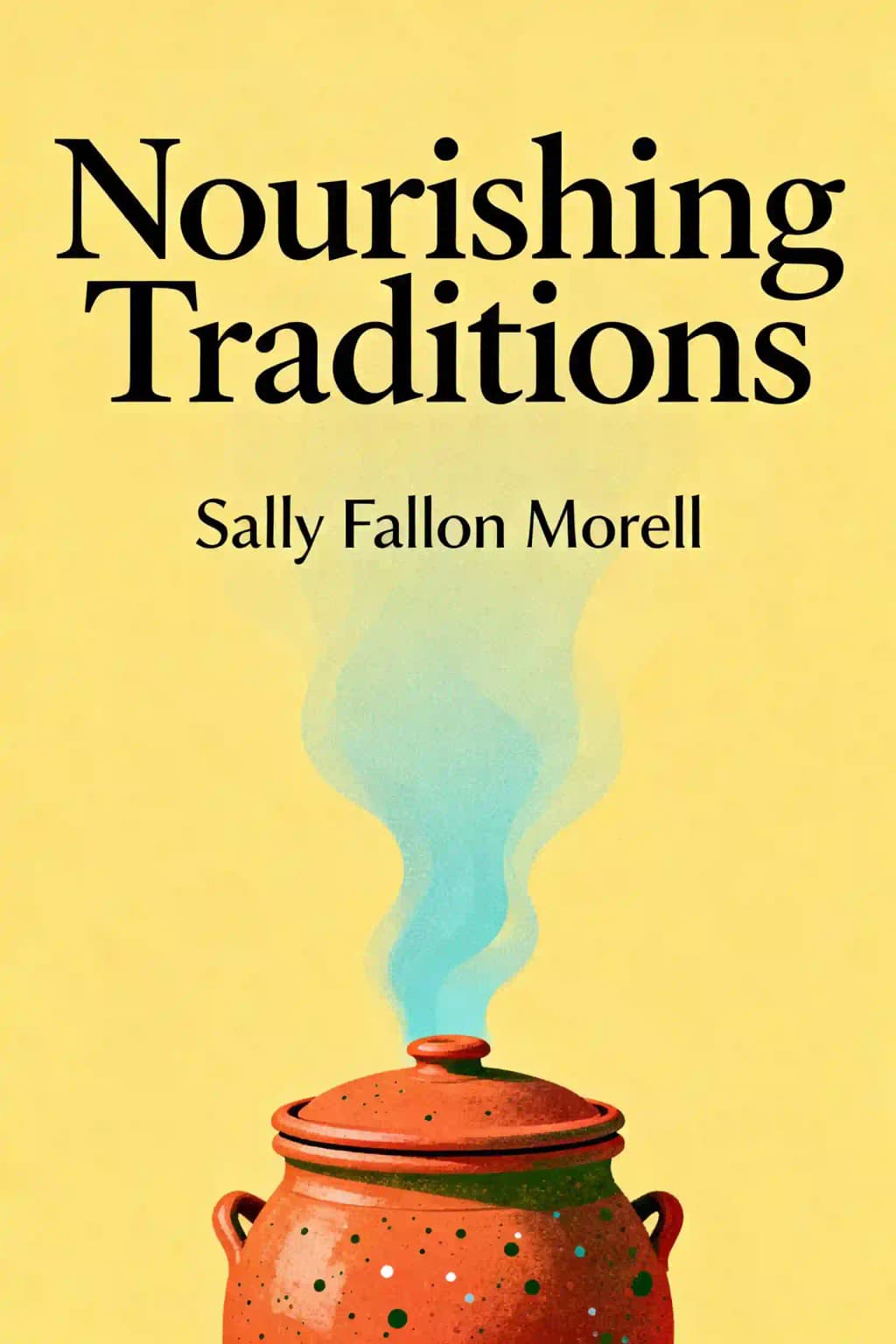
Revolutionizing nutrition by challenging conventional wisdom, "Nourishing Traditions" has sold 600,000+ copies while sparking a food revolution. What if everything you've been told about animal fats is wrong? Discover why this controversial cookbook created entire industries and transformed America's eating habits.
Sally Fallon Morell is the bestselling author of Nourishing Traditions: The Cookbook that Challenges Politically Correct Nutrition and the Diet Dictocrats and a pioneering voice in traditional foods and alternative nutrition. Her work draws from dentist Weston A. Price's research on indigenous diets, challenging conventional dietary wisdom by advocating for animal fats, raw dairy, fermented foods, and traditional preparation methods.
As founding president of the Weston A. Price Foundation—a nutrition education nonprofit with fifteen thousand members and nearly six hundred local chapters worldwide—Fallon Morell has transformed the conversation about healthy eating. She also founded A Campaign for Real Milk and serves as president of NewTrends Publishing. Her other notable works include Eat Fat Lose Fat (co-authored with Dr. Mary Enig) and Nourishing Broth (with Kaayla T. Daniel, PhD).
Fallon Morell holds degrees in English from Stanford University and UCLA. Nourishing Traditions has sold over 650,000 copies worldwide and remains a foundational resource in the traditional foods movement.
Nourishing Traditions is a cookbook and nutrition guide that challenges modern dietary advice by advocating for traditional food preparation methods used by healthy, non-industrialized societies. The book presents over 700 recipes alongside scientific research arguing that animal fats and cholesterol are essential nutrients, not health hazards. Sally Fallon Morell unites ancestral wisdom with independent research to show how traditional techniques like fermenting, soaking grains, and using raw dairy can restore health compromised by modern food processing.
Sally Fallon Morell is the co-founder and president of The Weston A. Price Foundation, holding degrees from Stanford University and UCLA. She wrote Nourishing Traditions to document the research of Dr. Weston A. Price, a 1930s-40s dentist who traveled the world studying traditional diets and discovered that remote villages eating unprocessed foods had distinct physical characteristics of health. Morell's mission is to challenge politically correct nutrition and provide families with evidence-based guidance on returning to ancestral eating patterns that promote robust health.
Nourishing Traditions is ideal for health-conscious individuals seeking alternatives to mainstream dietary advice, home cooks interested in traditional food preparation, and families wanting to improve their nutrition through whole foods. The book appeals to those willing to invest time in from-scratch cooking methods like making bone broth, fermenting vegetables, and culturing dairy. It's particularly valuable for people dealing with chronic health issues, parents concerned about their children's nutrition, and anyone questioning modern industrialized food systems.
Nourishing Traditions is worth reading for its comprehensive challenge to conventional nutrition wisdom and practical recipes, though it requires significant commitment. The book offers well-researched information on traditional foods' benefits and provides over 700 gourmet recipes that combine ancestral wisdom with modern application. However, readers should note that recipes often require time-intensive preparation, multiple sub-recipes, and specialty ingredients that may need ordering online. The book balances valuable nutritional insights with some controversial claims that mix legitimate science with debated positions.
Nourishing Traditions advocates several core principles that depart from modern dietary guidelines. The book promotes consuming saturated fats like butter and coconut oil for fat-soluble vitamins, using raw and cultured dairy products to preserve beneficial enzymes, and embracing animal foods from grass-fed sources for optimal omega-3/omega-6 balance. Additional key practices include sprouting, soaking, or fermenting grains to improve digestibility, lacto-fermenting vegetables and fruits to increase nutrients and beneficial bacteria, and soaking nuts and seeds to neutralize enzyme inhibitors.
The Weston A. Price Foundation provides the scientific and philosophical foundation for Nourishing Traditions, with Sally Fallon Morell serving as its co-founder and president. Dr. Weston A. Price was a dentist in the 1930s-40s who traveled to remote villages worldwide studying proper nutrition and discovered that communities eating traditional, unprocessed foods exhibited remarkable physical health. The Foundation educates the public about his research findings, which revealed that when these same villages adopted processed foods, they experienced the chronic illnesses associated with modern diets.
Nourishing Traditions recommends specific ancestral food preparation techniques that enhance nutrition and digestibility. These include making homemade bone broths for mineral-rich stocks, fermenting vegetables through lacto-fermentation to preserve food while increasing vitamins and beneficial bacteria, and culturing dairy products like yogurt and kefir to break down casein and increase enzyme content. The book also advocates soaking grains, nuts, and seeds before consumption to neutralize anti-nutrients, using raw dairy to preserve digestive enzymes, and preparing everything possible from scratch including salad dressings and condiments.
Critics note that Nourishing Traditions mixes legitimate scientific research with unsubstantiated claims, making it difficult to distinguish evidence-based advice from controversial positions. Reviewers commonly complain that recipes are impractical and time-consuming, often requiring multiple sub-recipes, specialty ingredients that must be ordered online, and extensive meal planning around varying fermentation times. The book's extreme approach—such as opposing coffee and chocolate due to caffeine—strikes some readers as overly fanatical. Additionally, Sally Fallon's direct, no-nonsense critique style can feel confrontational to those new to alternative nutrition perspectives.
Nourishing Traditions advocates a return to nutrient-dense whole foods prepared traditionally rather than industrially processed alternatives. The book strongly recommends grass-fed butter and raw virgin coconut oil over margarine and refined vegetable oils, whole raw milk over ultra-pasteurized skim milk, and organ meats and animal fats from pasture-raised animals. Additional recommended foods include cultured dairy products like yogurt and kefir, properly prepared grains through soaking or fermenting, lacto-fermented vegetables, bone broths, soaked nuts and seeds, and traditionally prepared sauces that promote digestion.
Nourishing Traditions directly contradicts mainstream dietary guidelines by claiming that animal fats and cholesterol are vital nutrients rather than health villains. While modern nutrition emphasizes low-fat, high-carb diets with polyunsaturated oils, Sally Fallon Morell argues that new-fangled vegetable oils are harmful and traditional saturated fats are essential for health. The book challenges the notion that pasteurization improves safety, advocates whole raw milk over processed alternatives, and argues that modern whole grain products can cause health problems unless properly prepared through soaking or fermenting. This represents a fundamental departure from politically correct nutrition recommendations.
Lacto-fermentation is a traditional preservation method featured prominently in Nourishing Traditions that uses beneficial bacteria to transform vegetables and fruits. This process preserves food without refrigeration while simultaneously increasing digestibility, vitamin levels, beneficial enzymes, and healthy bacteria content. Sally Fallon Morell emphasizes lacto-fermentation as a way to enhance nutrition beyond what fresh produce alone provides, though recipes require making homemade whey and managing varying fermentation times that can complicate meal planning. The technique represents a core principle of returning to ancestral food preparation methods.
Nourishing Traditions presents significant practical challenges for busy families despite its nutritional benefits. Recipes often require making multiple sub-recipes first—such as grinding your own wheat, making homemade yogurt, or preparing bone broth as an ingredient in other dishes—which demands considerable time investment and advanced meal planning. Many recipes call for specialty ingredients like piima, kefir cultures, kombucha, and kelp that must be ordered from specialty suppliers rather than purchased at regular grocery stores. However, some readers find value in selectively adopting certain practices rather than following the entire program.
저자의 목소리로 책을 느껴보세요
지식을 흥미롭고 예시가 풍부한 인사이트로 전환
핵심 아이디어를 빠르게 캡처하여 신속하게 학습
재미있고 매력적인 방식으로 책을 즐기세요
Americans have never eaten so poorly.
The diet dictocrats have created an artificial distinction.
No traditional culture was entirely vegetarian.
Chronic disease rates have skyrocketed.
Nourishing Traditions의 핵심 아이디어를 이해하기 쉬운 포인트로 분해하여 혁신적인 팀이 어떻게 창조하고, 협력하고, 성장하는지 이해합니다.
Nourishing Traditions을 빠른 기억 단서로 압축하여 솔직함, 팀워크, 창의적 회복력의 핵심 원칙을 강조합니다.

생생한 스토리텔링을 통해 Nourishing Traditions을 경험하고, 혁신 교훈을 기억에 남고 적용할 수 있는 순간으로 바꿉니다.
무엇이든 물어보고, 목소리를 선택하고, 진정으로 공감되는 인사이트를 함께 만들어보세요.

샌프란시스코에서 컬럼비아 대학교 동문들이 만들었습니다
"Instead of endless scrolling, I just hit play on BeFreed. It saves me so much time."
"I never knew where to start with nonfiction—BeFreed’s book lists turned into podcasts gave me a clear path."
"Perfect balance between learning and entertainment. Finished ‘Thinking, Fast and Slow’ on my commute this week."
"Crazy how much I learned while walking the dog. BeFreed = small habits → big gains."
"Reading used to feel like a chore. Now it’s just part of my lifestyle."
"Feels effortless compared to reading. I’ve finished 6 books this month already."
"BeFreed turned my guilty doomscrolling into something that feels productive and inspiring."
"BeFreed turned my commute into learning time. 20-min podcasts are perfect for finishing books I never had time for."
"BeFreed replaced my podcast queue. Imagine Spotify for books — that’s it. 🙌"
"It is great for me to learn something from the book without reading it."
"The themed book list podcasts help me connect ideas across authors—like a guided audio journey."
"Makes me feel smarter every time before going to work"
샌프란시스코에서 컬럼비아 대학교 동문들이 만들었습니다

Nourishing Traditions 요약을 무료 PDF 또는 EPUB으로 받으세요. 인쇄하거나 오프라인에서 언제든 읽을 수 있습니다.
Imagine a world where butter is celebrated rather than vilified, where fermented foods are medicine, and where traditional preparation methods transform ordinary ingredients into extraordinary nutrition. This is the revolutionary perspective of "Nourishing Traditions." While modern nutritional advice has us counting calories and avoiding fats, our ancestors thrived on diets that would horrify today's health experts. Yet they enjoyed robust health, perfect teeth, and freedom from the chronic diseases that plague us today. What did they know that we've forgotten? In the 1930s, dentist Weston A. Price traveled the globe studying isolated societies untouched by Western foods. Despite their diverse diets - from Swiss villagers to Pacific Islanders - all shared common nutritional threads. They consumed animal products (particularly organ meats), employed special preparation methods like fermentation, and valued certain "sacred foods" for pregnant mothers. The contrast with our modern diet couldn't be starker. Despite our obsession with "healthy eating," chronic disease rates have skyrocketed. One in three Americans suffers from allergies, one in ten develops ulcers, and nearly half the population battles chronic illness. What if the very dietary guidelines meant to protect us are actually making us sick?