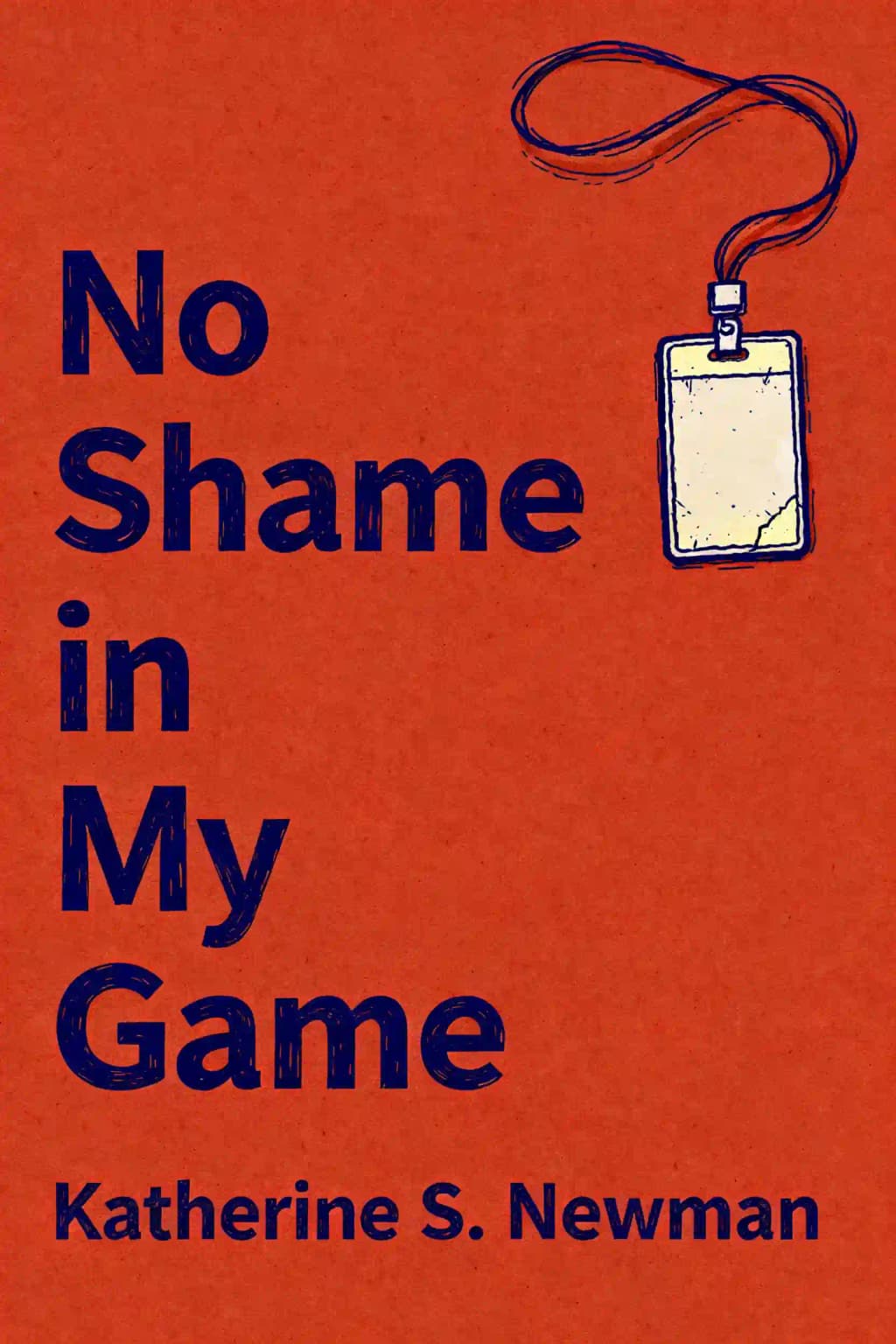
In "No Shame in My Game," Harvard anthropologist Katherine Newman dismantles poverty myths through intimate portraits of Harlem's working poor. Winner of the Robert F. Kennedy Book Award, this eye-opening study asks: Why do we stigmatize those fighting hardest to escape poverty's grip?
Katherine S. Newman, award-winning author of No Shame in My Game: The Working Poor in the Inner City, is a distinguished sociologist and academic renowned for her research on urban poverty and economic mobility.
A professor at Princeton University and former Provost of the University of Massachusetts system, Newman combines anthropological rigor with policy insights to expose systemic barriers faced by low-wage workers. Her work draws from decades of fieldwork, underscored by her roles at Columbia University, Harvard’s Kennedy School of Government, and Johns Hopkins University.
Newman’s expertise spans labor economics and social inequality, reflected in her eight books, including The Missing Class and Reskilling America, which examine near-poverty dynamics and workforce transitions. A frequent commentator on NPR and PBS, she received the Robert F. Kennedy Book Award and Sidney Hillman Prize for No Shame in My Game, praised for reshaping public discourse on poverty. Her research has been funded by the National Science Foundation and Russell Sage Foundation, cementing her authority in social policy circles.
No Shame in My Game by Katherine S. Newman explores the lives of low-wage workers in Harlem, challenging stereotypes about poverty and work ethic. Through interviews and fieldwork, it reveals how workers navigate economic instability, structural inequality, and social stigma while maintaining resilience and dignity. The book highlights survival strategies like resource-pooling and community networks, advocating for policy changes to support the working poor.
This book is essential for sociologists, policymakers, and anyone interested in urban poverty, labor markets, or social justice. Students studying economic inequality will gain nuanced insights into systemic barriers faced by low-wage workers, while general readers appreciate its humanizing narratives about often-overlooked communities.
Yes—Newman’s blend of rigorous research and compelling storytelling offers a groundbreaking perspective on poverty. It dispels myths about the “unmotivated poor” and provides actionable policy ideas, making it a vital resource for understanding socioeconomic challenges in urban America.
The book examines how systemic racism exacerbates economic marginalization for Black and Latino communities in Harlem. Newman highlights discriminatory hiring practices, unequal access to education, and cultural stereotypes that perpetuate cycles of poverty, while emphasizing workers’ agency despite these barriers.
Newman conducted qualitative research through:
Key strategies include:
While praised for its empathy, some critics note a reliance on anecdotal evidence over quantitative data. Others suggest deeper analysis of policy implementation could strengthen its arguments, though most acclaim its human-centered approach.
Newman reframes these jobs as valid career pathways requiring skill and dedication. Workers express pride in mastering tasks like inventory management or customer service, countering perceptions of “unskilled” labor.
Recommendations include:
With rising income inequality and debates about minimum wage, the book’s insights into systemic barriers remain urgent. Its focus on worker dignity aligns with modern movements for fair labor practices and economic justice.
While No Shame in My Game focuses on immediate struggles, follow-ups like Chutes and Ladders track long-term outcomes. Later books analyze how macroeconomic shifts (e.g., 1990s wage growth) impacted mobility trajectories.
These lines encapsulate workers’ pragmatism and undervalued societal roles.
저자의 목소리로 책을 느껴보세요
지식을 흥미롭고 예시가 풍부한 인사이트로 전환
핵심 아이디어를 빠르게 캡처하여 신속하게 학습
재미있고 매력적인 방식으로 책을 즐기세요
They don't need 'reengineering' of their values; they need support.
Survival takes precedence over advancement.
Health problems create employment instability.
It's not what you know, it's who you know.
Fast food jobs carry profound stigma.
No Shame in My Game의 핵심 아이디어를 이해하기 쉬운 포인트로 분해하여 혁신적인 팀이 어떻게 창조하고, 협력하고, 성장하는지 이해합니다.
No Shame in My Game을 빠른 기억 단서로 압축하여 솔직함, 팀워크, 창의적 회복력의 핵심 원칙을 강조합니다.

생생한 스토리텔링을 통해 No Shame in My Game을 경험하고, 혁신 교훈을 기억에 남고 적용할 수 있는 순간으로 바꿉니다.
무엇이든 물어보고, 목소리를 선택하고, 진정으로 공감되는 인사이트를 함께 만들어보세요.

샌프란시스코에서 컬럼비아 대학교 동문들이 만들었습니다
"Instead of endless scrolling, I just hit play on BeFreed. It saves me so much time."
"I never knew where to start with nonfiction—BeFreed’s book lists turned into podcasts gave me a clear path."
"Perfect balance between learning and entertainment. Finished ‘Thinking, Fast and Slow’ on my commute this week."
"Crazy how much I learned while walking the dog. BeFreed = small habits → big gains."
"Reading used to feel like a chore. Now it’s just part of my lifestyle."
"Feels effortless compared to reading. I’ve finished 6 books this month already."
"BeFreed turned my guilty doomscrolling into something that feels productive and inspiring."
"BeFreed turned my commute into learning time. 20-min podcasts are perfect for finishing books I never had time for."
"BeFreed replaced my podcast queue. Imagine Spotify for books — that’s it. 🙌"
"It is great for me to learn something from the book without reading it."
"The themed book list podcasts help me connect ideas across authors—like a guided audio journey."
"Makes me feel smarter every time before going to work"
샌프란시스코에서 컬럼비아 대학교 동문들이 만들었습니다

No Shame in My Game 요약을 무료 PDF 또는 EPUB으로 받으세요. 인쇄하거나 오프라인에서 언제든 읽을 수 있습니다.
Here's a scene that shatters our assumptions: thousands of people in Harlem, dressed for work, waiting at bus stops on a Monday morning in 1989. This wasn't supposed to exist. The prevailing narrative painted inner cities as "jobless ghettos" where welfare dependency ruled and work was a foreign concept. But what if the story we've been telling ourselves about poverty is fundamentally wrong? What if the problem isn't that poor people won't work, but that work itself has failed them? This is the uncomfortable truth at the heart of America's working poor - 7.4 million people who clock in, follow the rules, and still can't escape poverty. They're invisible not because they're hiding, but because acknowledging them forces us to confront a disturbing reality: in the world's wealthiest nation, playing by the rules doesn't guarantee survival. Think about who comes to mind when you hear "poverty." Probably not someone in a work uniform rushing to catch a bus. The working poor occupy a strange liminal space in American consciousness - too employed to provoke outrage like welfare recipients, too poor to have political clout, too scattered to organize like traditional labor. Yet they're everywhere: changing hospital linens, flipping burgers, bagging groceries, cleaning office buildings after dark. They live perpetually on the edge, where one sick child means unemployment, one missed rent payment means eviction, one car breakdown means catastrophe.