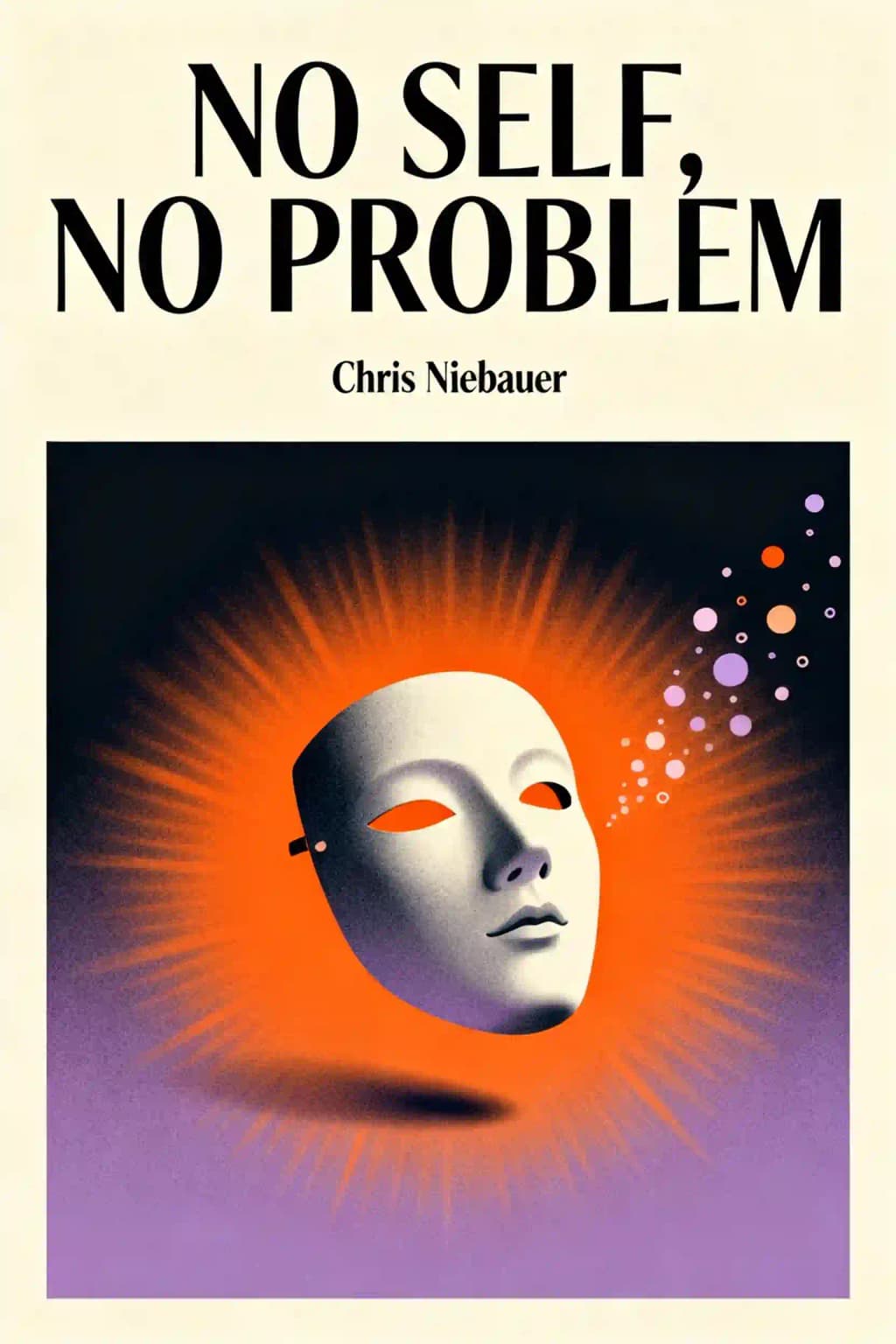
Discover why your "self" might be an illusion as neuroscience confirms what Buddhism taught centuries ago. This mind-bending exploration bridges Eastern wisdom with brain science, offering practical mindfulness techniques that challenge how we perceive identity. What if everything you think you are is just left-brain fiction?
Chris Niebauer, Ph.D., is a cognitive neuropsychologist and bestselling author of No Self, No Problem: How Neuropsychology Is Catching Up to Buddhism, a groundbreaking exploration bridging neuroscience and spirituality.
As a professor at Slippery Rock University for over two decades, he taught courses on consciousness, mindfulness, and brain lateralization, informed by his doctoral research on left- and right-brain differences. His work challenges conventional views of selfhood, arguing that anxiety and existential struggles stem from overidentifying with the "thinking mind" – a theme expanded in his companion No Self, No Problem Workbook.
A sought-after speaker, Niebauer has appeared on Deepak Chopra’s The Chopra Well and the top-rated podcast The One You Feed, reaching millions globally. His insights blend empirical rigor with Buddhist philosophy, offering practical frameworks to transcend ego-driven narratives.
The original No Self, No Problem became an Amazon top-10 bestseller across multiple categories, establishing Niebauer as a leading voice in mindfulness-based neuropsychology. He continues to advance this dialogue through his website (chrisneibauerphd.com) and academic collaborations.
No Self, No Problem explores how neuropsychology validates Buddhism’s claim that the “self” is an illusion. Chris Niebauer, a cognitive neuropsychologist, argues the left brain constructs a narrative self through language and categorization, while the right brain processes reality holistically. By recognizing this duality, readers can reduce mental suffering tied to ego-driven thoughts.
This book suits seekers of mindfulness, psychology enthusiasts, and anyone grappling with overthinking. It’s ideal for readers interested in bridging science (neuropsychology) and spirituality (Buddhism). Those seeking clarity on ego, identity, or left/right brain dynamics will find actionable insights.
Yes—it offers a fresh synthesis of neuroscience and Eastern philosophy, backed by Niebauer’s 22 years of academic research. The book provides practical exercises to detach from the “storytelling mind,” making abstract concepts like non-self accessible. Its Amazon bestseller status and companion workbook underscore its value.
Key ideas include:
Niebauer posits the left brain excels at logic, language, and constructing a coherent self-narrative. The right brain processes experiences holistically, without labels. Conflict arises when the left brain dominates, mistaking its stories for reality. Balancing both hemispheres reduces attachment to the illusory self.
Notable quotes include:
The book aligns with Buddhism’s anatta (no-self) doctrine, showing how modern neuroscience confirms ancient insights. Niebauer parallels the left brain’s “monkey mind” with Buddhist teachings on attachment, arguing both traditions aim to transcend egoic suffering.
Some neuroscientists argue Niebauer oversimplifies left/right brain dichotomies, as modern research emphasizes interconnectivity. Others note the book prioritizes conceptual understanding over meditation practices. However, most praise its ability to make complex ideas digestible.
By revealing anxiety as a product of the left brain’s storytelling, the book teaches readers to observe thoughts without identification. Exercises like mindful awareness weaken the ego’s grip, fostering inner calm. This aligns with therapies like ACT (Acceptance and Commitment Therapy).
Yes—the companion workbook offers practices like:
Niebauer describes consciousness as the substrate beneath thought—a silent awareness that observes the mind’s chatter. He contrasts this with the left brain’s “illusion of a thinker,” proposing true self is this observing presence.
Unlike typical self-help books that reinforce ego-driven goals, Niebauer’s work dismantles the notion of a fixed self. Its blend of neuropsychology and spirituality offers a scientifically grounded path to ego transcendence, distinguishing it from purely philosophical or religious approaches.
저자의 목소리로 책을 느껴보세요
지식을 흥미롭고 예시가 풍부한 인사이트로 전환
핵심 아이디어를 빠르게 캡처하여 신속하게 학습
재미있고 매력적인 방식으로 책을 즐기세요
The self we identify with is an illusion generated by our left brain.
We live under the direction of an interpreter.
We mistake these maps for reality itself.
Categories group continuous things by common features.
People fight and die for beliefs they mistake for reality itself.
No Self, No Problem Workbook의 핵심 아이디어를 이해하기 쉬운 포인트로 분해하여 혁신적인 팀이 어떻게 창조하고, 협력하고, 성장하는지 이해합니다.
No Self, No Problem Workbook을 빠른 기억 단서로 압축하여 솔직함, 팀워크, 창의적 회복력의 핵심 원칙을 강조합니다.

생생한 스토리텔링을 통해 No Self, No Problem Workbook을 경험하고, 혁신 교훈을 기억에 남고 적용할 수 있는 순간으로 바꿉니다.
무엇이든 물어보고, 목소리를 선택하고, 진정으로 공감되는 인사이트를 함께 만들어보세요.

샌프란시스코에서 컬럼비아 대학교 동문들이 만들었습니다
"Instead of endless scrolling, I just hit play on BeFreed. It saves me so much time."
"I never knew where to start with nonfiction—BeFreed’s book lists turned into podcasts gave me a clear path."
"Perfect balance between learning and entertainment. Finished ‘Thinking, Fast and Slow’ on my commute this week."
"Crazy how much I learned while walking the dog. BeFreed = small habits → big gains."
"Reading used to feel like a chore. Now it’s just part of my lifestyle."
"Feels effortless compared to reading. I’ve finished 6 books this month already."
"BeFreed turned my guilty doomscrolling into something that feels productive and inspiring."
"BeFreed turned my commute into learning time. 20-min podcasts are perfect for finishing books I never had time for."
"BeFreed replaced my podcast queue. Imagine Spotify for books — that’s it. 🙌"
"It is great for me to learn something from the book without reading it."
"The themed book list podcasts help me connect ideas across authors—like a guided audio journey."
"Makes me feel smarter every time before going to work"
샌프란시스코에서 컬럼비아 대학교 동문들이 만들었습니다

No Self, No Problem Workbook 요약을 무료 PDF 또는 EPUB으로 받으세요. 인쇄하거나 오프라인에서 언제든 읽을 수 있습니다.
What if the voice in your head-the one narrating your life, defending your choices, explaining your feelings-is actually lying to you? Not maliciously, but constantly, creatively, and completely beyond your awareness. In the 1960s, neuroscientist Michael Gazzaniga stumbled upon something extraordinary while studying split-brain patients. When he showed the word "walk" only to a patient's right brain, they stood up and started walking. Asked why, their left brain-which never saw the command-instantly invented an explanation: "I'm going to get a Coke." The patient believed this completely. This wasn't confusion or memory loss. It was something far more unsettling: the left hemisphere functions as an interpreter that fabricates explanations for behaviors it doesn't understand, creating a seamless narrative that feels absolutely true. This mechanism doesn't just explain our actions-it constructs the very sense of "I" that seems to be living your life. What we call the self might be the brain's most elaborate fiction.




