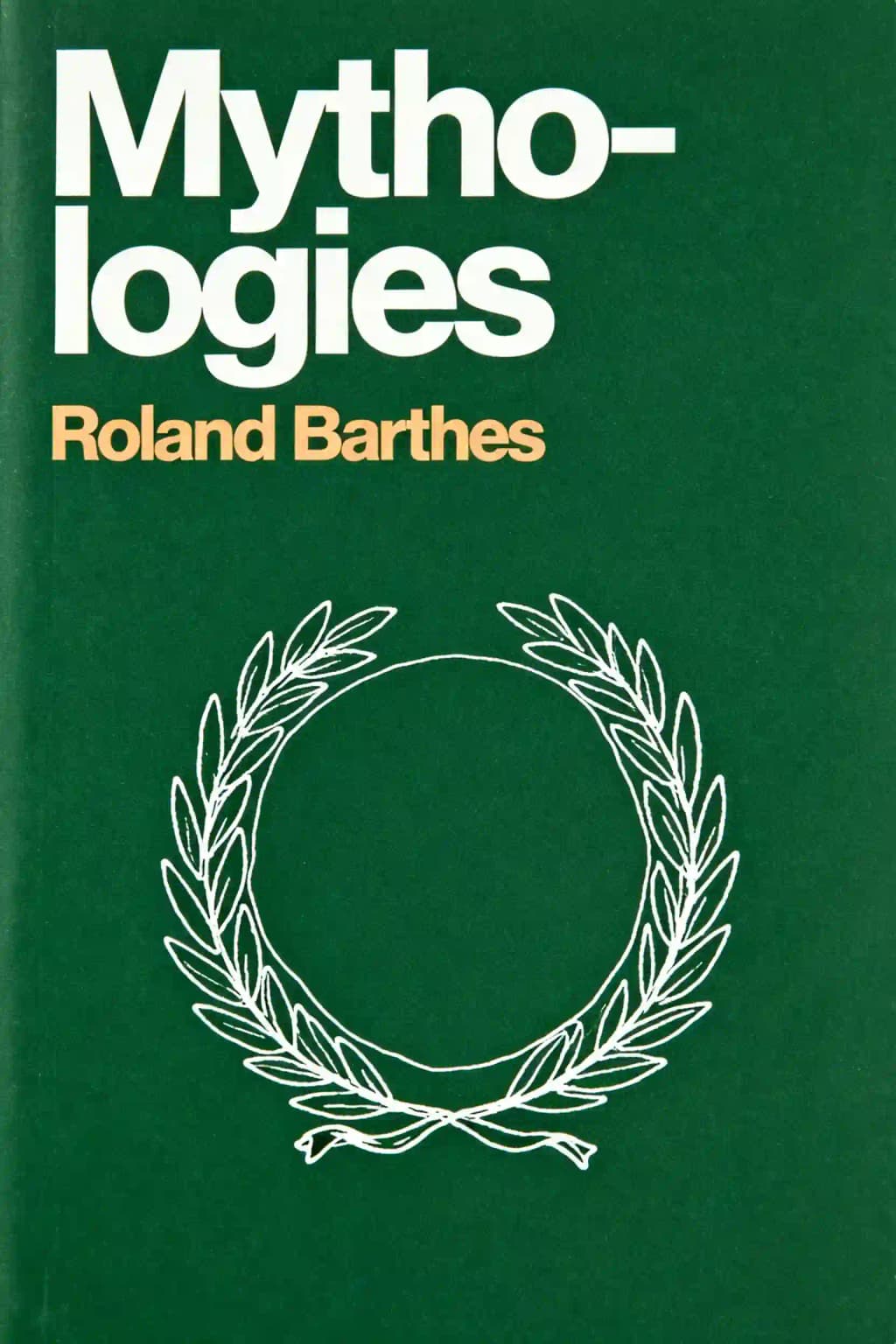
Roland Barthes' "Mythologies" dissects everyday symbols that secretly shape our thinking. This revolutionary 1957 collection transformed cultural criticism by exposing hidden ideologies in wrestling matches, advertisements, and royal yachts. What everyday "myths" are unconsciously controlling your perceptions right now?
Roland Gérard Barthes (1915–1980) was a French literary theorist and semiotics pioneer, best known for authoring Mythologies, a seminal 1957 essay collection dissecting the hidden ideologies within everyday culture.
A leading figure in structuralism and post-structuralism, Barthes combined literary criticism, philosophy, and cultural analysis to expose how mass media, advertising, and social rituals reinforce bourgeois norms. Educated at the University of Paris, he later taught at institutions like the École Pratique des Hautes Études and became the first chair of literary semiology at the Collège de France.
His works, including Writing Degree Zero, S/Z, and Camera Lucida, redefined textual analysis by emphasizing reader interpretation over authorial intent—a concept central to his influential essay "The Death of the Author." Mythologies revolutionized cultural studies, translating complex semiotic theory into accessible critiques of wrestling, soap ads, and wine consumption.
Barthes’ interdisciplinary approach remains foundational in media studies, literary criticism, and philosophy, with his books translated into over 35 languages and routinely cited in academic curricula worldwide.
Mythologies analyzes how everyday cultural objects, media, and practices become ideological myths that naturalize societal norms. Roland Barthes decodes these myths—from wrestling matches to detergent ads—to reveal how they reinforce bourgeois values by transforming history into "natural" truths. The book combines semiotic theory with cultural critique, arguing that myths disguise constructed power dynamics as universal realities.
This book is essential for students of semiotics, media studies, and cultural theory, as well as readers interested in decoding societal narratives. Barthes’ accessible yet rigorous approach appeals to critics, philosophers, and anyone examining how ideologies shape perception through symbols, advertising, and mass media.
Yes—it remains a foundational text for understanding cultural criticism and semiotics. Barthes’ blend of theoretical frameworks with real-world examples (e.g., analyzing Hollywood films or political rhetoric) offers timeless insights into how myths perpetuate power structures, making it relevant to modern discourse on media literacy and propaganda.
Barthes defines myth as a semiotic system where a form (e.g., an image, phrase, or object) is stripped of its original context and fused with a societal concept (e.g., patriotism, purity). This process naturalizes ideologies by making culturally constructed values appear inherent. For example, a French flag symbolizes patriotism, masking its historical contingencies.
Myths legitimize dominant ideologies by framing them as universal truths. Barthes argues that bourgeois institutions use myths (e.g., equating capitalism with “freedom”) to maintain control. By presenting these ideas as natural, myths suppress dissent and obscure their origins in specific historical or class interests.
Barthes suggests myths “steal” meanings by repurposing signs for ideological ends. For instance, a photograph of a soldier saluting becomes a myth of nationalism, erasing individual stories to serve a broader narrative. This distortion turns complex histories into simplified, emotionally resonant symbols.
Barthes dissects consumer goods (e.g., wine, toys) as myths that encode class values. A luxury car, for example, symbolizes not just wealth but moral superiority. These myths encourage conformity to capitalist ideals by linking identity to consumption, masking systemic inequalities.
This quote underscores Barthes’ view that myths are not ancient tales but everyday communicative acts. By framing myth as “speech,” he emphasizes its role in perpetuating ideologies through language, images, and rituals—from magazine covers to political slogans.
The book applies semiotics—the study of signs—to cultural analysis. Barthes breaks myths into signifiers (forms) and signifieds (concepts), showing how their arbitrary connections are framed as natural. This approach laid groundwork for analyzing media, advertising, and political discourse.
Some scholars argue Barthes’ analysis focuses narrowly on French bourgeois culture, overlooking global or cross-class dynamics. Others note his Marxist lens risks reducing complex phenomena to class struggle. However, his methodology remains influential for critiquing modern mythmaking.
Barthes’ framework explains contemporary myths like “viral” social media trends or political slogans (e.g., “Make America Great Again”). These myths simplify complex issues into emotionally charged narratives, demonstrating his enduring relevance in analyzing propaganda and digital culture.
While Mythologies uses structuralist semiotics, Barthes later embraced post-structuralism, rejecting fixed meanings. This shift is evident in The Death of the Author, which argues against assigning singular interpretations—a contrast to Mythologies’ focus on decoding ideological messages.
저자의 목소리로 책을 느껴보세요
지식을 흥미롭고 예시가 풍부한 인사이트로 전환
핵심 아이디어를 빠르게 캡처하여 신속하게 학습
재미있고 매력적인 방식으로 책을 즐기세요
Myth is depoliticized speech.
Wrestling portrays justice-not abstract justice, but an immanent, quantitative sequence.
The audience doesn't demand realism but perfect intelligibility.
To sweat is literally to think-except for Caesar.
Mythologies의 핵심 아이디어를 이해하기 쉬운 포인트로 분해하여 혁신적인 팀이 어떻게 창조하고, 협력하고, 성장하는지 이해합니다.
Mythologies을 빠른 기억 단서로 압축하여 솔직함, 팀워크, 창의적 회복력의 핵심 원칙을 강조합니다.

생생한 스토리텔링을 통해 Mythologies을 경험하고, 혁신 교훈을 기억에 남고 적용할 수 있는 순간으로 바꿉니다.
무엇이든 물어보고, 목소리를 선택하고, 진정으로 공감되는 인사이트를 함께 만들어보세요.

샌프란시스코에서 컬럼비아 대학교 동문들이 만들었습니다
"Instead of endless scrolling, I just hit play on BeFreed. It saves me so much time."
"I never knew where to start with nonfiction—BeFreed’s book lists turned into podcasts gave me a clear path."
"Perfect balance between learning and entertainment. Finished ‘Thinking, Fast and Slow’ on my commute this week."
"Crazy how much I learned while walking the dog. BeFreed = small habits → big gains."
"Reading used to feel like a chore. Now it’s just part of my lifestyle."
"Feels effortless compared to reading. I’ve finished 6 books this month already."
"BeFreed turned my guilty doomscrolling into something that feels productive and inspiring."
"BeFreed turned my commute into learning time. 20-min podcasts are perfect for finishing books I never had time for."
"BeFreed replaced my podcast queue. Imagine Spotify for books — that’s it. 🙌"
"It is great for me to learn something from the book without reading it."
"The themed book list podcasts help me connect ideas across authors—like a guided audio journey."
"Makes me feel smarter every time before going to work"
샌프란시스코에서 컬럼비아 대학교 동문들이 만들었습니다

Mythologies 요약을 무료 PDF 또는 EPUB으로 받으세요. 인쇄하거나 오프라인에서 언제든 읽을 수 있습니다.
Look around you. That wrestling match on television isn't just entertainment - it's an elaborate morality play. The frothy bubbles in your laundry detergent aren't just cleaning agents - they're selling you a fantasy of purity and luxury. In Roland Barthes' groundbreaking work "Mythologies," the ordinary transforms into the extraordinary through penetrating cultural analysis. Before semiotics became fashionable in academic circles, Barthes was dissecting the secret language of wrestling matches, soap advertisements, and children's toys - revealing how these seemingly innocent cultural artifacts perpetuate ideological systems. His revolutionary approach shows us that what appears "natural" in our daily lives is often carefully constructed to maintain existing power structures. By teaching us to read the hidden codes in everyday objects and practices, Barthes hands us the tools to see beyond surface meanings and question the "common sense" narratives that shape our world.