1장
Money: Our Most Powerful Psychological Drug
When two members of the band KLF burned 1 million in cash on a Scottish island in 1994, they unleashed a firestorm of public outrage. The act took just 67 minutes, yet people were so disturbed that many refused to believe real money had been destroyed-until laboratory tests confirmed the ashes were genuine banknotes. What made this act so transgressive wasn't merely the destruction of paper, but the obliteration of possibility-all the potential good that money could have manifested.
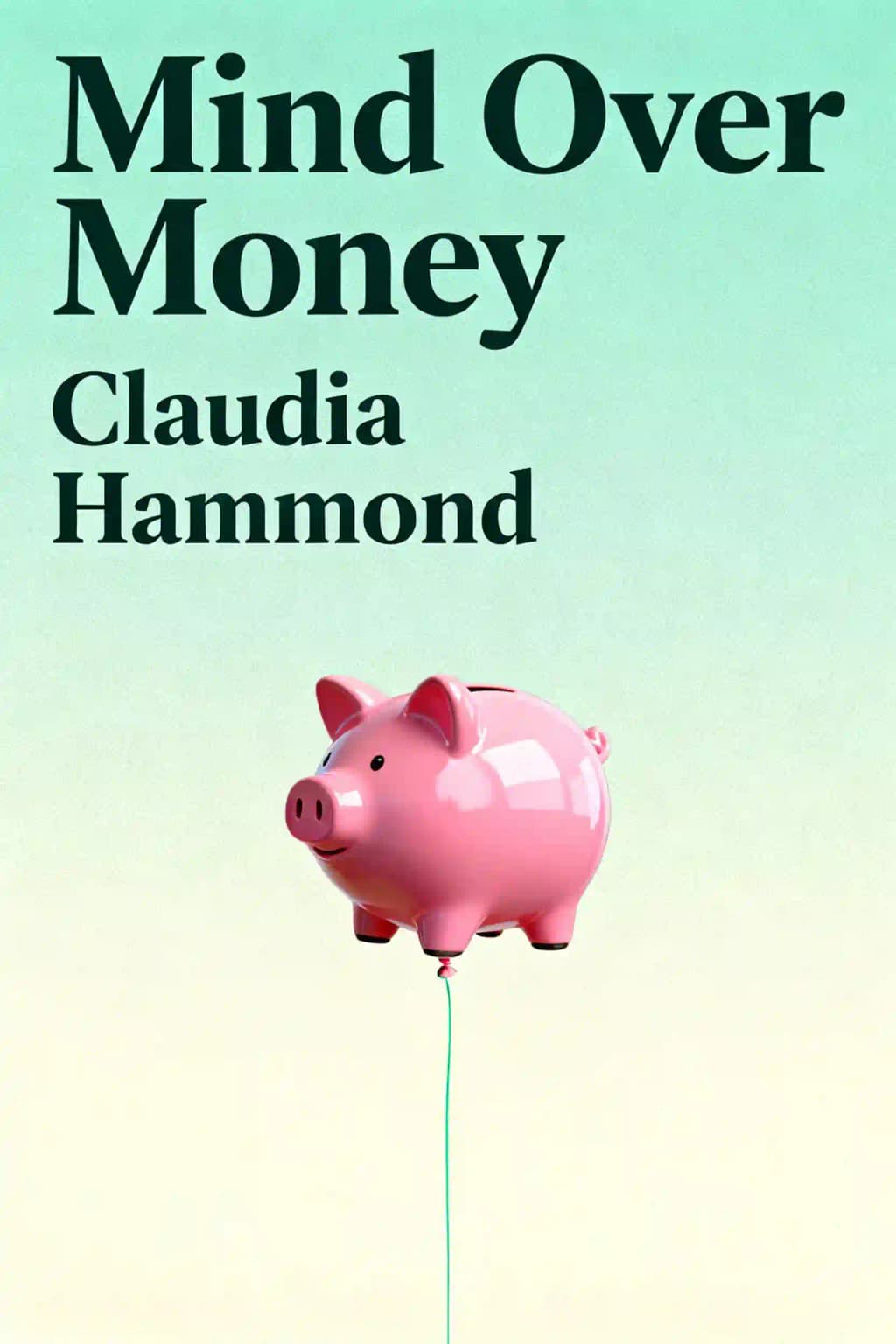
This visceral reaction reveals our profound psychological relationship with money. Though merely an abstract system of trust with no inherent value beyond our collective belief, money fundamentally shapes human behavior in ways we rarely recognize. It's simultaneously a tool we use and a drug we crave, triggering dopamine release in our brains much like chocolate or wine. Claudia Hammond's "Mind Over Money" has been praised by behavioral economists like Dan Ariely as "a fascinating and important exploration of how money molds our thinking," offering insights that have made it required reading in financial psychology programs worldwide.
2장
The Money Mindset: From Childhood to Old Age
Our relationship with money begins remarkably early. Even four-year-olds proudly display coins without understanding their purchasing power, valuing money for its own sake. By age six, children demonstrate sophisticated economic thinking-Finnish nursery school children spontaneously discussed ticket pricing strategies and DVD sales when creating a play, showing intuitive understanding of market forces. Similar studies in other countries reveal children as young as five can grasp basic concepts of trade and value, often incorporating money themes into their play and social interactions.
Children's understanding evolves through distinct stages. They first collect money simply to possess it, then save for specific items (like the author's childhood dream of a lute), and finally grasp money as representing future choice. Around age eight, children begin to understand the concept of earning interest and delayed gratification. By age ten, most can comprehend complex financial concepts like loans and debt. This progression reveals how we develop our lifelong financial psychology. Most children learn about money primarily by observing their parents rather than through direct discussion, as money remains a topic many families avoid discussing openly. Research indicates that children who receive regular allowances tied to chores develop stronger financial responsibility compared to those who receive unconditional money.
Research shows children with strong math skills develop better financial management abilities and are more likely to save and donate to charity as adults. Studies from multiple universities demonstrate that early exposure to basic financial concepts correlates with higher savings rates and better credit scores in adulthood. Interestingly, children from emotionally warm families, regardless of income level, are more likely to develop healthy financial habits-suggesting our emotional environment shapes our money psychology as much as direct financial education. Children who experience financial stress or witness frequent money conflicts between parents often develop anxiety-driven financial behaviors that persist into adulthood.
Money's psychological power extends throughout our lives, even serving as an "existential drug" that buffers our fear of death. In experiments, people who counted actual banknotes reported nearly 20% less death anxiety than those who counted paper with printed numbers. This effect appears strongest in individuals who experienced financial insecurity in their formative years. When primed to think about mortality, people overestimate coin sizes, require higher sums to consider someone "rich," and prefer immediate smaller payments over delayed larger ones-suggesting the comfort comes from possessing money rather than using it. Recent neuroimaging studies show that merely looking at money activates the same reward centers in the brain as food or social acceptance, highlighting money's deep psychological impact beyond its practical utility.
These early experiences and psychological patterns continue to influence financial decision-making well into retirement age, affecting everything from investment strategies to inheritance planning. Cultural differences also play a significant role, with some societies emphasizing collective financial responsibility while others prioritize individual wealth accumulation, demonstrating how deeply our money mindset is shaped by both personal and societal factors.
3장
The Physical and Psychological Power of Cash
Despite living in an increasingly digital world, physical money exerts a powerful psychological hold. We value different forms of money differently, with particular attachment to physical currency. A crisp new banknote provides visceral pleasure-"holding folding" as the British expression goes. Research shows we spend dirty, worn notes faster than clean ones, with their "dwell time" in wallets being measurably shorter.
The design of currency carries enormous symbolic weight as national identity markers. When the Bank of England announced removing Elizabeth Fry from the 5 note in 2013, leaving no women except the Queen on British currency, feminist Caroline Criado-Perez's campaign for Jane Austen on the 10 note triggered vicious backlash. This extreme reaction suggests money's deep connection to establishment power-having women represented on currency threatens some people's sense of the "natural order."
Our attachment to physical forms of money creates fascinating perceptual biases. When Britain decimalised its currency in 1971, studies showed people significantly overestimated the size of old coins compared to the new decimal ones, as if their minds believed old money bought more so must have been physically larger. This perception bias extends beyond currency changes-research consistently shows people worldwide overestimate the physical size of money, with the effect being stronger among poorer populations who attribute more precious quality to currency.
The shift toward cashless payments has profound psychological implications. Research shows paying with cards rather than cash leads to more impulsive purchases, particularly unhealthy foods. MIT students bidding on basketball tickets offered an average of $60 by card versus just $28 in cash. Card payments feel less "real," delaying the pain of spending and contributing to the tripling of personal debt in the UK between 1990-2013. As we transition toward cashless payments, our grip on "virtual" money remains looser than with physical currency.
4장
The Mental Accounting System
We don't treat all money the same way, despite what traditional economic theory might suggest. Instead, we create sophisticated "mental accounts" or "psychological moneybags" that assign different values and emotional weights to money depending on its source, intended purpose, and context. This cognitive framework explains numerous seemingly irrational financial behaviors that have long puzzled economists and financial advisors.
Consider this revealing thought experiment: most people wouldn't purchase replacement theater tickets if they lost their original $160 tickets, but would readily use a credit card if they lost $160 cash intended for those same tickets. Why this inconsistency? Because lost tickets feel like double-spending from the designated "entertainment account," while lost cash comes from a "general account" that still maintains available funds. This mental separation creates different emotional responses to objectively identical monetary losses.
These mental accounts serve multiple purposes, helping us make quick spending judgments and exercise financial self-control. A comprehensive study by Japanese researchers revealed that women typically divide their spending money into nine distinct mental accounts, including daily necessities, luxuries, security, education, healthcare, social obligations, personal development, emergency funds, and long-term savings. We tend to judge value within these specific accounts rather than across them. For instance, paying $8 for oranges at a highway rest stop during a family vacation feels acceptable because it comes from the "going out" account rather than "daily necessities," even though the same oranges might cost just $3 at your local grocery store.
Beyond permanent mental accounts, we create temporary accounts for specific transactions that remain psychologically open until the experience or transaction is complete. When purchasing flight tickets, we mentally assign an appropriate sum to that specific journey, creating a dedicated mental budget. Any unexpected additional costs-like extra baggage fees, airport parking, or emergency ground transportation due to a strike-feel like a "loss" on that specific account rather than being assigned to a general "rainy day" fund. This psychological mechanism explains why paying extra fees during booking feels more painful than if they'd been included in the initial price-once we've mentally established what we're paying, additional costs register as losses or penalties rather than part of the overall expense.
Our mental accounting system also explains why we often struggle to recategorize expenses, even when circumstances change. The author describes her personal difficulty in taking taxis despite selling her car and logically knowing that occasional taxi use would be substantially cheaper than car ownership. The mental account for "transportation" had been established with different parameters and spending thresholds that proved remarkably resistant to restructuring, even in the face of changed circumstances and clear financial benefits. This cognitive inertia demonstrates how deeply ingrained these mental accounting systems become in our financial decision-making process.
Understanding these mental accounting principles can help us make better financial decisions by recognizing when our psychological categorizations might be leading us astray from optimal economic choices. It also explains why financial windfalls, bonuses, and found money often get spent more freely than regular income, despite money being fundamentally fungible.
5장
The Psychology of Loss and Ownership
Most people acquire money through effort rather than inheritance, making us particularly reluctant to part with what we've earned. Daniel Kahneman's experiments reveal our profound loss aversion: when given $1,000 and offered either a guaranteed additional $500 or a coin toss for $1,000 more, most choose certainty. Yet when framed as having $2,000 with options to either lose $500 certainly or risk losing $1,000 on a coin toss, people prefer gambling despite identical outcomes. This demonstrates how presentation dramatically affects our financial decisions-we experience losses approximately twice as powerfully as equivalent gains.
Fascinatingly, this loss aversion appears to have evolutionary roots. On Cayo Santiago island, Professor Laurie Santos studied capuchin monkeys trained to exchange tokens for food. When presented with two traders offering identical outcomes (50% chance of one or two grapes), the monkeys overwhelmingly preferred (71%) the trader who appeared to offer a bonus grape rather than the one who sometimes removed a grape-despite identical results. This suggests loss aversion dates back 35 million years in our evolutionary history, possibly originating when losing food meant potential starvation.
The "endowment effect"-our tendency to value things more highly simply because we own them-creates irrational attachments to possessions that affect even major financial decisions. In car purchases, people prefer deals where they receive more for their trade-in ($6,500 versus $5,500) even when the final price difference is identical ($2,000 in both scenarios). Free trials exploit this same psychology-once we possess something, cancellation feels like a loss.
Even capuchin monkeys show this reluctance to trade, refusing to exchange fruit for oatcakes unless offered massive quantities in return. This deep-seated attachment to what we already own can actually impede commerce rather than facilitate it, as money sometimes fails to overcome our evolutionary instinct to hold onto possessions.
6장
How Price Shapes Perception
Our perception of value is easily manipulated by price, as demonstrated by the Rudy Kurniawan wine fraud case. For years, this young trader fooled wine experts by blending cheap burgundy with quality wine, placing it in old bottles with fake labels, and selling it for astronomical sums. Despite red flags-like bottles dated before vineyards existed-experts were deceived partly because high prices reinforced their expectations of quality.
Brain scans confirm this phenomenon: when wine drinkers were told they were tasting expensive vintages, their medial orbitofrontal cortex (the brain's pleasure center) showed increased activity, even when drinking cheap wine. The brain literally experiences more pleasure when we believe something is expensive. Studies show only experts prefer expensive wines in blind tastings-ordinary drinkers actually rate cheaper wines higher when unaware of price.
Price affects not just perception but actual performance. Students who paid $1.89 for energy drinks solved more anagrams than those who paid $0.89 for the identical product. Similarly, branded painkillers provide greater relief than identical generic versions-approximately one-third of pain relief comes from believing you're taking the premium product. Even discounted cold remedies seem less effective than full-price versions.
Stores strategically display items to exploit the "compromise effect"-our tendency to choose middle options. When presented with three laptops-expensive and sleek, cheap and basic, or mid-priced with decent features-most choose the middle option. Estate agents use this psychology by showing houses above your budget to make reasonably priced properties seem like bargains. Experiments confirm this effect: when choosing between two cameras, people split 50/50 between cheap and expensive models, but adding a third, premium option pushed 50-67% toward the mid-priced choice.
When we perceive something as overpriced, our insula-the same brain region that anticipates physical pain-activates. Neuroscientists studying brain activity during purchasing decisions found they could predict buying behavior with 60% accuracy by monitoring three brain regions: the right insula ("Ouch! Too much"), the nucleus accumbens (part of the reward circuit signaling "pleasure ahead"), and the medial prefrontal cortex (which integrates information about gains and losses).
7장
Money as Motivation: When It Works and When It Fails
We commonly assume financial incentives drive performance-governments use payment-by-results to help the unemployed find jobs, and corporations justify enormous executive bonuses as necessary motivation. But does money truly motivate us in all circumstances?
For simple physical tasks, financial incentives can be remarkably effective. In the 1950s, Harvard neurologist Robert S. Schwab found that offering $5 (equivalent to $35 today) nearly tripled men's endurance when hanging from a bar by their hands-from 50 seconds with verbal encouragement to almost two minutes with monetary reward.
However, financial incentives in education have shown mixed results. Harvard economist Roland Fryer's controversial $9.4 million experiment across five U.S. cities demonstrated that paying students for achievement yields inconsistent outcomes. In New York and Chicago, payments had minimal impact on grades. Washington saw improvements only in reading. The most successful program was in Dallas, where seven and eight-year-olds earned $2 per book read, resulting in improved reading comprehension-they were rewarded for completing specific tasks within their control, not just achieving grades.
Financial incentives have proven remarkably effective in health interventions, particularly for smoking cessation during pregnancy. While seemingly small rewards (as little as 3) can make people 50% more likely to change behaviors, the psychological power exceeds the monetary value. For pregnant smokers, financial incentives increased quit rates to 24% compared to just 6% with other methods.
The money serves not merely as currency but as tangible validation of success. Marie, a pregnant mother who quit smoking for vouchers worth 150, had previously ignored the potential 2,500 savings from not buying cigarettes. The difference? The vouchers represented external recognition of her achievement, structured differently in her mental accounting than everyday savings.
For Tom, an advertising professional spending 1,000 weekly on cocaine, a seemingly insignificant 2 payment for each clean drug test transformed his recovery. Despite the modest total (144 over six months compared to thousands saved by not buying drugs), these small payments represented symbolic victories in his battle against addiction. The power wasn't in the money's value but what it represented-external validation of success.
8장
When Money Undermines Motivation
While money can be a powerful motivator in certain contexts, using financial incentives inappropriately can backfire dramatically-either encouraging wrong behaviors or undermining intrinsic motivation.
In 1969 at Carnegie Mellon University, psychologist Edward Deci conducted a revealing experiment with student newspaper volunteers. One group was secretly paid 50 cents per headline while another worked unpaid. Surprisingly, the unpaid group became more efficient over time (reducing from 22 to 12 minutes per headline) while the paid group showed minimal improvement. When payments stopped, many paid students quit altogether.
In another experiment, Deci gave students Soma puzzles-intricate rosewood cube configurations-to solve. During breaks, researchers secretly observed their behavior through one-way mirrors. Initially, all students continued working on puzzles during breaks out of genuine interest. When one group began receiving payment for solutions, however, they spent break time reading magazines rather than engaging with the puzzles when not being paid. Their intrinsic motivation had disappeared.
Most tellingly, a third group receiving only verbal praise for their work showed the highest continued interest in the puzzles during breaks-even higher than the unpaid control group. The conclusion was striking: money can actually reduce motivation while appropriate praise enhances it.
When massive financial incentives are at stake, performance often deteriorates rather than improves. Dan Ariely demonstrated this in rural Tamil Nadu, India, where villagers played games testing memory, creativity, and dexterity with varying prize amounts. Those competing for life-changing sums performed significantly worse than those playing for modest rewards.
This "choking" phenomenon occurs because high-pressure situations cause people to shift from autopilot to conscious thinking-overthinking simple tasks. Brain scans reveal that large rewards trigger increased activity in the ventral midbrain's reward pathways, overwhelming working memory. Research at Berkeley found that those with naturally high dopamine levels are most susceptible to "choking," as additional reward-induced dopamine effectively causes an overdose in the striatum, impairing concentration.
Financial incentives can sometimes backfire completely through a phenomenon called "crowding out." In a famous Swiss referendum on nuclear waste facilities, researchers found that offering financial compensation ($2,000-$6,000 annually) to residents actually halved acceptance rates from 50% to 25%. The money had transformed a civic duty into a self-interested transaction, where residents judged the compensation insufficient for the perceived risk.
9장
The Poverty Trap: How Money Worries Impair Thinking
While many envy the wealthy, psychological tests and brain scans reveal something more disturbing: many people feel disgust toward the poor. Research on prejudice suggests we judge others through a two-step process: assessing their warmth (friend or foe) and their competence. We tend to see rich people as competent but lacking warmth, generating envy. The poor, often viewed as lacking both warmth and competence, elicit disgust.
In a shocking 2006 Princeton study, neuroscientists Lasana Harris and Susan Fiske found that when volunteers viewed images of homeless people, their brains' medial prefrontal cortex (which activates when recognizing other humans) failed to activate, while disgust-related areas lit up-essentially dehumanizing vulnerable people.
Money worries can dramatically impair cognitive function. In a revealing study, Indian sugar cane farmers scored 9-10 points lower on IQ tests during pre-harvest poverty than post-harvest prosperity-enough to drop them from "superior" to "normal" intelligence classification. Harvard psychologist Sendhil Mullainathan found that financial scarcity reduces mental "bandwidth," with an impact equivalent to 80% of pulling an all-nighter.
In another experiment at a New Jersey shopping mall, researchers asked participants to imagine facing either a $1,500 or $150 car repair bill. While wealthier participants performed equally well on cognitive tests regardless of the hypothetical bill amount, poorer participants scored significantly worse when imagining the larger expense-even though no real money was involved. This demonstrates how poverty creates mental preoccupation that impairs decision-making, creating a vicious cycle that makes escaping poverty even harder.
Princeton students participated in a version of the TV quiz show Family Feud, with one group being "time-rich" and another "time-poor." When the time-poor group was offered the chance to "borrow" seconds at the cost of losing double that time later, they took the offer despite performing well without it. Their awareness of scarcity led to irrational, short-term thinking-even among these highly intelligent individuals. This suggests poverty itself leads to poor decision-making rather than the reverse.
The prefrontal cortex, which helps us delay gratification for greater future rewards, functions differently under chronic stress-a condition common among the poor. When deciding between smaller immediate rewards versus larger delayed ones (temporal discounting), poorer people often choose immediate rewards not from foolishness but necessity. Research shows financial poverty may actually damage children's brain development, with scans revealing smaller volumes of gray and white matter in poorer children, though good parenting can mitigate these effects.
10장
Finding Balance: Using Money Wisely
Money can be a positive force when we direct it outward rather than inward. Research from Vancouver shows people who spent money on others felt significantly happier than those who spent on themselves, regardless of amount. Brain scans reveal fundamental differences between "altruists" who experience reward when giving money and "egoists" who feel rewarded when keeping it.
Public recognition drives charitable giving. Theaters like the Tricycle in London use tiered membership systems (Trailblazers, Innovators, Pioneers) where donors' names appear publicly. Research shows donors rarely exceed the minimum threshold for each tier, suggesting fundraisers should create multiple tiers to encourage people to "trade up." Online donation platforms demonstrate how public giving influences others-after a higher-than-average donation, subsequent donors give 10 more on average.
Saving money requires asserting mind over money more than any other financial behavior. While short-term saving for specific goals like weddings or holidays offers immediate gratification through anticipation, long-term saving for unforeseen circumstances or retirement proves much harder, offering little pleasure while requiring immediate sacrifice.
Our time perspective significantly influences saving behavior. People with future-oriented thinking save more, though this only works when combined with financial knowledge. We often delay saving by believing "now" is never the right time, assuming we'll have more money and time in the future-the "budget fallacy." We consistently underestimate both past and future spending.
The Sapir-Whorf hypothesis suggests language influences thought patterns, including financial behavior. Languages with "weak future-time references" (like German, Mandarin, Finnish) don't always require explicit future tense markers when context makes timing clear. Research by economist Keith Chen found people in countries with these languages save twice as frequently and accumulate 6% more of their GDP in savings than those speaking "strong future-time reference" languages like English.
After exploring saving strategies, Hammond reassures readers that spending money can also be beneficial for wellbeing-when done thoughtfully. Research suggests spending on experiences rather than material goods yields greater happiness. Our enjoyment of simple pleasures can be undermined by calculating their monetary value. Research by Elizabeth Dunn and Michael Norton shows that activities like listening to music become less enjoyable after calculating your hourly wage.
Thrift-sharing etymological roots with "thrive"-can enhance wellbeing when practiced mindfully. Psychologist Sonya Lyubomirsky suggests appreciating what we already own by actively recalling their benefits, recycling old possessions, or "renting happiness" through temporary luxuries like weekend sports car rentals. Yet occasional "retail therapy" has merit too-research confirms small treats temporarily improve mood, and people often strategically purchase gifts when feeling low.
Hammond concludes that while money can enhance life, it won't transform us. Controlling our relationship with money, rather than letting it control us, is the path to fulfillment.




![[0f72827a-c520-4535-852d-24ab426e98ff:c0000] the-psychology-of-money-by-morgan-housel_260801_124238.pdf p1-1](/_next/image?url=https%3A%2F%2Fd1y2du6z1jfm9e.cloudfront.net%2Fassets%2Fpodcast%2Fyellow.png&w=1024&q=50)
![[0f72827a-c520-4535-852d-24ab426e98ff:c0001] the-psychology-of-money-by-morgan-housel_260801_124238.pdf p1-1](/_next/image?url=https%3A%2F%2Fd1y2du6z1jfm9e.cloudfront.net%2Fassets%2Fpodcast%2Fgreen.png&w=1024&q=50)
![[0f72827a-c520-4535-852d-24ab426e98ff:c0002] the-psychology-of-money-by-morgan-housel_260801_124238.pdf p1-1](/_next/image?url=https%3A%2F%2Fd1y2du6z1jfm9e.cloudfront.net%2Fassets%2Fpodcast%2Fblue.png&w=1024&q=50)




![[the-psychology-of-money-by-morgan-housel:c0001] The Psychology of Money p1-1](/_next/image?url=https%3A%2F%2Fd1y2du6z1jfm9e.cloudfront.net%2Fassets%2Fpodcast%2Fpurple.png&w=1024&q=50)