1장
Cities: The Ultimate Human Creation
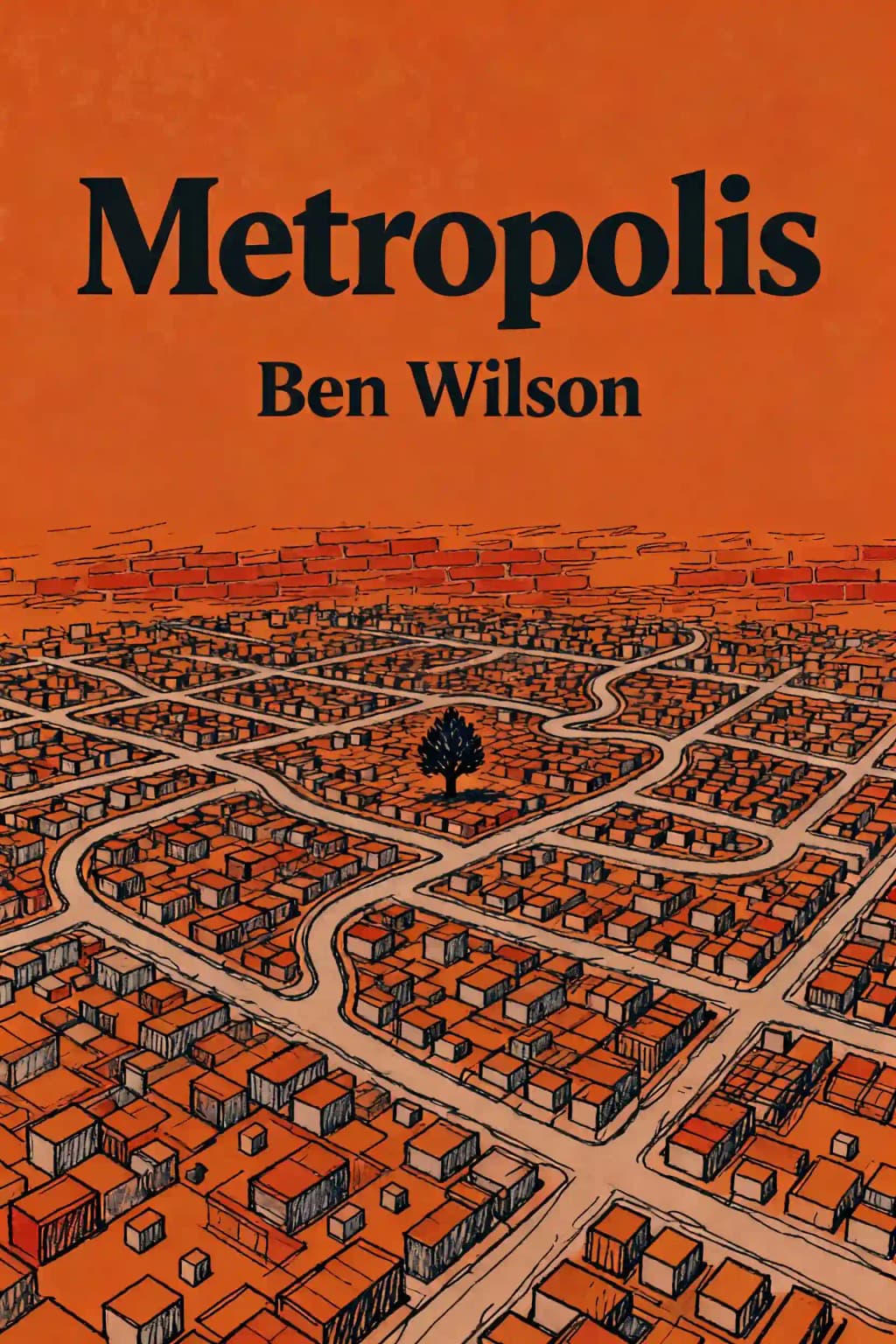
Ever wondered why cities have captivated humanity for millennia? Ben Wilson's "Metropolis" reveals the answer through a journey spanning 6,000 years of urban history. The book has earned praise from urbanists and historians alike, with The New York Times calling it "a sweeping history that traces the development of cities from Mesopotamia to the metropolises of today." Even Elon Musk referenced it when discussing his vision for sustainable urban development, noting how cities have always been humanity's greatest innovation engines. Wilson's work arrives at a pivotal moment-with over half of humanity now living in urban areas and projections suggesting 68% will be city-dwellers by 2050, understanding our relationship with cities has never been more crucial.
2장
The Birth of Urban Life: From Uruk to Global Networks
The story of cities begins in Uruk, humanity's first true urban center. Around 3000 BC, this Mesopotamian metropolis housed up to 80,000 people within three square miles, making it the most densely populated place on earth. Uruk wasn't just big-it represented humanity's triumph over nature, with nine-kilometer walls encircling neat gardens, extensive canal networks, and clay pipes beneath streets discharging waste outside the city. The labyrinthine narrow streets and windowless houses created an urban microclimate where shade and breeze mitigated the harsh Mesopotamian sun.
What drove this urban revolution? Recent discoveries reveal that climate change during the Holocene climatic optimum raised sea levels, transforming southern Iraq into expansive marshlands around 5000 BC. These wetlands became migration magnets, offering rich ecosystems with fish, mollusks, game, and land suitable for grain cultivation. When these marshes began drying out in the late fourth millennium BC, wetland farmers moved into the city, resulting in an urbanized population of 90% in lower Mesopotamia.
Uruk housed highly skilled craftsmen working with diverse materials-goldsmiths, copper smelters, metallurgists, and jewelers. Former wetland channels became urban canals connecting the city to the Euphrates, facilitating extensive trade networks. Materials arrived from astonishing distances: mother of pearl from Bahrain, precious metals from Anatolia and Arabia, lapis lazuli from Afghanistan (over 1,500 miles away), and carnelian from India.
The Epic of Gilgamesh explores fundamental questions about urban life: Why exchange primitive liberty for city comforts? What psychological cost comes with adapting to congested built environments? After his friend Enkidu dies, Gilgamesh seeks immortality by returning to nature, but ultimately learns death is unavoidable. He returns to Uruk with the realization that while individuals die, humanity's collective achievements-the city walls and written stories-are eternal.
By the early third millennium BC, Uruk's successful model had spawned rivals throughout Mesopotamia, creating competition for resources. Archaeological evidence shows maces, slingshots, and arrowheads in temple ruins. The region became characterized by shifting alliances between city-states that frequently battled over land and water. As cities competed for dominance, Lugalzagesi of Umma briefly ruled from Uruk before Sargon conquered the region and established history's first empire.
3장
Urban Utopias and Dystopias: The Dual Nature of Cities
Throughout history, cities have embodied contradictory visions-planned perfection versus decadent excess. The ancient Harappan civilization in modern Pakistan and India built remarkably advanced cities with grid patterns, citywide sewerage, and sophisticated water management systems. Every household had a flush toilet in the third millennium BC, with waste carried through terracotta pipes into underground sewers. Unlike other Bronze Age civilizations, the Harappans built cities without palaces, temples or monuments, focusing instead on civic infrastructure-granaries, assembly halls, bathhouses and marketplaces.
This utopian vision contrasts sharply with the Biblical view of cities as centers of sin and corruption. The Bible portrays cities as symbols of rebellion against God-from Cain's founding of Enoch to Nimrod's construction of Uruk, Akkad, and Babel. When the people of Babel attempted to build a tower reaching heaven, God scattered them and confused their languages, establishing cities as places of corruption and fragmentation.
This tension between utopian and dystopian visions continues today. Modern urban planners envision "smart cities" like South Korea's $35 billion Songdo, built on reclaimed land with high-tech infrastructure, pneumatic waste disposal, and millions of sensors feeding data to a central urban computer. Yet cities simultaneously offer anonymity and freedom from scrutiny, satisfying our baser drives-materialism, hedonism, and sexuality.
What gives great cities their energy is precisely their chaos, contradictions, and layers of history. They are simultaneously utopian and dystopian, powered by human vices and virtues alike. Their coarseness, contrasts and conflicts generate their excitement and vitality-they need both the grime and the glamour to maintain their electric spark.
4장
The Cosmopolitan City: Diversity as Urban Strength
Today's global cities are defined by their remarkable diversity-from Singapore to New York, 35-51% of residents are foreign-born, with Brussels reaching 62% and Dubai 83%. Throughout history, successful cities have thrived on the influx of outsiders bringing new ideas, practices, and global connections. Athens' fifth-century BC golden age was attributed to its openness, with over a third of its free population being foreign-born.
The Mediterranean's geography created a circulatory system of overlapping cultures and ideas, producing cities different from inland predecessors. Greek urbanization descended from southwest Asian traditions, transmitted via seafarers from the Levantine port of Byblos to Crete, then to mainland Greece's Mycenaeans. When these civilizations collapsed around 1200 BC, the Phoenicians emerged as maritime traders establishing posts throughout the Mediterranean and even venturing into the Atlantic, founding cities like Carthage, Cadiz and Lisbon.
Greek civilization spread through a constellation of 1,000 cities dotting the Mediterranean "like frogs round a pond," as Plato put it. At the heart of Greek society was the polis-more than just a city or city-state, it was a political, religious, military and economic community organized within an urban environment. For Greeks, the city represented humanity's natural state, superior to nature because it alone provided conditions for the good life and justice.
The agora was the beating heart of the Greek polis, where commerce, entertainment, legal proceedings and politics fused in a cacophony of activity. Athens' radical democracy required physical spaces that embodied its principles, like the Pnyx-a bowl-shaped hill with carved steps and a speaker's platform that could hold 6,000 citizens for the weekly assembly. This "tightly packed" space made visible the reality of popular sovereignty.
Despite its intellectual brilliance, Athens was physically unimpressive-"miserable old lanes" and mean houses crammed together in slum-like conditions. Yet this cramped intimacy, where private life was subordinated to public life, may have been one of Athens' strengths. The city's organic, irrational growth thrust diverse people together in ways that fostered innovation.
The independent city-states ultimately proved vulnerable to larger territorial powers. Alexander the Great spread Greek ideas and cities deep into Asia, founding dozens of new cities bearing the physical and ideological stamps of the ancient polis. The most enduring, Alexandria in Egypt, embodied Plato's vision of the Ideal City-built on mathematical principles with a rigid grid system. Within seventy years of its founding, Alexandria grew to become the world's largest city with 300,000 inhabitants, its magnificent port and lighthouse making it the fulcrum of trade between China, India, Arabia, Africa and the Mediterranean.
5장
Imperial Megacities: Rome's Grandeur and Excess
Rome embodied a culture where bigger was always better-bigger cities, buildings, ambitions, and appetites. The imperial megacity overwhelmed the senses with its gargantuan scale and endless pursuit of grandeur, becoming the ultimate expression of urban power and luxury.
The magnificent bathhouses epitomized the city's grandeur and excess. The Baths of Caracalla represented the pinnacle of this architectural form-a colossal complex clad in 17,000 tons of marble, featuring forty-meter-high vaulted ceilings, enormous granite columns, and spectacular decorations. These palatial spaces were democratic temples of leisure, open to all Romans regardless of class, where 60,000 citizens could bathe simultaneously. The baths offered not just cleansing but complete urban experiences-with libraries, lecture halls, exercise facilities, shops, snack bars, and gardens.
For ancient Romans, bathing was more than cleanliness-it was life itself. "Lavari est vivere" (To bathe is to live) proclaimed Roman graffiti. The emergence of imperial thermae coincided with Rome's growth to a million inhabitants, when natural water sources became inaccessible and polluted. In this dense metropolis of smoky, congested streets and cramped insulae (tenement blocks) rising up to ten stories, public baths offered essential respite.
Roman cities were theaters of spectacular entertainment, with 175 days annually devoted to public games by the fourth century. The Baths of Caracalla formed part of a deliberately designed route showcasing Rome's most impressive leisure structures: the baths themselves, the Circus Maximus (capacity 150,000-200,000), the Palatine, and the Colosseum (50,000). The Romans understood that leisure and spectacle aren't frivolities but essential ingredients of successful metropolises.
Bathhouses became the defining feature of Roman urban expansion into previously non-urbanized territories. In Britain, which lacked true cities before Roman occupation, bathhouses were among the first stone structures built in new settlements, providing both physical comfort and cultural indoctrination. The empire itself was fundamentally a network of Mediterranean-style towns connected by roads and bridges.
As Roman cities collapsed across Europe, the urban landscape dramatically transformed. Once-great cities like Londinium were abandoned completely, while provincial capitals shrank from 100,000 people to village size. Cities became targets for raiders rather than centers of commerce, as roads transformed from trade routes into invasion highways. Europe wouldn't recover Rome's level of urbanization, infrastructure, and living standards for 1,300 years, and no city would exceed a million inhabitants again until 1800.
6장
The Islamic Urban Revolution: Baghdad's Golden Age
As Western Europe retreated into urban insignificance following Rome's decline, a new era of urbanization swept across the rest of the world, exemplified by the rise of Baghdad. In 762, Caliph al-Mansur traced in cinders the outline of what would become the world's intellectual, spiritual, and commercial capital. Built in just four years by 100,000 workers, Baghdad rapidly grew to over a million inhabitants, perhaps reaching two million at its zenith.
Baghdad was designed as the perfect cosmic city-perfectly round with four equidistant gates connected by straight roads to the center. "It is as though it is poured into a mould and cast," marveled the essayist al-Jahiz. At its heart stood the imperial palace with its enormous green dome, surrounded by the "Forbidden City" reserved for the court and bureaucracy. The four gates pointed to the corners of the empire-Damascus Gate to Syria and the Mediterranean, Kufa Gate to Arabia, Khorasan Gate toward China, and Basra Gate to the Indian Ocean.
Baghdad's markets displayed the world's wealth through exotic foods, with merchants organized by specialty. The city's food culture defined its identity, from caliphs sampling street food incognito to poets composing elegies to recipes. Street food became fundamental to Baghdad's economy, as it would later be in megacities like nineteenth-century London with its thousands of specialized vendors.
Baghdad's intellectual explosion coincided with the introduction of papermaking from China, allowing unprecedented diffusion of written materials. The Bait al-Hikma-House of Wisdom-became the world's largest repository of manuscripts, preserving and expanding knowledge that might otherwise have been lost. This intellectual melting pot enabled breakthroughs like those of Muhammad ibn Musa al-Khwarizmi, whose work synthesized Greek geometry, Chinese mathematics and Indian number theory to create modern algebra.
The maritime Silk Road connecting the Persian Gulf to the Pearl River was more than just a trade network-it was a highway of learning. Cities across the monsoon seas, from Mombasa to Guangzhou, shared a striking cosmopolitanism. Saymur, south of present-day Mumbai, housed 10,000 immigrants from Oman, Siraf, Basra and Baghdad alongside the native population. The confederation of Sri Vijaya dominated the crucial crossroads around the Straits of Malacca and Sunda, with Palembang on Sumatra as its metropolis where traders from the Abbasid caliphate and Tang dynasty encountered one another.
In the early thirteenth century, Genghis Khan's Mongol conquests disrupted this urban network. Major cities fell in succession: Bukhara (300,000 people) was burned, Samarkand received similar treatment, Nishapur was bombarded before being razed, and Balkh was destroyed. Baghdad's fall in 1258 saw the Abbasid caliph rolled in a carpet and trampled to death, ending the exquisite city of learning.
7장
Medieval Trading Cities: Europe's Urban Renaissance
Lubeck exemplifies the "free city" that formed the bedrock of Europe's rise to global dominance-a small, efficient, prosperous, and militarized self-governing entity shaped by conflict. Lubeck began as a frontier settlement in 1143, founded on a defensible river island during campaigns to replace Slavic inhabitants with German and Danish colonizers. After burning down in 1157, it was refounded by Henry the Lion, Duke of Saxony, who granted it remarkable autonomy.
The city flourished as a jumping-off point for crusaders and settlers in the "drive to the East," serving as a base for conquest, conversion, and colonization. This connection between holy war and urban development fueled Europe's urban explosion, with 300 new towns created every decade in the thirteenth century. The Crusades exposed Europeans to sophisticated Islamic cities and created lucrative trading opportunities for Italian maritime republics like Venice, Genoa, and Pisa.
The corporate civic ideal of Lubeck was written in brick. After gaining independence, citizens built the Marienkirche, the largest brick church ever constructed, as a Gothic statement of mercantile power that dwarfed the bishop's cathedral. The impressive Rathaus celebrated merchants and civic dignitaries rather than warriors and kings. Civic spirit manifested in institutions like the Holy Spirit Hospital, founded in 1286 by wealthy merchants.
German merchants organized themselves into guilds called Hanse to exploit Baltic trade routes. The London kontor (Steelyard) was a massive walled free-trade zone in the heart of London, where Hanseatic merchants lived in princely wealth. From London, the Hansa controlled England's wool trade, while other kontors in Bergen controlled cod, Novgorod provided access to Russia, and Bruges connected to Europe's textile markets and emerging banking systems.
The Black Death paradoxically revitalized cities. Rural peasants migrated to fill vacant artisanal positions, wages rose, rents fell, and food demand increased. Survivors invested profits in magnificent buildings and art-much of Venice and Lubeck's beauty stems from this boom. Lubeck's 20,000 citizens were bound together by their shared vulnerability, functioning as an efficient corporate entity organized around guilds and fraternities representing various trades and professions.
Unlike the cosmopolitan, sprawling trading cities of the Indian Ocean's free-trade zone, European urbanization was distinctively militaristic. The motto "In the name of God and Profit" captured how European cities secured monopolies through force rather than competition. Cities excelled in naval technology, developing the Venetian galley, Hanseatic cog, and Portuguese caravel that revolutionized warfare and commerce.
Small, efficient cities like Lubeck reached their zenith in the fifteenth century but found themselves increasingly disadvantaged against centralized states with vast manpower reserves. Once-impregnable walls proved no match for modern artillery. The Hanseatic League faced stronger kingdoms like England, Sweden and Denmark, with many member cities losing autonomy to consolidating states like Poland and Prussia.
8장
Global Cities and Commerce: The First Wave of Globalization
Lisbon transformed from a European backwater to the continent's most exciting city by the late 15th century. Prince Henry (later called the Navigator) directed Portuguese caravels to explore Africa's Atlantic coast, reaching the Gulf of Guinea by the 1470s and the Congo in the following decade. Bartolomeu Dias's 1487 expedition solved the riddle of reaching the Indian Ocean by swinging west into the Atlantic and using westerlies to round the Cape of Good Hope.
Vasco da Gama's arrival in Calicut revealed a world far more interconnected than the Portuguese imagined. When his men unpacked their meager gifts-striped cloth, hats, coral, and foodstuffs-the Samoothiri's officials laughed, noting that the poorest Meccan merchant brought better presents. Calicut was a vast commercial metropolis where traders from across the monsoon seas had gathered for a millennium, making Lisbon seem provincial by comparison.
Portuguese expeditions grew increasingly violent. Malacca, the "Eye of the Sun," stood as the greatest prize in the Indian Ocean-a sprawling city of 120,000 people where 84 languages were spoken. In July 1511, Albuquerque's fleet attacked the city. After an initial repulse, his forces returned with disciplined pike squares advancing street by street under cannon cover, sparing no Muslim inhabitants. Just 900 Europeans had defeated 20,000 defenders, securing Portugal's control over global trade routes.
The wealth of the world poured into Lisbon, creating a wild, boisterous city where unbelievable wealth lived alongside poverty. Jan Taccoen, visiting in 1514, marveled at elephants in the streets, royal processions featuring exotic animals, thousands of African and Brazilian slaves, and diplomats from across the globe. As the first imperial metropolis exploiting global markets, Lisbon displaced the great cities of Asia and the Americas while creating a network of satellite cities across the planet.
When Spanish conquistadors first glimpsed Tenochtitlan in 1519, soldier Bernal Diaz described it as "an enchanted vision" of things "never heard of, seen or dreamed of before." This metropolis of 200,000 people-larger than Paris-rose from Lake Texcoco like jewels reflecting sunlight. The city was built on a rocky island connected to the mainland by bridges and causeways, alongside floating hydroponic gardens called chinampas that fed the population.
Tenochtitlan's urban planning was overseen by the calmimilocatl, who maintained building standards and the sacred gridiron pattern as the city expanded beyond its original rocky island. More than mere civic planning, the city's design was cosmological-the "foundation of heaven" and center of the universe. Technologically advanced, Tenochtitlan featured terracotta aqueducts bringing fresh mountain water, pristine avenues maintained by laborers, and public toilets whose waste fertilized the chinampas.
Amsterdam transformed from an obscure village to a global metropolis through innovative thinking and openness to refugees who brought skills and connections. The Dutch East India Company (VOC), founded in 1602 as the world's first publicly listed corporation, created a globe-spanning trade empire with bases across Asia and Africa. Amsterdam pioneered modern banking through the Amsterdamsche Wisselbank (1609) and developed the world's first securities market with sophisticated financial instruments like futures and options.
9장
The Birth of Modern Urban Culture: Coffee Houses and Sociability
Caffeine flows through the veins of the modern city. Coffee houses create a unique social alchemy in cities, serving as "third places" between home and work where people can socialize, work, read, or simply be alone in public. From South Korea's cafe culture that created new urban tribes to Tehran's anonymous-looking cafes that provide havens for distinct communities, these spaces embody the essence of private-public urban space.
Coffee's journey to ubiquity began in Ethiopia before spreading through Sufi monasteries and into Constantinople by the 1550s. When English merchant Daniel Edwards brought coffee to London in 1651, his servant Pasqua Rosee established western Europe's first coffee house in 1654. Within decades, London had nearly 1,000 coffee houses, spreading across Britain and to cities worldwide. These establishments transformed urban life by creating new spaces for sociability outside traditional institutions. For just a penny, patrons could sip coffee while reading newspapers and engaging in remarkably civil debate regardless of social rank.
Coffee houses revolutionized London's economy by creating spaces where financial innovation could thrive. Jonathan's Coffee-House became London's first securities exchange when stockbrokers proved too rowdy for the Royal Exchange. These establishments posted commodity prices and currency rates, democratizing access to markets. Garraway's conducted auctions for newly arrived cargo, while Lloyd's specialized in shipping news, eventually becoming the world's premier insurance market.
Coffee houses catered to diverse interests and social groups, creating specialized communities across London. Writers gathered at Will's and Button's, actors at Duke's, artists at Old Slaughter's, while fashion-conscious courtiers frequented White's in St. James's Street. As Royal Society fellow John Houghton observed, "Coffee-houses make all sorts of people sociable, the rich and the poor meet together."
The London that rose from the ashes of the 1666 fire sparked fierce debate about urban life. Critics saw a "Forest of Wild Beasts" where anonymity enabled "villainies, cheats and impostures," while defenders like the Earl of Shaftesbury celebrated how urban life polished people through "amicable collision." This new urban civility manifested physically in London's West End, with its neoclassical Palladian architecture reflecting restraint and self-mastery. This was the birth of the recognizably modern city, governed by market forces rather than ancient authorities, and shaped around the leisure activities and tastes of its citizens.
10장
Industrial Metropolis: The Urban Revolution
Manchester and Chicago emerged as the "shock cities" of the nineteenth century, heralding a new urban-industrial era that horrified and fascinated observers. General Charles Napier described Manchester as "the entrance to hell realised" with its 500 chimneys exhaling coal smoke, while visitors to Chicago were assaulted by its noise, stench, and industrial brutality. These cities represented the dark side of industrialization, where human beings were reduced to "wage slaves" working in appalling conditions.
The industrial cities grew so rapidly that they lacked basic civic amenities, sanitation, and public spaces that had defined urban centers for millennia. Angel Meadow exemplified these horrors with houses built back-to-back without drainage, multiple families crammed into damp cellars, and just two outdoor toilets serving 250 residents. Disease flourished in these conditions: typhoid, dysentery, smallpox and cholera ravaged populations, with infant mortality reaching 60% and life expectancy plummeting to twenty-six years-far worse than rural areas.
The industrial city's topography reflected stark social divisions. Commercial centers were surrounded by "a huge cordon of beastliness and filth," driving middle-class families to flee to increasingly distant suburbs. Manchester pioneered transportation innovations-the first omnibus service (1824) and passenger rail station (1830)-that facilitated this class segregation.
Despite their grim conditions, industrial cities offered freedom and self-reinvention. Even Engels recognized that slums liberated people from "happy vegetation in the countryside." Hippolyte Taine observed that Manchester workers, though living shorter lives than French peasants, enjoyed "more ideas and notions of all kinds, more intelligence in social, political, and religious matters." Urban density forced people together, creating vibrant street life-"that great recreation room" as Robert Roberts called it.
Industrial cities fostered remarkable working-class self-organization. William Aitken, a former child laborer, noted how industrialization brought workers together to become "sons of freedom" who collectively improved their conditions. Manchester saw hundreds of mutual aid societies emerge, with the Manchester Unity Friendly Society growing to 300,000 members by 1860, providing sickness benefits, medical help, and organizing libraries and social activities.
Urban working-class civic society directly fostered radical politics. Chicago's Irish community became a dominant force in city elections, the Democratic Party, and organized labor. German immigrants' Arbeiterverein organized both massive picnics and major strikes, while Turnverein halls taught socialism alongside gymnastics. Manchester, despite being known for free-market capitalism, hosted the first Trades Union Congress in 1868 and helped found the Labour Party.
Modern mass sports emerged from working-class urban culture. Manchester United began as Newton Heath, a railway company team, while Manchester City started as a church initiative to divert youths from street gangs. Football, once considered antisocial when played in streets, became organized through churches, unions, neighborhoods, and factories. These sports created unprecedented civic pride, with massive stadiums becoming urban cathedrals-Manchester's Old Trafford, "the Theatre of Dreams," opened in 1910 as the world's first planned football stadium seating 80,000.
11장
Reimagining the Metropolis: From Paris to New York
The idealized image of Paris can cause severe disappointment when confronted with reality. In 2006, the Japanese embassy established a hotline for tourists suffering "psychiatric breakdown" upon discovering the city's less romantic aspects. Even Sigmund Freud experienced this disillusionment in 1885, writing that Paris had been "the goal of my longings" but upon arrival he felt terrified by crowds and found Parisians "unapproachable and arrogant."
Nineteenth-century Paris was a city of contrasts. Notre-Dame cathedral shared the tiny Ile de la Cite with 15,000 poor workers living in congested squalor. The medieval streets were "tortuous paths" resembling insect tunnels through fruit, overcrowded and unsanitary, leading to 20,000 deaths from cholera in 1832 alone. Yet within this chaotic medieval framework existed pockets of "ultra-civilised" urban living-the Louvre's art collections, fashion boutiques, and gastronomic delights that made Paris the most seductive city on earth.
In 1853, Georges-Eugene Haussmann was appointed by Emperor Napoleon III to transform Paris. His brutal creative destruction involved cutting wide boulevards through medieval neighborhoods while building an extensive underground infrastructure. Haussmann also created four magnificent parks, added 600,000 trees and 4,500 acres of open space, ensuring no Parisian would be more than ten minutes from greenery. This transformed Paris into a beacon of modernity, attracting unprecedented tourism.
While Haussmann created a magnificent central Paris, he also created two distinct cities. "We have built within Paris two cities, quite different and hostile: the city of luxury, surrounded, besieged by the city of misery," wrote Louis Lazare. The working classes were pushed to the periphery, to "veritable Siberias" lacking basic amenities.
The Impressionists captured Paris's sensory overload with rapid brushstrokes reflecting the urbanite's experience. Manet's paintings like "A Bar at the Folies-Bergere" reveal both the vibrancy and troubling disconnection of modern urban life, showing figures occupying shared spaces while remaining psychologically isolated. Georg Simmel described the "blase outlook" as a psychological defense against metropolitan overstimulation, where people develop reserve and suspicion to protect themselves from the constant barrage of stimuli.
New York City emerges as the quintessential vertical metropolis, both tough and romantic, a concrete fortress that bewitches despite its forbidding nature. The city's soaring architecture perfectly fills the vertical frame of early cinema, with Edison's 1903 documentary capturing Manhattan's horizontal panorama from the water, revealing a forest of towers that had already dwarfed Trinity Church's once-dominant spire.
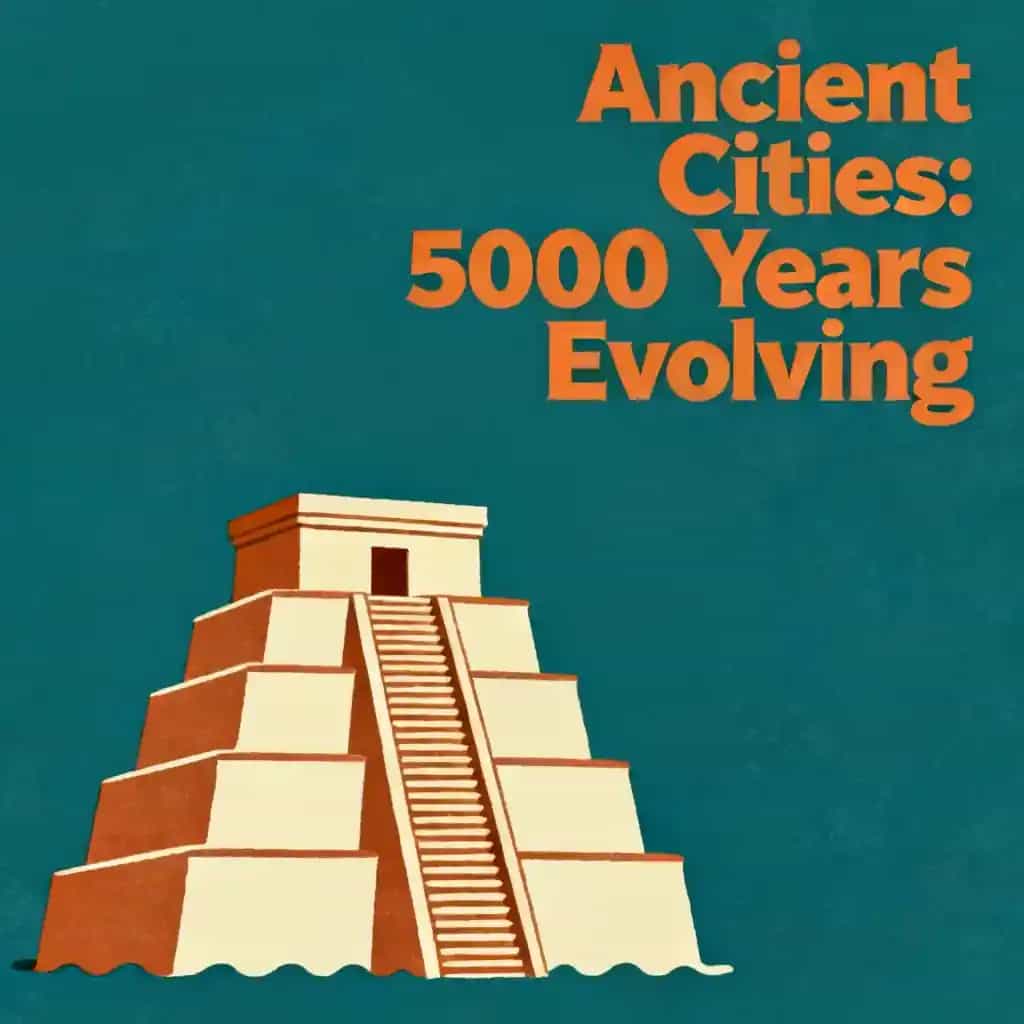
By the mid-1920s, New York had displaced London as the world's financial, commercial and cultural capital, with 2,479 high-rises compared to Chicago's mere 479. The 1916 Zoning Law had transformed skyscraper design, forcing architects to create tapered, setback buildings that preserved light at street level. These "neo-American" ziggurats represented a departure from European styles, connecting instead to Mesoamerican pyramids.
The 1920s skyscraper boom ended abruptly with the 1929 crash and Great Depression. The Bank of Manhattan Trust Building, Chrysler Building, and Empire State Building-once "the material embodiment of the late bull market"-became "ironic witnesses of collapsed hopes." Building investment plummeted from $4 billion in 1925 to just $400 million by 1933. The Empire State Building, nicknamed "The Empty State Building," symbolized the collapse of the vertical city dream.






![[PDF] The Pre-Industrial City - Urban Leadership Foundation](/_next/image?url=https%3A%2F%2Fd1y2du6z1jfm9e.cloudfront.net%2Fassets%2Fpodcast%2Fgreen.png&w=1024&q=50)