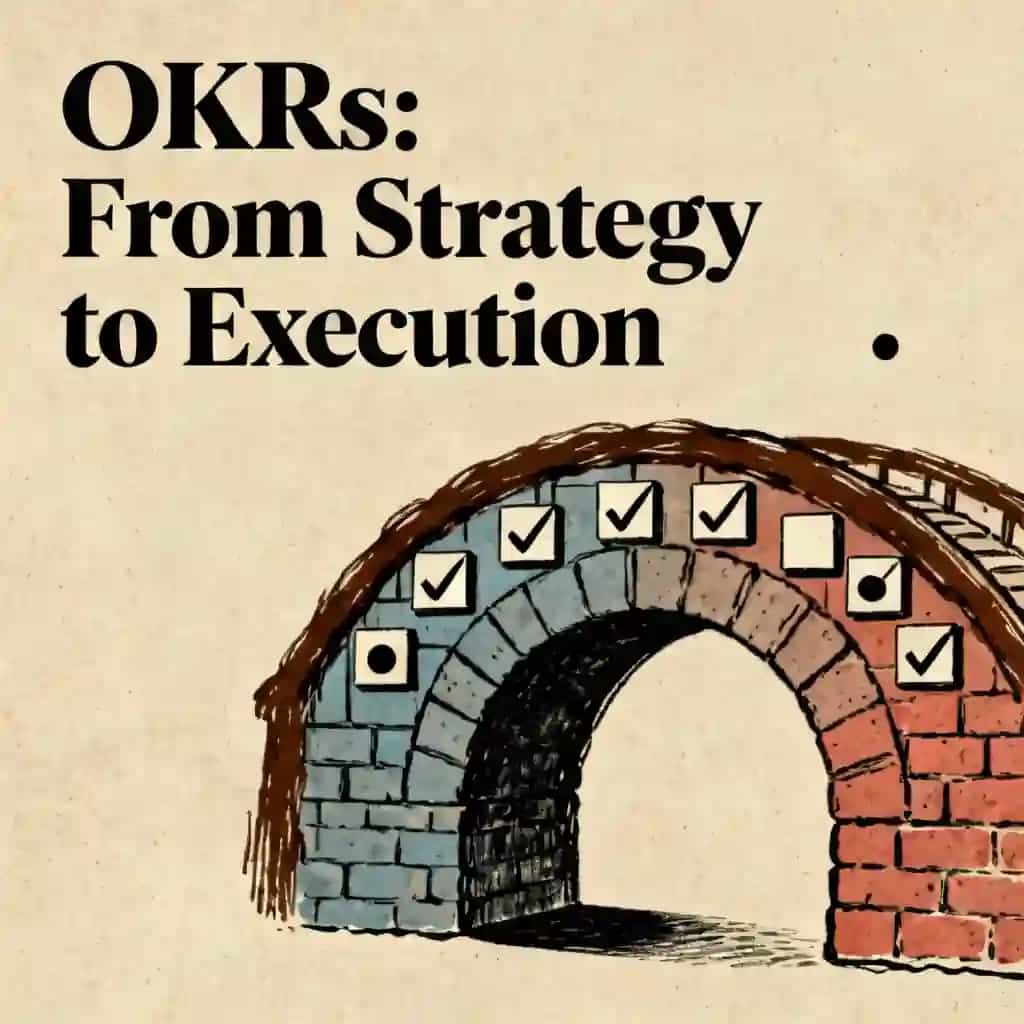
Discover how OKRs revolutionized Google's trajectory in "Measure What Matters." Endorsed by Bill Gates and adopted by tech giants, this framework transformed goal-setting worldwide. What secret system did Larry Page credit with "changing Google forever" - and could it unlock your organization's potential?
John Doerr, author of Measure What Matters: The Simple Idea That Drives 10x Growth, is an acclaimed venture capitalist and chairman of Kleiner Perkins Caufield & Byers, a firm instrumental in shaping Silicon Valley giants like Google and Amazon. A pioneer in goal-setting frameworks, Doerr popularized Objectives and Key Results (OKRs), a management system he first encountered at Intel and later introduced to startups and Fortune 500 companies alike.
His book blends practical business strategy with case studies from organizations such as the Gates Foundation and Bono’s ONE Campaign, reflecting his four-decade career mentoring entrepreneurs and scaling disruptive technologies.
Doerr’s insights stem from his role in early investments in Google, Amazon, and Intuit, where OKRs became foundational to their hypergrowth. A former Intel executive and appointee to President Obama’s Jobs Council, he combines engineering rigor with venture capital acumen. Measure What Matters has been adopted by teams worldwide, from government agencies managing crisis responses to tech unicorns optimizing product launches. The book remains a Wall Street Journal bestseller and is frequently cited in leadership programs for its actionable approach to aligning ambition with measurable outcomes.
Measure What Matters introduces OKRs (Objectives and Key Results), a goal-setting framework linking organizational missions to measurable outcomes. John Doerr explains how OKRs drive focus, alignment, and agility, using case studies from Google, Intel, and nonprofits. The book combines theory with practical guidance for defining inspirational objectives and tracking results through quantifiable key performance indicators.
Leaders, managers, entrepreneurs, and teams seeking scalable goal-setting methods will benefit. It’s particularly relevant for tech startups, nonprofits, and organizations prioritizing data-driven decision-making. The book offers actionable advice for aligning teams, fostering accountability, and achieving ambitious outcomes.
Yes: It’s a foundational guide for implementing OKRs, endorsed by industry leaders like Google’s Larry Page. While some chapters include anecdotal filler, the playbooks and templates provide immediate value for refining strategic planning.
OKRs (Objectives and Key Results) are a goal-setting system where Objectives define qualitative goals (e.g., “Revolutionize video loading speeds”), and Key Results quantify success (e.g., “Reduce YouTube buffering by 50%”). OKRs emphasize outcomes over activities, ensuring measurable progress.
Avoid common traps like vague KRs or conflating aspirational vs. committed goals.
While the book doesn’t provide exhaustive examples, it highlights Google’s early OKRs, such as improving video load times. Companion resources include templates for sales, engineering, and nonprofit objectives.
Critics note repetitive success stories and limited exploration of OKR pitfalls, like overcommitment. Some argue OKRs work best in growth-oriented cultures and may not suit rigid hierarchies.
After Doerr’s 1999 workshop, Google adopted OKRs to prioritize user-centric metrics (e.g., faster search results). Larry Page credits OKRs with enabling 10x growth through alignment and accountability.
Unlike SMART goals, OKRs emphasize ambitious “stretch” targets and adaptability. Unlike balanced scorecards, OKRs are simpler and more agile, promoting rapid iteration over static metrics.
With remote work and AI-driven industries, OKRs remain a universal tool for aligning distributed teams. The framework’s flexibility suits fast-paced sectors like climate tech and SaaS, where priorities shift rapidly.
저자의 목소리로 책을 느껴보세요
지식을 흥미롭고 예시가 풍부한 인사이트로 전환
핵심 아이디어를 빠르게 캡처하여 신속하게 학습
재미있고 매력적인 방식으로 책을 즐기세요
OKRs are not a silver bullet. They cannot substitute for sound judgment, strong leadership, or a creative workplace culture.
Objectives are the ‘what’ and Key Results are the ‘how.’
Objectives should be ambitious and feel somewhat uncomfortable.
Execution trumped expertise.
Measure What Matters : OKRs의 핵심 아이디어를 이해하기 쉬운 포인트로 분해하여 혁신적인 팀이 어떻게 창조하고, 협력하고, 성장하는지 이해합니다.
Measure What Matters : OKRs을 빠른 기억 단서로 압축하여 솔직함, 팀워크, 창의적 회복력의 핵심 원칙을 강조합니다.

생생한 스토리텔링을 통해 Measure What Matters : OKRs을 경험하고, 혁신 교훈을 기억에 남고 적용할 수 있는 순간으로 바꿉니다.
무엇이든 물어보고, 목소리를 선택하고, 진정으로 공감되는 인사이트를 함께 만들어보세요.

샌프란시스코에서 컬럼비아 대학교 동문들이 만들었습니다
"Instead of endless scrolling, I just hit play on BeFreed. It saves me so much time."
"I never knew where to start with nonfiction—BeFreed’s book lists turned into podcasts gave me a clear path."
"Perfect balance between learning and entertainment. Finished ‘Thinking, Fast and Slow’ on my commute this week."
"Crazy how much I learned while walking the dog. BeFreed = small habits → big gains."
"Reading used to feel like a chore. Now it’s just part of my lifestyle."
"Feels effortless compared to reading. I’ve finished 6 books this month already."
"BeFreed turned my guilty doomscrolling into something that feels productive and inspiring."
"BeFreed turned my commute into learning time. 20-min podcasts are perfect for finishing books I never had time for."
"BeFreed replaced my podcast queue. Imagine Spotify for books — that’s it. 🙌"
"It is great for me to learn something from the book without reading it."
"The themed book list podcasts help me connect ideas across authors—like a guided audio journey."
"Makes me feel smarter every time before going to work"
샌프란시스코에서 컬럼비아 대학교 동문들이 만들었습니다

Measure What Matters : OKRs 요약을 무료 PDF 또는 EPUB으로 받으세요. 인쇄하거나 오프라인에서 언제든 읽을 수 있습니다.
What if a simple goal-setting framework could transform not just companies, but entire industries and humanitarian efforts worldwide? This is precisely what John Doerr reveals in "Measure What Matters." Objectives and Key Results (OKRs) powered Google's meteoric rise from a scrappy startup to a global powerhouse, and have since been embraced by organizations ranging from tech giants to the Gates Foundation. The system's genius lies in its elegant simplicity: Objectives define WHAT you want to achieve-the inspirational, qualitative goals that provide direction; Key Results establish HOW progress will be measured-specific, quantifiable metrics that leave no room for ambiguity. This framework has revolutionized how ambitious organizations translate vision into reality, making what truly matters measurable and achievable. When Andy Grove developed OKRs at Intel in the 1970s, he was solving a practical problem: how to align a growing organization around measurable results rather than credentials or pedigree. The system emphasized execution over expertise, creating a culture where outcomes trumped academic backgrounds. The pivotal moment came in 1999 when Doerr introduced OKRs to a young Google with just 40 employees. Larry Page and Sergey Brin had an audacious vision-organizing the world's information-but needed a system to channel their ambition. When Page set a seemingly impossible revenue target of $10 billion, many scoffed. Yet this exemplified the kind of ambitious thinking OKRs were designed to support, helping transform a modest search engine into one of history's most valuable companies.