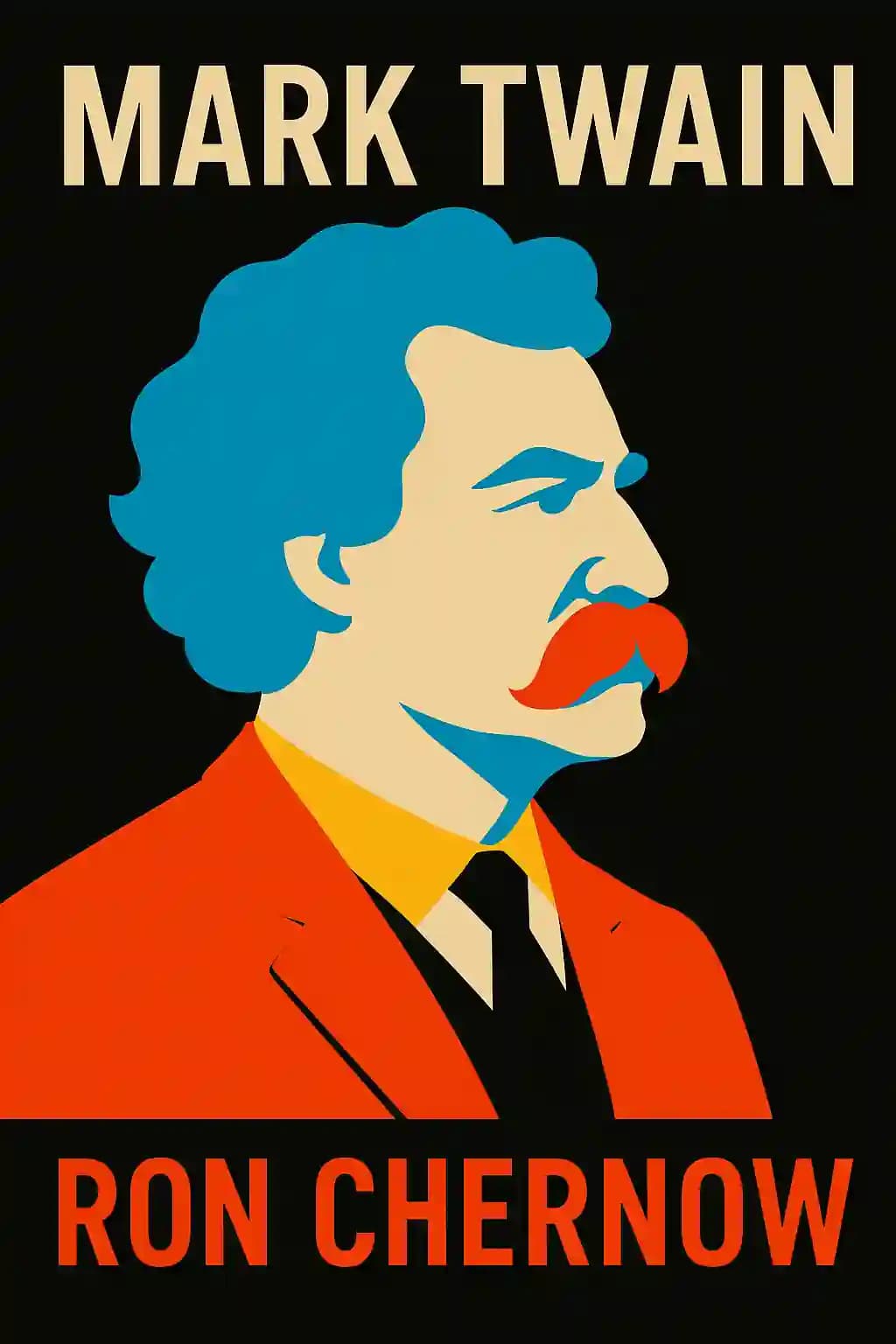
Ron Chernow unmasks Mark Twain's dazzling contradictions in this 1,174-page masterpiece. While redefining America's literary icon, it arrives amid our racial reckoning, perfectly timed with Everett's Pulitzer-winning "James." What shocking truths about Twain's evolution will challenge everything you thought you knew?
Ron Chernow, Pulitzer Prize-winning biographer of Mark Twain, specializes in deeply researched portraits of pivotal American figures and financial dynasties.
His expertise in illuminating the Gilded Age—a period central to Twain's life and work—stems from acclaimed biographies like Titan: The Life of John D. Rockefeller, Sr. and The House of Morgan, which won the National Book Award.
Chernow's Alexander Hamilton (adapted into the groundbreaking Broadway musical), Washington: A Life (Pulitzer winner), and Grant exemplify his skill in contextualizing historical giants within their socio-economic landscapes.
A frequent media commentator and keynote speaker—including at the White House Correspondents Dinner—Chernow blends scholarly rigor with narrative brilliance. His books have sold over 30 million copies worldwide and been translated into more than 20 languages, cementing his status as a definitive voice in American history.
Ron Chernow's Mark Twain is a comprehensive biography exploring Samuel Clemens' literary genius, business failures, and complex persona. It delves into his iconic works like Huckleberry Finn, disastrous financial ventures, and turbulent personal life—including his marriage to Livy, whose stabilizing influence proved crucial to his success. The book also examines Twain's critiques of American society, particularly regarding slavery and industrialization, drawing on unpublished manuscripts and personal correspondence.
This biography suits readers interested in American literary history, Gilded Age society, or nuanced portraits of cultural icons. Chernow’s meticulous research and narrative depth appeal to biography enthusiasts, while Twain’s relevance to modern issues like racial justice and celebrity culture makes it valuable for contemporary audiences. At over 800 pages, it best serves those seeking an exhaustive study of Twain’s contradictions.
Yes, for its unparalleled depth and readability. Chernow masterfully balances Twain’s humor with his tragedies—bankruptcy, family deaths, and moral struggles—using unpublished archives for fresh insights. Though some critics note occasional narrative flaws, the biography’s exploration of Twain’s cultural impact and Livy’s pivotal role solidifies its status as a definitive work.
Livy Clemens was Twain’s anchor: She managed his finances, edited his manuscripts, and tempered his self-destructive tendencies. Chernow reveals her as Twain’s essential confidante and moral compass, arguing his iconic status might not exist without her influence. Her death in 1904 left Twain adrift, underscoring her irreplaceable role in his personal and professional stability.
Chernow details Twain’s "hair-brained schemes" that repeatedly brought him to bankruptcy, from failed investments in a typesetting machine to ill-advised publishing ventures. These endeavors highlight Twain’s paradoxical nature: a satirical skeptic who fell for financial frauds. The biography frames these failures as cautionary tales balancing his literary triumphs.
Some reviewers note Chernow’s occasional "lazy writing" (e.g., clichéd phrases) and narrative inconsistencies, like claiming Twain’s old age lacked "autumnal calm" after earlier depicting his sentimental decline. Others argue the biography, while exhaustive, doesn’t fully resolve Twain’s inner contradictions. These flaws, however, don’t diminish its overall rigor.
Chernow emphasizes Twain’s progressive stance on slavery and engagement with African American culture post-Civil War, setting him apart from white contemporaries. The biography analyzes works like Huckleberry Finn as critiques of racial injustice, using Twain’s letters to show his evolving empathy. This focus underscores Twain’s relevance in ongoing discussions about equality.
Chernow leverages Twain’s 50 notebooks and thousands of unpublished letters for new insights, particularly on Livy’s influence and Twain’s business failures. Unlike prior biographies, it connects his financial recklessness to his creative restlessness, framing his life as a reflection of America’s industrialization and moral shifts.
Post-Livy’s death, Twain descended into grief and eccentricity, despite global fame. Chernow portrays this period as marked by bitter political crusades, isolation, and erratic behavior—contrasting sharply with his earlier vitality. The biography suggests Twain’s later cynicism stemmed from personal losses and disillusionment with American society.
Chernow’s prose is "fluent storytelling" (The Guardian) blending scholarly rigor with novelistic pacing. He uses Twain’s witty quotes and vivid anecdotes to animate historical analysis, though some critics cite repetitive phrasing. The biography’s accessibility makes its 800+ pages engaging for general readers.
Twain’s critiques of imperialism, racial injustice, and corporate greed mirror modern issues like systemic inequality and celebrity culture. Chernow argues Twain’s skepticism toward authority and empathy for the marginalized offer timeless lessons, cementing his status as America’s "moral conscience".
While Hamilton established Chernow’s reputation for immersive research, Mark Twain tackles a more complex and documented figure, requiring deeper archival excavation. Both share thematic focus on flawed geniuses, but Twain emphasizes personal recklessness over political influence, reflecting Chernow’s skill in adapting his approach to divergent subjects.
저자의 목소리로 책을 느껴보세요
지식을 흥미롭고 예시가 풍부한 인사이트로 전환
핵심 아이디어를 빠르게 캡처하여 신속하게 학습
재미있고 매력적인 방식으로 책을 즐기세요
what a bottom of fury there is to your fun.
Piloting on the Mississippi River was not work to me; it was play.
he loved the Mississippi almost as much as he loved a person.
the darling existence with nothing comparable to it in my life since
Mark Twain의 핵심 아이디어를 이해하기 쉬운 포인트로 분해하여 혁신적인 팀이 어떻게 창조하고, 협력하고, 성장하는지 이해합니다.
Mark Twain을 빠른 기억 단서로 압축하여 솔직함, 팀워크, 창의적 회복력의 핵심 원칙을 강조합니다.

생생한 스토리텔링을 통해 Mark Twain을 경험하고, 혁신 교훈을 기억에 남고 적용할 수 있는 순간으로 바꿉니다.
무엇이든 물어보고, 목소리를 선택하고, 진정으로 공감되는 인사이트를 함께 만들어보세요.

샌프란시스코에서 컬럼비아 대학교 동문들이 만들었습니다
"Instead of endless scrolling, I just hit play on BeFreed. It saves me so much time."
"I never knew where to start with nonfiction—BeFreed’s book lists turned into podcasts gave me a clear path."
"Perfect balance between learning and entertainment. Finished ‘Thinking, Fast and Slow’ on my commute this week."
"Crazy how much I learned while walking the dog. BeFreed = small habits → big gains."
"Reading used to feel like a chore. Now it’s just part of my lifestyle."
"Feels effortless compared to reading. I’ve finished 6 books this month already."
"BeFreed turned my guilty doomscrolling into something that feels productive and inspiring."
"BeFreed turned my commute into learning time. 20-min podcasts are perfect for finishing books I never had time for."
"BeFreed replaced my podcast queue. Imagine Spotify for books — that’s it. 🙌"
"It is great for me to learn something from the book without reading it."
"The themed book list podcasts help me connect ideas across authors—like a guided audio journey."
"Makes me feel smarter every time before going to work"
샌프란시스코에서 컬럼비아 대학교 동문들이 만들었습니다

Mark Twain 요약을 무료 PDF 또는 EPUB으로 받으세요. 인쇄하거나 오프라인에서 언제든 읽을 수 있습니다.
Mark Twain was far more than the benign white-suited humorist many imagine. Behind that carefully crafted persona lurked a sharp-tongued critic who delivered uncomfortable truths about society and human nature. William Dean Howells captured this perfectly when noting "what a bottom of fury there is to your fun." Twain's growing pessimism stood in stark contrast to America's traditional optimism, making him a fascinating anomaly-immensely popular yet fiercely critical of the world around him. What made Twain revolutionary was his transformation of American authorship. He abandoned the image of the contemplative writer for that of a celebrity engaged in the hurly-burly of American life. His career spanned roles as printer, pilot, miner, journalist, novelist, platform artist, publisher, inventor, and investor. He created a distinctly American literary voice by capturing the vernacular of western towns and small villages, making him the first to truly elevate American speech to literary status. Before Twain, American writers often imitated European models. After him, American literature found its authentic voice. Beyond his literary achievements, Twain was remarkably cosmopolitan, spending eleven years abroad and crossing the Atlantic twenty-nine times. His evolution from southwestern humorist to northeastern liberal with radical views on religion, slavery, aristocracy, and colonialism reveals a mind constantly growing and challenging itself. Though born into a slave-owning family, he transcended his southern roots to befriend Frederick Douglass and forcefully denounce racial bigotry-becoming what Howells called "the most desouthernized southerner I ever met."