Branson's audacious autobiography reveals how a dyslexic dropout built a billion-dollar empire by embracing risk and fun. From crash-landing balloons in Algeria to battling British Airways, his entrepreneurial playbook has inspired a generation. What adventure would you attempt if failure wasn't an option?
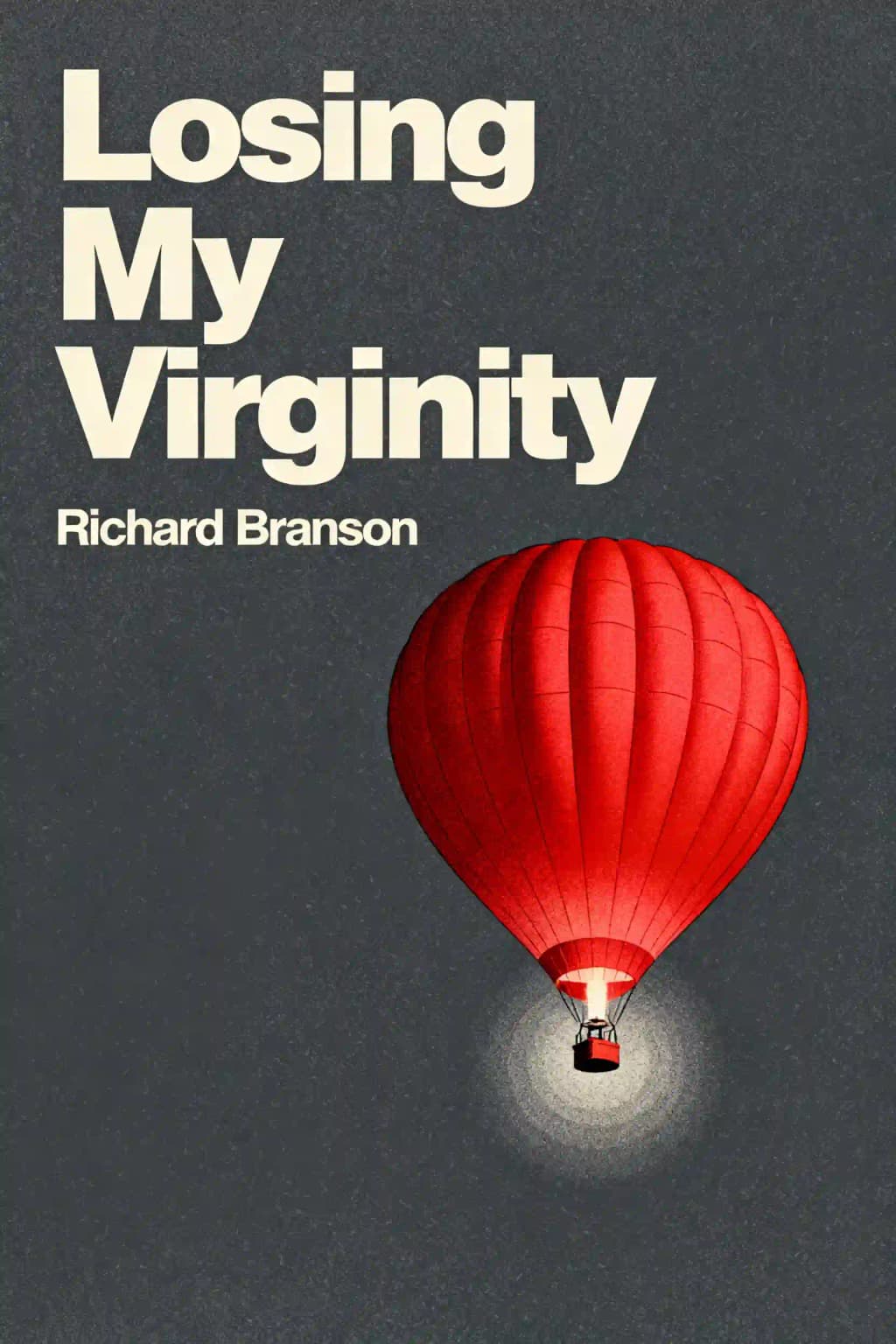
Sir Richard Charles Nicholas Branson, author of Losing My Virginity: How I Survived, Had Fun, and Made a Fortune Doing Business My Way, is a billionaire entrepreneur and founder of the globally recognized Virgin Group. This candid memoir blends business strategy with adventurous storytelling, reflecting Branson’s unconventional approach to entrepreneurship, risk-taking, and innovation across industries like aviation (Virgin Atlantic), music (Virgin Records), and space tourism (Virgin Galactic).
Born in Surrey, England, Branson’s career began at 16 with Student magazine, evolving into a conglomerate spanning 40+ companies in 35 countries.
A knighted philanthropist (1999), Branson shares insights through his blog and social media (41M+ followers) while advocating for business as a force for good via Virgin Unite. His 2024 audiobook Losing and Finding My Virginity expands on his legacy, narrated in his signature charismatic style.
Branson’s ventures have redefined industries, earning recognition as one of Time’s “100 Most Influential People.” In 2021, he became one of the first private astronauts aboard Virgin Galactic’s Unity 22 mission, cementing his reputation as a boundary-pushing innovator.
Losing My Virginity chronicles Richard Branson’s journey from dropping out of school to building the Virgin Group empire. It highlights his risk-taking ventures like Virgin Records and Virgin Atlantic, interspersed with adrenaline-fueled exploits like transatlantic ballooning. The memoir emphasizes entrepreneurship as a blend of intuition, boldness, and relentless curiosity, offering insights into Branson’s philosophy of balancing work with adventure.
Aspiring entrepreneurs, business enthusiasts, and fans of autobiographies will find value in Branson’s unorthodox approach to business and life. The book appeals to those seeking inspiration on innovation, leadership, and overcoming failures. Readers interested in unconventional career paths or adventurous storytelling will also enjoy its candid tone.
Yes, for its raw insights into building a global brand through creativity and resilience. Branson’s anecdotes—like suing British Airways or signing the Sex Pistols—blend business lessons with entertainment. However, those seeking structured business advice may find its narrative style less actionable.
Branson launched Virgin as a mail-order record business in 1970, later opening physical stores with a youth-centric vibe. Early success came from signing Mike Oldfield’s Tubular Bells, funding expansion into airlines, telecom, and space tourism. His strategy: challenge complacent industries with better customer experiences.
He rejects rigid hierarchies, favors playful branding (e.g., Virgin Brides), and embraces public stunts for marketing. Unlike data-driven CEOs, he trusts instincts—like launching Virgin Atlantic despite industry skepticism.
Yes. Branson advocates blending work with adventure, family, and fun. Examples include ballooning globally while negotiating deals, and prioritizing employee well-being through flexible policies.
Critics note Branson’s privilege (seed money from family) isn’t addressed, and his risk-taking may seem reckless for non-billionaires. The memoir also skims over Virgin’s financial struggles in the 1980s.
Unlike Elon Musk’s or Phil Knight’s books, Branson’s focuses on joy-driven entrepreneurship over technical detail. It shares Tony Hsieh’s emphasis on company culture but with more globetrotting tales.
He frames setbacks as learning tools—e.g., Virgin Cola’s flop taught market research limits. His resilience shines during Virgin Atlantic’s battle against British Airways, turning litigation into PR wins.
Its lessons on agility (pivoting industries) and brand storytelling align with today’s gig economy and social media-driven markets. Branson’s emphasis on ethical leadership and climate advocacy (via Virgin Galactic) also resonates in 2025.
저자의 목소리로 책을 느껴보세요
지식을 흥미롭고 예시가 풍부한 인사이트로 전환
핵심 아이디어를 빠르게 캡처하여 신속하게 학습
재미있고 매력적인 방식으로 책을 즐기세요
Challenges were deliberately placed in my path.
My mother believed in throwing her children in at the deep end.
Failure was viewed as a learning opportunity.
I felt like I was drowning.
Adventure and purpose can coexist with profit.
Losing My Virginity의 핵심 아이디어를 이해하기 쉬운 포인트로 분해하여 혁신적인 팀이 어떻게 창조하고, 협력하고, 성장하는지 이해합니다.
Losing My Virginity을 빠른 기억 단서로 압축하여 솔직함, 팀워크, 창의적 회복력의 핵심 원칙을 강조합니다.

생생한 스토리텔링을 통해 Losing My Virginity을 경험하고, 혁신 교훈을 기억에 남고 적용할 수 있는 순간으로 바꿉니다.
무엇이든 물어보고, 목소리를 선택하고, 진정으로 공감되는 인사이트를 함께 만들어보세요.

샌프란시스코에서 컬럼비아 대학교 동문들이 만들었습니다
"Instead of endless scrolling, I just hit play on BeFreed. It saves me so much time."
"I never knew where to start with nonfiction—BeFreed’s book lists turned into podcasts gave me a clear path."
"Perfect balance between learning and entertainment. Finished ‘Thinking, Fast and Slow’ on my commute this week."
"Crazy how much I learned while walking the dog. BeFreed = small habits → big gains."
"Reading used to feel like a chore. Now it’s just part of my lifestyle."
"Feels effortless compared to reading. I’ve finished 6 books this month already."
"BeFreed turned my guilty doomscrolling into something that feels productive and inspiring."
"BeFreed turned my commute into learning time. 20-min podcasts are perfect for finishing books I never had time for."
"BeFreed replaced my podcast queue. Imagine Spotify for books — that’s it. 🙌"
"It is great for me to learn something from the book without reading it."
"The themed book list podcasts help me connect ideas across authors—like a guided audio journey."
"Makes me feel smarter every time before going to work"
샌프란시스코에서 컬럼비아 대학교 동문들이 만들었습니다

Losing My Virginity 요약을 무료 PDF 또는 EPUB으로 받으세요. 인쇄하거나 오프라인에서 언제든 읽을 수 있습니다.
Picture this: A four-year-old boy abandoned miles from home, told to find his way back with only a few coins for emergency calls. This wasn't neglect-it was my mother's deliberate strategy to build self-reliance. Before turning twelve, I was cycling fifty miles cross-country with just basic directions. These weren't acts of cruelty but calculated lessons in problem-solving that would later fuel my entrepreneurial spirit. My family's DNA runs deep with adventure-my mother disguised herself as a boy to train as a glider pilot when women weren't allowed, and my uncle Clare's peculiar diet of hedgehogs and wild plants led to him teaching survival skills to elite military units. Our modest home in Shamley Green became the perfect playground for childhood adventures and early business experiments, with just one rule: be home for dinner. Isn't it fascinating how these early challenges shaped my approach to risk and opportunity?