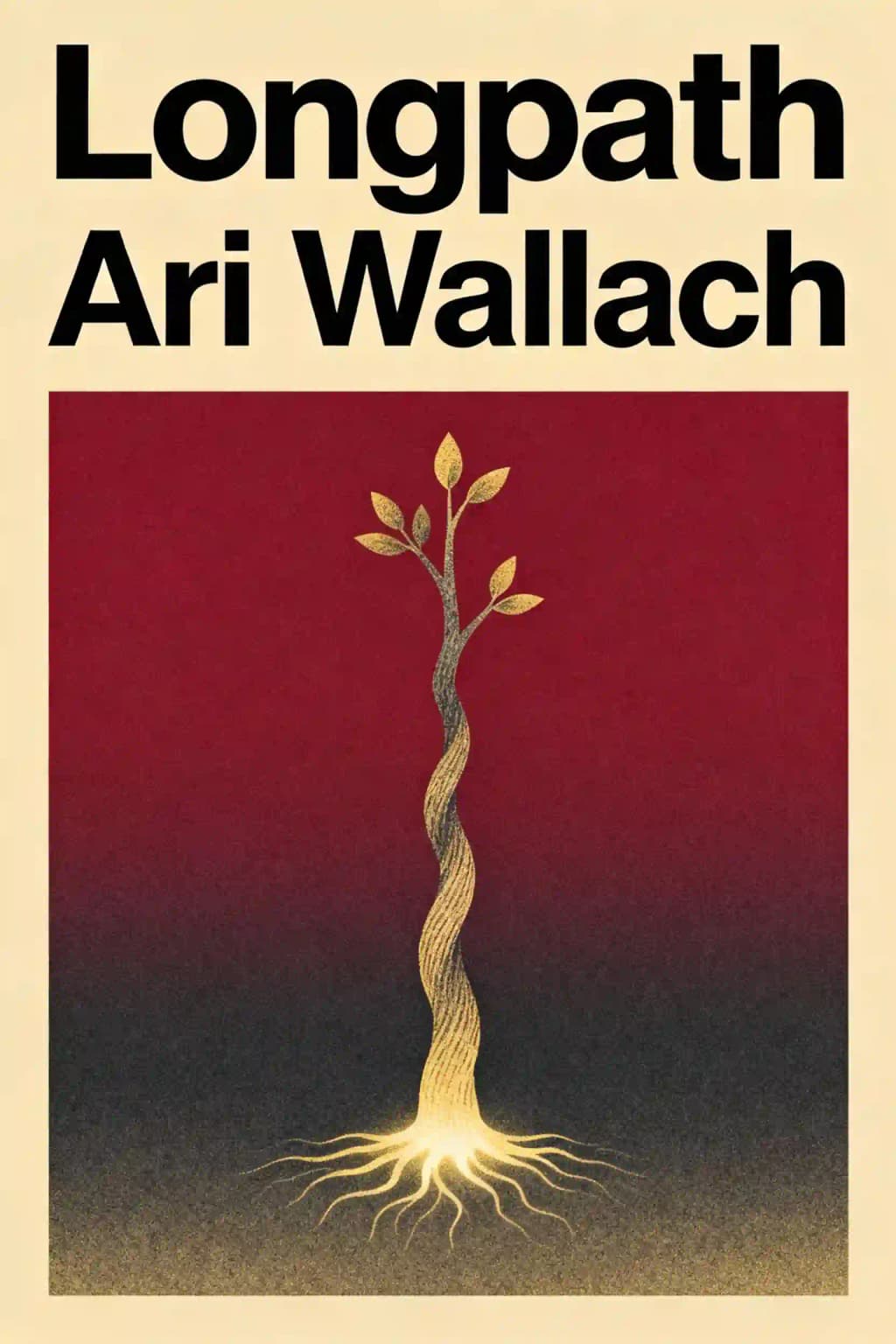
Longpath
Becoming the Great Ancestors Our Future Needs--An Antidote for Short-Termism
Longpath 개요
In "Longpath," futurist Ari Wallach challenges our short-term thinking with a transformative mindset viewed by 2.5 million TED viewers. Adam Grant calls it revolutionary - not just planning months ahead, but generations ahead. Your descendants are waiting. Are you ready to become their great ancestor?
Longpath의 핵심 주제
- transgenerational empathy
- long-term thinking
- ancestral responsibility
- intertidal period
- future-oriented leadership
Longpath의 명언
The future is not something that happens to us, but something we create.
We're living in what Wallach calls an "Intertidal period"-a dramatic transition phase.
Our brains evolved for short-term thinking.
We're also trapped in what Wallach calls "presentism"-a Hall of Mirrors version of the present.
Longpath isn't just abstract philosophy-it's a practical framework.
Longpath의 등장인물
- Ari WallachAuthor and founder of Longpath Labs
저자 소개
Longpath의 저자 소개
Ari Wallach, author of Longpath: Becoming the Great Ancestors Our Future Needs, is an applied futurist and founder of Longpath Labs, dedicated to fostering long-term thinking in governance, technology, and societal systems. A Columbia University adjunct professor lecturing on AI and public policy futures, his work bridges academic rigor and practical innovation. Wallach’s TED Talk on transcending short-termism has garnered 2.6 million views and been translated into 21 languages, amplifying his role as a leading voice in futurism.
As CEO of Synthesis Corp., he advised the UN Refugee Agency, Ford Foundation, and Fortune 100 companies on strategic foresight. Wallach created the viral 2008 Obama campaign initiative The Great Schlep with Sarah Silverman and hosts PBS’s A Brief History of the Future, exploring solutions to global challenges. His writing has appeared in Wired and the BBC, and he’s been featured in The New York Times, CNN, and Vox.
Longpath combines Wallach’s decades of systems-change advocacy with tools for transgenerational empathy, reflecting his belief that “cathedral thinking” can address ecological and social crises. The book’s insights stem from his collaborations with governments, NGOs, and grassroots movements worldwide. Residing in New York’s Hudson Valley with his family, Wallach continues advancing his vision of a thriving planetary future through Longpath Labs’ initiatives. His TED Talk remains a cornerstone resource for educators and policymakers combating myopic decision-making.
Longpath 요약 다운로드
Longpath 요약을 무료 PDF 또는 EPUB으로 받으세요. 인쇄하거나 오프라인에서 언제든 읽을 수 있습니다.
이 책에 대한 FAQ
Longpath by Ari Wallach is a paradigm-shifting guide advocating for long-term thinking to address modern challenges like climate change and workplace stress. It introduces the "Longpath" mindset, encouraging readers to prioritize future generations by blending insights from neuroscience, theology, and social technologies. The book emphasizes asking "To what end?" to align decisions with sustainable, values-driven outcomes.
Leaders, policymakers, environmental advocates, and individuals seeking purpose beyond short-term goals will benefit from Longpath. It’s ideal for those interested in systemic change, ethical decision-making, or fostering resilience in personal and professional contexts.
Yes—Longpath offers actionable strategies to combat reactionary thinking, making it vital for navigating crises like climate change and societal polarization. Wallach’s blend of research and practical frameworks makes it a compelling read for creating lasting impact.
Key concepts include embracing interconnected time (past-present-future), prioritizing cooperation over competition, and cultivating "future-conscious" habits. Wallach argues that redefining success around legacy, not immediacy, fosters societal and personal resilience.
Success in Longpath means acting as a "good ancestor" by making choices that benefit future generations. Wallach critiques short-term metrics like quarterly profits, advocating for metrics that measure sustainability, equity, and intergenerational well-being.
This framework challenges readers to evaluate decisions by asking: What is my ultimate goal? and Does this align with my values? It shifts focus from reactive problem-solving to intentional, future-focused action.
Wallach links climate crises to short-termism, urging systemic shifts like valuing ecological health in economic models. He emphasizes collective responsibility, proposing policies and individual actions that prioritize long-term planetary health.
- "We are the ancestors of futures yet unborn."
- "Short-term wins often become long-term traps."
These emphasize legacy thinking and the pitfalls of immediacy.
Unlike tactical self-help guides, Longpath combines macro-level societal analysis with personal growth. It shares themes with Atomic Habits (systems thinking) but focuses more on collective legacy than individual habits.
Some argue its ideals are challenging to implement in profit-driven systems. Critics note it leans heavily on philosophical concepts without granular steps, potentially limiting practicality for some readers.
Wallach advises evaluating roles through a "200-year lens"—asking how a job contributes to societal good. This mindset reduces burnout by linking daily work to broader purpose.
Amid AI advancements and climate urgency, Longpath’s call for ethical, long-term innovation resonates. Its frameworks help navigate dilemmas like AI ethics and sustainable tech development.
Ari Wallach is a futurist and founder of Longpath Labs, with expertise in sociology and systems thinking. His TED Talks and work with organizations like the UN inform the book’s interdisciplinary approach.