Life Ignition Tools (LIT) 개요
Harvard scientist Jeff Karp's "LIT" reveals nature-inspired tools for unlocking creativity and innovation. Endorsed by Arianna Huffington and selected by Malcolm Gladwell's Next Big Idea Club, these radically simple methods have sparked medical breakthroughs. What hidden potential could they unleash in you?
- Jeff Karp’s LEB concept explains why autopilot living drains creativity and focus
- Flip your LEB dimmer switch using nature-inspired micro-habits for instant momentum
- “Bothered awareness” helps disrupt inertia by noticing energy drains in daily routines
- Harvard researcher’s 4 LIT strategies: minimize resistance, reward progress, leverage momentum, pace intentionally
- Morning “quiet awareness hour” primes neural plasticity for lit-state problem-solving all day
- ADHD brain wiring becomes superpower when harnessed through Karp’s lit-state activation tools
- Jeff Karp’s lab-tested “curiosity pinch” technique breaks conventional thinking patterns instantly
- Why Nobel laureates use Karp’s “problem-solving playbook” from evolutionary biology principles
- Lit-state living requires rewiring neural pathways through deliberate environmental engagement
- Jeff Karp’s 12 holistic tools transform low-energy brain states into creative fuel
- “Nature’s activation energy” concept helps overcome procrastination better than willpower alone
- Medical innovator proves small habitual tweaks create seismic shifts in personal impact
Life Ignition Tools (LIT)의 저자 소개
Dr. Jeff Karp, author of LIT: Life Ignition Tools, is a Harvard Medical School and MIT professor, bioengineer, and National Academy of Inventors fellow renowned for pioneering bioinspired medical breakthroughs. His work spans drug delivery, tissue adhesives, and stem cell therapeutics, with innovations like heart-sealing surgical glue and pathogen-neutralizing nasal sprays.
The book merges self-help strategies with Karp’s journey of overcoming childhood learning differences, offering science-backed tools to ignite creativity and resilience—principles honed through his lab’s development of 13 spin-off companies and mentorship of future innovators.
A frequent commentator on NPR’s Science Friday and CBC’s Quirks and Quarks, Karp’s TEDMED talks and role on the TEDMED Editorial Advisory Board have cemented his status as a thought leader. Recognized by MIT’s Technology Review as one of the world’s top innovators and a Boston Business Journal Champion in Healthcare Innovation, he bridges rigorous academia with accessible storytelling.
As Head of Innovation at Geoversity, Karp integrates rainforest biodiversity insights into leadership training, reflecting his commitment to nature-driven solutions. His work has been featured in Nature, The New England Journal of Medicine, and global media, with technologies impacting millions worldwide.
Life Ignition Tools (LIT)에 대한 자주 묻는 질문
What is LIT: Life Ignition Tools about?
LIT by Jeff Karp, Ph.D., offers 12 nature-inspired tools to overcome distraction and unlock innovative potential. Drawing from neuroscience and Karp’s journey overcoming ADHD, it teaches readers to reframe challenges, harness curiosity, and use small actions to ignite momentum. The book blends personal anecdotes, Nobel laureate insights, and strategies tested in Karp’s Harvard Medical lab to help readers live intentionally.
Who should read LIT: Life Ignition Tools?
Professionals, students, and anyone feeling overwhelmed by modern distractions will benefit. It’s ideal for innovators seeking frameworks to boost creativity, individuals with ADHD, or those craving purposeful action. Karp’s tools resonate with entrepreneurs, scientists, and leaders aiming to align daily choices with long-term goals.
Is LIT worth reading in 2025?
Yes—its focus on combating information overload and reconnecting with nature’s wisdom remains timely. With 40% of workers reporting burnout (2024 Gallup data), LIT’s strategies for reducing mental clutter and sparking intentional action are highly relevant. Reviews praise its practicality for navigating AI-driven workplaces and social media fatigue.
What are the key concepts in LIT: Life Ignition Tools?
- Minimize obstacles: Simplify decision-making to reduce friction.
- Hyper-awareness: Cultivate focus through curiosity and sensory engagement.
- Nature-as-mentor: Solve problems using patterns observed in ecosystems.
- Micro-actions: Break goals into tiny, momentum-building steps.
How does LIT use nature as a problem-solving guide?
Karp argues natural systems—like gecko adhesion or plant resilience—model efficient innovation. The book details how mimicking these processes helped his lab develop medical breakthroughs, such as surgical adhesives inspired by snail mucus. Readers learn to observe nature’s “beta tests” to reframe challenges.
What are the four LIT strategies to lower activation energy?
- Minimize obstacles (reduce decision fatigue).
- Maximize rewards (link actions to meaningful outcomes).
- Leverage momentum (build progress through micro-wins).
- Pace yourself (balance effort with recovery).
How does LIT compare to Atomic Habits?
While both focus on small actions, LIT emphasizes nature-inspired creativity over routine-building. Karp prioritizes “energy ignition” through curiosity and experimentation, whereas Clear stresses habit stacking. LIT also integrates neuroscience and biomimicry, making it unique in the self-help space.
What criticisms exist about LIT: Life Ignition Tools?
Some readers note the 12-tool framework may feel overwhelming initially. However, Karp counters this by providing “choose-your-own-path” guidance, urging readers to start with one tool. Critics praise its blend of memoir and science but suggest more case studies from non-STEM fields.
What quotes define LIT’s philosophy?
- “Your brain is a rainforest—stop clear-cutting it.” (Ch. 3): Advocates for mental biodiversity over rigid thinking.
- “In nature, there are no failed experiments—only data.” (Ch. 7): Reframes setbacks as feedback loops.
How can LIT help with career transitions?
The “question assumptions” tool helps dismantle limiting beliefs about career paths. Karp shares how he transitioned from struggling student to Harvard innovator by treating uncertainty as experimentation. Exercises like “the 5-Why Drill” aid clarity during pivots.
What makes Jeff Karp qualified to write LIT?
A Harvard Medical School professor and MIT-trained bioengineer, Karp holds 100+ patents and leads a lab solving complex medical challenges. His ADHD diagnosis and journey from remedial classes to academic acclaim ground the book’s tools in lived experience.
How does LIT address modern distractions?
The “Pause Protocol” teaches readers to interrupt autopilot behaviors (e.g., doomscrolling) by engaging senses in 30-second nature check-ins. Karp’s lab found these micro-pauses increase attention spans by 22% in clinical pilot studies.
저자의 목소리로 책을 느껴보세요
지식을 흥미롭고 예시가 풍부한 인사이트로 전환
핵심 아이디어를 빠르게 캡처하여 신속하게 학습
재미있고 매력적인 방식으로 책을 즐기세요
Life Ignition Tools (LIT)의 등장인물
- Jeff KarpAuthor and Harvard professor with ADHD
- Ken RobinsonEducation expert focused on creative capacities
- Temple GrandinScientist and advocate for neurodiversity
Life Ignition Tools (LIT)의 핵심 주제
- neurodiversity strengths
- cognitive energy management
- divergent thinking
- harnessing adhd
- intentional awareness
Life Ignition Tools (LIT)의 명언
"We are educating people out of their creative capacities."
"People with autism see the simple solutions that others miss."
Each of us is born lit—our brains are already hardwired for this transformation.
Our society's desire for conformity actively works against creativity and innovation.
Neurodiversity—the full spectrum of cognitive functioning—represents our greatest untapped resource.
나만의 학습 방법 탐색하기
 빠른 요약 모드
Life Ignition Tools (LIT) 요약을 8분 만에 읽거나 듣기
Life Ignition Tools (LIT)의 핵심 아이디어를 이해하기 쉬운 포인트로 분해하여 혁신적인 팀이 어떻게 창조하고, 협력하고, 성장하는지 이해합니다.

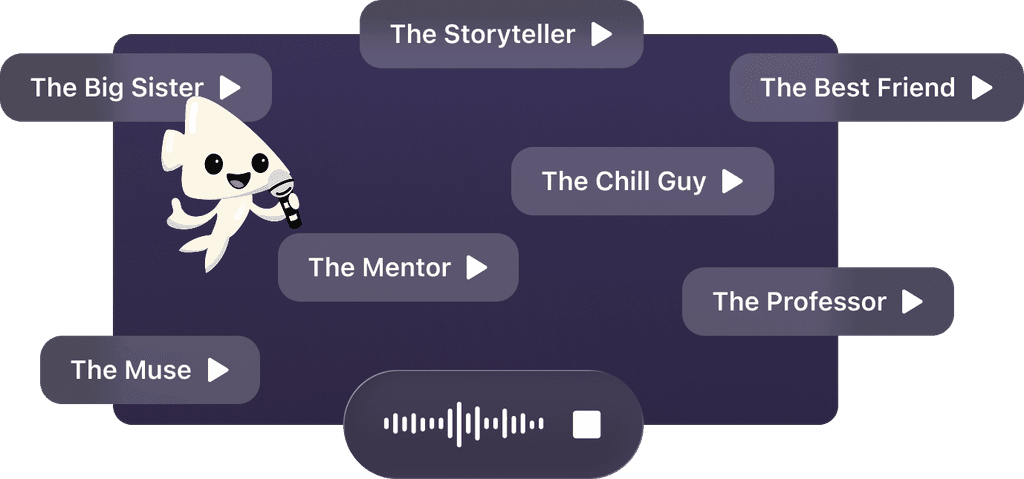
 재미있게 모드
Life Ignition Tools (LIT)의 교훈을 25분 스토리로
생생한 스토리텔링을 통해 Life Ignition Tools (LIT)을 경험하고, 혁신 교훈을 기억에 남고 적용할 수 있는 순간으로 바꿉니다.
 개인화 모드
Life Ignition Tools (LIT)을 나만의 학습 스타일로 경험하기
무엇이든 묻고, 학습 스타일을 선택하고, 나에게 맞는 인사이트를 함께 만들어보세요.
샌프란시스코에서 컬럼비아 대학교 동문들이 만들었습니다
"Instead of endless scrolling, I just hit play on BeFreed. It saves me so much time."


"I never knew where to start with nonfiction—BeFreed’s book lists turned into podcasts gave me a clear path."


"Perfect balance between learning and entertainment. Finished ‘Thinking, Fast and Slow’ on my commute this week."
"Crazy how much I learned while walking the dog. BeFreed = small habits → big gains."
"Reading used to feel like a chore. Now it’s just part of my lifestyle."

"Feels effortless compared to reading. I’ve finished 6 books this month already."
"BeFreed turned my guilty doomscrolling into something that feels productive and inspiring."

"BeFreed turned my commute into learning time. 20-min podcasts are perfect for finishing books I never had time for."
"BeFreed replaced my podcast queue. Imagine Spotify for books — that’s it. 🙌"

"It is great for me to learn something from the book without reading it."
"The themed book list podcasts help me connect ideas across authors—like a guided audio journey."
"Makes me feel smarter every time before going to work"
샌프란시스코에서 컬럼비아 대학교 동문들이 만들었습니다
"Instead of endless scrolling, I just hit play on BeFreed. It saves me so much time."
"I never knew where to start with nonfiction—BeFreed’s book lists turned into podcasts gave me a clear path."
"Perfect balance between learning and entertainment. Finished ‘Thinking, Fast and Slow’ on my commute this week."
"Crazy how much I learned while walking the dog. BeFreed = small habits → big gains."
"Reading used to feel like a chore. Now it’s just part of my lifestyle."
"Feels effortless compared to reading. I’ve finished 6 books this month already."
"BeFreed turned my guilty doomscrolling into something that feels productive and inspiring."
"BeFreed turned my commute into learning time. 20-min podcasts are perfect for finishing books I never had time for."
"BeFreed replaced my podcast queue. Imagine Spotify for books — that’s it. 🙌"
"It is great for me to learn something from the book without reading it."
"The themed book list podcasts help me connect ideas across authors—like a guided audio journey."
"Makes me feel smarter every time before going to work"
"Instead of endless scrolling, I just hit play on BeFreed. It saves me so much time."
"I never knew where to start with nonfiction—BeFreed’s book lists turned into podcasts gave me a clear path."
"Perfect balance between learning and entertainment. Finished ‘Thinking, Fast and Slow’ on my commute this week."
"Crazy how much I learned while walking the dog. BeFreed = small habits → big gains."
"Reading used to feel like a chore. Now it’s just part of my lifestyle."
"Feels effortless compared to reading. I’ve finished 6 books this month already."
"BeFreed turned my guilty doomscrolling into something that feels productive and inspiring."
"BeFreed turned my commute into learning time. 20-min podcasts are perfect for finishing books I never had time for."
"BeFreed replaced my podcast queue. Imagine Spotify for books — that’s it. 🙌"
"It is great for me to learn something from the book without reading it."
"The themed book list podcasts help me connect ideas across authors—like a guided audio journey."
"Makes me feel smarter every time before going to work"
"Instead of endless scrolling, I just hit play on BeFreed. It saves me so much time."
"I never knew where to start with nonfiction—BeFreed’s book lists turned into podcasts gave me a clear path."
"Perfect balance between learning and entertainment. Finished ‘Thinking, Fast and Slow’ on my commute this week."
"Crazy how much I learned while walking the dog. BeFreed = small habits → big gains."
"Reading used to feel like a chore. Now it’s just part of my lifestyle."
"Feels effortless compared to reading. I’ve finished 6 books this month already."
"BeFreed turned my guilty doomscrolling into something that feels productive and inspiring."
"BeFreed turned my commute into learning time. 20-min podcasts are perfect for finishing books I never had time for."
"BeFreed replaced my podcast queue. Imagine Spotify for books — that’s it. 🙌"
"It is great for me to learn something from the book without reading it."
"The themed book list podcasts help me connect ideas across authors—like a guided audio journey."
"Makes me feel smarter every time before going to work"

Life Ignition Tools (LIT) 요약 다운로드
Life Ignition Tools (LIT) 요약을 무료 PDF 또는 EPUB으로 받으세요. 인쇄하거나 오프라인에서 언제든 읽을 수 있습니다.