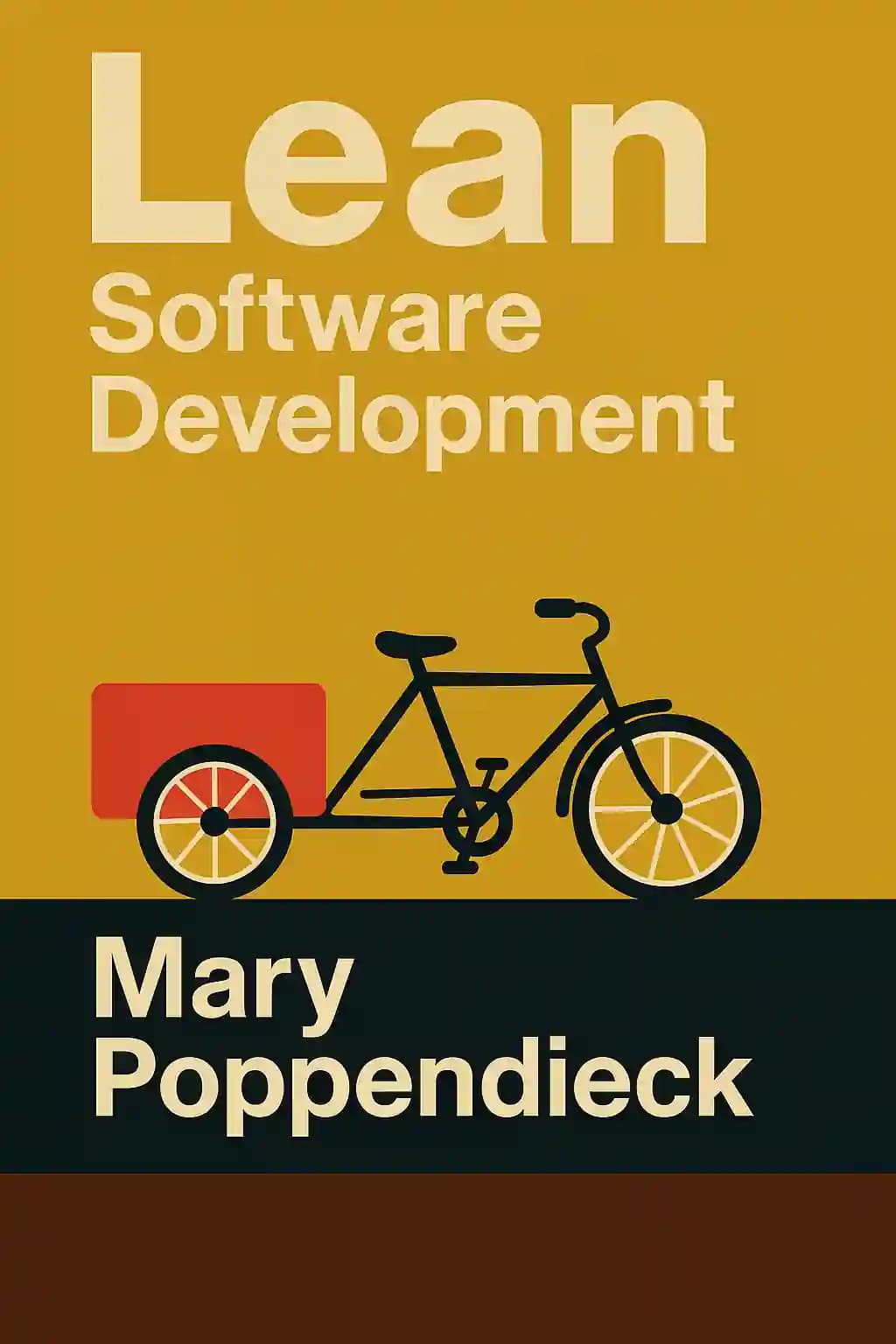
Revolutionizing software development since 2003, "Lean Software Development" transformed how tech giants build products. The Poppendiecks' waste-elimination principles sparked an industry-wide shift from waterfall to agile - why did this methodology become required reading for software leaders worldwide?
Mary Poppendieck is the co-author of Lean Software Development: An Agile Toolkit, a seminal work that established her as a leading authority in applying lean manufacturing principles to software engineering.
A former programmer and project manager, her career bridges hands-on technical expertise with transformative management practices, reflecting the book’s core themes of efficiency, waste reduction, and agile collaboration.
Alongside Tom Poppendieck, she expanded these ideas in Implementing Lean Software Development: From Concept to Cash and Leading Lean Software Development: Results Are Not the Point, cementing their status as pioneers in the field. Their workshops and talks at global Agile conferences have influenced tech giants and startups alike, advocating for workflows optimized through lean thinking.
Lean Software Development earned the Software Development Productivity Award in 2004 and remains a cornerstone of modern agile methodologies, translated into multiple languages and widely cited in both academic and industry settings.
Lean Software Development adapts Toyota’s Lean manufacturing principles to software engineering, focusing on eliminating waste, delivering customer value faster, and fostering continuous improvement. It outlines seven core principles, including amplifying feedback, delaying commitment, and empowering teams, to optimize workflows and create high-quality software. The book blends case studies, exercises, and actionable strategies for streamlining development processes.
This book is ideal for software developers, project managers, and IT leaders seeking to reduce inefficiencies and enhance product quality. It’s also valuable for Agile practitioners looking to integrate Lean thinking into iterative workflows, as well as anyone interested in customer-centric, waste-free development methodologies.
Yes. Despite being published in 2003, its principles on waste reduction, rapid feedback, and systems thinking remain foundational in modern DevOps and Agile practices. The focus on adaptability and customer value aligns with current trends like CI/CD and MVP-driven development, making it a timeless resource.
By cutting waste (e.g., unused features, delays), minimizing rework through early feedback, and simplifying code to lower maintenance costs. Lean’s focus on incremental delivery prevents overinvestment in unvalidated ideas, ensuring resources align with actual customer needs.
Customer feedback loops are central. Teams release minimal viable products (MVPs) early, gather user insights, and iterate rapidly. This ensures alignment with market demands, reduces the risk of building unnecessary features, and builds trust through responsive development.
While both emphasize iterative delivery, Lean prioritizes waste reduction and end-to-end value streams, whereas Agile focuses on collaboration and adaptability. Lean introduces manufacturing-inspired concepts like just-in-time decision-making, whereas Agile frameworks (e.g., Scrum) structure workflows via sprints and roles.
The book cites cases where teams:
Waste includes any activity that doesn’t add customer value, such as redundant documentation, task-switching delays, overengineering, and unresolved defects. The book advocates mapping value streams to identify and eliminate these inefficiencies.
Some argue its manufacturing roots oversimplify software’s complexity, and its emphasis on delayed commitment may clash with industries requiring upfront planning. Others note it lacks granular implementation guidelines compared to newer frameworks like DevOps.
It advocates for small-batch delivery to accelerate learning and reduce risk. By breaking projects into minimal marketable features, teams can deliver value faster, adapt to changes, and avoid large-scale failures.
By empowering cross-functional teams to self-manage, reducing wait times for approvals, and fostering a culture of continuous improvement (kaizen). This autonomy minimizes bottlenecks and aligns work with real-time priorities.
Complexity costs grow exponentially in software. Systems thinking helps teams visualize interactions between components, simplify architectures, and avoid localized optimizations that harm overall performance. This holistic view ensures sustainable, scalable solutions.
저자의 목소리로 책을 느껴보세요
지식을 흥미롭고 예시가 풍부한 인사이트로 전환
핵심 아이디어를 빠르게 캡처하여 신속하게 학습
재미있고 매력적인 방식으로 책을 즐기세요
Amplify learning.
Decide as late as possible.
Deliver as fast as possible.
See the whole.
Software development isn't a production process-it's fundamentally about learning.
Implementing lean software development의 핵심 아이디어를 이해하기 쉬운 포인트로 분해하여 혁신적인 팀이 어떻게 창조하고, 협력하고, 성장하는지 이해합니다.
Implementing lean software development을 빠른 기억 단서로 압축하여 솔직함, 팀워크, 창의적 회복력의 핵심 원칙을 강조합니다.

생생한 스토리텔링을 통해 Implementing lean software development을 경험하고, 혁신 교훈을 기억에 남고 적용할 수 있는 순간으로 바꿉니다.
무엇이든 물어보고, 목소리를 선택하고, 진정으로 공감되는 인사이트를 함께 만들어보세요.

샌프란시스코에서 컬럼비아 대학교 동문들이 만들었습니다
"Instead of endless scrolling, I just hit play on BeFreed. It saves me so much time."
"I never knew where to start with nonfiction—BeFreed’s book lists turned into podcasts gave me a clear path."
"Perfect balance between learning and entertainment. Finished ‘Thinking, Fast and Slow’ on my commute this week."
"Crazy how much I learned while walking the dog. BeFreed = small habits → big gains."
"Reading used to feel like a chore. Now it’s just part of my lifestyle."
"Feels effortless compared to reading. I’ve finished 6 books this month already."
"BeFreed turned my guilty doomscrolling into something that feels productive and inspiring."
"BeFreed turned my commute into learning time. 20-min podcasts are perfect for finishing books I never had time for."
"BeFreed replaced my podcast queue. Imagine Spotify for books — that’s it. 🙌"
"It is great for me to learn something from the book without reading it."
"The themed book list podcasts help me connect ideas across authors—like a guided audio journey."
"Makes me feel smarter every time before going to work"
샌프란시스코에서 컬럼비아 대학교 동문들이 만들었습니다

Implementing lean software development 요약을 무료 PDF 또는 EPUB으로 받으세요. 인쇄하거나 오프라인에서 언제든 읽을 수 있습니다.
Imagine a world where software projects deliver elegant, user-friendly systems consistently rather than becoming bloated, buggy nightmares. The solution comes from an unexpected source: automobile manufacturing. Mary Poppendieck's journey from manufacturing leadership at 3M back to software development revealed a startling disconnect - while manufacturing had embraced lean principles pioneered by Toyota, software development remained mired in heavy process definition and detailed front-end planning. This revelation sparked "Lean Software Development: An Agile Toolkit," a work that has transformed how companies like Spotify, Netflix, Google, and Microsoft approach software creation. The lean philosophy isn't just another methodology - it's a fundamental rethinking of how we create software, treating it as a knowledge-creation process rather than a production line. By applying Toyota's time-tested principles to the digital realm, development teams can eliminate waste, amplify learning, and deliver software that truly delights users while adapting to changing needs. What if you spent months documenting requirements for software that, once built, didn't solve the customer's problem? This represents the most fundamental waste in software development - effort creating no value. Toyota's Taiichi Ohno defined waste as anything not directly creating customer value, which in software translates to seven specific types: partially done work sitting unintegrated, excessive documentation no one eagerly awaits, "just-in-case" features, productivity-killing task switching, waiting for approvals or testing, motion waste when developers must seek distant expertise, and defects that multiply in cost the longer they remain undetected.